
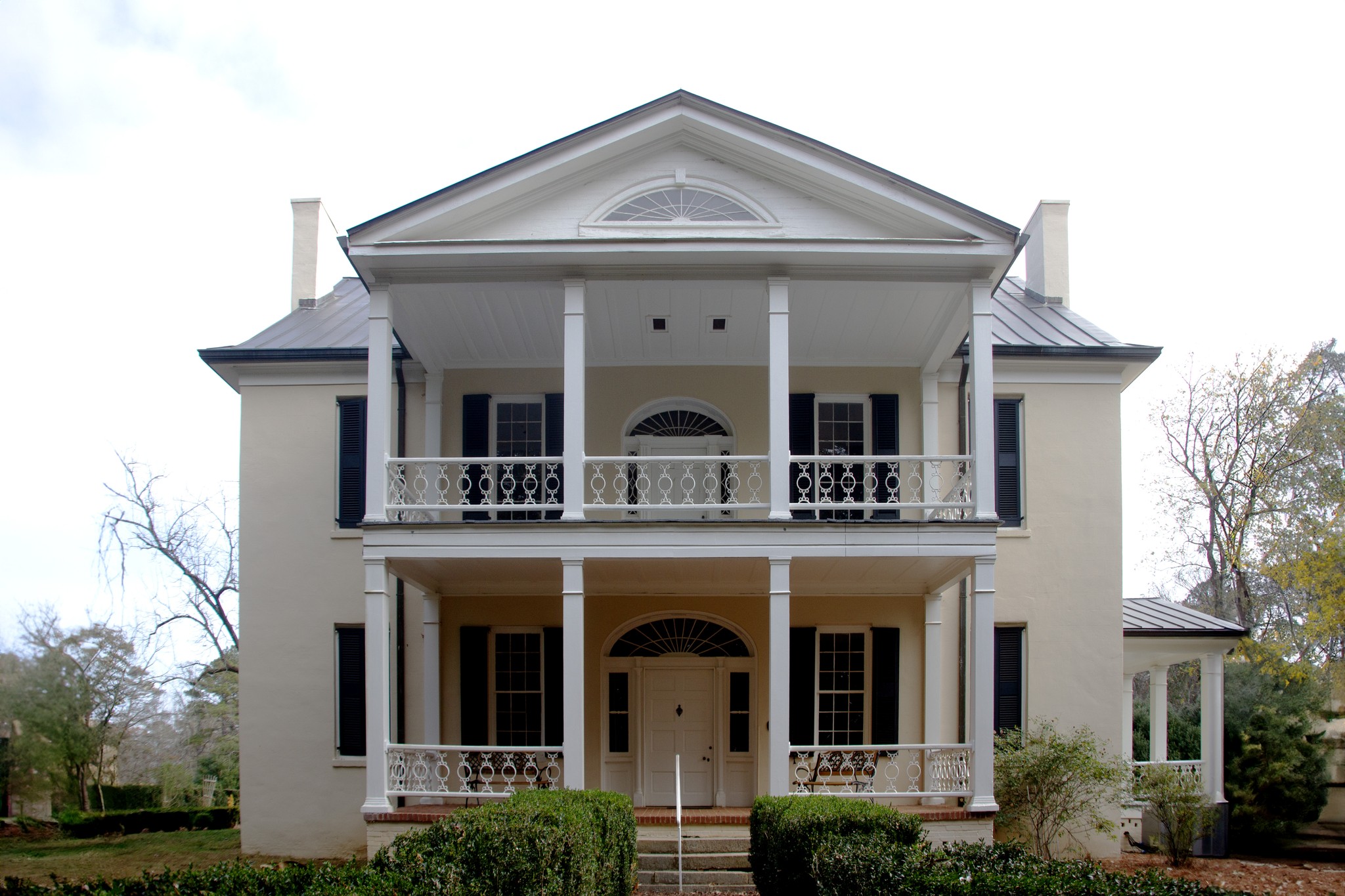
I will give away my age; I haven’t had a United States or South Carolina history class in over 40 years. In fact, I think the last history class I had was the world history class I took as a freshman at Newberry College in 1976. However, I had a history class on Saturday when my husband and I started our “tour” of South Carolina State Parks. Right now, there are 47 state parks. A few of them are overnight parks with villas, cabins, and camping sites. A lot of them are day-use-only parks offering hiking trails and sometimes fishing and other outdoor activities. We went to two day-use parks: Rose Hill Plantation State Historic Site and the Battle of Musgrove State Historic Site. Both were very interesting places to visit. The parks are open from 9 a.m. to 6:00 p.m. daily. Entrance to Rose Hill is free; there is a $3.00 per adult parking fee for Musgrove Mill. Rose Hill offers a tour of the restored plantation house of William Gist, known as the “Secessionist Governor” since he was the governor of South Carolina when the state seceded from the Union in 1860. The tour of the house was impressive for the amount of history the park ranger gave us in 45 minutes to an hour. (Tours of the house are Friday through Monday, 11:00 a.m., 1:00 p.m., and 3:00 p.m. On Thursday, there is one tour at 1:00 p.m., but there is also a program called Voices of the Ancestors, which chronicles the life of slaves in the South. I don’t know those times off the top of my head.)
The ranger talked about the role of the slaves in the lives of the plantation owners and described the hardships of slavery and the attitudes toward slaves held by the plantation owners of Rose Hill. She also talked about the role the Gist family played during Reconstruction as members of the Ku Klux Klan. It is difficult history to hear, especially if you have grown up with the romanticized version of plantation life depicted in books and movies such as Gone with the Wind. The lesson I had from my Rose Hill tour is not what I remember from my elementary, middle, and high school history classes. It is not revisionist history, either. Sometimes, we gloss over the hard parts of our past, but we cannot bury that past, either. How else are we to learn from it if we don’t know it?
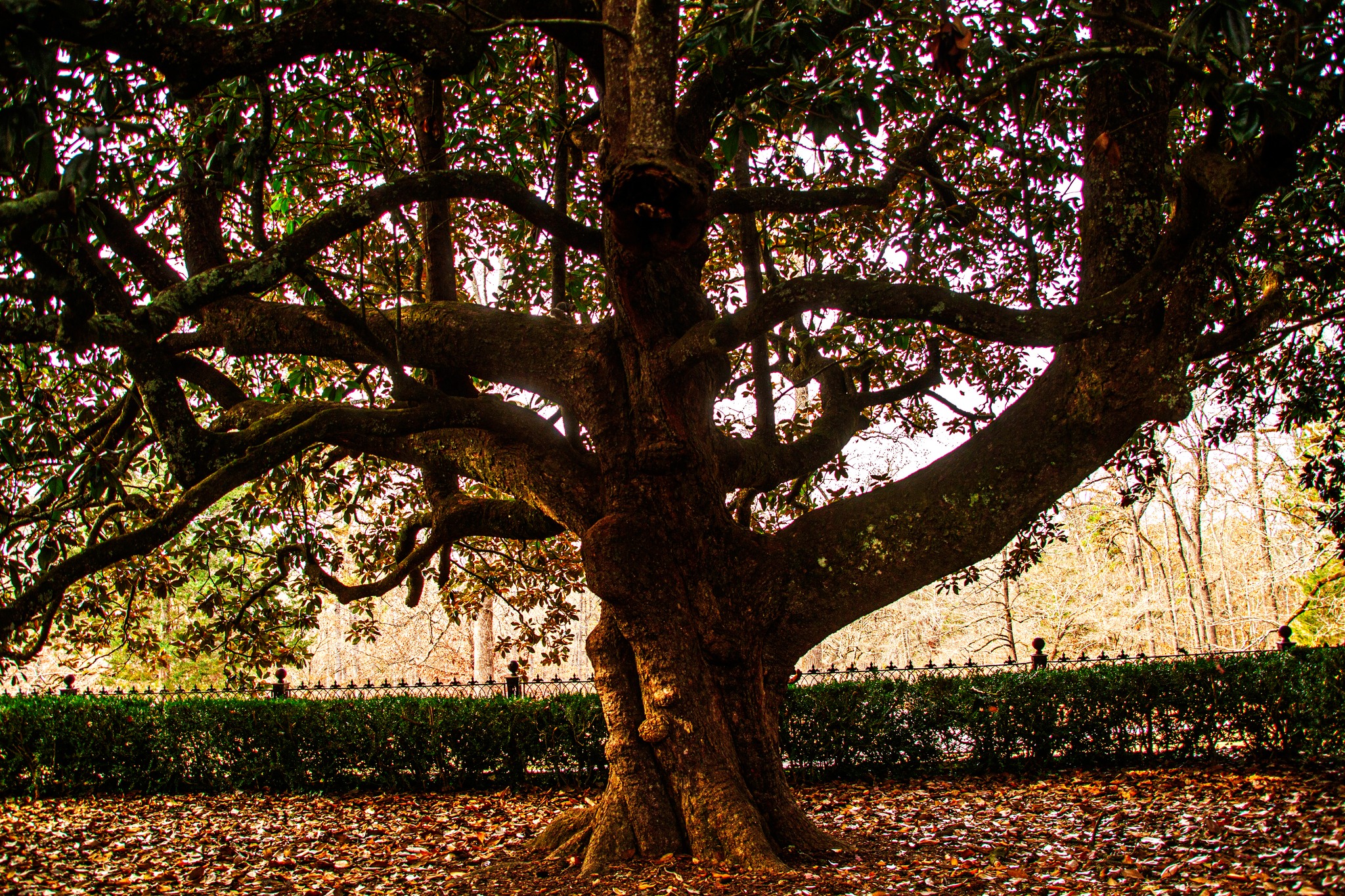
The gardens at Rose Hill have also been restored, but what really impressed me were the gigantic magnolias in front of the house. These magnolias are said to be about 200 years old. I don’t know that I’ve ever seen such large ones. They are probably magnificent in the spring and early summer when they are in bloom.
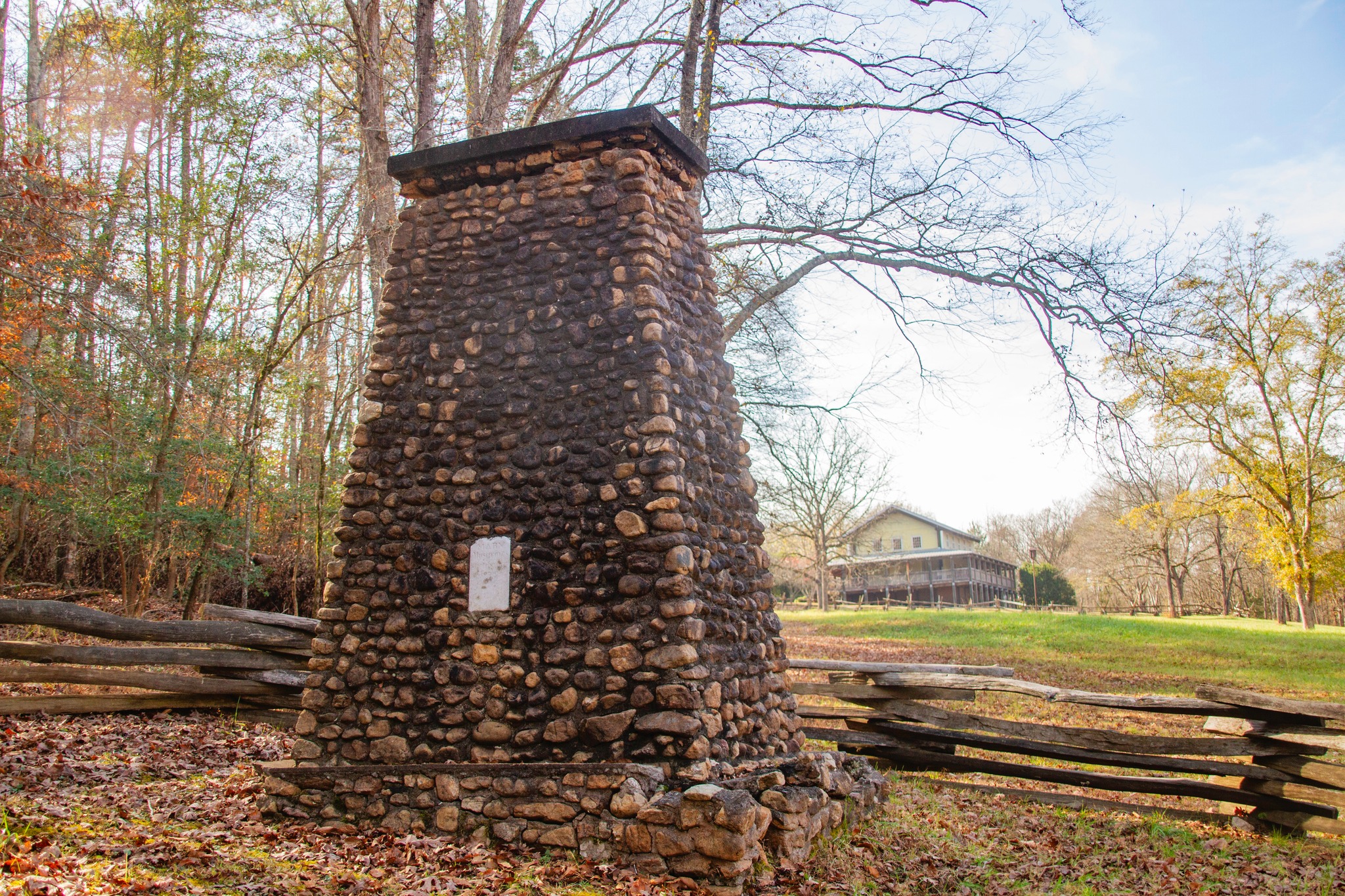
The second park, the Battle of Musgrove Mill State Historic Site, is equally interesting. I knew there were some key Revolutionary War battle sites in South Carolina, Cowpens, Kings Mountain, Camden, and Fort Moultrie, for example. I did not know about Musgrove Mill or Blackstock until I began researching the state park system and planning our tour. Musgrove Mill was a key turning point for the Patriot militia in South Carolina. I do remember learning something about General Nathaniel Green in history classes, but not much. The exhibit about the role of women in the Revolutionary War impressed me, and I would like to learn more about the female spies and helpers during this period. According to legend, Mary Musgrove may have been such a spy for the Patriots even though her father Edward tried to remain neutral. The monument to Mary Musgrove was erected sometime in the early 20th century to commemorate her role in the Revolutionary War.
The British commandeered his property, including his mill (which ground corn and wheat). The Musgrove property lay on the banks of the Enoree River and offered a ford. This was an ideal position for the British forces to control communication and travel as well as to have a ready source of provisions to feed the troops. We walked the British camp trail by the river. Next time I visit this park (and there will be a next time), I’ll do the waterfall trail.
The original Musgrove plantation house and the mill are long gone. Floods washed out a bridge crossing the Enoree River. All that’s left are the pillars. It disappointed me that the park did not offer a printed map with explanations of things to watch for as you walk the trails. There were a few interpretative signs about, but not enough to satisfy my curiosity about the history. Perhaps the waterfall trail has more. (Next time I will print out the maps from the state park website and be better prepared!)

As I said, these two parks taught me some things about the history of my state that I did not know or did not learn when I was a student. I spoke with a park employee at Musgrove Mill, and he agreed that our history lessons are lacking in teaching local history. He is from Union, SC, just about 30 or 40 miles from where I live. It’s only when history teachers take it upon themselves to take students to historic sites such as these that the gaps are filled in.
History is a difficult thing. There is the saying that the victors write the histories. Perhaps it is so. I know that a visit to Rose Hill and the tour of the house will quickly dispel any notion of the “happy slave” and the romantic view of life on Southern plantations. Walking through the museum and visitors’ center at Musgrove Mill will provide an interesting perspective on the role of women during the Revolutionary War.
I will plan another round of visits to SC State Parks soon (with or without my husband). I plan to soak up as much history as I can as well. Hopefully, within the next two years, I will join the ranks of the Ultimate Outsiders, folks who have visited all 47 state parks in South Carolina.
 Telling Stories