Fire, Summer, Belonging, and Upheaval

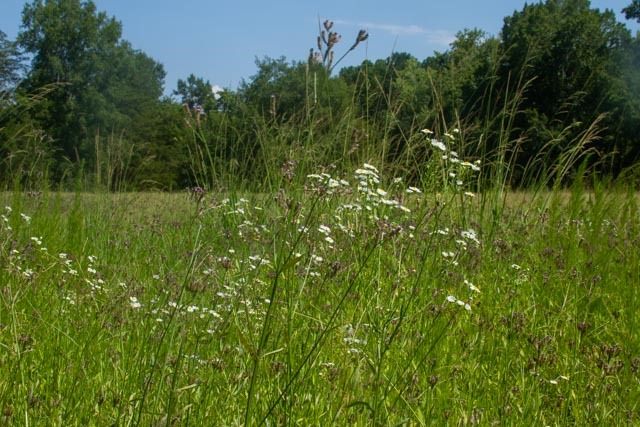
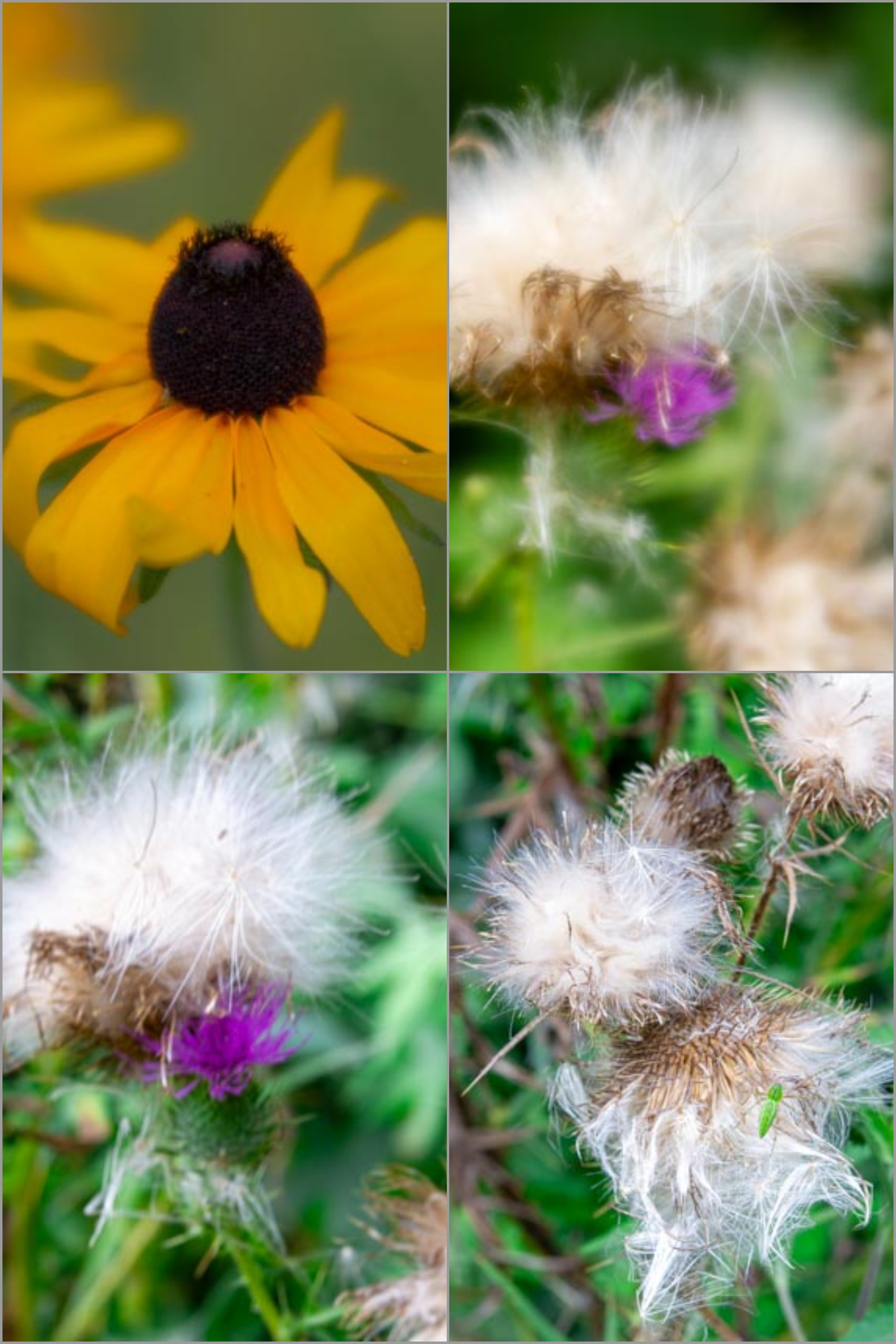
Yesterday, I made a fast foray into the jungle of the front yard. It was a typical July day in South Carolina–hot and humid, though the humidity had not yet reached the level of “air you can wear”. Still, if I had walked all the way around all seven ponds and through the “back forty,” I would have been hot and sticky when I came in. I took out my older Canon EOS 7D with the Lensbaby Velvet 56 lens to make some images. I am out of practice with fully manual modes of photographing. I kept forgetting to check the exposure before pressing the shutter button. I had to make numerous post-processing corrections in Lightroom.

During our Kinship “An Elemental Year” practice circle discussion, we were given the question: what does summer feel like right now? Besides the usual responses of hot, humid, buggy, stormy, I threw in the word “upheaval.” This has been a summer of upheaval, especially regarding the status of my church. The question of disaffiliation and dissolution has caused a rift among the members (and families) that I’m not sure time will even heal or repair. My heart has gone beyond “broken” to “wounded.” The question I had after the practice circle is one of how I can capture those emotions in photography.

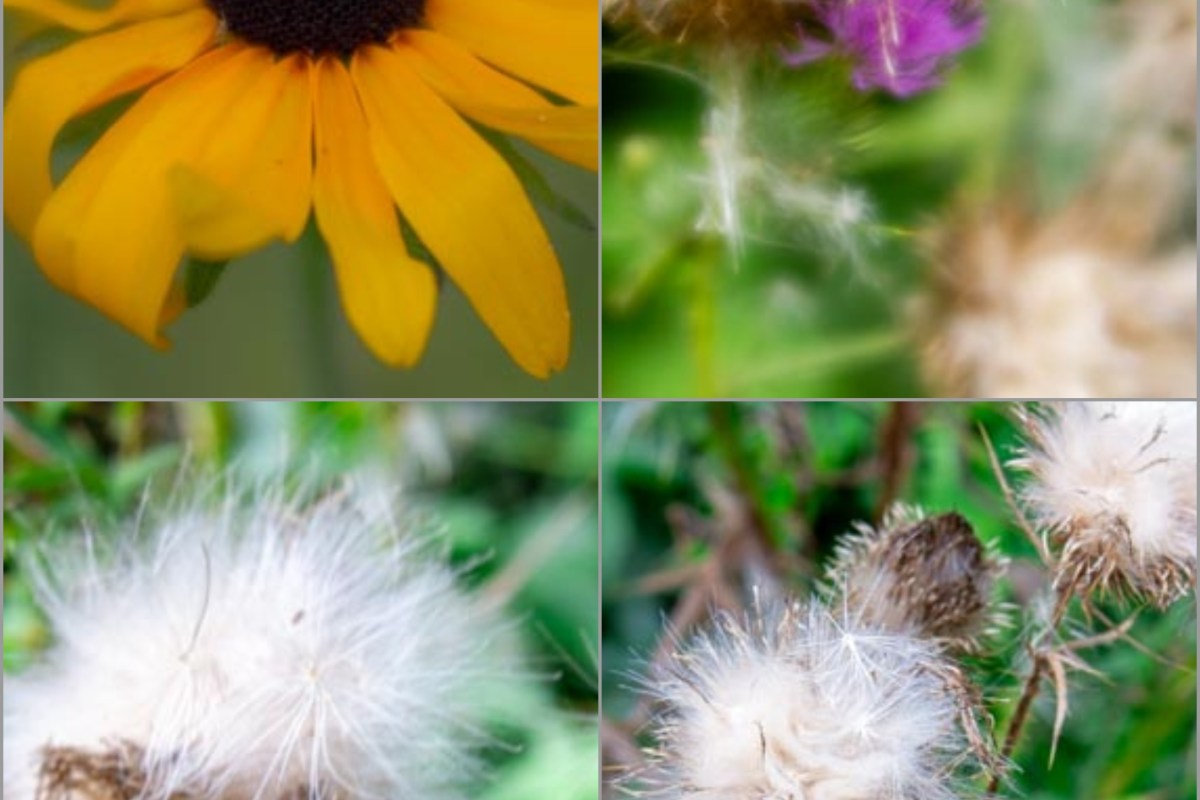
A subject that has caught my eye in the last several walks through the yard is the common thistle plant growing at the edge of the woods in the front yard. I have photographed it when it was in full bloom with lovely purple flowers and now when it is the fluffy seed head stage. Those seeds are ready to spread themselves in the wind. The yellow black-eyed Susans (or are they coneflowers?) are also in bloom now. I even catch the yellow jackets or honey bees or whatever insect they are on them. The bees belong on those flowers. The seeds are ready to leave the plant.
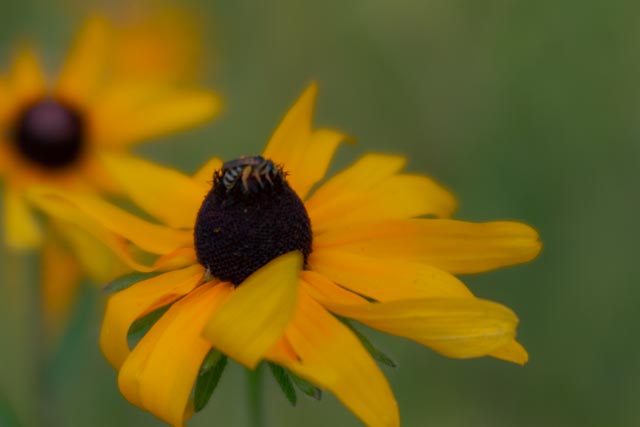
Belonging and upheaval. Stasis and movement. Longing and contentment.

It has been a summer of inversions and contradictions. It will take some time for me to sort everything out and find a sense of peace again. But I will continue to walk as often as I can with and without my camera. I will still look for the beauty in the world in the extraordinary and the mundane. It is cliche that “beauty is in the eye of the beholder.” Yet it is true. There is beauty. I just have to look for it, even if it is the upheaval.
Seeing Differently

This morning, I was thinking about my photography and how I see things. Since I

‘ve taken up photography, I find myself looking at the world as if I were looking through the camera lens. I look for the things that catch my eye. Sometimes, it’s a spot of color or a shape or the light. It could be a facial expression or a gesture. Whenever I don’t have a camera, I try to remember what I saw. Right now, I’m noticing the changes in the trees, from the bare limbs and twigs to the golden green of the new spring leaves.

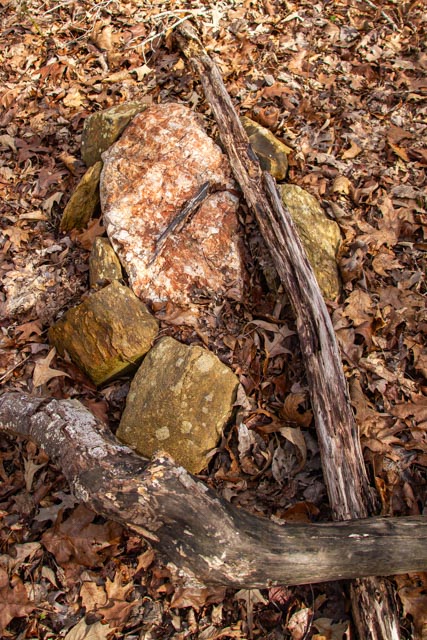
Pup’s grave

Sometimes, I take pictures of things that make me curious. I found this group of rocks while tramping through the woods behind the pond. The arrangement of the rocks suggested a grave. Something compelling about the arrangement of the broken tree limbs around the rocks reinforced the idea. I knew that my son had buried his beloved dog, Pup, in those woods. I sent him the picture and asked if this was Pup’s grave. He confirmed it. I look at this image now and recognize something sacred or holy about the place. My son was an adult when Pup died. He had had Pup for nearly thirteen years. The young man who buried his beloved pet was a heartbroken little boy that day.

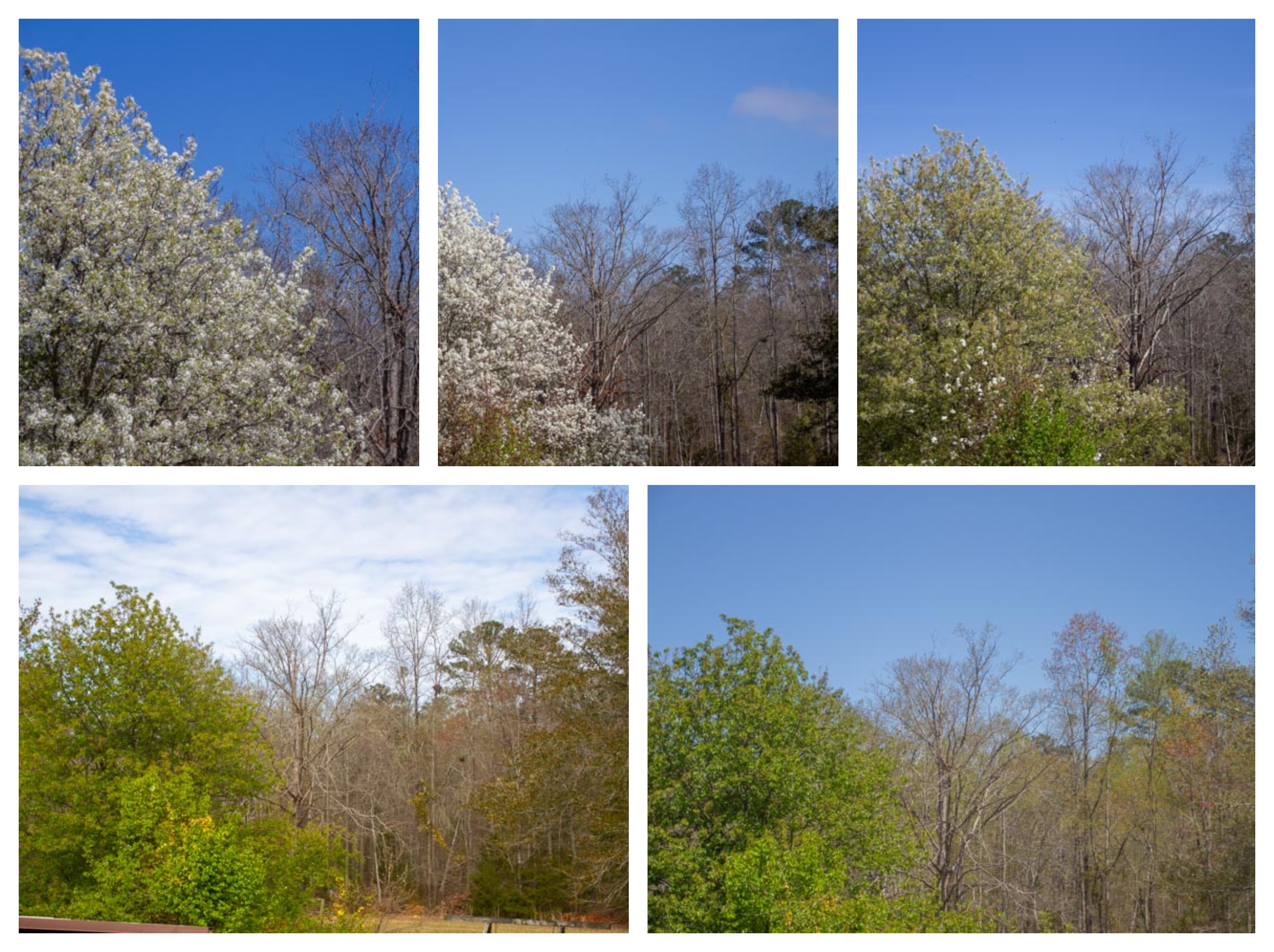
Photography invites storytelling. Or perhaps it’s the other way around—that storytelling invites photography. Last fall I began a practice of taking weekly pictures of the cherry tree from the back door of my house. I continued that practice throughout the winter, even when I couldn’t see any changes. Still, the photos tell the story of the changing seasons. I think I may create a photo collage of images, one from each month of the year, to tell the story of the changing seasons, weather, and moods of the place where I live.

Collage “From the Back Door March 2024”

These images in the collage are actually rather ordinary. However, they tell a story of how the world changes over time. I am sure some of those trees will someday die and fall or be cut down. The weather changes. I want to be aware of those changes and let the photos tell the story.

I want to explore other ways photography helps us see differently. I will be exploring the idea of perspective in the future.

A Walk around the Ponds–Wildflowers

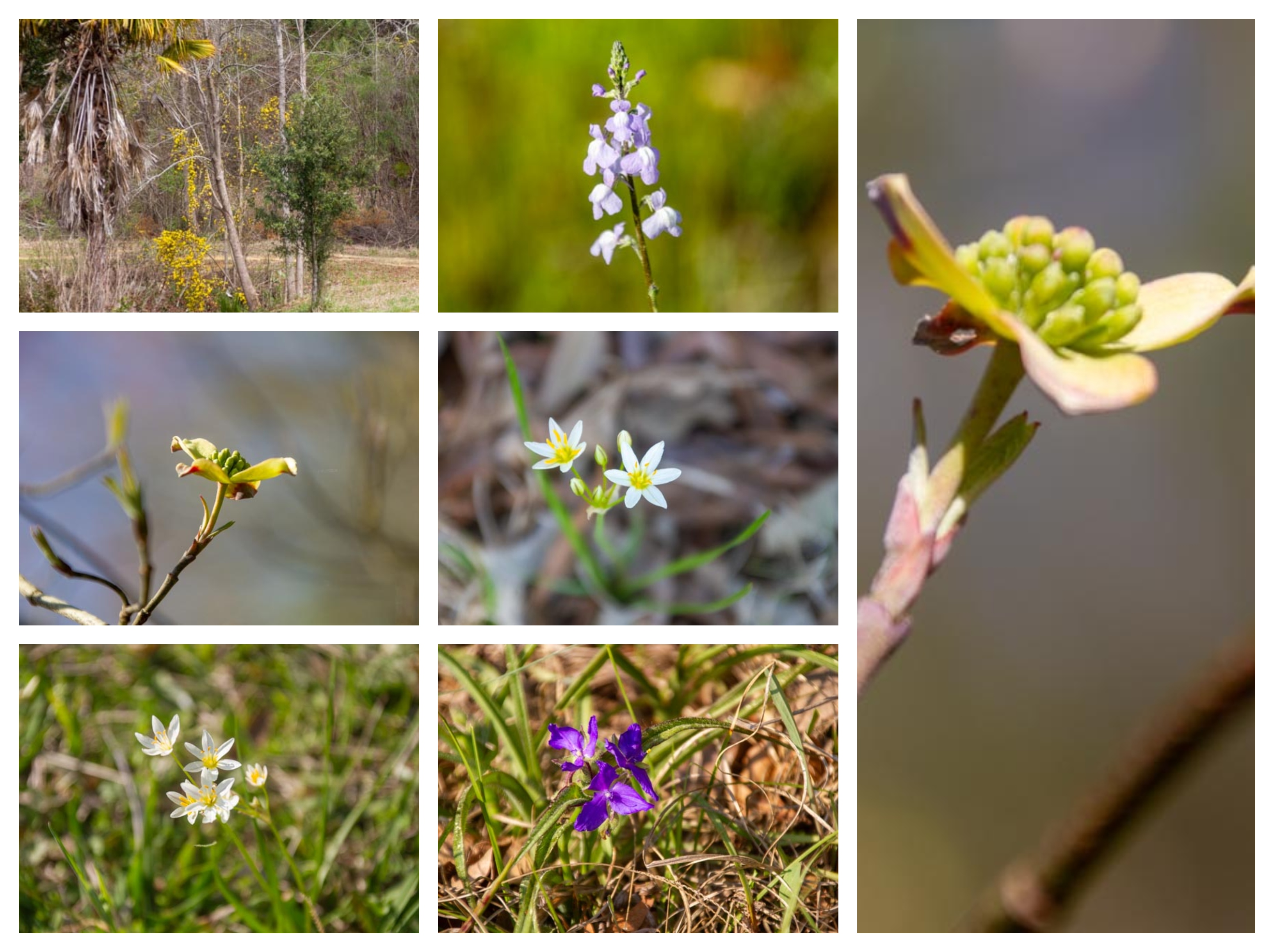
I enjoy making photo collages after I’ve taken a walk. I went out this afternoon for a walk around the ponds. The dogwood is beginning to bloom, and jasmine is hanging from the trees. There are all kinds of wildflowers starting to bloom. I downloaded a plant identifier app to my phone and discovered that something that what I thought were weeds are actually plants that can be cultivated. Those tiny little star-like flowers are called false garlic and can be used as accent plants. The purple plant (bottom center) has an interesting name: Crow poison. According to the plant identifier app, the name comes from a Cherokee legend that the plant could be used to poison the crows that ate their corn.

And now a poem:

The Singular and Cheerful Life

  by Mary Oliver (from Evidence

The singular and cheerful life

of any flower

in anyone’s garden

or any still unowned field–

if there are any–

catches me

by the heart,

by its color

by its obedience

to the holiest of laws:

be alive

until you are not.

Ragweed,

pale violet bull thistle,

morning glories curling

through the field corn;

those princes of everything green–

the grasses

of which there are truly

an uncountable company,

each on its singular stem

striving

to rise and ripen.

What, in the earth world,

is there not to be amazed by

and to be steadied by

and to cherish?

Oh, my dear heart,

my own dear heart,

full of hesitations,

questions, choice of directions,

look at the world.

Behold the morning glory,

the meanest flower, the ragweed, the thistle.

 Look at the grass.

Picture It Wednesday: A Walk through Dreher Island State Park

Today is supposed to be a “Picture It” day. I had planned to talk about photography, editing, and such. I like to use photography as a contemplateive practice, a kind of meditation. I think about the opening verses of Psalm 8, in which the psalmat pracises God for the magnificience of creation. How magnificient that creation is, and how magnificent is the Creator God who made it all!

The idea behind contemplative photography is to make images of things that catch the photographer’s attention by simply being open to what is before one without judgment. Of course, there are some considerations–lighting, camera settings, point of view and perspective, composition, framing, focal points, etc. But the idea is not to judge the scene or object for “beauty.” After all, “beauty is in the eye of the beholder.” Photography gives me a chance to study the scene/subject, to think about the essence of it, and to convey to the viewer what it “means” to me in that moment.

I’m taking fewer photos as a result. Or maybe I’m taking more photos of fewer subjects. It’s a toss-up.

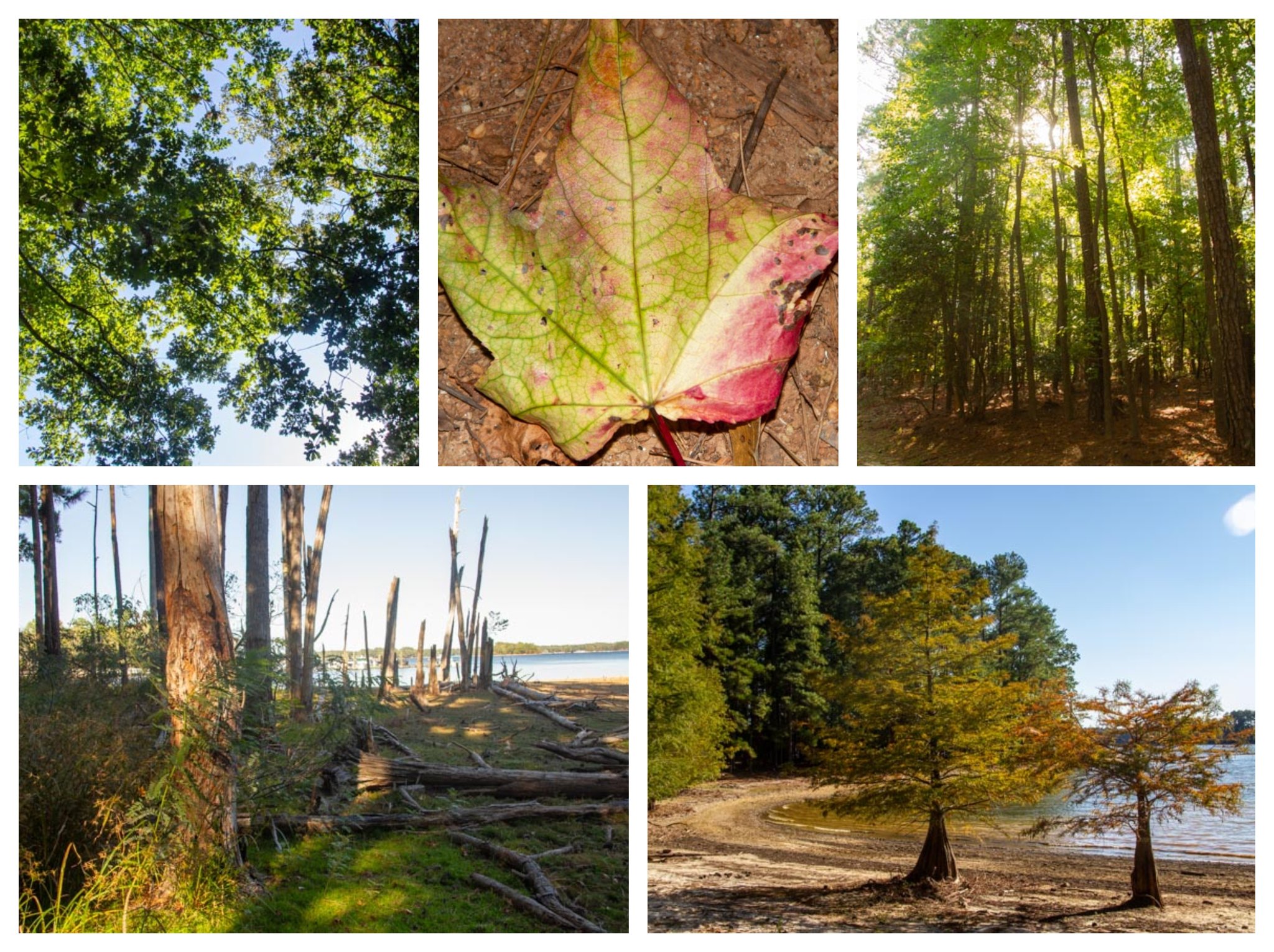
The image at the top includes five images from my last walk. All were edited in Lightroom Classic (newest update) with minimal adjustments. I usually adjust white balance, use the “auto” adjustments for exposure, contrast, whites, highlights, shadows, and blacks, and then do some tweaking. I increase the contrast and make further adjustments to texture, clarity, and dehaze sliders. A tip I learned from David du Chemin, a Canadian photographer I follow, is to use the medium tone curve preset and then tweak. I am learning to use masks to make surther adjustments.

After that, I like to make collages. The easiest tool I’ve found is the online version of BeFunky. It has some photo editing tools and a whole mess of templates for creating grids, layouts, Facebook banners, and more. I print out my collages for my journals using my Canon Selphy C1200 photo printer. This little printer prints photos the size of postcards. Depending on what I want to do with the photos, I will tape the photo in my memory planner or bullet journal whole, or I will cut the print apart and glue the individual images in “scarpbook” bashion. I like to print out my images. I can go back to look at them in my planners and journals easier than I can locate them on the computer!

My goal is to use my camera often during the week to document the world around me.

The Last Roses of Summer

September 2023. It’s officially autumn. Daylight hours are fewer; daytime temperatures are milder. The humidity is lower. Mornings are cooler. The air conditioner does not run as often or as long. Leaves are beginning to turn.

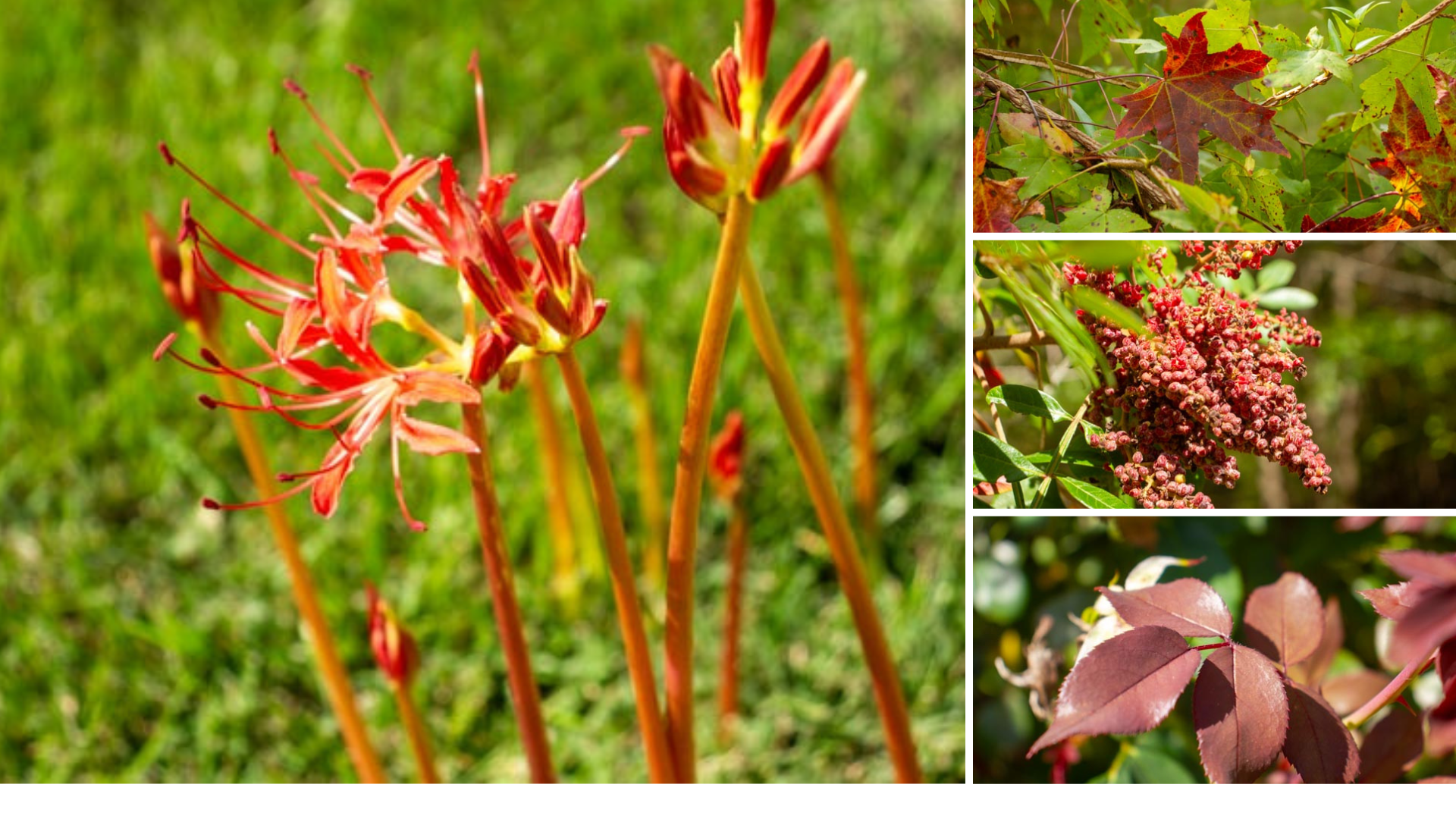
I went for a walk around the ponds. I was supposed to be working on the weekend photo challenge for my creativity group in Girls with Cameras. The prompt was to decide on a line or a shape AND a color, make the images, and create a collage (which serves as the pattern). Well, let’s just say that the “rebel” in me did not follow directions! I went out with the idea of looking for a color first. Among the first things I saw were the spider lilies in the front yard. I got the tubers or bulbs from Mama when I got married. Mama had bunches of them growing by the screened-in back porch. I planted these in front of the first house we lived in, and there they have remained even though that original mobile home is no longer there. Those spider lilies inspired me to look for things in nature that are red.

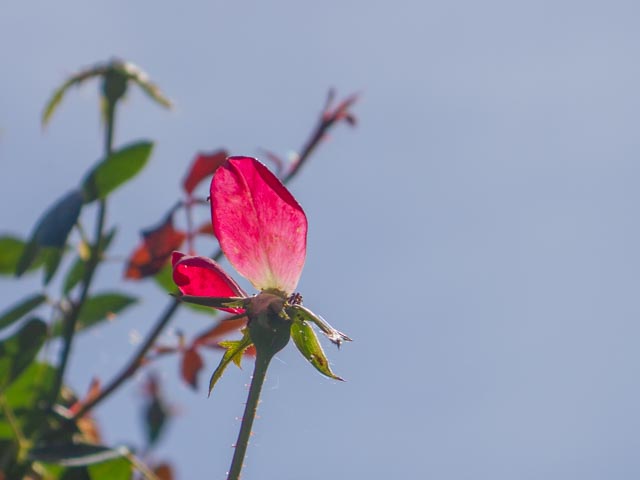
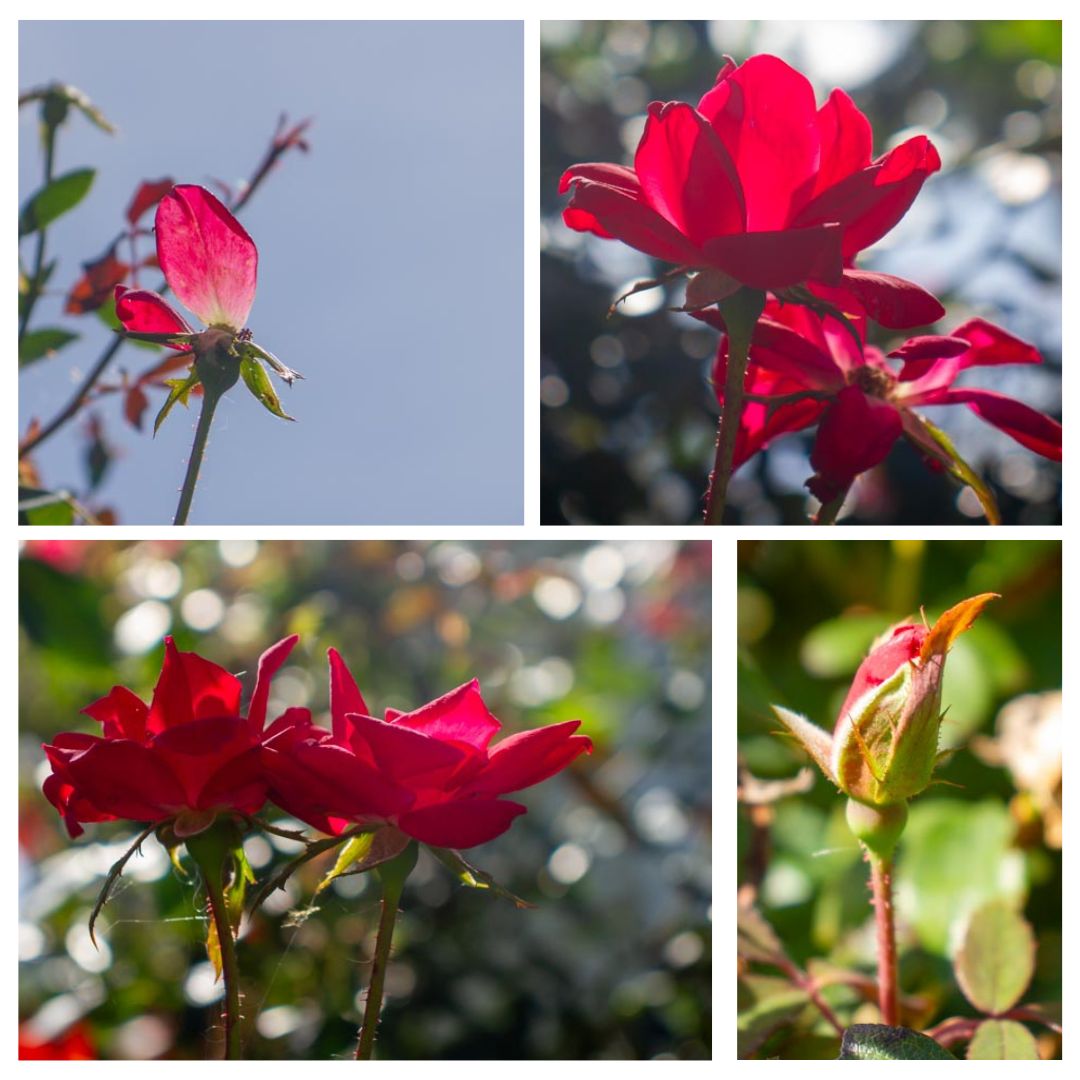
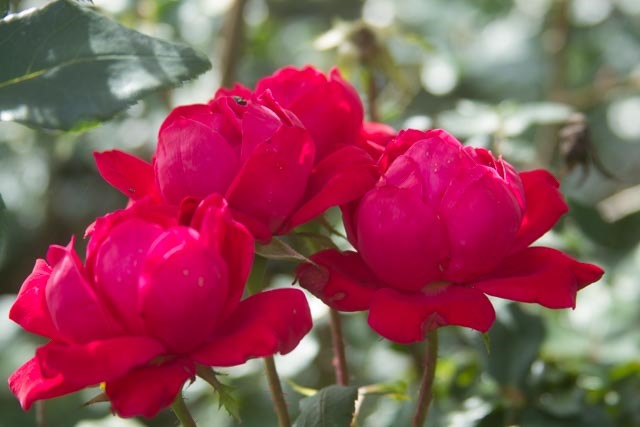
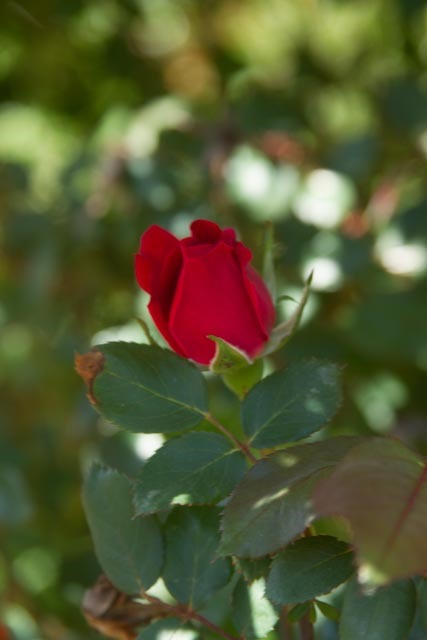
As I wound up my walk, I came to the Knockout rose that Mama gave us several years ago for Christmas. This bush would grow as tall as the house if we let it! It’s already much taller than I am! I stopped to make images of some of the blooms–the last roses of summer. One thing that I noticed was the transparency of the petals as the afternoon sun shone through them. Another thing that caught my eye was the imperfection of the blooms. Many of them were already well past their prime and shedding their petals.

When I began learning about the concept of contemplative photography, I also learned about Mitsang contemplative photography, which asks the photographer to look at the world with an “open” mind to see what is authentically present without preconceptions. That led me to the concept of wabi sabi. Now, that is a term that is not easy to define. It is based on the Japanese notion of imperfection. But it’s more than just the idea that things are not perfect; it also carries the idea of impermanence. This idea is embodied in the traditional Japanese tea ceremonies in which tea is often served in vessels that are cracked, distorted, and old.

My images of the roses remind me somewhat of the notion of wabi sabi: the “blown” blooms, the wilted ones, even the ones that have turned brown. There is a beauty in the decline of the roses at the end of the season.

I’m learning a new app while making these collages. One of my former students loved using Canva to make presentations and projects. I have played with it on occasion, but I am not very proficient with it. However, a little bit of research led me to using the ready-made templates for photo collages. As a result, I just upload my photos to the app and move the selected images into the cells of the template. That aspect works much like the app Befunky, which I’ve used for a while.

I have decided to use my retirement to learn new things and to improve “old” things. I’m learning some new ways of thinking about photography through my participation in the Girls With Camera communities; I’m learning how to use Lightroom as an editing tool, and I’m learning new ways of presenting my photographs. Retirement is being good to me.

Pond Walking in July

Those seven ponds my husband’s grandfather made way back when are a treasure.  There is always something to notice each time I take a walk around them. We’ve had some incredibly hot weather until just a few days ago, and I haven’t walked around the ponds since July 6.  Today, I made myself get out and stroll around with the camera. 

I thought about the colors I usually see this time of year—green, light green, lighter green. Oh, there’s some green, and maybe a little darker green.  Many of the wildflowers have stopped blooming for the season.  I had to look.

The crepe myrtles are in full bloom.  I love the delicate blossoms.  They look so fragile.

IMG_6678

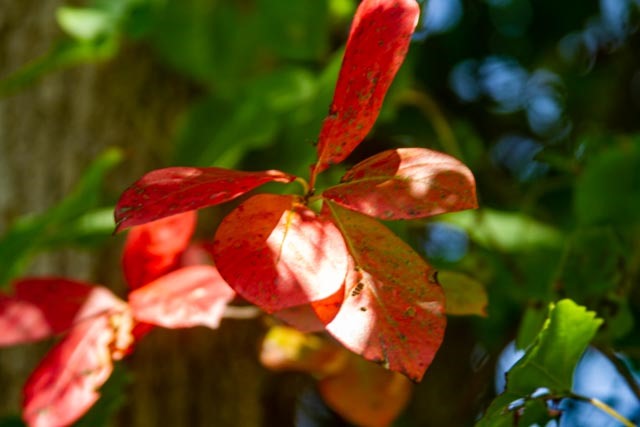
I’m not always sure of the names of the various trees in my backyard.  Somehow, it never seems important to know, but I wish I knew what tree these beautiful red leaves belong to. These remind me that fall will be coming in just a couple of months.

IMG_6685

I am no flower gardener, but I do love wildflowers.  These purple beauties are all over the place around the ponds.

IMG_6686 

A neighbor farms a small field next to Gramps’s pond, and right now the field is fallow.  These beauties are all through the field.

IMG_6710

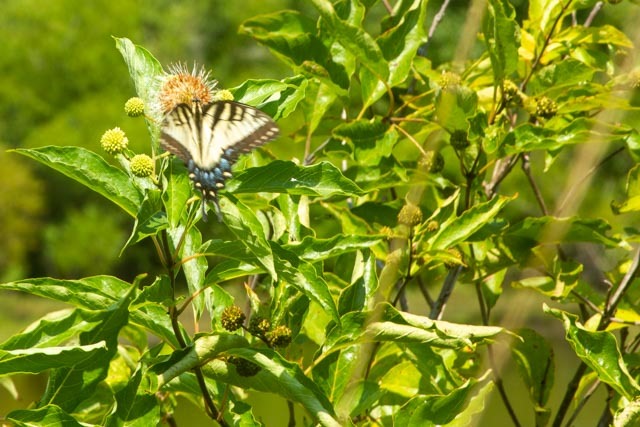
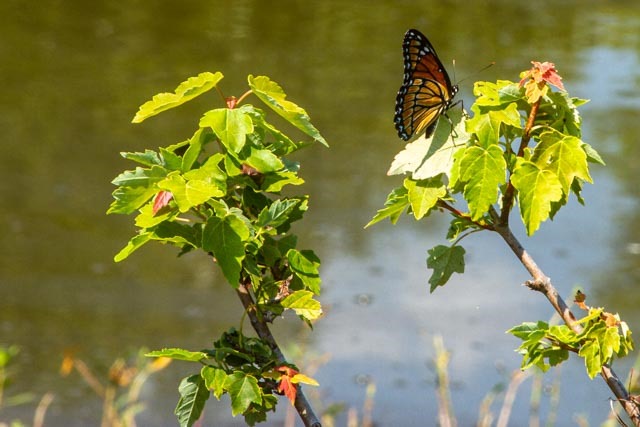
And the butterflies!  I wish I had kept count.  I know I saw two black and blue ones on the dam of the Big Pond (yes, that’s the “name” given to the pond—each one of the seven has a specific name), but they wouldn’t be still long enough for me to snap some pictures.  The butterflies below did oblige me, though.  I just wish I had the longer zoom lens with me for these shots.

IMG_6715

IMG_6716

IMG_6720

There is so much beauty in the world.

Today Was Supposed to Be the Day

Today was supposed to be the day that I would go for a photo walk.  That was the plan when I woke up.  I dressed appropriately, put on my tennis shoes (Southern for sneakers), gathered all my camera gear this time, and headed for the lake.  The swamp roses, wild hibiscus, are blooming on the lakeshore—beautiful white and pink blossoms, some as big as my hand. 

6-22 (1 of 1)

I was also testing out my camera and camera card.  I’m having some problems with the images.  It may be that my camera is just OLD.  The sensor may not be working properly, or something.  Anyway, things are not going well at all, and I’m not happy.

This morning things seemed to be going well.  I was able to get some nice closeups with my Lensbaby Sweet 35 optic with Composer Pro (yeah, it’s as old as the camera, I think). The lakeshore was not crowded.  There was a couple fishing near the edge of the church’s property, but I was going the other way anyway.  No problems with anyone being disturbed or interrupted or bothered.  It was getting hot, though, and it was only 9:30 a.m.! I walked down to the cross on the point, noticing that someone had left a very wilted wreath on the cross.  I’m afraid I’m not tall enough to take it down. Then, I headed toward another little neck of land to get some pictures of the yellow flowers.
That’s when my plans blew up in my face.  I stepped on a fire ant mound hidden in the grass at the edge of the path.  Now, I don’t know if you’ve ever been stung by fire ants, but their name in appropriate.  I must have had thirty or more of those little bugs crawling over my right ankle, and each one of them was biting me.  They were in my shoes, around the top of my sock, and heading for my knees!  I wiped, and I brushed, and I stomped.  Then I headed for home to get the Benadryl gel on those bites.  So, here I set hours later, my ankle a bit red and swollen.  For now, the pain is not bad, and the welts are not itching—yet. I hope I got the gel on in time.

And the result of my photo walk.  I had to discard about half of my pictures.  Some were just badly exposed because I have forgotten how to use my Lensbaby.  Others had that weird coloration, like this one I took earlier in the week:

6-22 (1 of 6)

See that pink corner?  Yeah, that’s what’s happening with my camera.

But I think I did get some pretty pictures of the hibiscus known as the swamp rose.

6-22 (2 of 6)

6-22 (3 of 6)

Procrastination: Putting off today what you can do tomorrow

Or can you?

Yesterday, I walked around the ponds, headphones on, water bottle slung over one shoulder, step tracker clipped on my shirt. I was out for exercise.

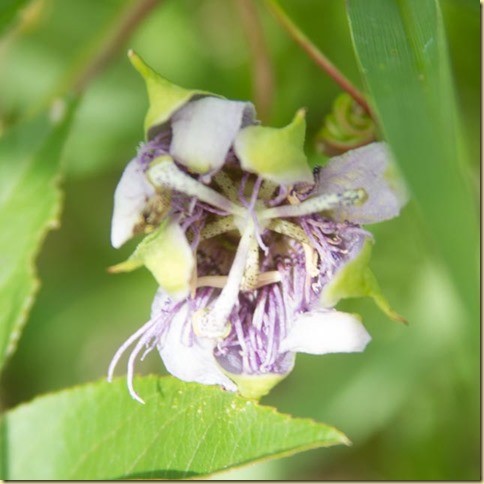
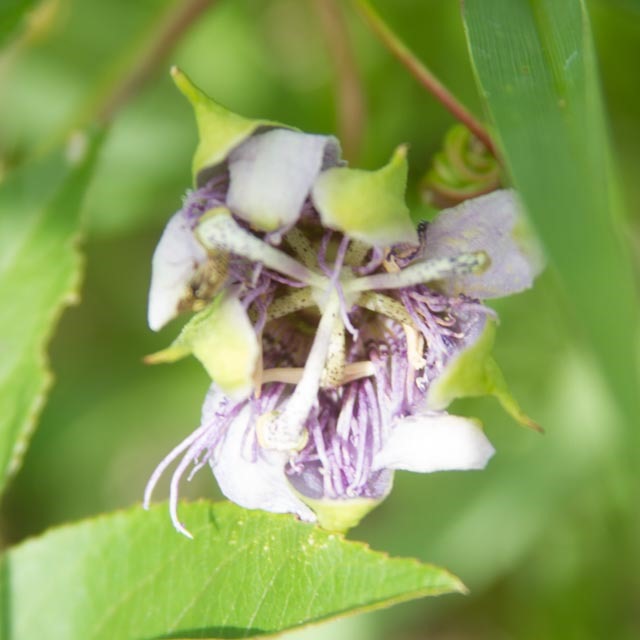
That did not stop my roaming eye. As I walked up the powerline right of way, I saw another purple flower—a Maypop blossom! (Some people may call them passion flowers.) These vines grow wild in these parts. After they bloom, they bear fruit. I’ve heard you can eat the fruit, but I never did. When I was a child, I played with Maypops, using sticks to make animals out of them.

When I saw the flower, I was excited! But I was midway through my second lap, and I did not want to interrupt the momentum of the walk. I did not go back for the camera.

I lost the opportunity to take the photo of the purple passion flower//Maypop blossom. Surely, it will be in bloom tomorrow. . . . .

Well, here is what is looks like today.

untitled-5

It is beginning to close.  It’s a strange-looking thing at this stage.  The good news is, that while I was taking this photo, I saw that there are a few more buds that haven’t opened yet. I will be watching these so that I can get the picture.  And I will be watching for the fruit, too. I may even make a Maypop animal!

Here are some other things I saw along the walk around the pond today.

untitled-4

Roses in the backyard

untitled-7

Wild blackberries beginning to ripen

untitled-8

An interesting bent tree

untitled-13

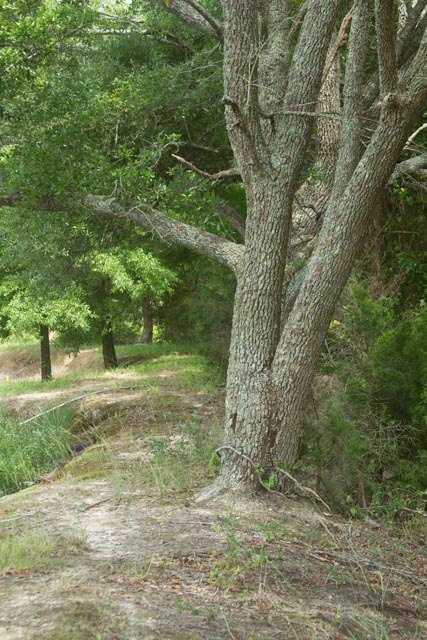
The grand oaks that line one side of the dam between “Herbert’s” pond and Gramps’s pond.

untitled-14

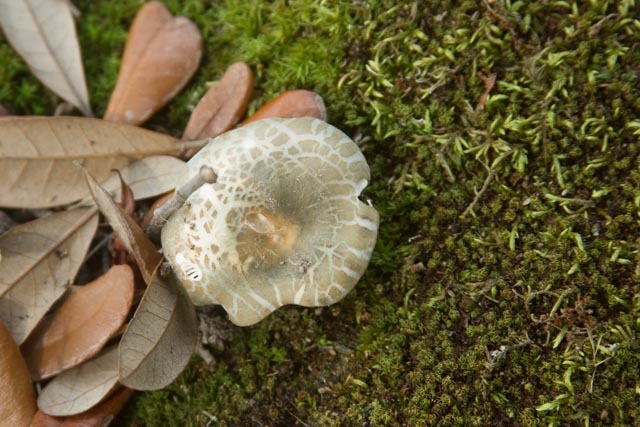
Mushrooms, moss, and fallen leaves—an interesting combination of textures. (No, I did not stage this.)

untitled-24

Red trumpet vines.

All I have to do is keep my eyes open.

By the way, I’m not exactly upset with myself that I didn’t go back and take a picture yesterday. I carry the memory.

Notes toward a New Course

In a previous post, I hinted at a new course I want to develop in my “ReFrame” classroom on Teachable.com. I’m thinking about how words and images, especially paintings and photographs, seems to fit together almost perfectly, as if cut out to make a jigsaw puzzle. In particular, I am exploring the idea that writing and photography are both contemplative practices. I won’t give away everything I’m thinking in the blog entry, but I will give you some “sneak peaks.”

Andy Carr, a “contemplative” photographer and author of the Seeing Fresh website, defines the term contemplative photography this way:

Contemplative photography is a method for seeing and photographing the world in fresh ways, to reveal richness and beauty that is normally hidden from view. Instead of emphasizing subject matter or the technical aspects of photography, the contemplative approach teaches you to see clearly, and make images based on fresh perceptions.

Notice that contemplative photography is not about the subject or the technique. It is all about seeing. It’s about noticing the “richness and beauty” of things that we often overlook. We often use the expression that we can’t see the forest for the trees when we get so caught up in details. However, sometimes, all we see is the forest, and we overlook the trees that make the forest beautiful and rich. (One reason for that, I believe, is that we live in a world that is too fast paced, and beauty rushes by us.)

Simply slowing down and paying attention to what catches our eye forces us into “noticing.”

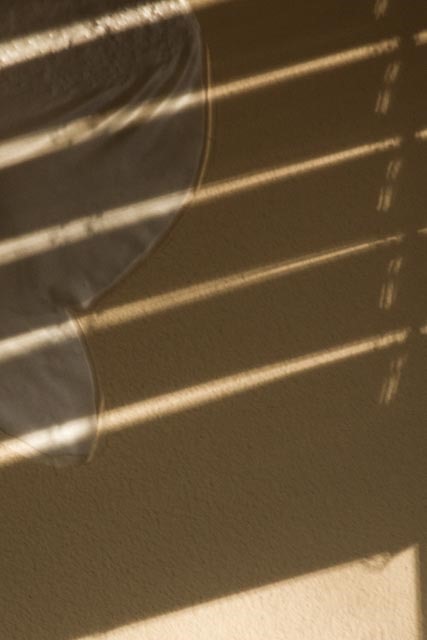
I know that light shines through the windows at my house. There are two eastward-facing windows in my living room. As the sun rises in the morning, the room fills with light. I could be satisfied with that idea of “lightness” in the room. But one day, this caught my eye:

untitled-3

This image is not technically perfect. The white balance is all out of whack. Composition is “off.” Cropping leaves a lot to be desired. Yet, it is rich and beautiful and reminds me of golden light. This is contemplative photography.

Contemplative photography is not about making images for others’ “consumption.” It is about YOU, the photographer. These are things that speak to YOU, first and foremost. I share a lot of my images, and if others relate to them in some way, I am glad, and if not, that’s okay, too. Contemplative photography is all about the noticing.

Contemplate, the verb, is defined this way

to look thoughtfully for a long time at [something]; to think about; to think profoundly at length, meditate

Do you notice that first definition, “to look thoughtfully for a long time at”? When we approach photography from a contemplative practice, we don’t always just press the shutter at the first thing we see, or the first thing we notice. We look at the thing thoughtfully for a bit to see if it resonates with us somehow, and then we press the shutter.

This is one of the practices I’ll take up in the upcoming “Words and Images” course. And I’ll explore writing as a contemplative practice that also slows us down to “think profoundly at length.”

Today, take a walk and slow down. Notice what catches your eye, and then stop and look at it at length. If you should have a camera, even your phone camera, with you, make the image. Don’t worry about the technical aspects. (You will be surprised, though, that you actually become a better photographer technically when you practice contemplative photography regularly!)

Enjoy your time of contemplation.

While I Was Not Looking

THIS happened:

untitled-25

Things started blooming.

April 17 collage

I have “prided” myself on being observant, of seeing the world, but somehow, all of this happened, and I didn’t notice.

I’ll blame it on

getting ready for Aaron and Sherry’s beautiful wedding on April 1.

going back to work and writing lesson plans and grading papers on March 20.

being “busy.”

getting ready for Easter.

coming down with bronchitis and sinusitis.

You get the idea. I have a million and one excused for allowing all this beauty to go unnoticed. Yet, there it is. I noticed it Saturday, the first day I went out of the house for a reason other than necessity. I saw the white bloom of the blackberries, but I didn’t have the camera. I noticed it.

On my way back to the house (coughing, short of breath, thanks to the bronchitis), I saw the yellow and red of the trumpet vines (or whatever they are). I noticed it.

untitled-2

And the red Knockout roses are in bloom.

untitled-7

I noticed it.

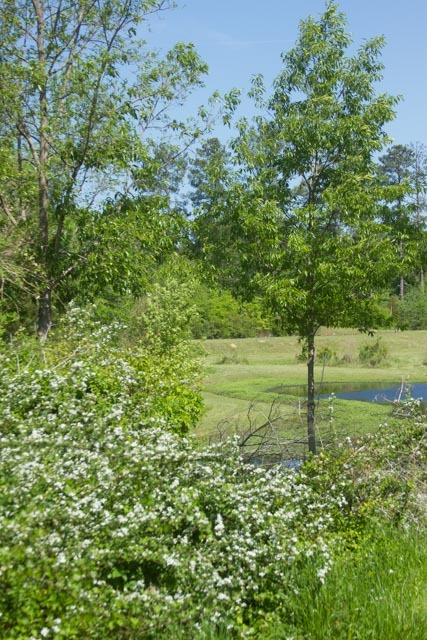
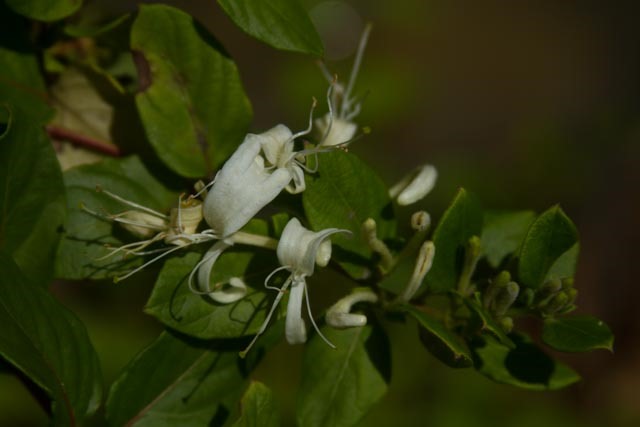
This morning, I went out with the camera, and I noticed other things—holly berries, wildflowers, dandelions, even some honeysuckle. It’s all there.

untitled-30

And today, I noticed it.

What did you notice today?