Walking around the Pond

I’ve walked around those seven ponds so many times over the last 32 years that I may be able to do it with my eyes closed. Not that I will, though, because I just might fall in the ponds, and I don’t want to do that again! Once is enough!

But I don’t take those walks “blindly” or casually, either. There is always something new to see—new growth, new beauty. Today was no different. I decided I had to get out of the house for some “vitamin D therapy,” some sunshine. I refilled the bird feeders and put up the new one that Sherry and Aaron gave me for Mother’s Day. By the way, the birds have flocked to the feeders! They must like the new arrangement and the new bird seed! Then I grabbed the camera and went for the walk.

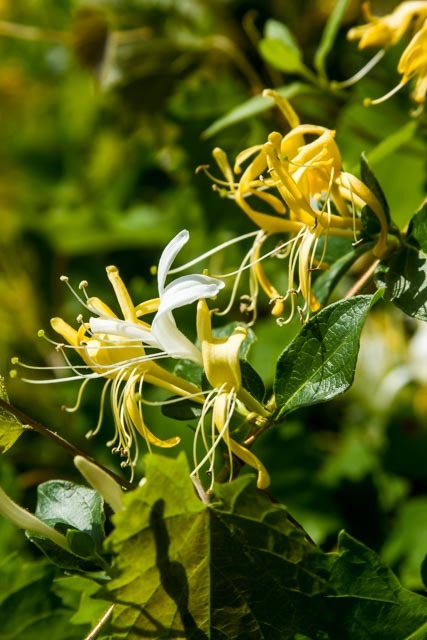
I’m not sure what smells better, the heavy perfume of roses or the sweetness of honeysuckle. Both scents were evident this morning.

untitled-8

I remember picking honeysuckle flowers and licking the nectar. Maybe I will do that one day soon.

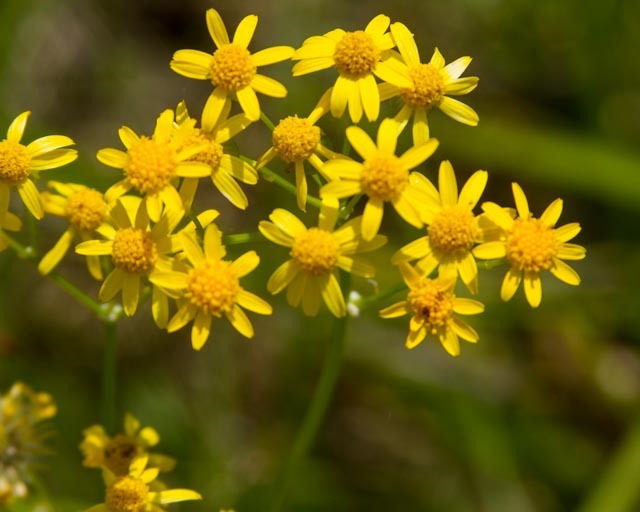
Wildflowers are abundant now—dandelions and other flowers. I know, some people may call them weeds, but they are beautiful.untitled-16

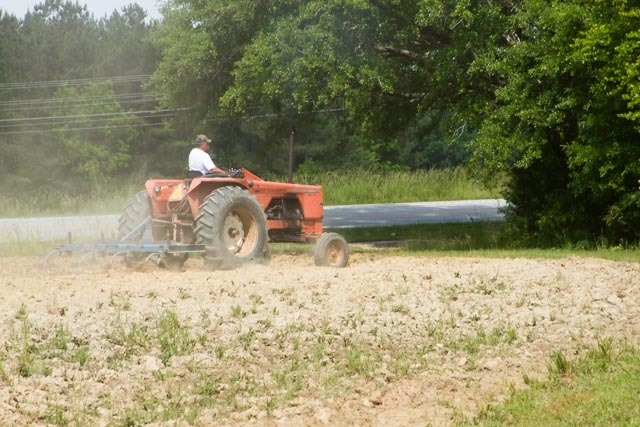
Mr. Leon was plowing the field by one of the ponds. I love the smell of freshly plowed earth. I wonder how long this area will continue to be “rural” and agricultural. It seems that this way of life is going away.

untitled-20

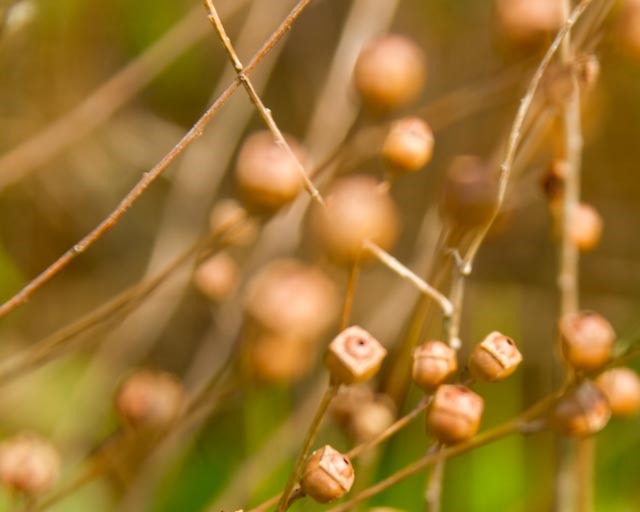
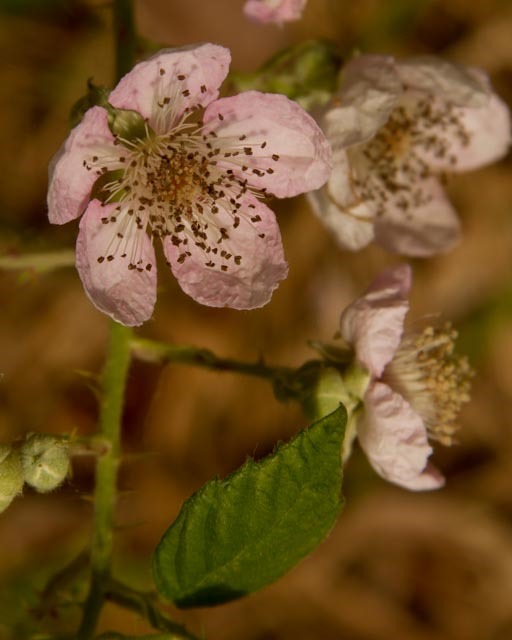
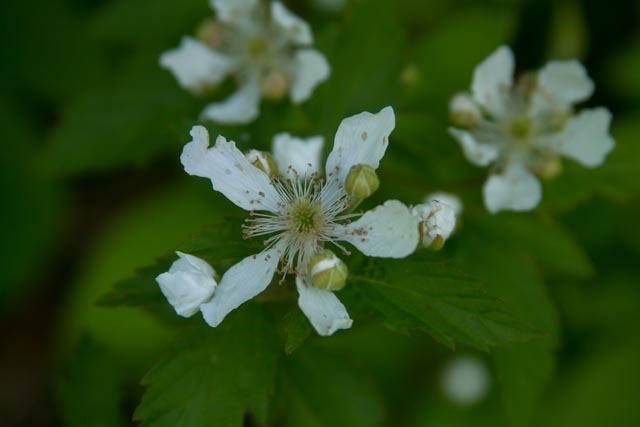
Sometimes nature surprises me. I didn’t see the squares on these “berries” until I went through the images in Lightroom.

untitled-22

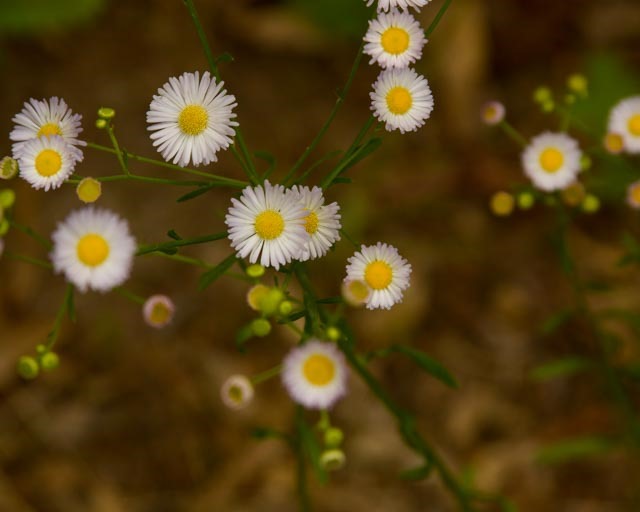
I wish I knew the names of plants better than I do. I discovered today that these little beauties are Robin’s plantain, one of the fleabanes that grow in the Eastern states.

untitled-42

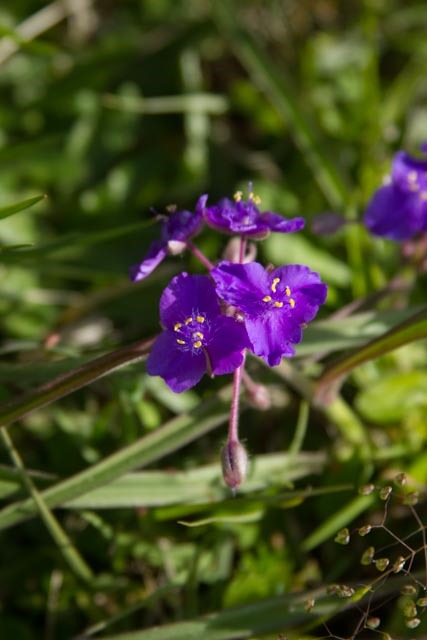
But I don’t know what this pretty purple flower is

untitled-39

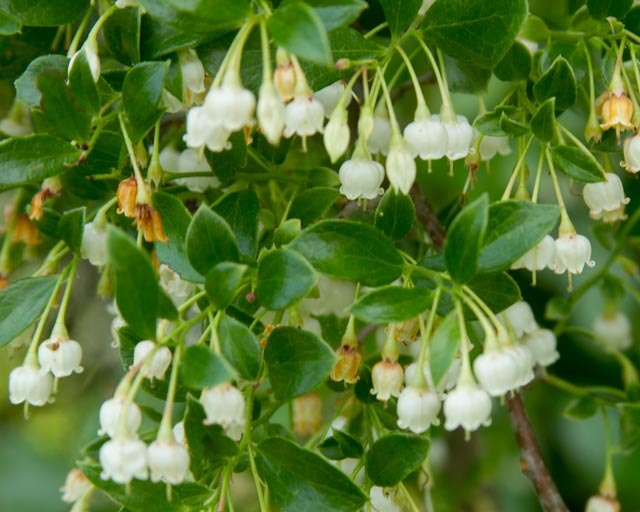
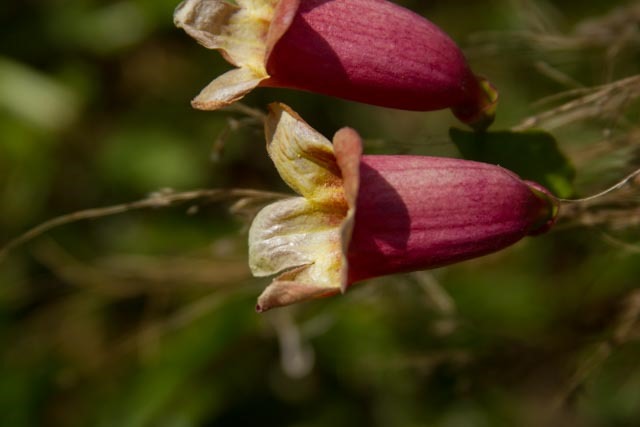
Nor do I know what these bell-shaped flowers are.

untitled-35

Maybe I don’t need to know, though. John Keats once wrote,

‘Beauty is truth, truth beauty,—that is all

    Ye know on earth, and all ye need to know.’ (“Ode on a Grecian Urn”).

Perhaps he is right.

A Day of “Arting”

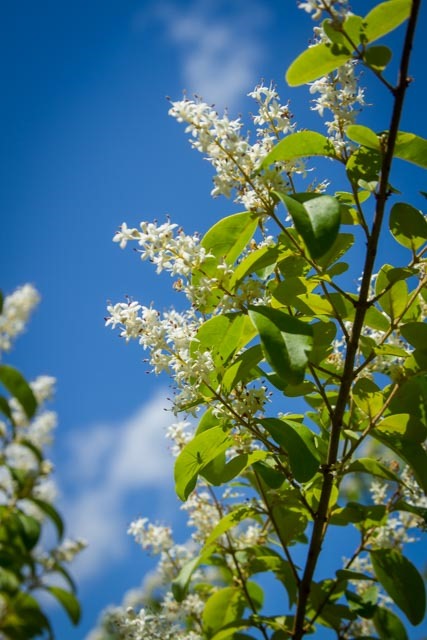
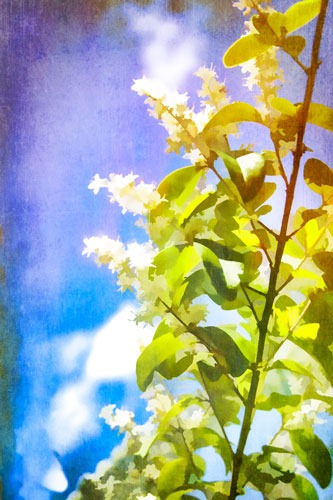
Yesterday, I saw a shrub of some sort waving its white branches at me. I had to fill the bird feeders anyway, so I grabbed the camera and went out for a quick photo shoot. After asking on Facebook for an identification, I found out that it is privet hedge. It is beautiful and smells heavenly. I started with this image:

untitled-2

I applied a texture layer and used Topaz Simplify 4 to apply the “impressionist” effect, and ended with this:

privit-hedge

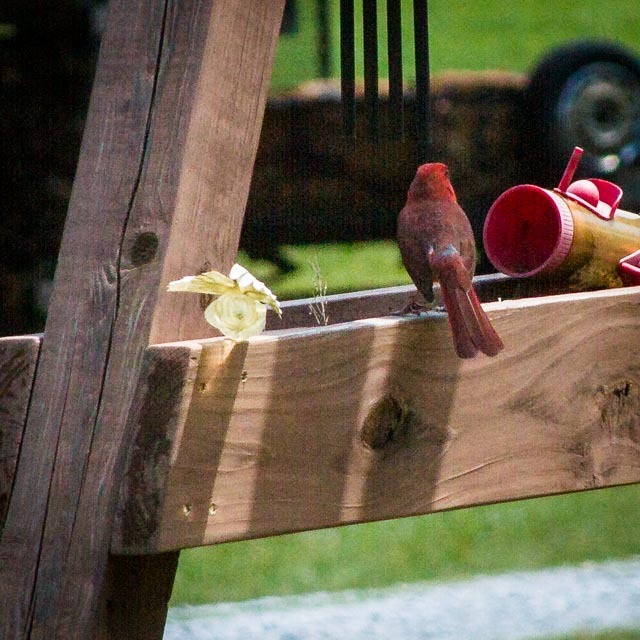
I like this image. But I wasn’t done playing with the images I received yesterday. A lone male cardinal visited the feeders after I filled them. I really did not have the best lens on my camera to get this shot, but I had to try. Cardinals do not like to pose for photographs, and I was hasty. My original image was underexposed, but with a little Lightroom magic, I was able to recover enough details to work with the image. In addition, the background is busy and distracting, and I really had to work with the background to get something I was pleased with.

untitled-7

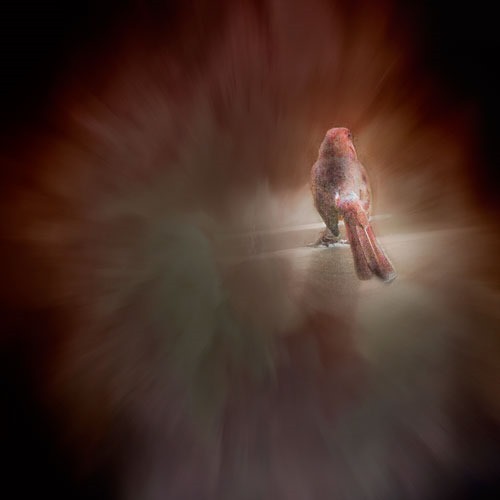
I cropped the image to a square. Then I used some techniques from Susan Tuttle’s book Digital Expressions to desaturate the background while keeping the color of the subject (the cardinal) and creating a vignette with a color fill layer. This is the result:

cardinal

I wasn’t quite satisfied, so I played a little more. I added a texture overlay in vivid light mode and the spot light effect from the filter|Render menu in CS6. After playing a bit with opacity, I ended with this:

cardinal-2

There is a Native American legend that says that cardinals are visitors from heaven. I suppose this little bird is such a visitor.

365, Life, and Intentions

I start each year the same. I set an “intention.” This year, it was to follow Katrina Kennedy’s Capture Your 365 daily prompts. That lasted about five days. Then I picked it up again in February for a couple of days, in March, and, now in April. I read the prompts, and sometimes, they do speak to me, and sometimes.  . . . .  not so much. I go days or weeks without looking at my camera sitting quietly on a chair or in the corner or on the back seat of my car, much less picking it up to use it!

And yet, as I drive down the road on my way to work, I cross the Adam’s Camp bridge and say to myself, I should get here when I’m off to take the picture of the fog rising from the lake at sunrise. Or I will see an interesting cloud formation or a beautiful sunset on the drive home from work. I see photographs daily even though I don’t take them. Maybe that is the point of doing a 365 project in the first place, not so much the photographs themselves, but the seeing, the observations, the being in the moment and being present enough to notice bits and pieces of life around us.

So, four months into the year, I’ll change my “intention,” from taking a photograph every day to seeing everyday, to notice things and to let them speak to me.

Today, I went for a walk around the ponds. It’s spring; it’s cool outside. This weekend was just plain cold in the mountains of North Carolina. I won’t even guess what the wind chill factor was Saturday! Needless to say, I was not as prepared as I should have been. But, I digress. . . .

I love the springtime, even if it doesn’t always love me (my itchy, allergy-ridden eyes; itchy, runny, stuffy nose; scratchy throat. . . . ).  Early spring is also a transition. There’s all kinds of evidence of new life, but there is also a reminder of the winter as well—a fallen leaf caught in the green grass;untitled-18

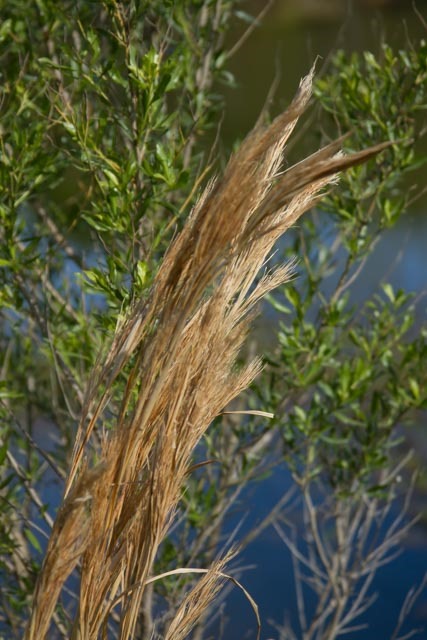
the brown broom straw in front of a newly leafed shrub;

untitled-17

blackberries blooming (that’s another story!);

 untitled-10

beautiful wildflowers (I won’t call them weeds—yet).

untitled-29untitled-35

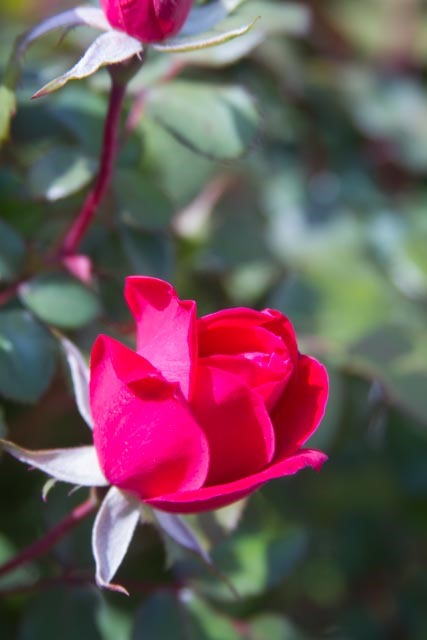
My red knock-out roses are in bloom;

untitled-5

the dianthus is opening.

untitled-4

The lavender looks good. Birds are singing loudly in the mornings. I’m waiting for them to rediscover the newly refilled feeders outside my living room window.

Learning to see, learning to be present. . . .  That’s Capturing Your 365, even when it doesn’t show up in the photos.

O Wind, If Winter comes, can Spring be far behind?

Anyone who knows me, knows that my received my Masters degree in English literature, specializing in the literature of the nineteenth century. I love my Romantic poets—Keats, Shelley, Byron, Wordsworth, Coleridge, the Pre-Raphaelites, the Brontes. . . . . The more Gothic, the better!

When I am walking and looking for images to receive in my camera, I tend to think in terms of poetry, especially metaphor and symbolism, mood, setting. Those elements speak to me somehow, and at times, I do think that photography is, as Chris Orwig says, “visual poetry.”

This winter has been gloomy—cloudy, rainy, wet. More often than not, I’ve been kept indoors by the rain than by the cold. In terms of temperature, it’s been a mild winter. Just WET!

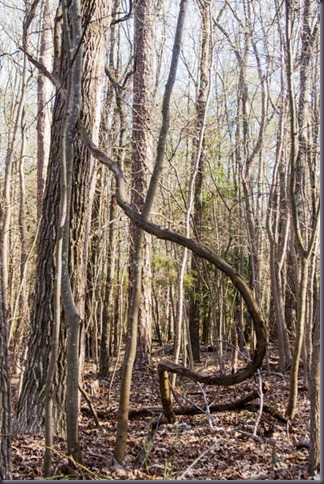
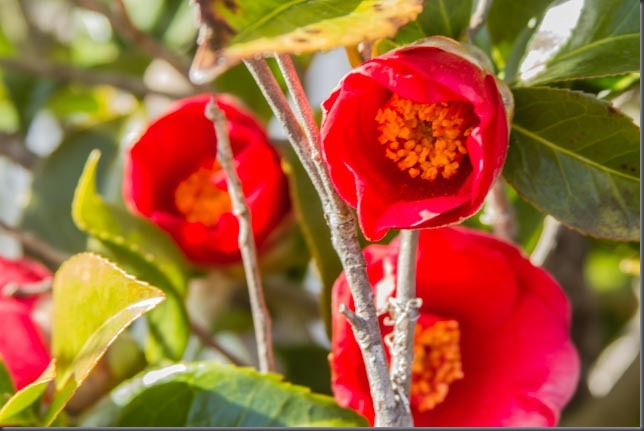
But lately, I’m seeing signs of spring. I went for a walk through Dreher Island State Park yesterday as well as through my backyard. Shelley had it right. When there is winter, spring is not far behind.
untitled-23

untitled-4

untitled-6-2

untitled-3

untitled-10

untitled-14

untitled-17

Here is Shelley’s complete poem:

Ode to the West Wind

Percy Bysshe Shelley, 1792 – 1822

I

O wild West Wind, thou breath of Autumn’s being,
Thou, from whose unseen presence the leaves dead
Are driven, like ghosts from an enchanter fleeing,

Yellow, and black, and pale, and hectic red,
Pestilence-stricken multitudes: O thou,
Who chariotest to their dark wintry bed

The wingèd seeds, where they lie cold and low,
Each like a corpse within its grave, until
Thine azure sister of the Spring shall blow

Her clarion o’er the dreaming earth, and fill
(Driving sweet buds like flocks to feed in air)
With living hues and odours plain and hill:

Wild Spirit, which art moving everywhere;
Destroyer and Preserver; hear, O hear!


II

Thou on whose stream, ‘mid the steep sky’s commotion,
Loose clouds like Earth’s decaying leaves are shed,
Shook from the tangled boughs of Heaven and Ocean,

Angels of rain and lightning: there are spread
On the blue surface of thine airy surge,
Like the bright hair uplifted from the head

Of some fierce Maenad, even from the dim verge
Of the horizon to the zenith’s height,
The locks of the approaching storm. Thou dirge

Of the dying year, to which this closing night
Will be the dome of a vast sepulchre
Vaulted with all thy congregated might

Of vapours, from whose solid atmosphere
Black rain, and fire, and hail will burst: O hear!


III

Thou who didst waken from his summer dreams
The blue Mediterranean, where he lay,
Lulled by the coil of his crystalline streams,

Beside a pumice isle in Baiae’s bay,
And saw in sleep old palaces and towers
Quivering within the wave’s intenser day,

All overgrown with azure moss and flowers
So sweet, the sense faints picturing them! Thou
For whose path the Atlantic’s level powers

Cleave themselves into chasms, while far below
The sea-blooms and the oozy woods which wear
The sapless foliage of the ocean, know

Thy voice, and suddenly grow grey with fear,
And tremble and despoil themselves: O hear!


IV

If I were a dead leaf thou mightest bear;
If I were a swift cloud to fly with thee;
A wave to pant beneath thy power, and share

The impulse of thy strength, only less free
Than thou, O Uncontrollable! If even
I were as in my boyhood, and could be

The comrade of thy wanderings over Heaven,
As then, when to outstrip thy skiey speed
Scarce seemed a vision; I would ne’er have striven

As thus with thee in prayer in my sore need.
Oh! lift me as a wave, a leaf, a cloud!
I fall upon the thorns of life! I bleed!

A heavy weight of hours has chained and bowed
One too like thee: tameless, and swift, and proud.


V

Make me thy lyre, even as the forest is:
What if my leaves are falling like its own!
The tumult of thy mighty harmonies

Will take from both a deep, autumnal tone,
Sweet though in sadness. Be thou, Spirit fierce,
My spirit! Be thou me, impetuous one!

Drive my dead thoughts over the universe
Like withered leaves to quicken a new birth!
And, by the incantation of this verse,

Scatter, as from an unextinguished hearth
Ashes and sparks, my words among mankind!
Be through my lips to unawakened Earth

The trumpet of a prophecy! O Wind,
If Winter comes, can Spring be far behind?

This poem is in the public domain.

Experiencing Doubts

I have been absent from writing regular posts—again. I think I wrote last week, but it has been more than a month since I’ve posted regularly. I doubted I had much to say. And I doubted myself as an artist. My work is kind of dull compared to others.
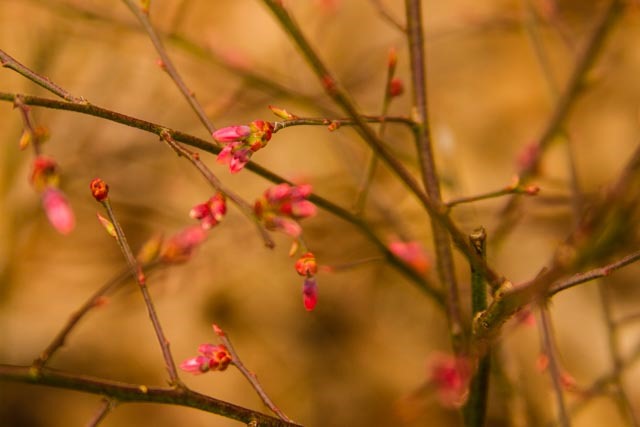
Yesterday and this morning, I think I know why I am in such a state of doubt. I spent an evening looking through a truly beautiful magazine, Digital Studio, published by Stampington and Co. It is a gorgeous magazine. I love their publications, Somerset Studio, Somerset Life, Art Journaling . I could spend a small fortune on subscriptions alone! Then I begin to compare my work to what I see, and I tell myself that I don’t measure up. And then I doubt myself.

I am working on shaking that mode. A wise friend told me yesterday that I should remember that my photography is for me and me alone and that I should not be concerned that others “don’t get it.” You know, that image that speaks only to me, like this one.

untitled-3

It is a perfect pinecone, for heaven’s sake. And it’s attached to the branch on which it grew, and there are still green needles at the end. And I could not resist taking the image. Beauty. To me. And a little bit of “apartness” and separation and perhaps “aloneness.” (Okay, I’m taking a page from Shakespeare: if he can make up works like fantastical, then why can’t I?)

And there are details to notice in the world, like this:untitled-19

Again it’s only a holly berry lying on the brown earth, but it’s a spot of unexpected color. So, I received this tiny moment as that point of unexpectedness, recorded it, and moved on.

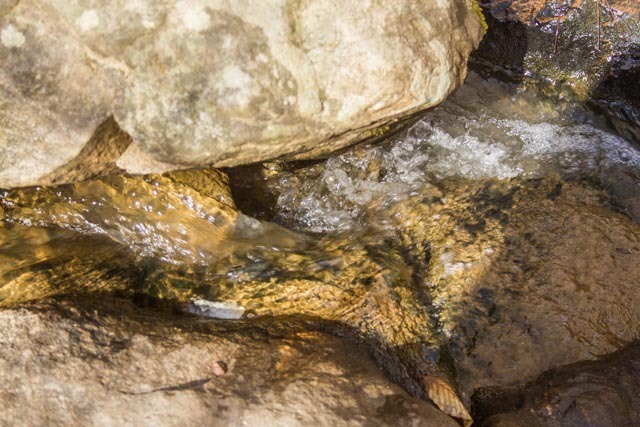
We walked by the creek/stream that runs through Lynch’s Woods yesterday. I admit that I am a “water person,” drawn to water and can abide by water. And I noticed more details—rocks, water, algae, texture.

untitled-15

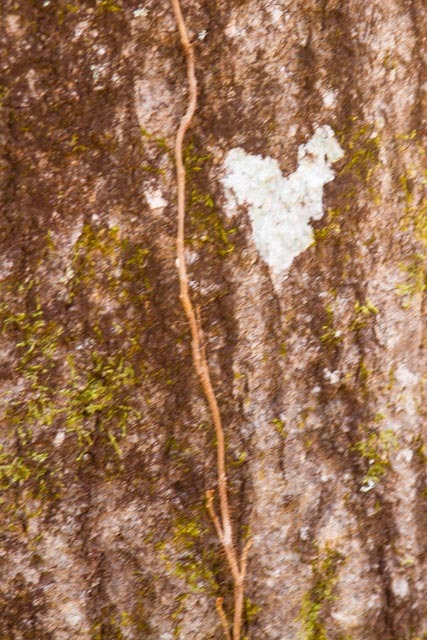
I listened to my wise friend’s advice and recorded the images that spoke to me. Near the end of the walk, we both spotted some lichen growing on the tree trunk:

untitled-38

Do you see it? There is a heart. And Madre Julie wrote to me on Facebook and said, “There is Love.” Someone understood. . . .

Tomorrow, I may face the demon doubt again and wonder if anyone understands what I’m trying to say through my art of photography. But for today, I will be content and know that at least one image has spoken and someone else “gets it.”

I will leave you with one more image of the blossoming of spring (and hope):untitled-55

Challenges and Decisions

There are MORE challenges for bloggers and writers than there is time in the day. BlogHER hosts the November challenge to blog every day in November. Of course, since it is November, there is the challenge to count gifts and blessings in this month of gratitude. And there is the National Novel Writing challenge.

After a very disappointing results in the October Write 31 Days challenge, I am calling it quits on the challenge.

It’s not that I don’t want to accept these challenges. I realized that I am not a “write everyday” kind of writer. When I was in graduate school and taking the necessary “intro” courses to teach college composition, I wrote of my writing process: I do a LOT of head work before I commit anything to paper. That means I do my research if research is called for. I think about the topic a lot. I consider the points of view and the ways that I want to write. Then, and only then, can I commit anything to paper.

Even this blog post has been percolating for a few days. Once I’ve gotten the concept down in my head, the composition part is easy. However, it sometimes takes days.

I know. . . .  I could write what’s been percolating and save to drafts and schedule for a future date. And, as a blogger, perhaps I need to develop that habit.

But I am also someone who tends to work on “inspiration.” I write when I feel that I  have something worthwhile to say. I try not to fill my space with empty words.

I think my photography works along the same lines at times. I tend to do something with photography almost every day. A lot of the things I do, though, never see the light of day. No one sees the results, and I don’t even save the results for publication or posting. I experiment.

So, during this month of November, I will post when I can on what I want to. I will let my schedule drive me rather than the blog drive me. After all, this blog is as much for me as it is for “business.”

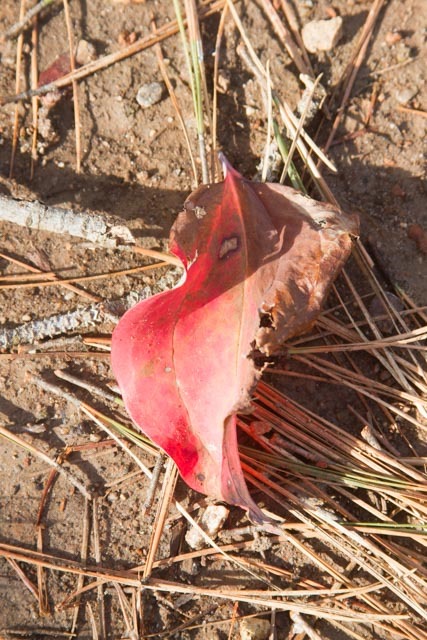
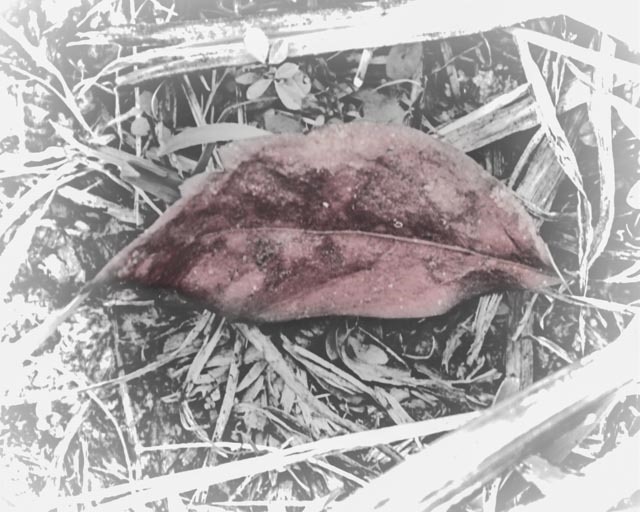
I’m going to pull an image that I’ve been playing with. My son likes it.

leaf

I wanted to emphasize the red leaf, so my first idea was to desaturate the image and then paint back in the color on the leave. I used one of the Topaz actions in the Simplify set.  I think this is the chiffon action. Again, I painted some of the leaf color back in. The vignette is a bit light to my taste, but I can go in a work on darkening it later, if I decide to do that.

Image play, post processing, even experimenting with camera angles and perspective helps to refine my vision.
Poetry and Picture—Another Day of Connecting

Rumi wrote:

“You are the strange autumn rose

that led the winter wind

in by withering.

You are rain soaking everywhere

from cloud to ground.

No bother of talking.

Flowing silence

and sweet sleep beside

the Friend.” (from “Autumn Rose Elegy”)

untitled-45

Lectio Divina —A Contemplative Practice for Photographers

In her books The Artist’s Rule, Lectio Divina, Eyes of the Heart, and Soul of the Pilgrim, Christine Valters Paintner recommends using some key practices to put us in the state of mindfulness. One of these practices is  lectio divina, or “sacred reading.” Paintner outlines the process in Lectio Divina–The Sacred Art of  Transforming Words and Images into Heart-Centered Prayer with four “movements.”

The first movement is “Settling and Shimmering.” In other words, the reader settles and quiets the mind (and body) and reads through a selected passage while listening for a word, phrase, or sentence that “shimmers,” or stands out for some reason.

The second movement calls for the reader to re-read the same passage. Literacy experts often point out that current practice does not value re-reading enough. It is a powerful strategy, not only for comprehension, but for letting a text settle further into the mind. In this second phase, Paintner encourages the reader to allow that word, phrase, sentence, passage, to sink in and to work in and on the mind. She encourages the reader to allow the passage to help us recall memories and make connections with the physical senses and to savor this experience.

In the third movement, Paintner asks the reader to consider how the passage is affecting the reader or leading the reader to a “new awareness” or understanding.

And, finally, the fourth movement calls the reader to slow down and be still. At this point, the reader can move into prayer or a prayer-like state. This final stage calls for even more stillness and allowing ourselves “simply to be.” Allowing ourselves this kind of stillness is not always easy to do. Yet, stillness an awareness are key.

Of course, in the Benedictine practice, the texts used would be sacred texts. But I think you could use any inspiring text to practice lectio divina. For example, for the last couple of years, I have been fascinated with “day books” of readings from a variety of authors: Rilke, Rumi, and Thomas Merton. I especially like Rilke and Rumi because of their use of imagery.

I see using lectio divina in this way, which is also the way Edward Goode outlines in his article, “Imago Scriptura: Imaging the Scriptures.” Goode follows Paintner’s outline and takes it one step further. After reading and praying and meditating over the passage (Goode actually began praying the Psalms in this way), he went for photo walks and allowed himself to receive images that reflected the literal or figurative word he received from his daily reading.

This week, in my Thirty-One Days series, I’m going to (try to) use passages from A Year with Rilke to practice some variation of lectio divina. I begin today:

“The Moon” (from Uncollected Poems , a reading for October 25 in A Year with Rilke)

The way that body, the moon, sublime, purposeful,

suddenly steps over the peaks,

bringing the night to serene completion.

Just so my voice rises purely

over the mountains of No Moon.

And the astonished places you inhabited

and left ache more clearly for you.

Those last two lines speak so clearly to me, especially in my season of grieving for my father. I thought about how I could illustrate this poem and these lines, and I thought of an image I made last week. In my walk around the state park, I come to this chimney, or at least the remains of a chimney, a reminder of a house place or a homestead long abandoned. Sometimes, I feel an “ache” to know who lived there “once upon a time,” to know why those persons left, and why the chimney is all that remains. Thus, this is my image that comes from this poem:

chimney-vine-2

Will you join me this week and share your images that you received after reading and pondering and meditating on some passage of inspiring literature?