(Perfect) Practice Makes Perfect

As a child, I heard the saying “Practice makes perfect.” But I’ve changed my thinking: only perfect practice makes perfect. But practice does create habits. Contemplative photography is a practice, like yoga. The more we practice, the better we get.

I was reading in Effortless Beauty about seeing. Julia Dubose states several times that we often do not really see what’s in front of us because we we have our minds elsewhere. And sometimes when we focus our minds on something, we see that thing. For instance, if we go out looking for color or shape, then we will find those very things. It’s as if we can’t see anything else for those things.

I am taking a “weekend break” from the contemplative practice of photography. My older son is a high school band director, and his band is competing this weekend in the SC Lower State Marching Band Competition. This will be the first time that I will see his students perform. Therefore, I am stepping away from the series for a couple of days. I’ll be back Monday, though. (Sometimes a mom has to do what a mom has to do!)

I will leave you with a question: what will you see through your camera lens this weekend?

untitled

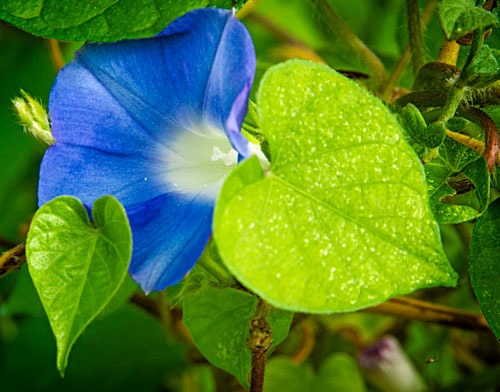
I went out looking for shapes in August. I found these beautiful heart-shaped leaves on this morning glory vine.

Book Club Thursday

Something different today, but still within keeping of the theme of Contemplative Photography.

I am a reader. I can devour books at the rate of one or two a day, depending on the kind of book. Of course, when I do that, nothing else gets done, not even writing blog posts or searching out new subjects to photograph or even the much needed purging and “fall cleaning.” (I’ve only lived in this house for three years. Where did all this “stuff” come from?!)

Today, I’m going to list a few of my favorite books about photography, especially contemporary photography and some of my favorite authors who may not call what they do “contemplative,” but who seem to express the essence of this practice.

Of course, my first recommendation is Eyes of the Heart by Christine Valters Paintner. She draws upon Christian contemplative and monastic practices as she writes about using photography as a way of engaging in contemplative prayer. She does not address the technical aspect of photography, but no book about the art and craft of photography can get away from discussions about the elements of photography.

A new favorite is Photography and the Art of Seeing by Freeman Patterson. He does not use the term “contemplative photography” in his book, but it is obvious that he does think of photography in that vein. His book is a workshop, if you will, that helps the photographer develop the ability to see the subject in different ways. Patterson does not address such technical aspects as focus, exposure, depth of field, and technique except to suggest that these are the tools of the craft. It is the seeing that is most important.

I just began reading Julia Dubose’s Effortless Beauty last night. So far, and I confess that I am only a couple of chapters into the book, she reiterates the same idea about seeing that Patterson and Paintner do: before making/receiving/taking a photograph, one must see the subject without judgment and bias, something that is hard to do. We approach our photographic subjects with preconceived ideas of what makes for good photography and appropriate subjects. Contemplative practices ask us to suspend those notions.

One of the key aspects of contemplative photography is seeing the everyday in new ways. Sometimes we take for granted the things we see and assume that because they are ordinary that they are not necessarily the “stuff” of photographs. A book that suggests otherwise (along with Patterson, Paintner, and Dubose) is Brenda Tharp and Jed Manwaring’s Extraordinary Everyday Photography: Awaken Your Vision to Stunning Images Wherever You Are. The subtitle is the key: you do not have to travel to exotic locations to find material to photograph. It’s right there in front of you at home or wherever you are. It’s a matter of seeing “differently.”

Liz Lamoreux’s Inner Excavation: Explore Your Self through Photography, Poetry, and Mixed Media takes contemplative photography a step further and invites us to explore our everyday as well, but with the idea of creating “art” from those photography explorations. Lamoreux moves from making images of the things around us to making self-portraits to tell the story of who we are at this moment in time.

One more recommendation, though not a book, but a magazine: Bella Grace published through Stampington presses. The magazine is a quarterly publication with rich photography and equally rich and thoughtful (and thought-provoking) writing. The publisher says the goal of the magazine is to find the beauty in the ordinary. The audience is definitely female, but the photography is so good. And another good magazine is Lenswork. The publication focuses more on the image than the words, but it is full of inspiration.

Two other authors I highly recommend for their online content are Kim Manley Ort and Guy Tal. Tal also published a book, More than a Rock. I think the title sums up the idea of contemplative photography. We may see a rock in front of us, but when we look closer, it is “more than a rock.”

There are probably some resources that I have not included. Please leave your suggestions in the comments below. I will update this list in the future. We can always use a good read, can’t we?

Abstract Photography—Contemplative Photography

There are a couple of ways that we can think about the word abstract. In the academic publishing world, authors often must write “abstracts” that provide the reader with an overview of the essential points of an article or a dissertation or a book. The writer focuses in on those points that give the work its shape and direction. In art, “abstract” often refers to a nonliteral artistic representation of an idea, theme or subject, often relying on color or shape to suggest the subject.

I’m going to refer to Freeman Patterson again. He writes of the photographer’s need to abstract a subject or scene to see the lines, shapes, and colors and tonality. He suggests that since our subjects are made up of these things, then it is necessary to see those things. And sometimes, we can  use these elements to suggest a subject in a non-literal way.

untitled-23

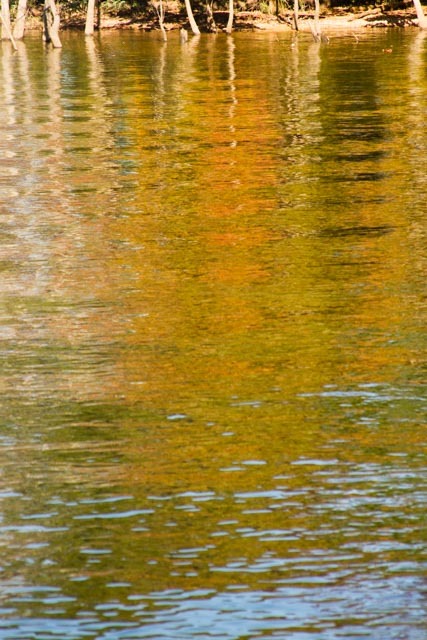
I am often fascinated by reflections in water. There is enough literal detail in this image (the shoreline with the bottoms of the trees) to indicate that I am making a photograph of trees. However, the main part of the image is the reflection. When I took the image, the wind was blowing and the lake surface was ripples.. Nature made the image an abstract. The trees reflected on the water’s surface suggest autumn color without being a literal representation.

There are other ways to make abstract photographs. David du Chemin suggests horizontal or vertical camera movement to blur the image. Using a subject with straight lines works very well for this type of photography.

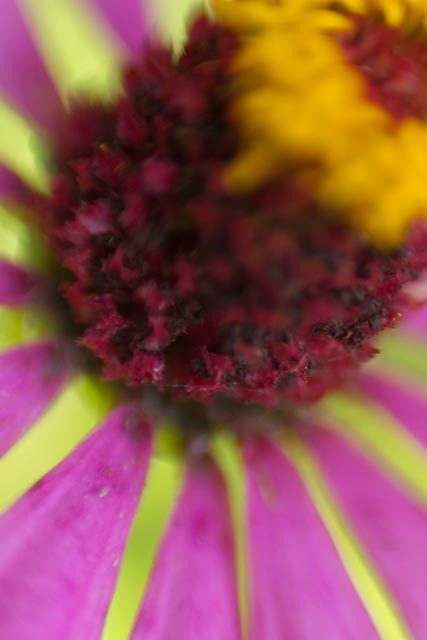
Kim Manley Ort suggests focusing on a part of a subject and capturing just enough of the subject to suggest what it is, as I did for this image of the zinnia.

untitled-14

Andy Carr in his book on the practice of contemplative photography takes it a step further and says that we can focus on the color alone or a particular shape or line. There really is no one way to “do” abstract photography.

Making abstract photographs, though does force us to slow down and look closely at the object or the scene and pick out the most telling detail. In some ways, it is like deconstructing the subject and examining each part. Sometimes, the abstract says more to the viewer than the literal interpretation.

Imperfectly Perfect—Contemplative Photography

There is a philosophy in Japanese art called wabi sabi. It’s not easily defined, however, and my understanding of it is growing daily. In this way of thinking, one understands that nothing is permanent and nothing is completely perfect; there are, though, perfect imperfections. And those imperfections make something “perfect.” It’s a paradox.

Even Robert Frost the poet recognized that nothing is permanent or perfect in the poem “Nothing Gold Can Stay.”

Nature’s first green is gold
Her hardest hue to hold.
Her early leaf’s a flower;
But only so an hour.
Then leaf subsides to leaf.
So Eden sank to grief,
So dawn goes down to day.
Nothing gold can stay.

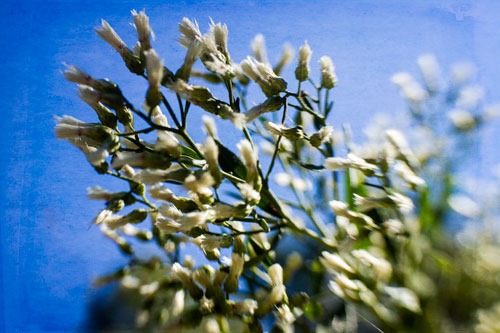
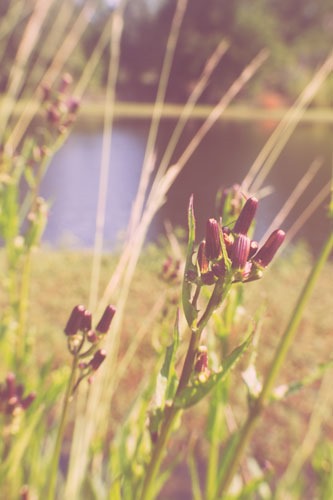
I am terrible about knowing the names of the plants and bushes and flowers that grow around my home. But we have this bush that grows around the pond with these wonderful feathery flowers, I guess you call them. They last just a short time, and then they become seeds blowing in the wind.

edited-with-textures

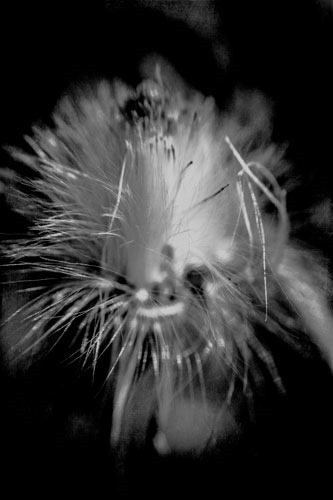
In just a few days, these “feathers” open up and become this:

fuzzy-flower

Soft, ethereal, transient. . . . “Nothing gold can stay.”

Day 8–What happened to Thirty-One Days?

It’s not even two weeks into October, and I have missed a day. After a horrendous weekend that saw my beloved South Carolina flooded and two days at home until we could return to work, I am back at Remington College. Yesterday, students returned. During the day, we heard the stories. One of my students lost everything when the roof of her house collapsed. Other students told stories of cars being flooded. Fortunately, none of our students lost their lives or the lives of their family.

Then another student suffered a health scare that has left her in a medically induced coma in intensive care. Our hearts are breaking.

I am setting my Thirty-One Day series aside for a few days–until next week. My students need me. I need to be present. Sunday will be soon enough to pick up the camera and play with words. I promise, though, that I will follow through with all thirty-one days on the theme of contemplative photography.

I know you will understand.

Day 6: Photography and Recovery

Today, the sun shone. I thought I’d need to look it up on Google just know what I was seeing. (Yes, this is a bit of sarcasm and hyperbole, but it seems so long since I’ve seen sunshine!)

I went for a walk today, and I took my mp3 player with some happy music and my camera to see what there is to see. After being inundated with images of destruction, all I could see today is beauty. God provides.

I had a plan for this month’s series. I really did! It’s in my planner, but the events of this weekend, the flood, the destruction—well, my thinking about what photography means to me. I needed to see beauty today in the midst of the destruction. I needed to see the beauty of nature. And taking the camera out with me allowed me to see.

untitled-2untitled-4untitled-9untitled-10untitled-15untitled-30untitled-33untitled-35

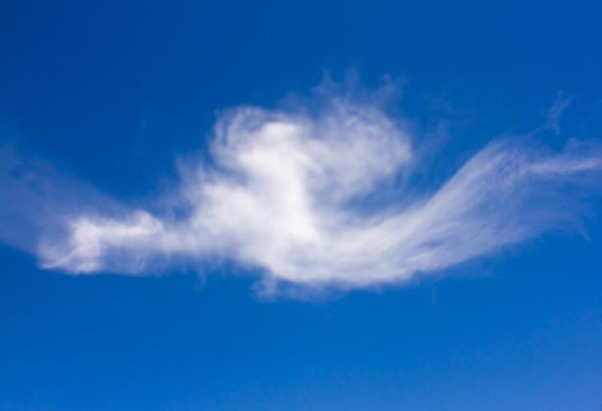
After days of gray, these blue skies and white clouds are welcome.

untitled-43

untitled-44

After my walk, I sat in the “John Deere” yellow swing to soak up the vitamin D. Peace. . . .

untitled-45untitled-46

Day 5: What Happens When the Camera Goes Silent

Today, when I write this, it is October 4. Today, my beloved South Carolina is experiencing a disaster unlike anything I’ve ever seen. We’ve had about a foot of rain, and it’s still coming. The creeks and rivers are flooding. Streets and roads and bridges are washing out.

I am in a state of shock. There are no words to express the sorrow. There are no words to express the horror of what we are seeing.

People have lost their homes, their cars, their possessions.

Several people have lost their lives.

I have not gone out into the weather to see what’s happening. I am watching the water rise in the pond, though. I cannot even take pictures.

Contemplative photography, though, invites me to be mindful, to be still, to listen, and to be still.

Today, there are no images. Today, the camera is silent.

Day 4: ReFraming the Gloom and Finding the Warmth


Here in South Carolina, we have had almost two weeks of clouds, rain, drizzle, and humidity. It’s hard to believe that just about two weeks ago, we welcomed the first day of fall. I need some sun and some vitamin D therapy.

It’s hard to see beauty when it is raining day after day.

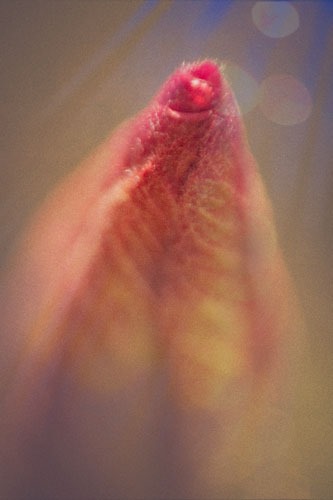
I looked through some recent images and found this hibiscus bud.

It is not spring, not even close, but the bud reminds me of warm, sunny days with a hint of the crispness of fall.

hibiscus

Day 3: Longings and the Journey

Sometimes, I think every journey begins with a longing or a restlessness.

Every journey is a quest. I step onto the path.

Sometimes, I know what I am seeking, but other times, I feel lost, out of place, unsure. . . .

I look through the lens of the camera and find what is in front of me, something that I hadn’t noticed before or something I hadn’t seen in quite this way.

untitled-19

Day 2: The Path

untitled-34

Every journey begins somewhere. And, of course, it ends.

But sometimes, we don’t know where that journey will take us.

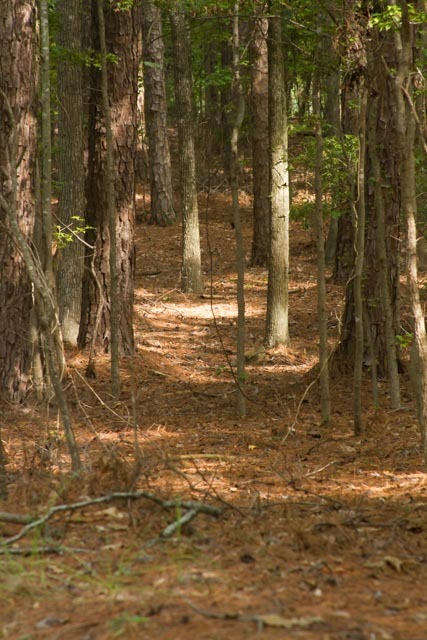
There is a path through the woods, and there is something new behind the tree or around the curve.

Robert Frost said that taking the path less traveled can make all the difference.

I am following this new path.