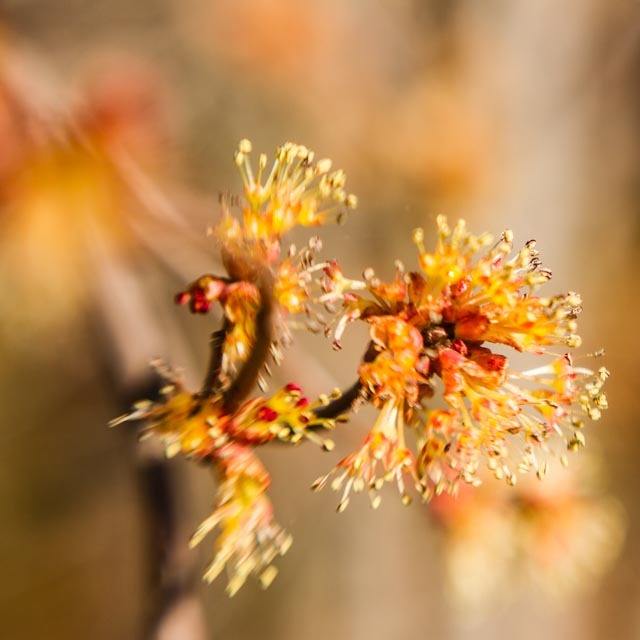
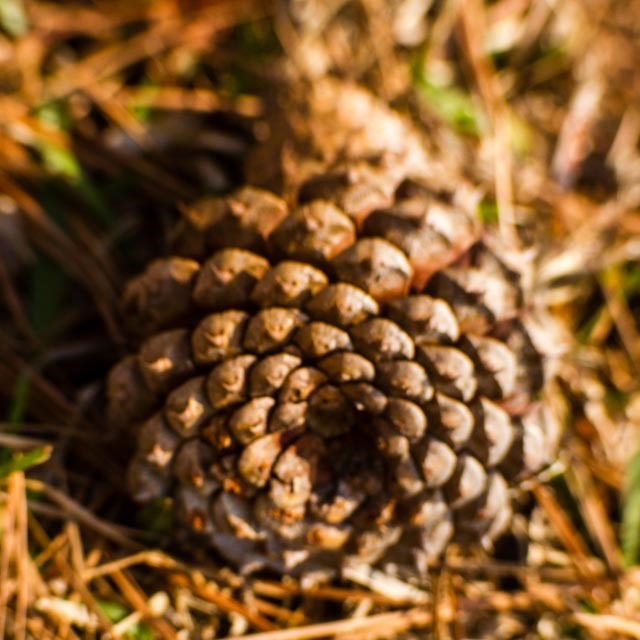
Picture Spring

What does spring look like in your part of the Northern Hemisphere? I have to be careful because I have friends in various social media groups who live in the Southern Hemisphere, and it’s winter there.

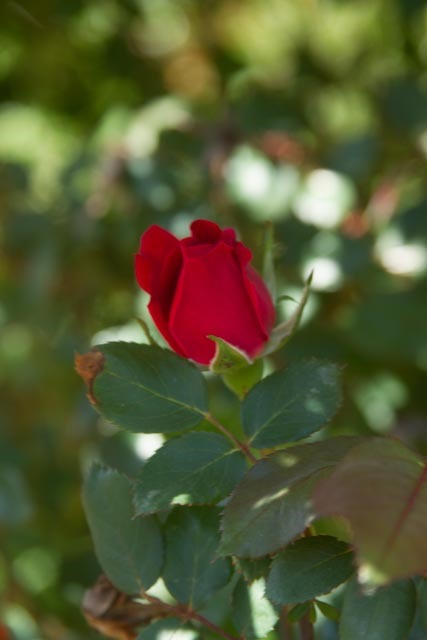
Today is a kind of stormy looking day. I do hear a bit of thunder now and again, but so far, the day is just cloudy. The jasmine has bloomed, as have the blackberries. I see the honeysuckle, though. My roses are blooming as well. The trumpet vine is not as colorful as it was two weeks ago. Everything is green.

It sounds kind of funny to start a Picture Spring project in May, but that’s going to be my focus this month in my personal photography. I want to look more closely at what spring looks like here in my corner of the world.
trumpet-vine-2

I will be doing some of my own prompts while I take on this project, but I will also be following Tracey Clark’s Picture Spring class. I have taken Tracey’s classes before when she taught through Big Picture Classes, and she is inspiring. I am looking forward to starting on May 15.

It has been hard to get out to photography this past month. It has been incredibly busy as we had Aaron’s wedding on April 1. I still have to go through the CDs of pictures they sent me and choose the ones I want to use in an album so I can show my beautiful daughter and handsome son. Then, no sooner than I get home from the wedding, I get sick with bronchitis and sinusitis. I am still coughing, and having some issues, so getting out with the camera to walk has not been easy.

Hopefully, May will be better. I will go out and start to photograph spring. And, of course, I will mess around with Photoshop and Topaz and the various textures and overlays that I’ve accumulated. It will be a time to create more art.

I will also be putting together a new course on Teachable.com that combines writing and photography. Look for more information about it in the coming weeks.

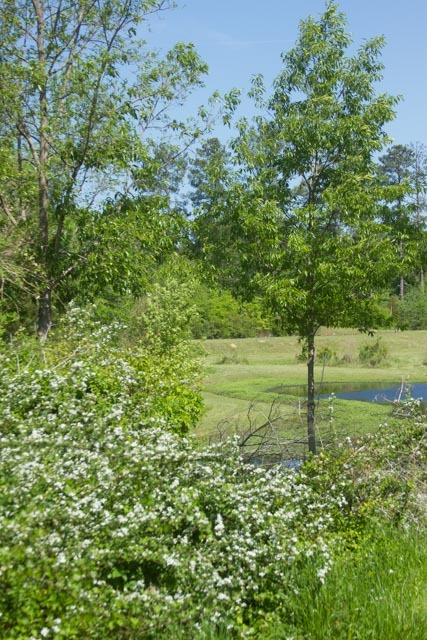
While I Was Not Looking

THIS happened:

untitled-25

Things started blooming.

April 17 collage

I have “prided” myself on being observant, of seeing the world, but somehow, all of this happened, and I didn’t notice.

I’ll blame it on

getting ready for Aaron and Sherry’s beautiful wedding on April 1.

going back to work and writing lesson plans and grading papers on March 20.

being “busy.”

getting ready for Easter.

coming down with bronchitis and sinusitis.

You get the idea. I have a million and one excused for allowing all this beauty to go unnoticed. Yet, there it is. I noticed it Saturday, the first day I went out of the house for a reason other than necessity. I saw the white bloom of the blackberries, but I didn’t have the camera. I noticed it.

On my way back to the house (coughing, short of breath, thanks to the bronchitis), I saw the yellow and red of the trumpet vines (or whatever they are). I noticed it.

untitled-2

And the red Knockout roses are in bloom.

untitled-7

I noticed it.

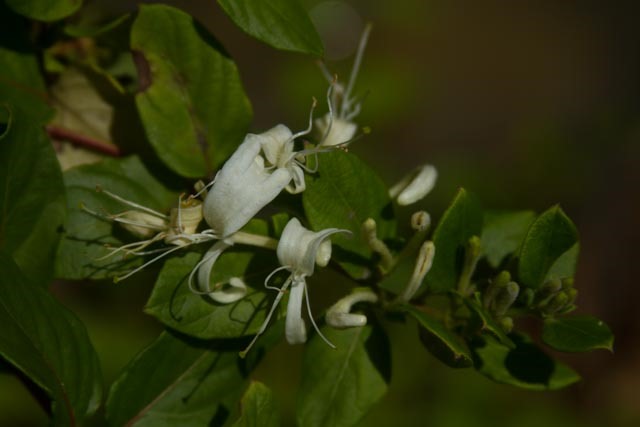
This morning, I went out with the camera, and I noticed other things—holly berries, wildflowers, dandelions, even some honeysuckle. It’s all there.

untitled-30

And today, I noticed it.

What did you notice today?

He Said, She Said

untitled-10

I posted some pictures of “spring” that I received during my walk through the Dreher Island State Park on Thursday. Folks, it’s FEBRUARY, and I was wearing a short sleeved T-shirt. Temperatures are almost 80 degrees! It was gorgeous. My “fan club” appreciated them; I received a few “likes” and “Loves” and “Wows” and a couple of comments. And then, there was this:

You are an artist, lady.

This comment came from a colleague with whom I had taught for quite a few years. He taught chemistry and physics, and, interestingly enough, he has degrees in theology as well. And he said, “you are an artist.”

untitled

My first response was (in my head), “Boy, do I have you fooled!” My written response was, “Well, thank you. It’s a passion.”

Like so many others I know, I have trouble accepting that label: “you are an artist.” I tend to compare my work to the work of other photographers, both amateur and professional, friends in-person, and friends on-line; and I feel that I come up short.

Last night, I stepped back a bit. I looked at the images I created. I thought a bit about what art is. And here is what I’m thinking this morning, at the edge of a weekend. Art is the way we share our vision of the world. For some, that sharing comes through painting or sculpture or sketching and drawing, through cooking and recipes, through musical compositions or performance, through writing poetry or novels or essays or nonfiction or drama; through acting, through designing and building—I’ve discovered there is an art to hammering a nail straight into a board! (I don’t have that art.)

untitled-16

I choose to see beauty in the world, and my photographs receive that beauty. I, like so many, can get caught up in the “big picture”—the sight of that majestic pine that has stood in place for years and years and years; the expanse of water where it meets the horizon, a whole field of sunflowers or grain. . . . But then there are the details, that cluster of “baby pine cones” (did you know they are pink?), the end of the stamen covered with thick yellow pollen standing out like spider legs, the amazing depth of blue sky, white clouds rimmed with gray (for contrast!).

untitled-13

I suppose I am an artist. I have “the art of seeing” and receiving those images reminds me that there is beauty everywhere.

“Traveling” Light

In the first chapter of The Soul of a Pilgrim, Christine Valters Paintner recommends that the pilgrim travel light. I’m not sure you’d call a walk through Dreher Island State Park a pilgrimage, per se, but I tend to travel light when I do walk through the park. Today was no exception. My only “baggage” was my Canon 7D with the battery grip and the very lightweight Lensbaby Composer Pro with the Sweet 35 optic installed. I did carry my cell phone and car keys as well. No camera bags, no other lenses. Just those items.

One of the challenges I give myself when I walk with the camera is to limit my gear to what I can carry on the camera and/or in my pockets. There’s a reason for that, really. I have to figure out other ways to get the images I want. With a zoom lens, I can stand at a distance and use the lens to capture the image, but with a fixed, or prime, lens, I have to move. I have to step closer or farther away. I have to change my position physically rather than rely on the camera and lens to do the work for me. The results can be better as a result.

untitled-22

The Lensbaby optics add still another challenge. The Lensbaby is fully manual—manual focus, manual settings. And it’s a soft-focus lens as well as a tilting lens. The sweet spot of focus is not necessarily in the dead center of the lens. It takes a bit of practice to get acceptable results from the Lensbaby system. I deleted quite a few  images before I was satisfied.

untitled-29

One of the things I especially enjoy about the Lensbaby system is that it sometimes yields results I didn’t quite expect. By shifting the lens to the extremes, the results can be abstract. At least the results are not quite realistic.

untitled-23

The credit card commercial asks, “What’s in your wallet?” I’m asking today, “What’s in your kit?”

Being Open and Trying Senething Different

Yesterday, I came home with new nail polish. Today I have blue fingernails! The ladies at the chiropractic clinic loved them! (My children will probably accuse me going through another “midlife crisis.”

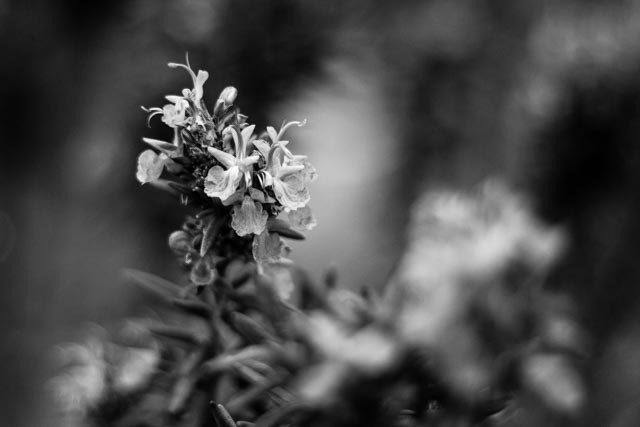
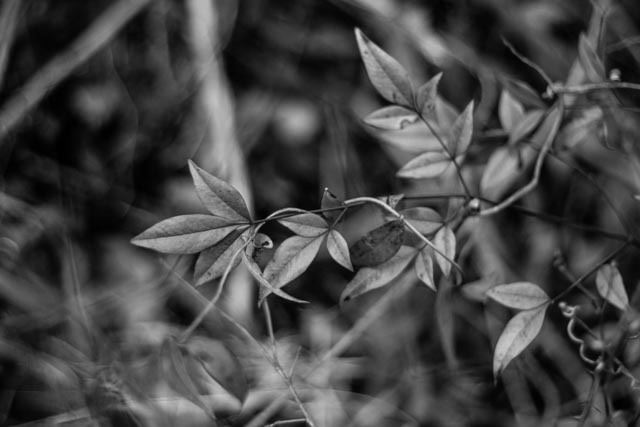
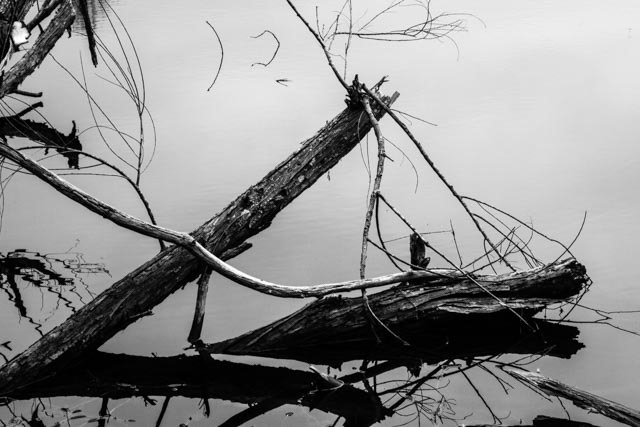
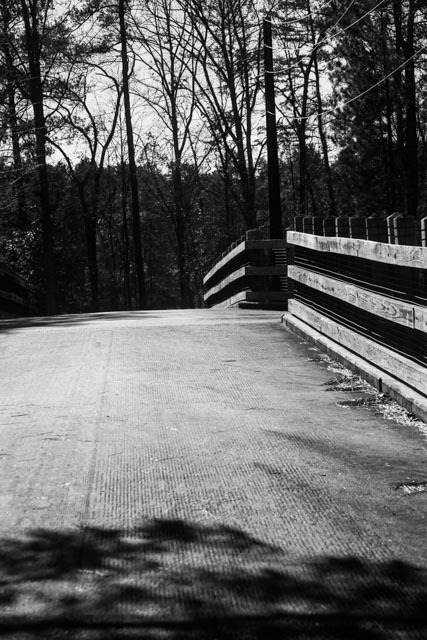
But that’s not the only thing I am trying that is different from my “norm.” Kim Manley Ort’s call to adventure #5 in her book Adventures in Seeing also calls me to try something different. I took a few minutes—after I filled the bird feeders—to take a short photo walk around the pond.  We’ve had some rain this week, and the back side of the ponds gets rather wet and muddy, so I curtailed my usual distance. Kim’s challenge was to photograph a subject that not my usual or to do something different. Usually, I leave the camera in the standard picture style and make the images in color, but today, I changed the setting monochrome and tried black and white photography.

The experience was—different. I did a lot of “chimping,” looking at the LED screen after each shot. I tried to figure out what I was (or was not) doing, whether the images were worth keeping. I have some “studying” to do. The first lesson I learned today is that even though I set the camera to make images in black and white, and the images show up as black and white on the camera’s LED screen, they are imported into Lightroom in full color! I learned after a bit of research that the camera records all data when set to receive the images in RAW format. Had I used JPEG, they would have important as black and white. Soooooo, that means I have to convert each image (again) to black and white.

(And I’m not upset because while I was making the pictures, I wondered if I could process them to show hints of color. The answer is YES.)

I also realized that it is harder to see in “black and white” than in color. My more successful images had a wider range of contrasts and texture than my least successful.

untitled-13untitled-16untitled-61

This last is my favorite of these three.

I will keep working with this idea of being open to something new, even blue nail polish!

Thin Places

In Celtic spirituality, thin places, or thin spaces, are those places where heaven and earth are closest. We have places that feel sacred and holy. “The Wall” honoring the Viet Nam soldiers in Washington, D.C., is one of those sacred places, even though every time I have been, it has been crowded with people—women, children, men, soldiers, tourists. It is “sacred ground.”

Arlington National Cemetery is the same. It is sacred ground, in part because it is a cemetery, but because it feels different somehow from other places.

It is easy to find these “thin places,” or sacred places, when we travel, but the challenge is to find the thin places at home in the “known world.”

I thought about the idea of thin places today after reading a Pacebook post from a friend who lives in Atlanta, a sister photographer and photographic artist. I went out seeking my own thin place. I have written so much about the ponds and have photographed them so often. I hesitate to guess how many images of the pond and the area around it I have in my archives. Yet, no matter how many times I walk around them, there is a thinness there that is at once isolated from “the world,” and yet very much a part of it. While I am walking, I feel as though I enter a different kind of space. Yes, today, the ground was a bit mushy and soft after several days of rain and downpours. It was breezy, but it was comfortable. There was still traffic zooming past up and down the road.

I am thinking now about the “meaning” of thin places, and how they manifest themselves to me. For now, I am content to know that they exist, and that they are welcoming places, places that are holy and “set apart” if only for a few minutes.

thin-plces

Divergency? A Thoughtful Thursday

I went for a walk today at the state park. It was a beautiful morning—temperature outside right at 70 degrees (in January, no less!), blue sky, breezy, but not so breezy that I felt as though the wind were pushing me down the road. I was in a thoughtful mood, trying to figure out what I wanted to “say” with my images today. I received an email from David du Chemin, one of my “mentor photographers,” even if he doesn’t know it!, announcing his next project about storytelling in photographs. I has some ideas of things I wanted to look for.

untitled-6

I wanted to explore the idea of openness again since the theme for Adventures in Seeing—The Book is openness. I was also looking for light and shadow and contrasts—and anything else that presented itself to me.

untitled-36

What I found was “divergency.”  I thought of Robert Frost’s poem that begins, “Two roads diverged in a wood.” And the idea of divergence as splitting apart into more than one way came to mind. How often do I come upon situations wherein there is more than one way to get to the same point? As an educator, I thought about divergent learners who do not always follow the linear path we teachers set for them. Again, the idea is that there is more than one way to reach the same destination. And, of course, there is the book Divergent, which I must admit I never quite finished. I noticed as I received the images today, that my photographs are definitely “divergent.”untitled-48

One thing that focusing on the concept of contemplative photography has taught me is that I have to be open to new ways of seeing even when I am seeing the “same old, same old.” I thought about that as I walked through the park. I have walked there regularly for a whole bunch of years, and the road I follow has not moved; the curves are still in the same places. . . . Yet, each time, it is different. The camera helps me see the new things.

“You don’t make a photograph just with a camera. You bring to the act of photography all the pictures you have seen, the books you have read, the music you have heard, the people you have loved.” – Ansel Adams

untitled-55

And then I saw this “story.” One of the very first poems I found that has stayed with me (besides “Nothing Gold Can Stay”) is Tennyson’s poem, “The Eagle.” I can imagine an eagle sitting in the top of this tree overlooking the lake, waiting for the precise moment to release his talons and dive for his prey.

The Eagle

BY ALFRED, LORD TENNYSON

He clasps the crag with crooked hands;

Close to the sun in lonely lands,

Ring’d with the azure world, he stands.

The wrinkled sea beneath him crawls;

He watches from his mountain walls,

And like a thunderbolt he falls.

A New Way to Create Art

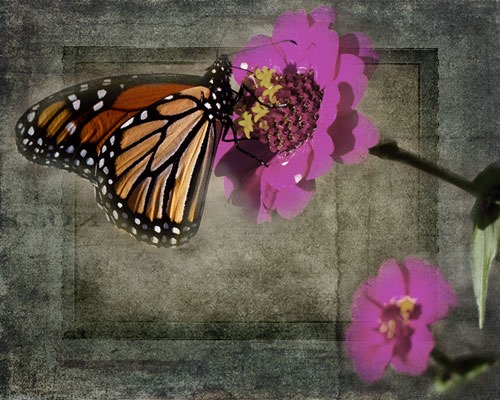
I enjoy playing with textures in Photoshop. I like the way layers of textures can transform an image to tell a new story. I have been looking at the art created by Tennessee photographer Jai Johnson, who also creates the Daily Texture collections. I’ve seen who she uses texture backgrounds with her images to isolate elements, and I wanted to figure out who to do that, too. By watching her videos, I learned that she uses Topaz Labs software for much of her work. However, I tried to do something similar in Photoshop. It’s not easy, and my results are not consistent—yet.

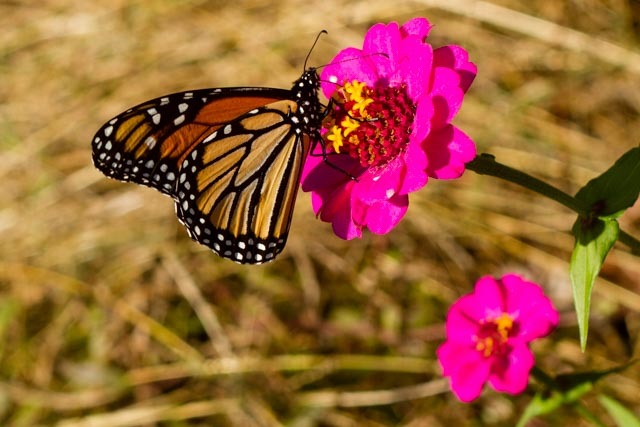
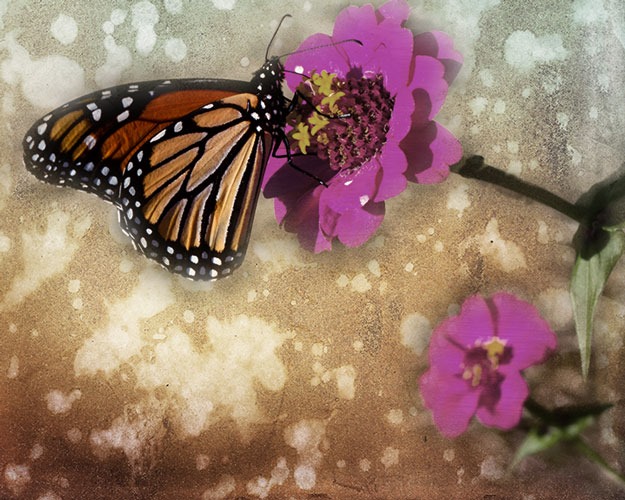
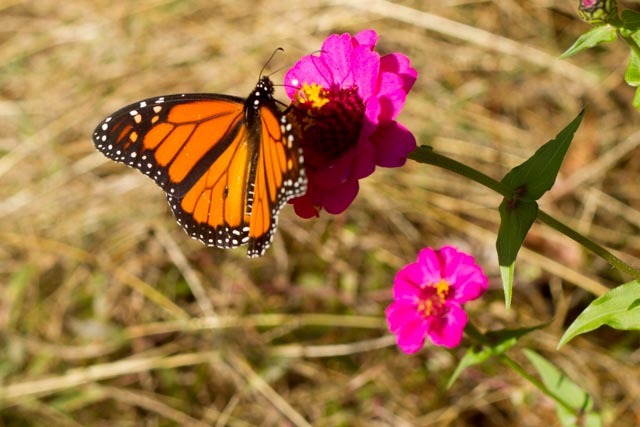
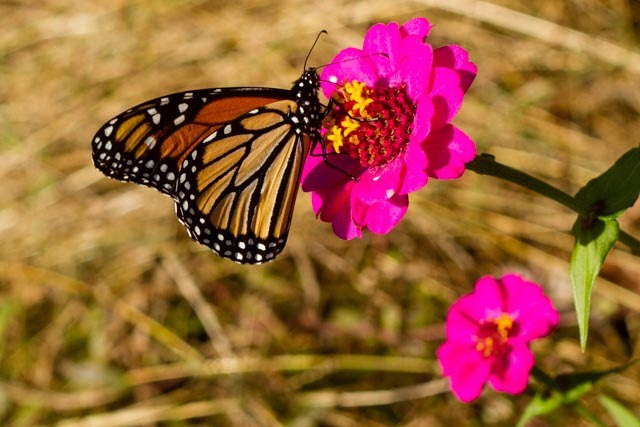
I’ll show you the original and the final product.

untitled-34

I began with this image of the butterfly and the zinnias. I took this at the end of October. I really am not crazy about the background of dead grass and weeds.

I did something a bit different. I opened a new document and set the size as 10 by 8. Then I used the Place Linked command to open the background texture. Next I used the File Linked command to place the butterfly image over the background.

Next, I used the lasso tool in Photoshop to outline the butterfly and the flowers with the stems and leaves, and then used the Select-Inverse command. I added a layer mask, The background texture is revealed behind the image of the flower and butterfly. I thought the pink flowers were a little too bright, so I desaturated the image slightly and brushed back in the color of the butterfly.

I cleaned up the edges with a soft round brush, adjusting the size and the opacity of the brush as needed. Then I added another texture on top of the image at the soft light blending mode at a reduced opacity to tie the image together.

The final result is this.butterly-with-two-lil-owl-textures

It’s different, but I like it. My younger son says it’s really cool.

EDITED: Okay, I still had to play with more stuff. I created one more “look.” I really like this one!

butterfy-with-two-lil-owls-and-photomorphsis-textures

The Last Day—Write 31 Days is “Officially” Over

I made it to the last day of October. While I managed to write most days, I did not write every day. Life sometimes gets in the way, and sometimes the inspiration, motivation, and desire just up and leave me high and dry. I am working on that latter bit, though, and learning to “show up” to do the work whether I am inspired or not. Sometimes, just showing up is the only thing that I can do.

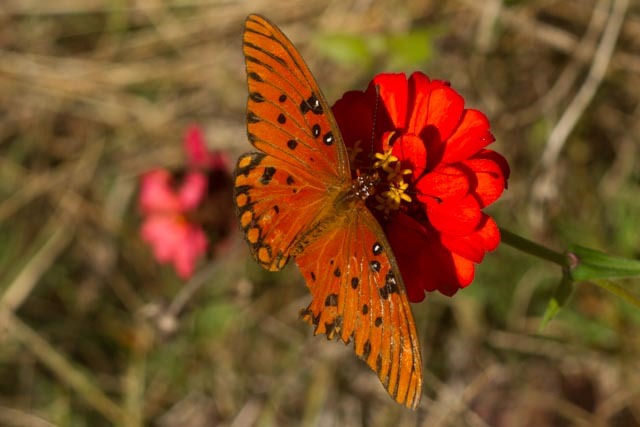
This morning, I went out for a quick walk around the yard with the camera. The zinnias are beautiful in their last bit of autumn loveliness. The butterflies are covering them. I could sit on the ground and watch them for hours, I think. And yes I found that one butterfly with the dry, papery wing that’s beginning to show its “age”. It’s a subtle reminder of the impermanence of things. And yet, it’s still as beautiful as the butterflies that are still perfectly whole.

untitled-30untitled-33

untitled-34

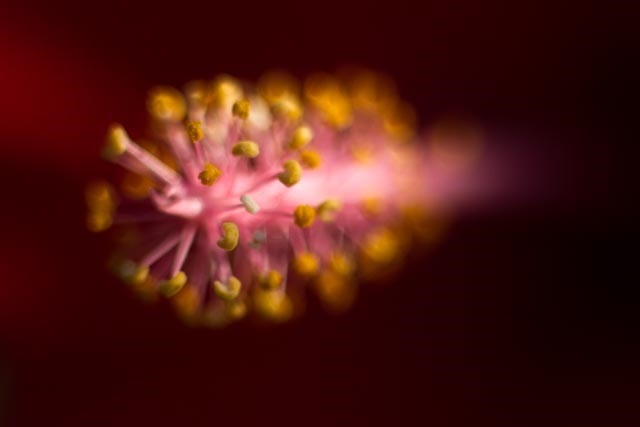
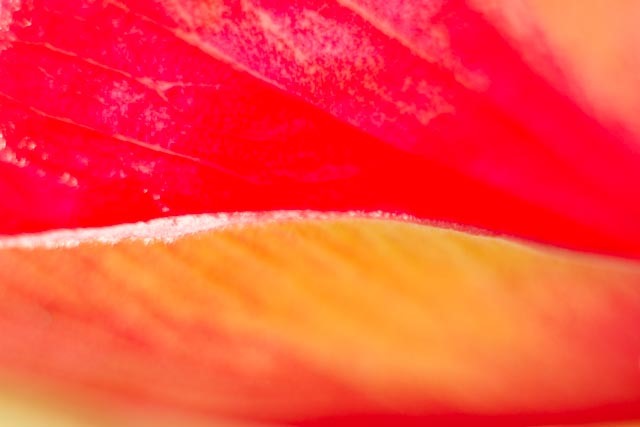
I did go out this morning with an idea of what I wanted to accomplish. I chose my 50mm f/1.8 lens, a fixed lens. If I “zoomed” in on something, I would have to do it with my feet! I also took my extension rings to work on some macro, or close-up, photography. I wanted to get close up for detail and to create some kind of abstract of the subject of the images. It’s harder than one thinks! And I was not satisfied with my results. Still I found some things I liked.

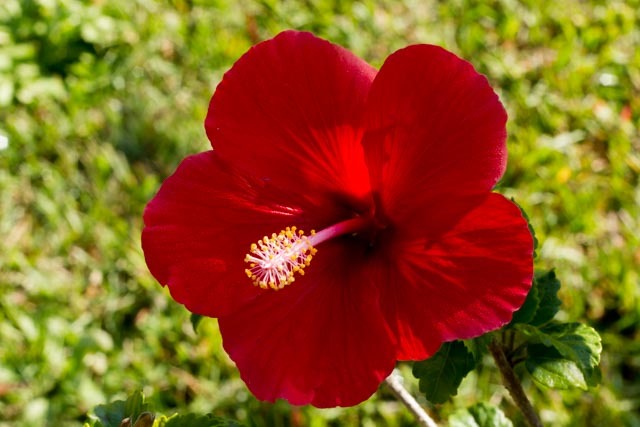
I started with my hibiscus.

untitled

This image, of course, is taken without the extension rings. I just love this flower. Then I started focusing on details.

untitled-5

untitled-8

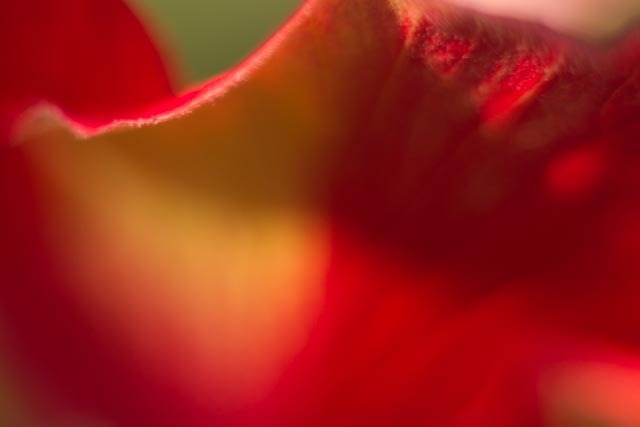
untitled-20

I love the curves and the yellow on the underside of the petals.

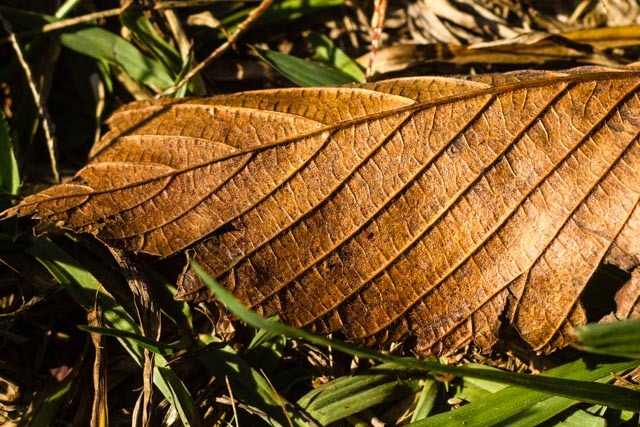
There are other indications of autumn all around the pond as well. Of course, I had to take the picture of the fallen leaf—just one—lying on top of the green grass.

untitled-57 

So much texture and lines in this image of the leaf.

While I had some intention when I began this walk, I also went out with an open mind to see whatever presented itself to me. One of the principles of contemplative photographic practices is to approach the world with an open mind, to see what is there without judgment whether the subject is appropriate or beautiful or photogenic. The idea is to see what is there as it is.

This walk was just what I needed this morning, too, as it put me in touch with creation and its beauty as it is, even the broken butterfly.

The Pictures I Bring Home

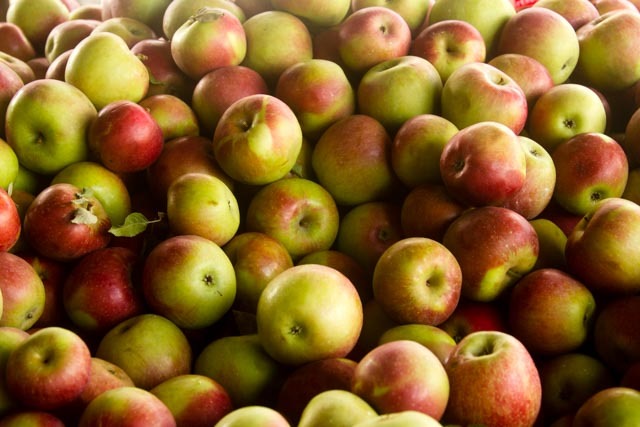
We went to the mountains yesterday for a “road trip”—you know, those one-day trips with no particular destination in mind, but with a couple of planned stops along the way. We went to get apples. Now, I know I could have saved a LOT of gas money and probably have bought the apples cheaper at the local grocery store, but these are NORTH CAROLINA MOUNTAIN APPLES! We came home with 1-1/2 pecks of different apples—Cameo, golden delicious, Pink Lady, Winesap. . . .

Mountain trip 2016 (3 of 17)

Oh, and a dozen apple cider doughnuts.

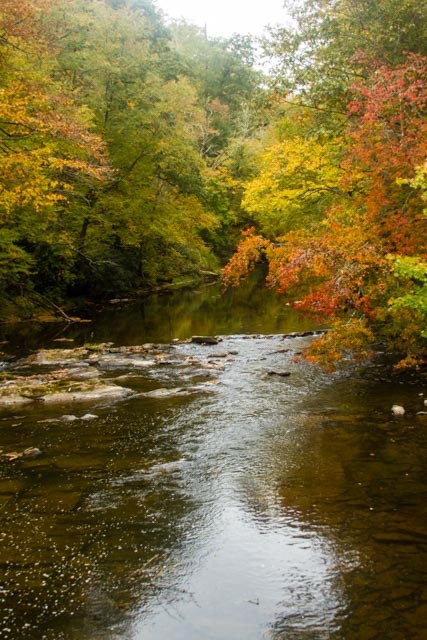
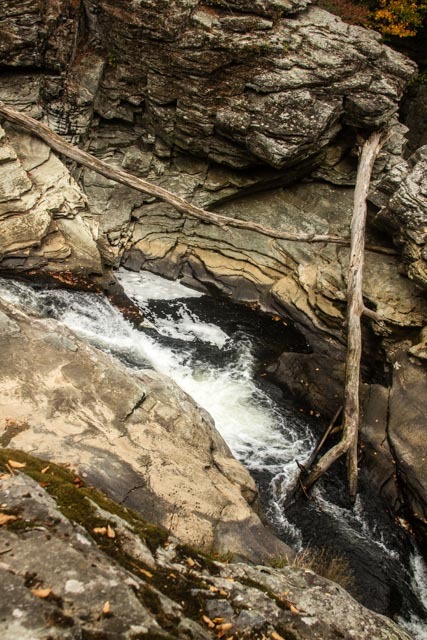
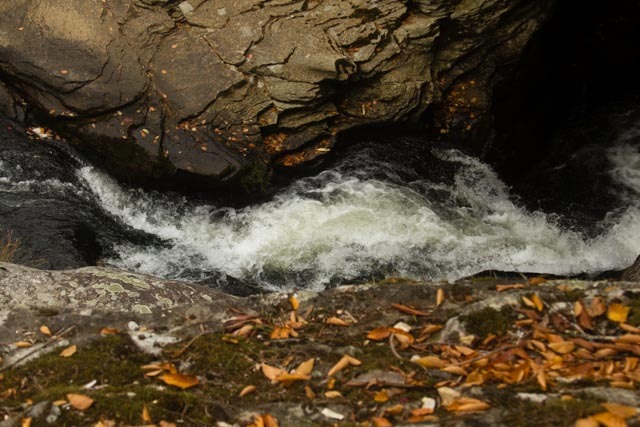
Next stop—Linville Falls. I do enjoy a good walk through the mountains especially if there is a fast-running stream or river, some rapids, and a waterfall or two involved. Linville Falls has it all. There is a nice, but small, book store/souvenir shop and clean restrooms at the visitors center, a map that you can take with you (although I admit that I didn’t consult the trail map very much), and well-planned trails and “roads” to follow. Because of HIS plantar warts, we did not walk all the trails, but we did go to the upper falls. Beautiful!Mountain trip 2016 (6 of 17)Mountain trip 2016 (10 of 17)Mountain trip 2016 (11 of 17)

The river and falls are named for William Linville, an early resident of North Carolina. He and his son and their hunting party were killed by a tribe of Native Americans. The Linvilles were out on an extended hunting trip. Historians speculate that they were killed to prevent them from warning the Cherokee who lived in the area of an impending attack and perhaps to take the supply of furs the Linvilles most likely had as a result of their expedition. It’s a sad story, to be sure, but an interesting bit of history as well.

The falls are fascinating, really, not only for the story, but also for the interesting rock formations. I love texture, shape, and line, and these rocks certainly provide all the above. I am even fascinated by the monochromatic tones of grays, whites, and blacks. Of course, the autumn leaves provide additional pops of color that complement the scene.
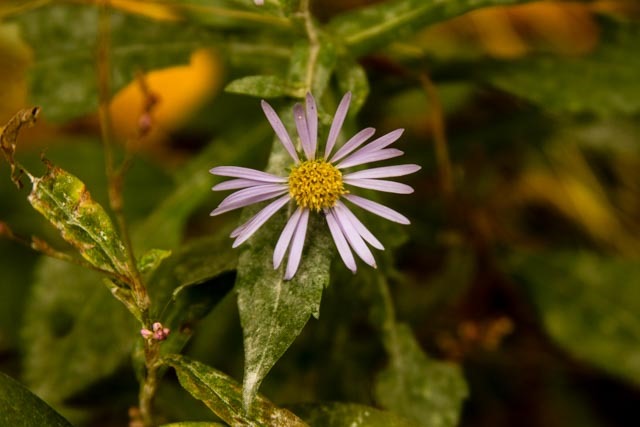
And of course, I took the “portrait of a posy”. I do love to find wildflowers, no matter the season.

Mountain trip 2016 (7 of 17)

My picture number was low for me—only 46 images from this trip. Perhaps I am becoming more selective and discerning when it comes to snapping the shutter. I know that I pause more often when I put the camera to my eye to make sure that I am taking the picture that I really want. Contemplative practices like pausing before pressing the shutter are truly influencing the way I photograph things, especially nature.