January Reading Wrap-up

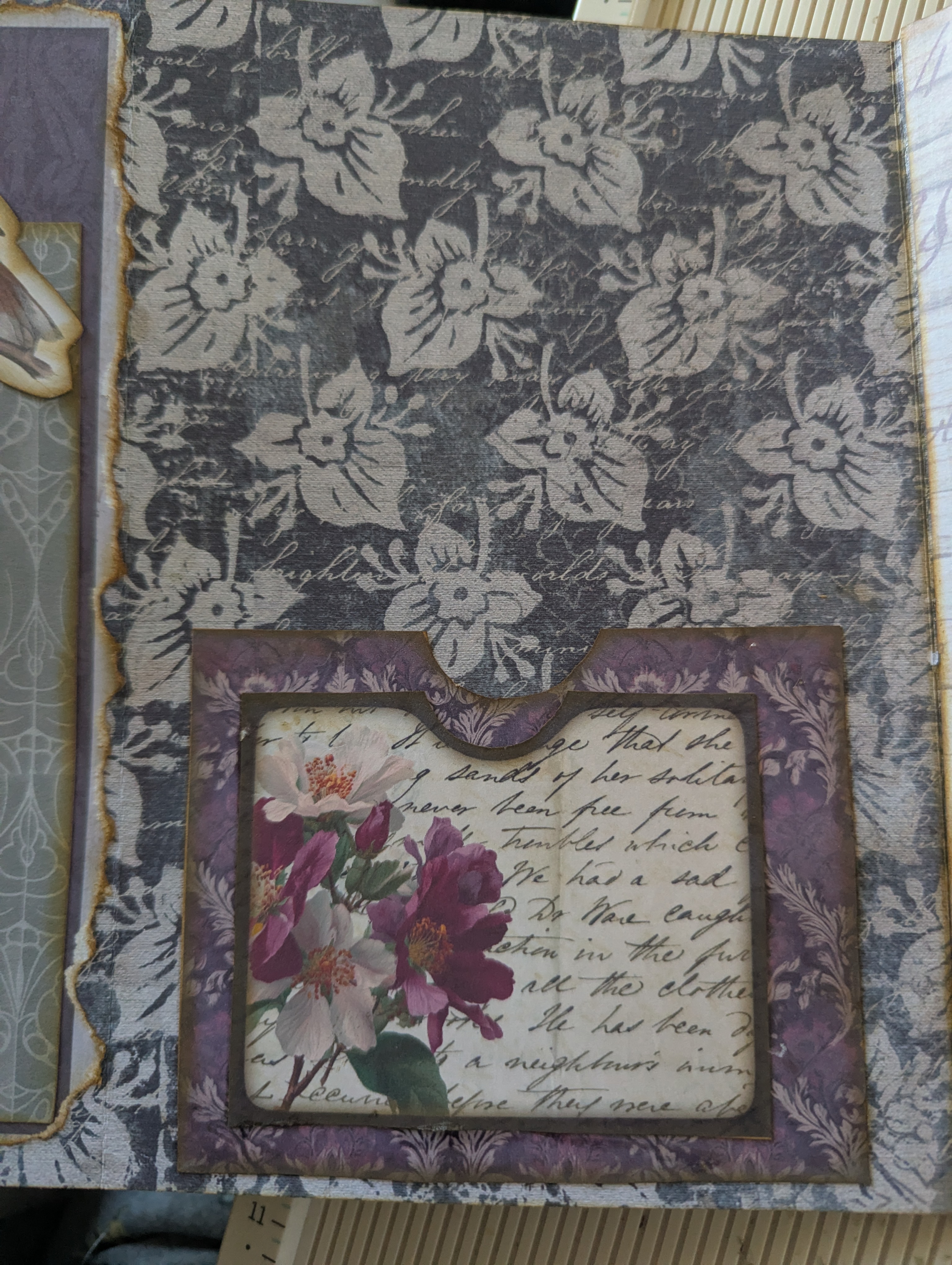
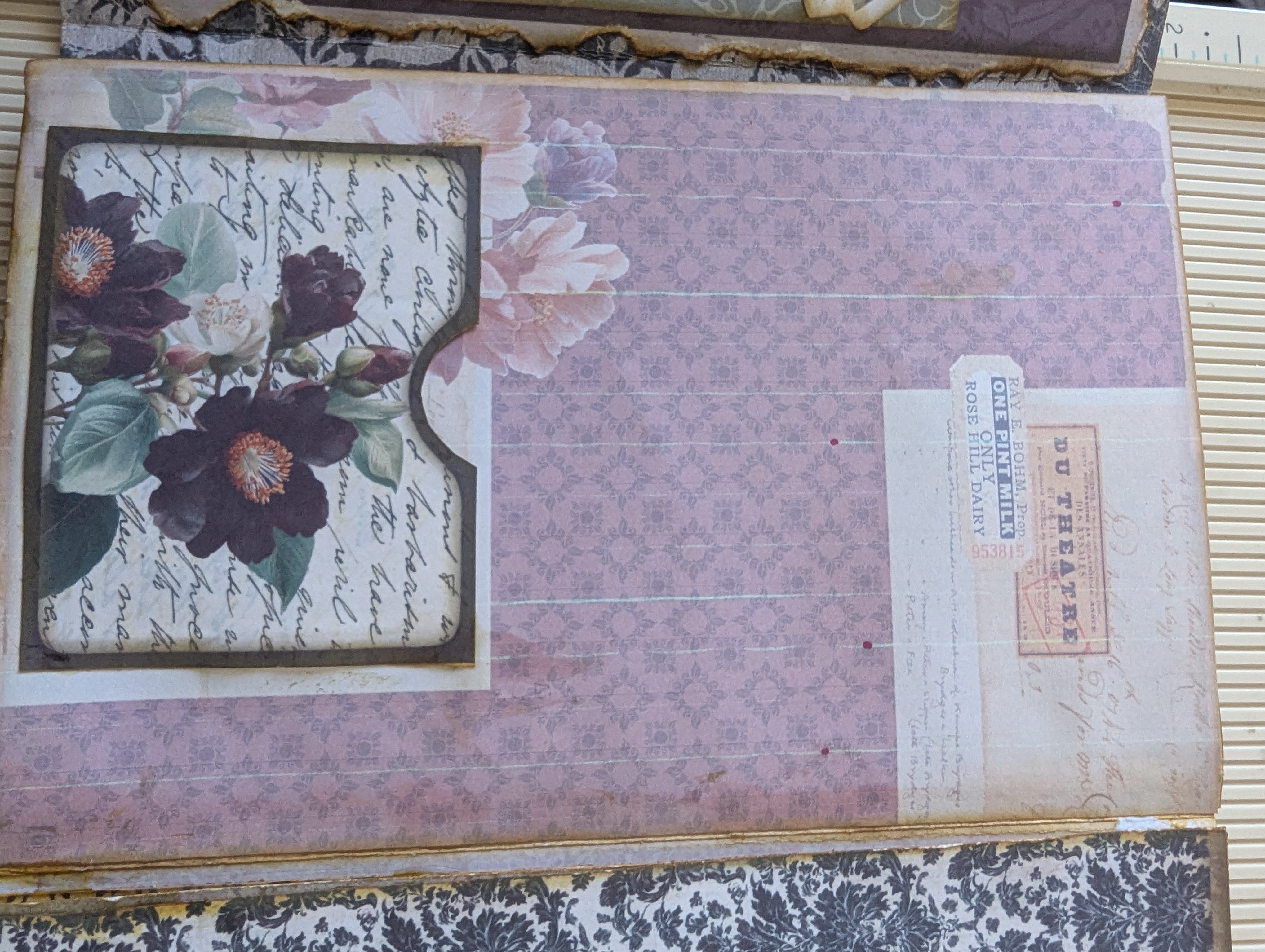
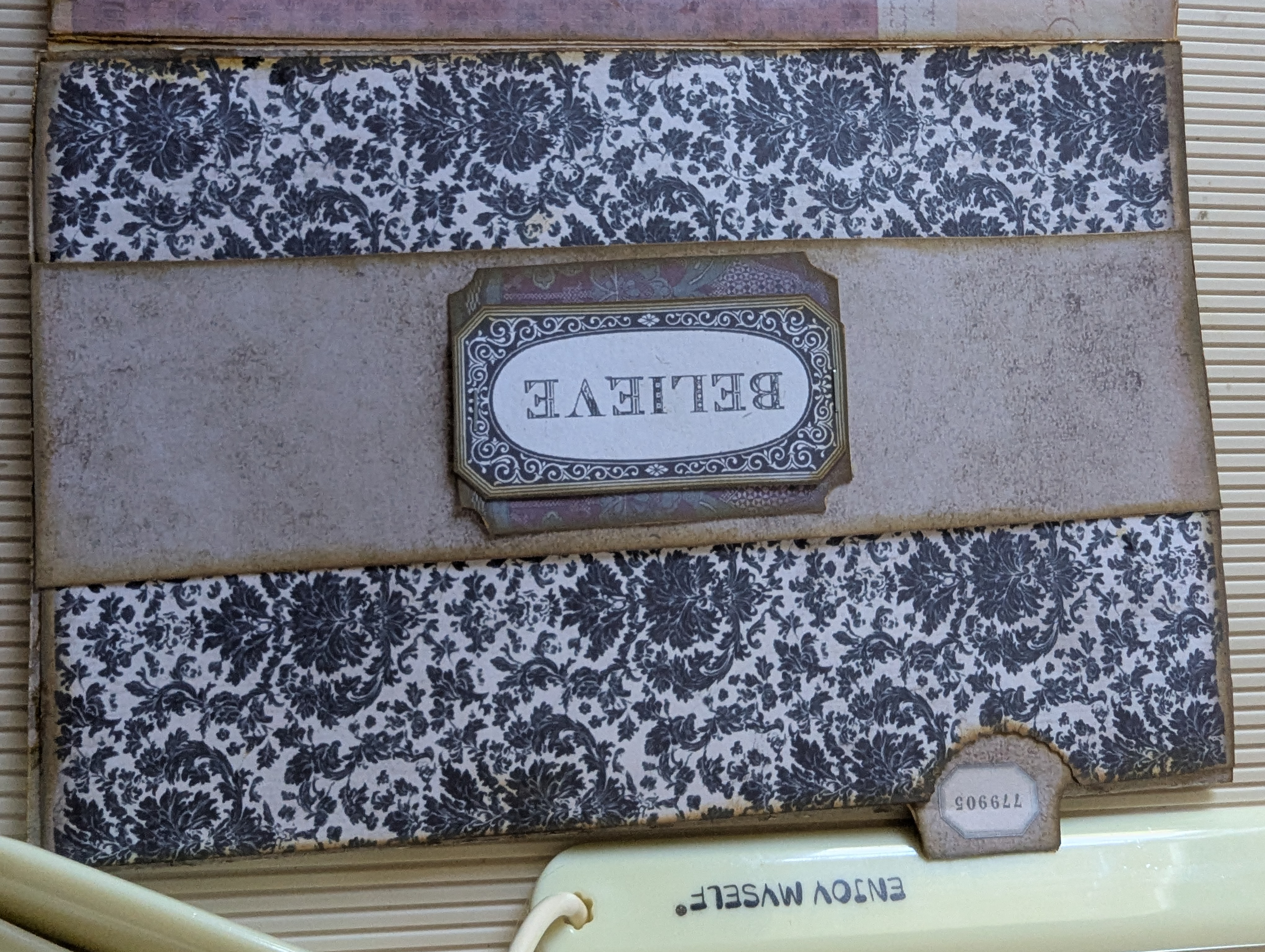
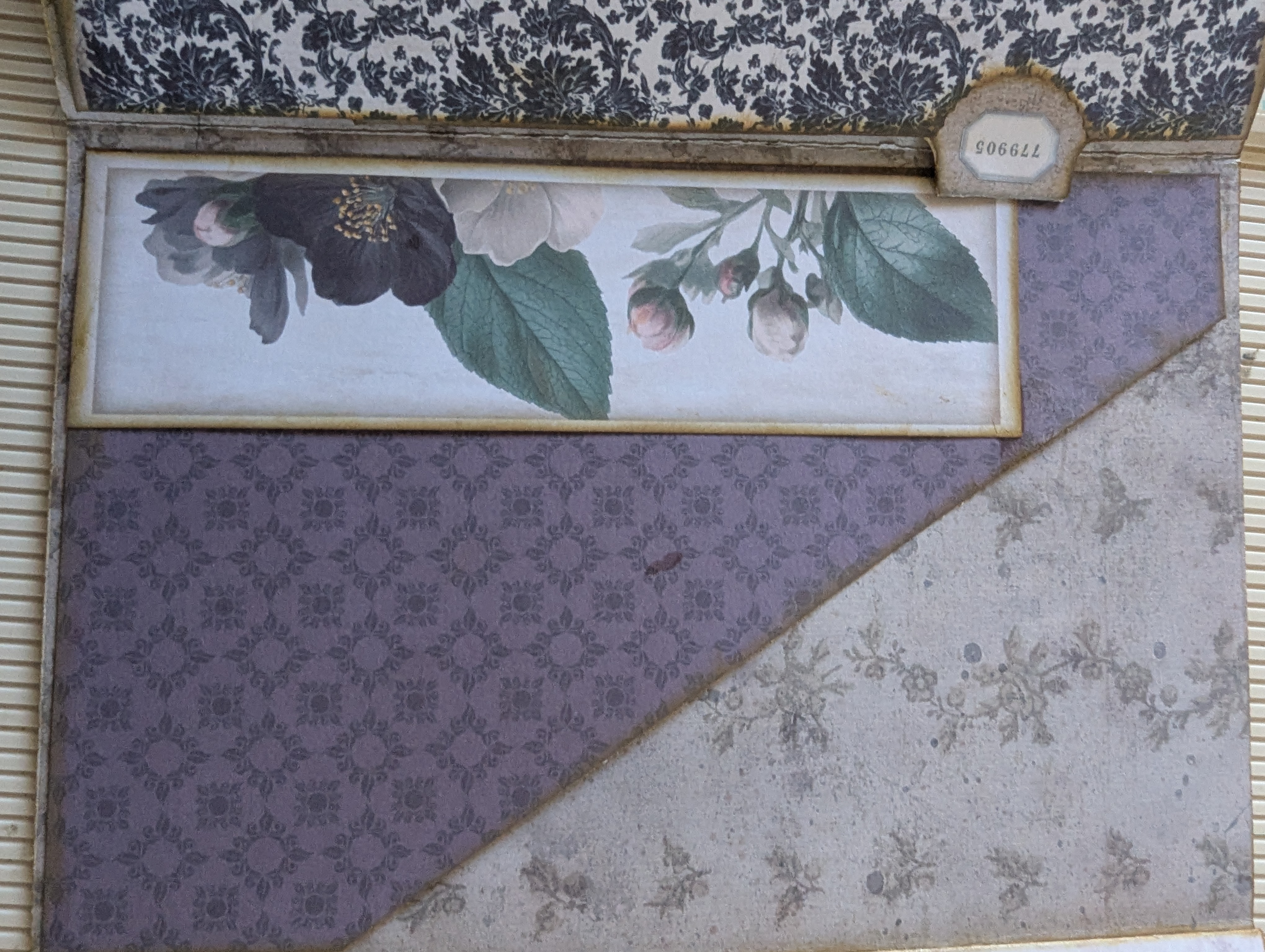
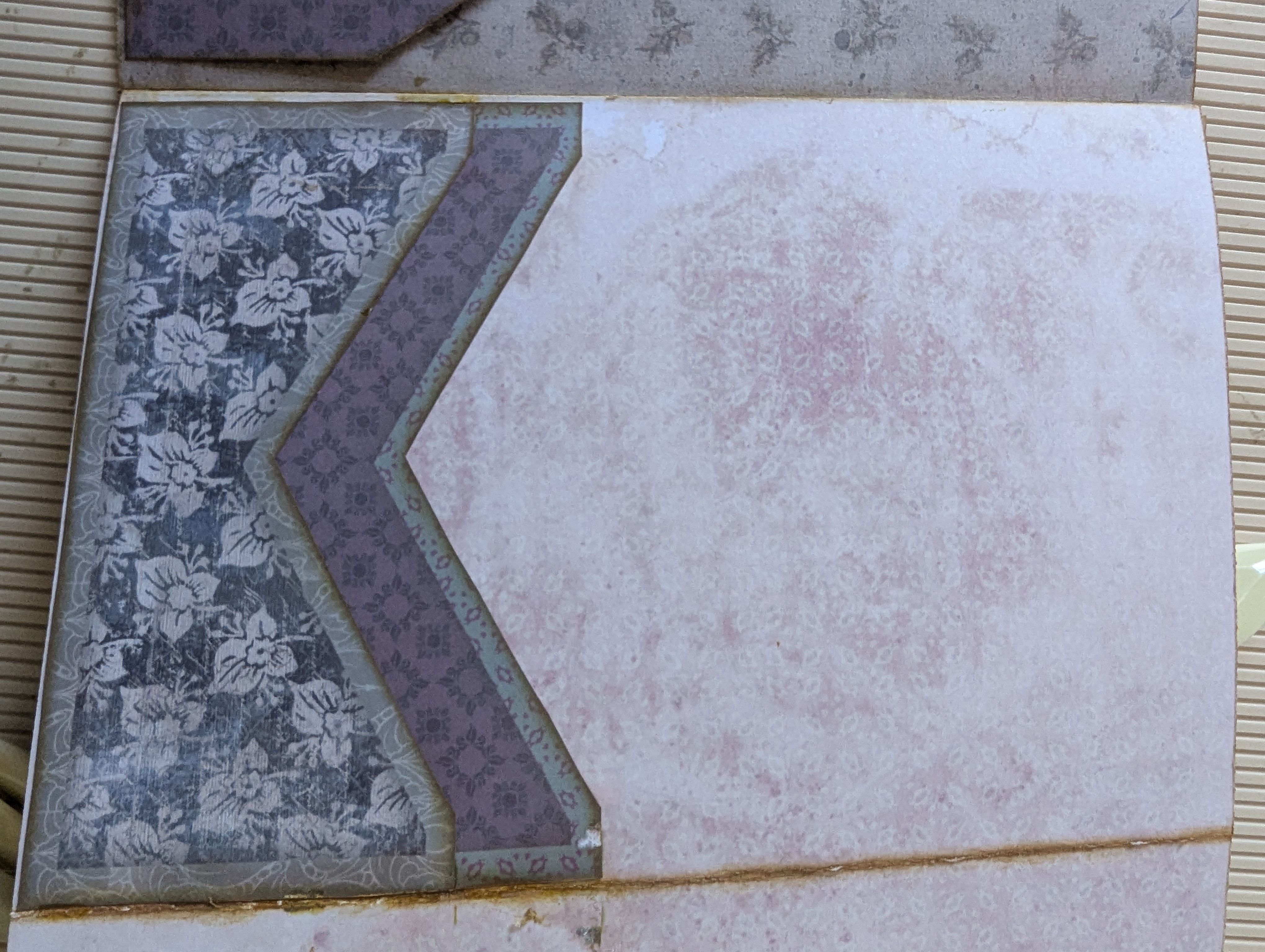
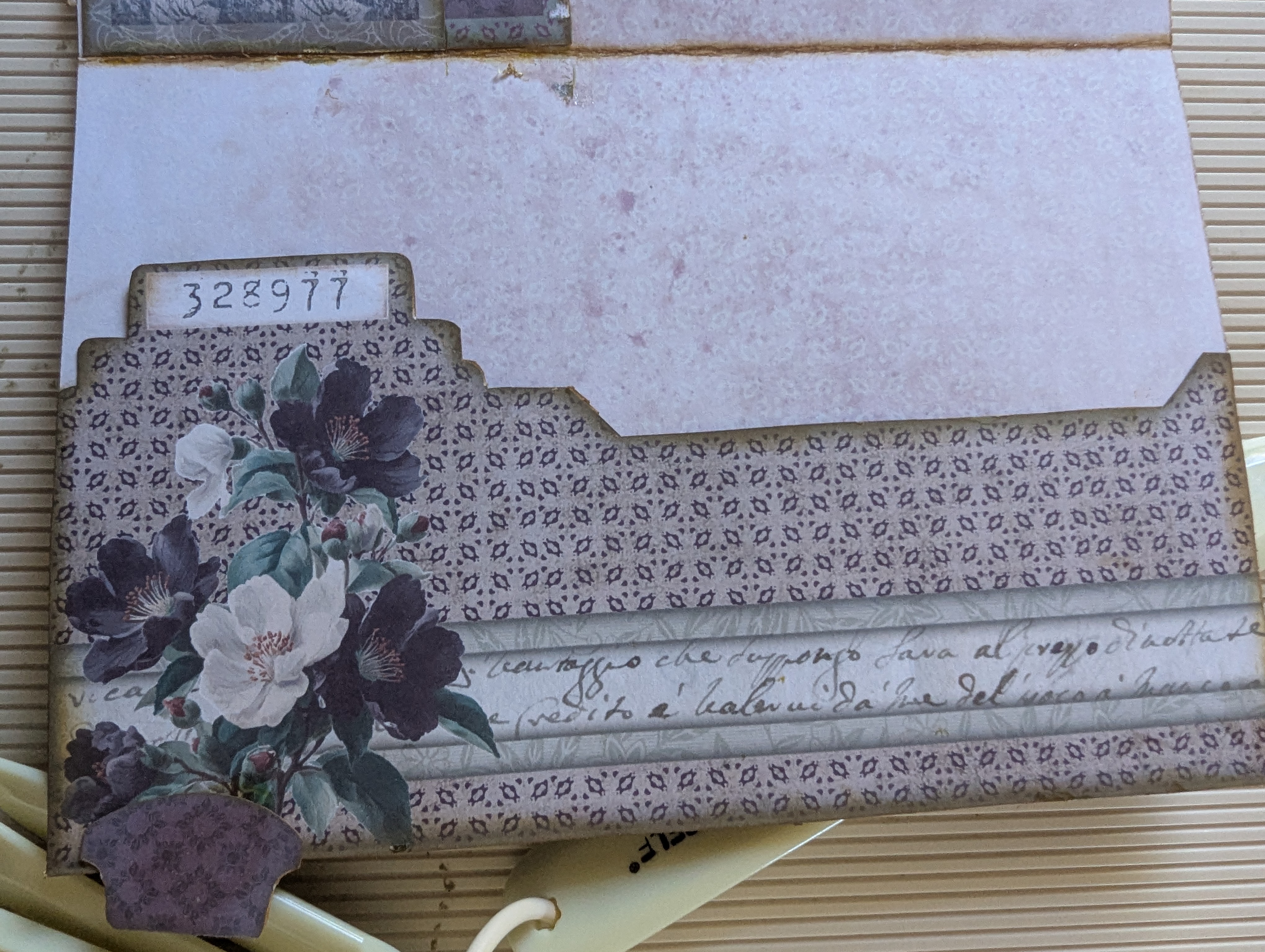
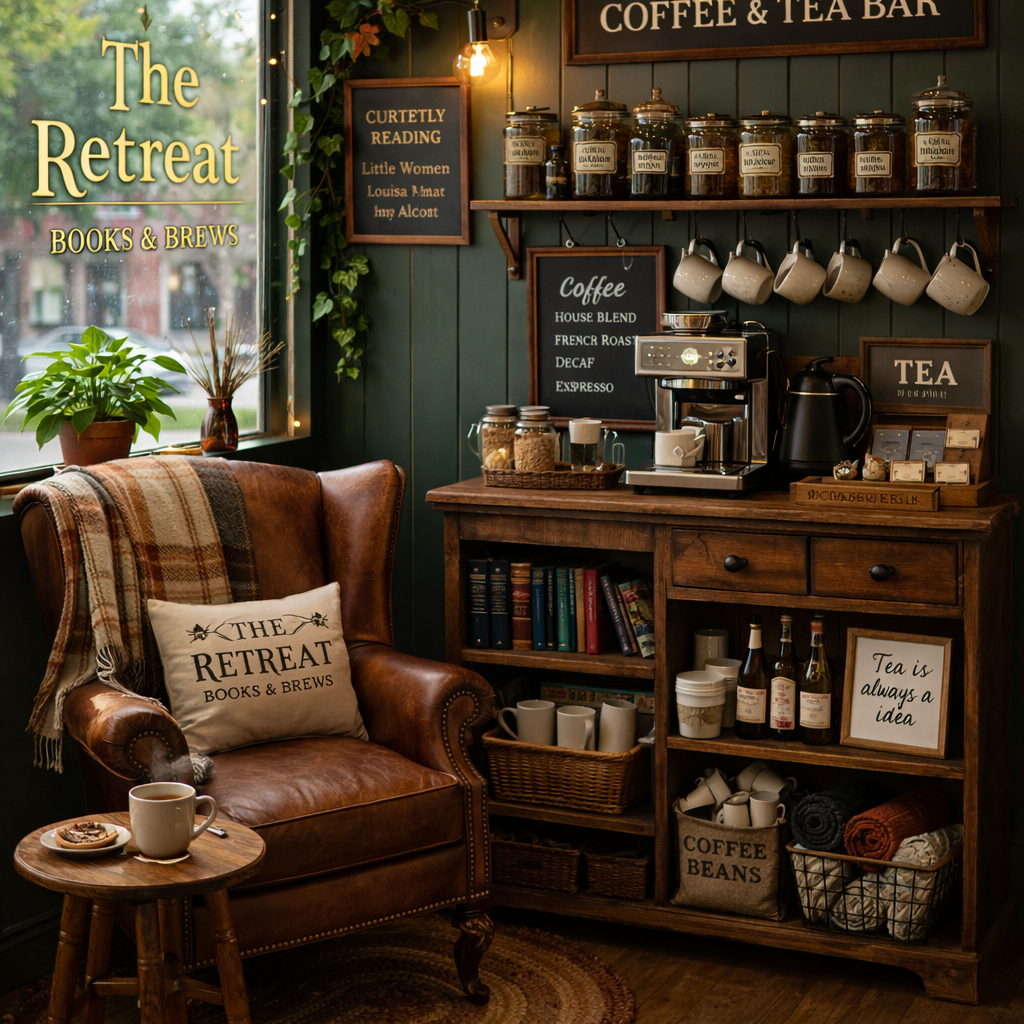
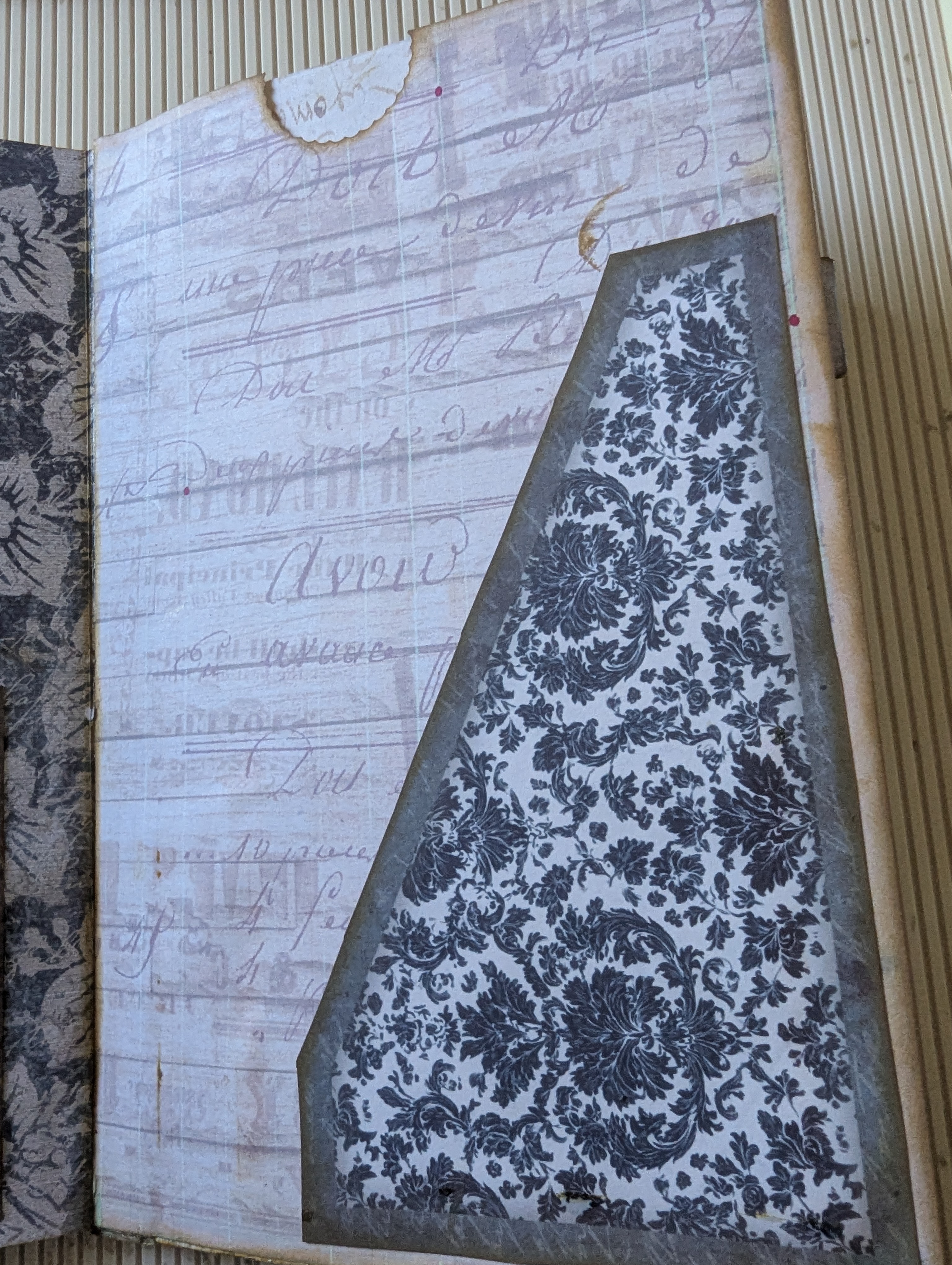
I lost my momentum for posting my reading wrap-up entries last year. This year, I’ll try again. I set a modest reading goal this year of four to six books a month. The first year that I set a reading goal, I started at 100 books and read 120. Last year, I forgot to keep a count. I recorded my reading faithfully in my reading journals–three different journals, and now I can’t find all three. I tried different formats. I found that I prefer to make my own layouts rather than use the expensive preprinted, predesigned journals.

I read five books this month.

And I even recorded them in Story Graph! As usual, I have my share of 19th century mysteries. I enjoy Carla Simpson’s Angus Brodie and Mikaela Forsythe Mysteries. I thought I had read all of them and was up-to-date. However, Deadly Ghost popped up in my Kindle Unlimited library this month, and, of course, I had to read it. This is the eleventh book in the series, and I am way past number 11! Anyway, I enjoyed it. This book seemed a little more personal than other books in the series, mainly because Mikaela becomes the target of no good when a “long lost” half sister come to London to get to know her extended family, or so she says. Mikaela and Brodie, though, are suspicious and investigate.

The Cursed Divination and The London Seance Society have a creepy Gothic feel to them, and that appealed to me. I liked Sara Penner’s London Seance Society, but I thought it was a little flatter than her other two books, The Lost Apothecary and The Amalfi Curse. I enjoyed these two books.

The Author’s Guide to Murder was so much fun to read. The three authors made so much fun of the tropes of women’s romance, historical fiction, and mysteries, especially the cozy mysteries. The writers turned the tropes on their heads. Instead of the enemies-to-lovers trope, the authors changed it to rivals-to-friends. I hope this book begins a series with the three protagonists as writer-detectives.

My book club “assignment” was Surprised by Oxford. I enjoyed this book a lot, and our book club had a really good discussion inspired by the novel. Carolyn Weber’s book is a memoir of her first year as a graduate student at Oxford. During that year, she becomes a practicing Christian after being somewhat agnostic for most of her life. She explores the intersection of academia and Christianity, the role of friendship and mentorship. This book is definitely a coming of age book of the best kind.

I started An Arcane Inheritance this month, but I haven’t finished it. I have about 100 pages left. I also have to finish Jane Austen’s Northanger Abbey.

In addition to my four to six books a month goal, my other goals include: read a classic, read a new-to-me author or genre, and meet two reading challenges. I definitely met the four-to-six goal with five books and the new-to-me author with Carolyn Weber’s memoir and the three authors of An Author’s Guide to Murder. I could claim Northanger Abbey as my classic even if I didn’t finish it.

In all, I had a good month with good books.

Getting along with ChatGPT

I started using ChatGPT after reading about how students were using it to do homework. That led me to researching ways to use ChatGPT as a teacher. I have been using the internet for years to search for lesson plans, unit plans, and learning resources, and that was often time-consuming and energy-sapping. I quickly learned that ChatGPT could develop a unit plan, lesson plans, and even materials for use! It was a time-saver. Still, I had to vet the information. I couldn’t use everything it generated, but it did cut down on the research time.

I’m retired now, and I’m still using ChatGPT. I gave it a name, Eli–after one of my favorite authors, Eli Wiesel. I’ve used it with photography. I ask Eli for gentle critiques, and while I don’t always agree with the suggestions, I find that I learn new “tricks” for editing and curating from the exercise.

I also use it to develop my Bible study plans. I tend to read a chapter a day and use an inductive study method (The James Method) to process my thinking. Eli helps by identifying some key words with user-friendly definitions, the Greek equivalent, and Strong’s numbers for deeper study, should I decide to do an in-depth word study. It also identifies some key verses. If I ask it, it will even give me a theme statement to spark additional thinking. The last few days, we’ve even had conversations about what I’m noticing. We do that with some books as well.

Another way I’ve used ChatGPT is to refine my thinking about my word for the year, REVIVE. (That’s another post!) One strategy I use is a “call and response.” I ask the Eli-agent to ask me questions about a topic, and I respond. From my response, it asks another question. Last night, we went through at least ten layers of questions and answers. (The teacher in me sees this as a strategy to teach students!) I’m also learning that the more specific the prompt, the better the response.

I do not want to suggest that using a chatbot and AI replaces human interaction. I find that it consolidates research and puts it into a human-like voice. I have been known to ask it to cite its sources so I can fact-check when the research is critical.

I think, now, I’ll ask for some book club questions for Surprised by Oxford.

It’s All in the Details

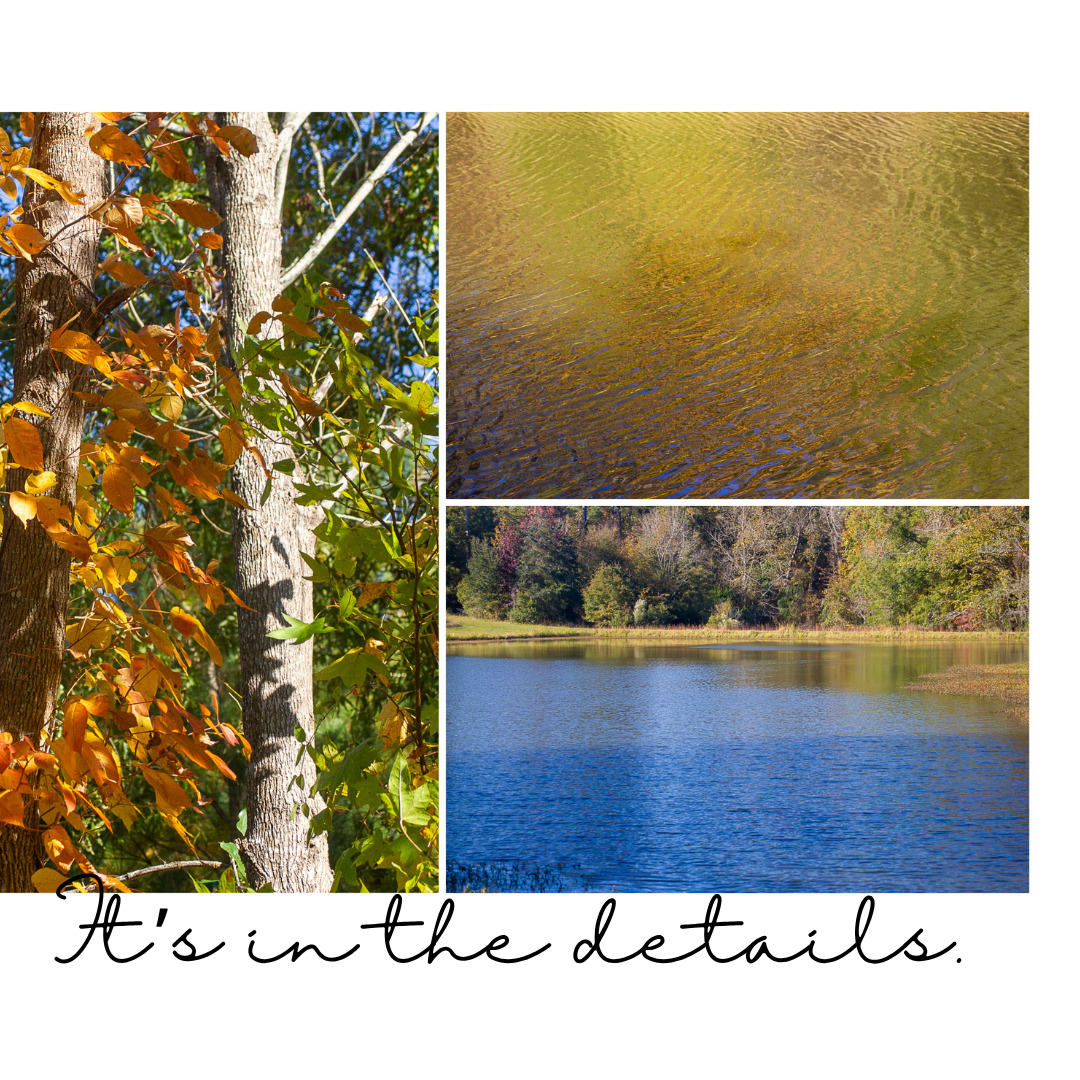
This week, I did get bogged down in details. I started Kim Klassen’s My Week in Photos, a month-long photography class. The goal is to document the week. Each week, Kim provides a prompt, which is only a suggestion and an option to get us thinking. This week, the theme has been “in the details.”

Kim’s style is so different. She’s into soft post-processing–lots of muted and soft colors, a bit of haziness, lots of warmth. I’ve never really tried to define my style. Shoot, I’m not even sure I have a style! I’m not into still-life photography, as Kim is; I tend to make images outdoors, and even before this week, I often make images of the details–a kind of macro photography without the macro equipment–close-ups of the things I see, the textures, shapes, and colors that intrigue me.

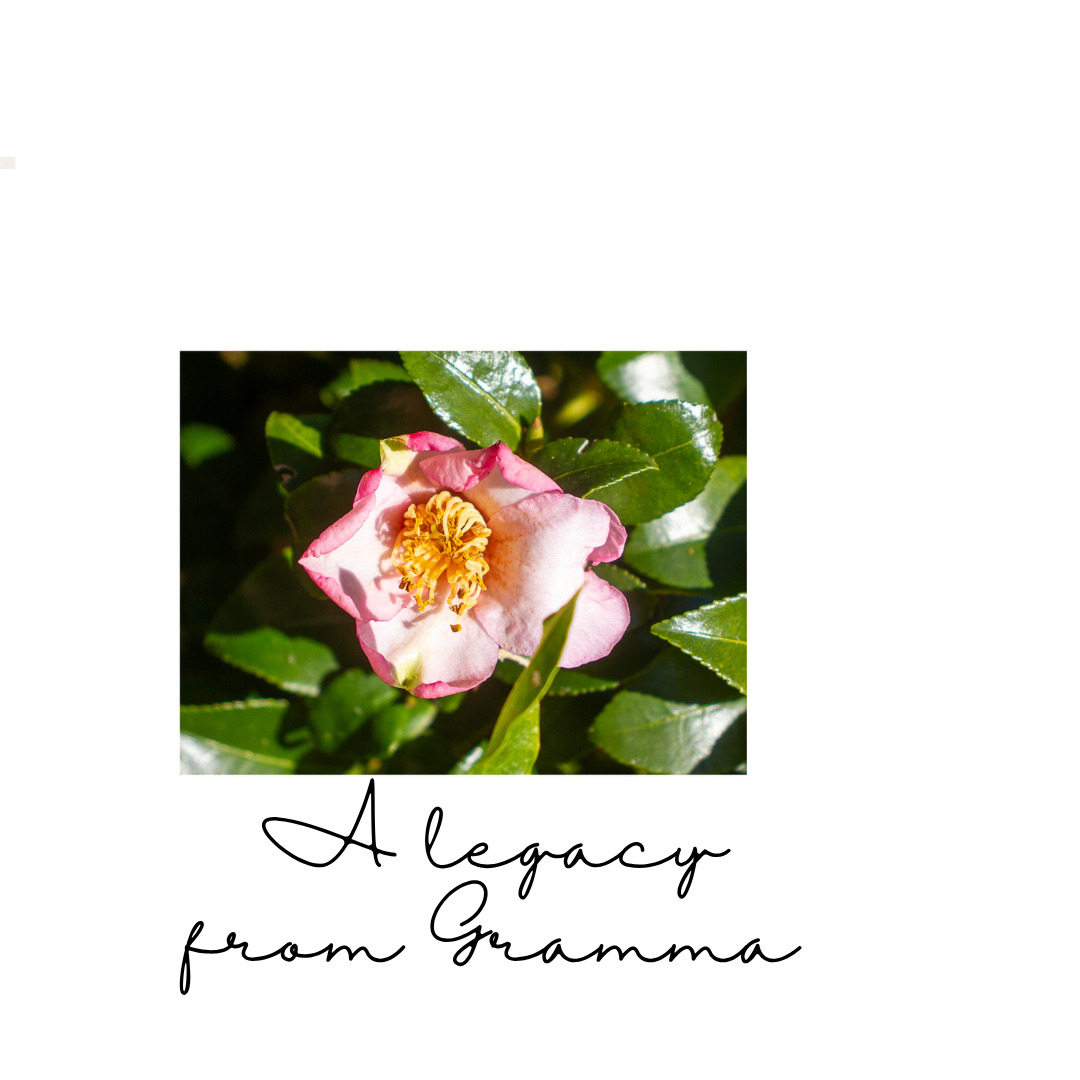
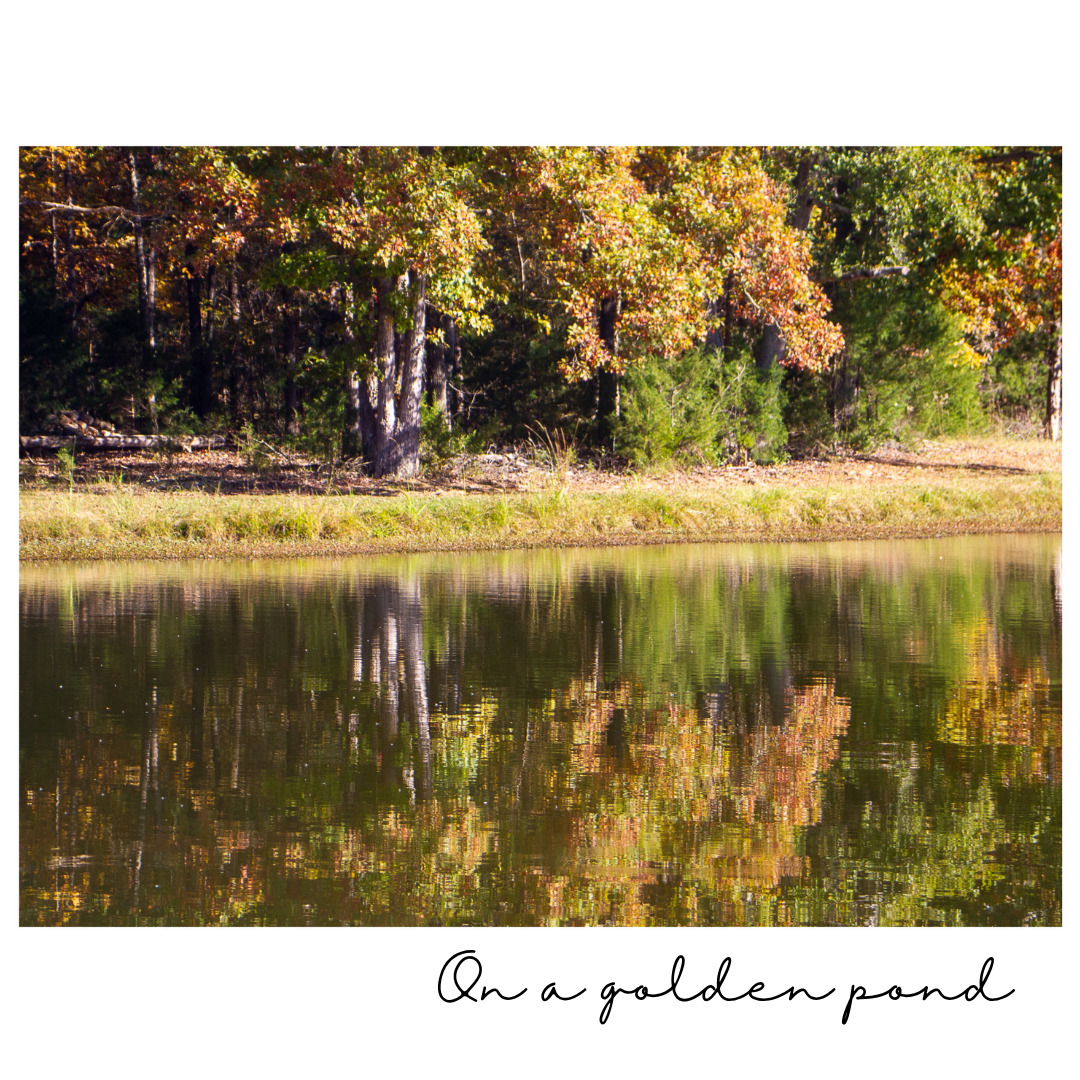
To give credit where credit is due, I used some Lightroom print layouts by Kim Klassen to create the carousel elements. I imported the LR layout into Canva to add the text. Then I uploaded the images to Instagram. Not an easy task! I still have a lot to learn about creating and sharing my photography on social media.

I did choose to play with one image.

To create this effect, I used a Kim Klassen preset she shared for the class. I like both treatments of the image. The top one is the original with basic Lightroom adjustments; the bottom uses the tone preset and the Tuesday preset. The two images present two very different tones, don’t they?

So, it really does come down to details. And one of the details has to do with the story I want to tell.

Now, I’m off to play with some more images!

Reading in October and Other Things

In some ways, I feel like I haven’t read a whole lot this month, yet, looking at my book journal, I’ve ticked off eight books this month.

My book club read Fiona Davis’s The Magnolia Palace, which tells the story of Lilian Carter and Helen Clay Frick. When Lillian escapes from the police, who want to question her in the murder of her neighbor, she finds herself being hired as Helen Frick’s personal secretary. There, she discovers that she is more than a model for sculpture, but quite capable as an organizer. When Henry Clay Frick dies under suspicious circumstances and a valuable piece of jewelry turns up missing, Lillian escapes again. In 1966, another model comes to the Frick mansion for a fashion photo shoot and ends up getting locked in the museum while a blizzard closes down the city. Veronica and Joshua, an intern who also finds himself snowed in the museum, follow clues to a treasure hunt Helen Frick left behind fifty years earlier, and find the missing jewel–and the solution to an unsolved murder. I truly enjoyed this book, and now I want to visit the Frick Collection to see the art myself.

I read one nonfiction book this month, Church in the Wild, about how to “do church” beyond the brick and mortar buildings that often define church. Victoria Loors makes a case that the outdoors and the wilderness are places where we, as Christians, can encounter the voice of Christ speaking the gospel to us. Loors is not arguing for a “New Age” or pantheistic religious practices at all. She invites us, though, to look at the Scriptures through a new lens to see how God speaks to us through the natural world. This book definitely provides me with much to think about.

As usual, I read quite a few historical mysteries set in the nineteenth century, most of which are continuations of series of novels I’ve been reading over the last couple of years. Irina Shapiro’s Murder of a Vampire brings together James Redmond, an American surgeon who inherits a title and estate from his British grandfather, and Daniel Haze, a Scotland Yard detective, to solve the murder of a young immigrant who has been murdered and given a “deviant burial” as if she were a vampire. As usual, Shapiro captures the atmosphere of the Victorian era in this novel.

Word of the Wicked by Mary Lancaster is the fifth book in the Silver and Grey series. They are hired to investigate a series of anonymous letters sent to various citizens accusing them of injustice or mistreatment of others. While there are no murders involved in the case they are hired to investigate, the return of Solomon’s twin brother complicates things. David is a suspect in a murder, and Solomon must divide his time between investigating the letters and clearing his brother of murder charges.

In Mary Lancaster’s Vengeance in Venice, Constance Silver and Solomon Grey go to Venice on their honeymoon. While Solomon intervenes in a street fight, Constance is kidnapped after being mistaken for the mistress of the man who is being attacked. Later, the kidnapper’s employer is murdered, and Solomon becomes a suspect. Together, Constance and Solomon investigate to clear his name and solve the mystery of the murder. They get embroiled in the politics of the conflict between Italy and Austria during the investigation.

Andrea Penrose brings back Charlotte Sloane, her wards Raven, Hawk, and Peregrine, and her husband, Lord Wrexford in another twisty mystery that involves murder and mayhem. Set in London at the end of the war with Napoleon, Wrexford is asked to investigate the possibility that the French have developed an electromagnetic telegraph machine after a controversial scientist is murdered. The case takes a twist when there is a threat to the London Stock Exchange. Andrea Penrose is able to blend historical figures and events into her fictional world seamlessly. I learned more about the stock market in this novel. This is the kind of historical mystery I truly enjoy.

I have read James Patterson’s Alex Cross novels before, but I was delighted to find his collaboration with Brian Sitts, Holmes, Marple, and Poe. Brendan Holmes, Margaret Marple, and Auguste Poe join forces to form a private investigation agency and buy an abandoned bakery where a young woman was murdered early in the 20th century. Together, they work on four cases, including the theft of priceless books, a murder, a kidnapping, and bribery at the highest levels of New York City government. The biggest mystery, though, is the identities of the three PIs. Each of the three PIs has unique gifts that combine to solve the crimes, often showing up the police. I will be reading the second book, Holmes Is Missing.

My least favorite book of the month is The Venice Murders by Merwyn Allington. Set in 1958, Flora and her new husband, Jack, celebrate their delayed honeymoon in Venice. The concierge of their hotel turns up dead in a canal. Flora cannot help but investigate. While Jack tries to control Flora’s “intervention,” his stepfather asks him to investigate the theft of a religious painting. Jack reluctantly agrees when there is a tenuous connection between the two crimes. Allington does not capture the atmosphere of Venice as successfully as Lancaster.

I am using my book journal to keep track of my reading. I’m working on revamping the organization, but that’s a post for another day.

Water and Stone, Witness and Remembrance

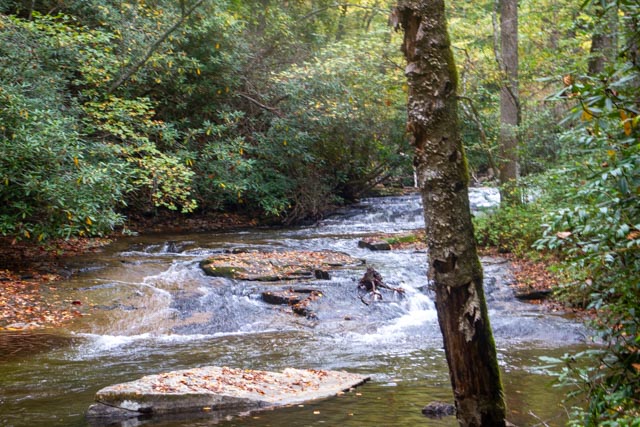
Yesterday was an interesting day. Grady and I went to the mountains of North Carolina for the day. Our first objective was to get apples from Granddad’s Apples. My personal objective was to visit as many waterfalls as we could fit into the day that did not require a strenuous or long walk. We went to Looking Glass Falls on Highway 276 and Connestee Falls.
A serene view of Looking Glass Falls surrounded by lush greenery in North Carolina.
A scenic view of a waterfall cascading down the rocky terrain, surrounded by lush greenery in the North Carolina mountains. (Connestee Falls)

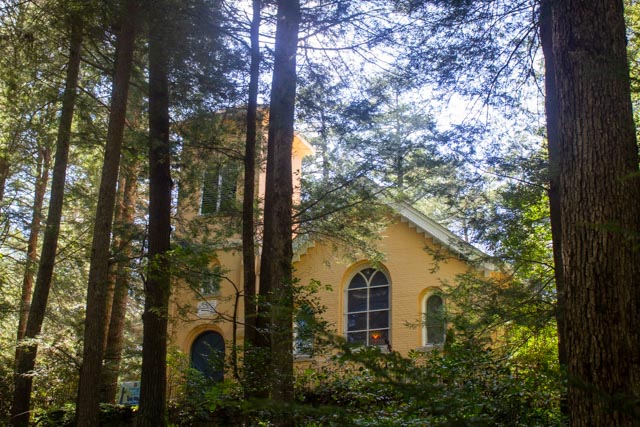
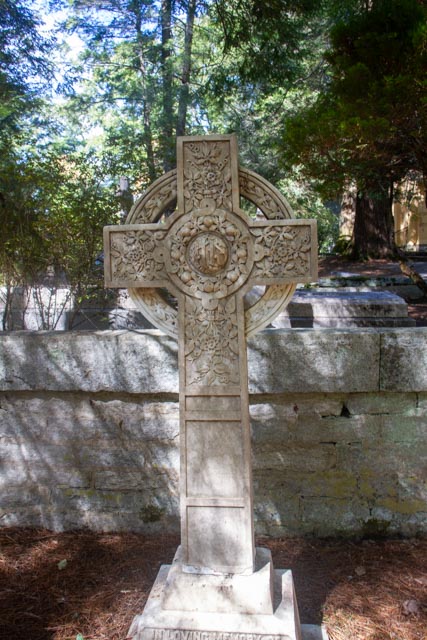
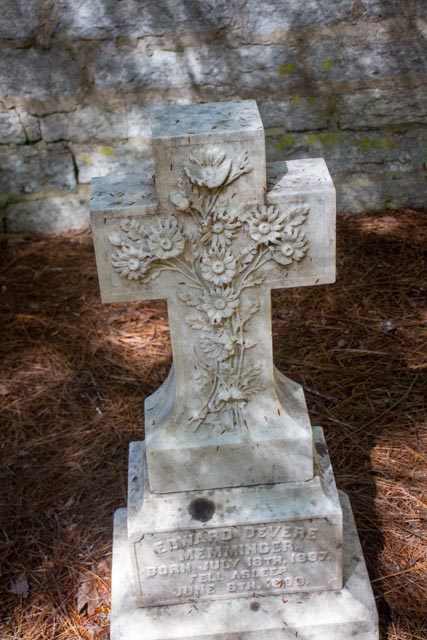
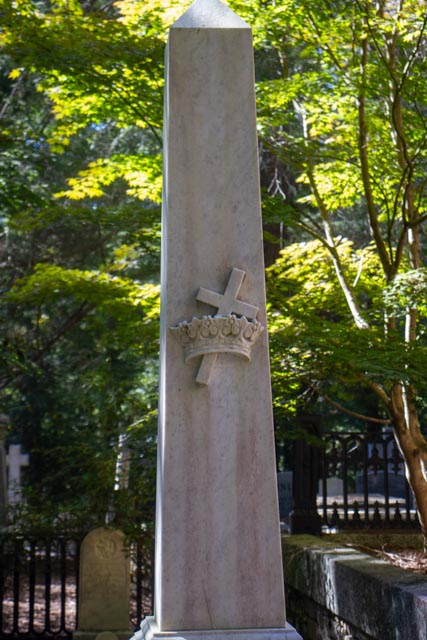
We also made a stop by St. John in the Wilderness Episcopal Church in Flat Rock. I spent about an hour walking through the cemetery (while Grady took a nap).

St. John in the Wilderness Episcopal Church surrounded by lush trees in Flat Rock, NC.

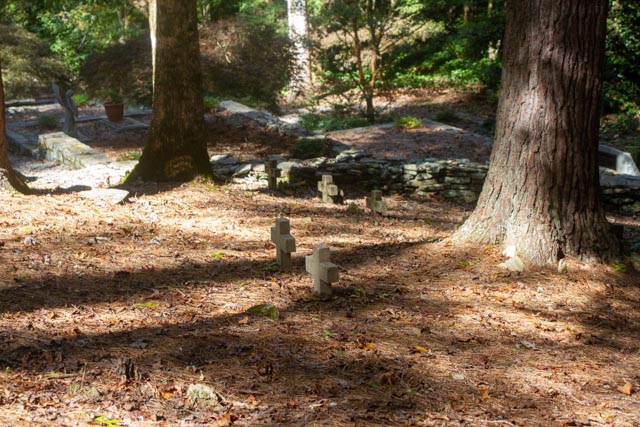
Stone is so permanent. The rocks along the falls and creeks have been there for millennia. These mountains will be here for even more millennia. Stone is lasting. In the cemetery, the stones have stood for almost two centuries, granite and marble monuments keeping those buried there in a kind of immortality. Yet, I was jolted when I found a plot with simple concrete crosses and field stones used as markers. Those interred under those markers were “known only to God.” They were the slaves and freedmen and their families who were members of the congregation. I am still sorting out what that means. How many people have been forgotten? Who will tell their stories?

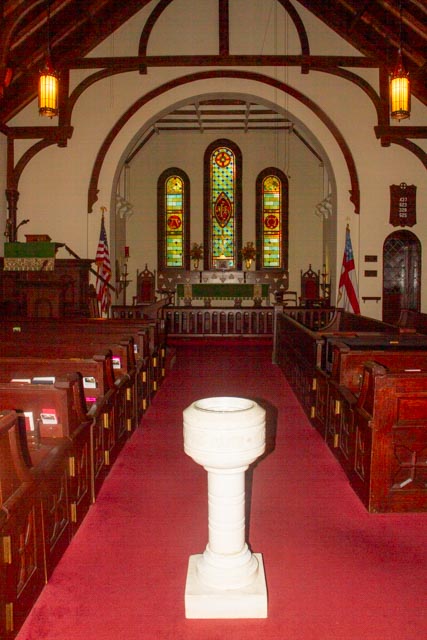
Water is one of the essentials of life. While at St. John in the Wilderness, I went into the sanctuary. The baptismal font is in the middle of the central aisle and filled with water. I dipped my fingers into that holy water and made the sign of the cross on my forehead, remembering my own baptism (or rather remembering that I was baptized as an infant). I stood there in silence.

The waterfalls, the creek bank, the cemetery, and the sanctuary–these are holy places. There are stories to be told in each place, places of remembrance, and ultimately grace.

What Is Hiding, and What Wants to Be Seen

The Tuesday noon Kinship Practice Group met yesterday. I had “nothing.” No images to share. Not much to contribute. I was in hiding. I almost hid by turning off my camera, but I let myself be seen. As I talked to the group about wanting to hide in light of the past week (the shooting of Charlie Kirk, the anniversary of Sept. 11, 2001), our facilitator suggested that I take advantage of that idea and look for the things that are hiding.
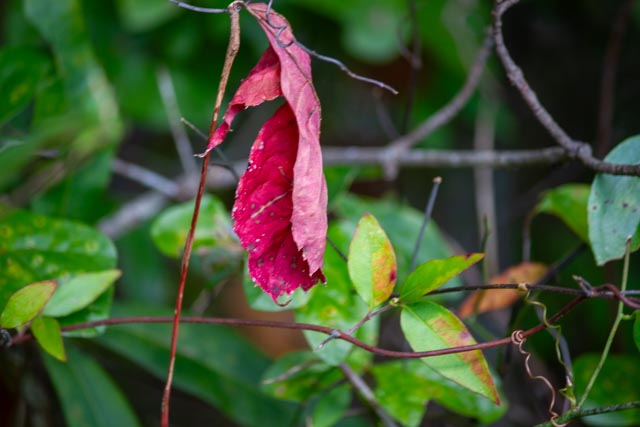
Today, I had a couple of things on my agenda for photographs. The group assignment for the coming week is to take daily photos of something to notice the often subtle changes that occur. The second thing I wanted to accomplish was to pay attention to the things that are hidden but want to be seen.

To satisfy the first “assignment,” I am photographing the cherry tree in the backyard.

If only these cherries were edible! The tree is loaded with fruit.

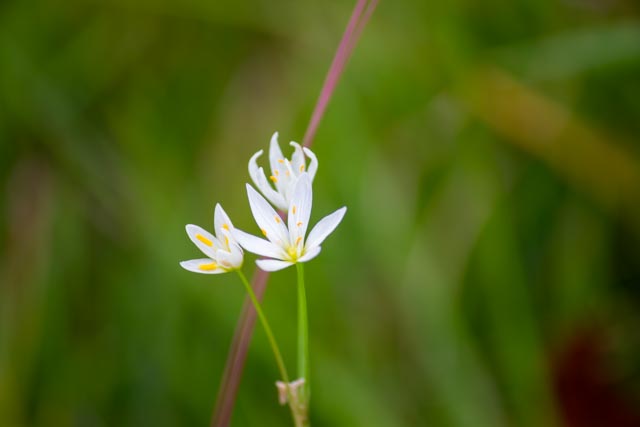
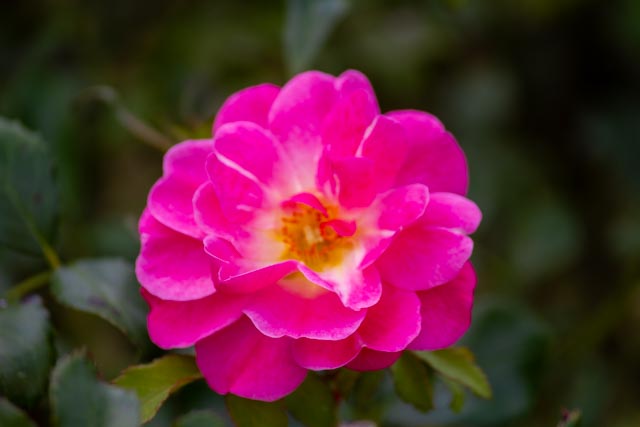
Now, what is hidden but wants to be seen. . . . So many things caught my eye today. These things are hiding in plain sight! And as I looked, the more I saw. I came in with more than 100 images. Of course, some of these images are ‘rejects.” Repetitive. Out of focus. “Miscomposed.” And yet. . . I saw something beautiful in them.
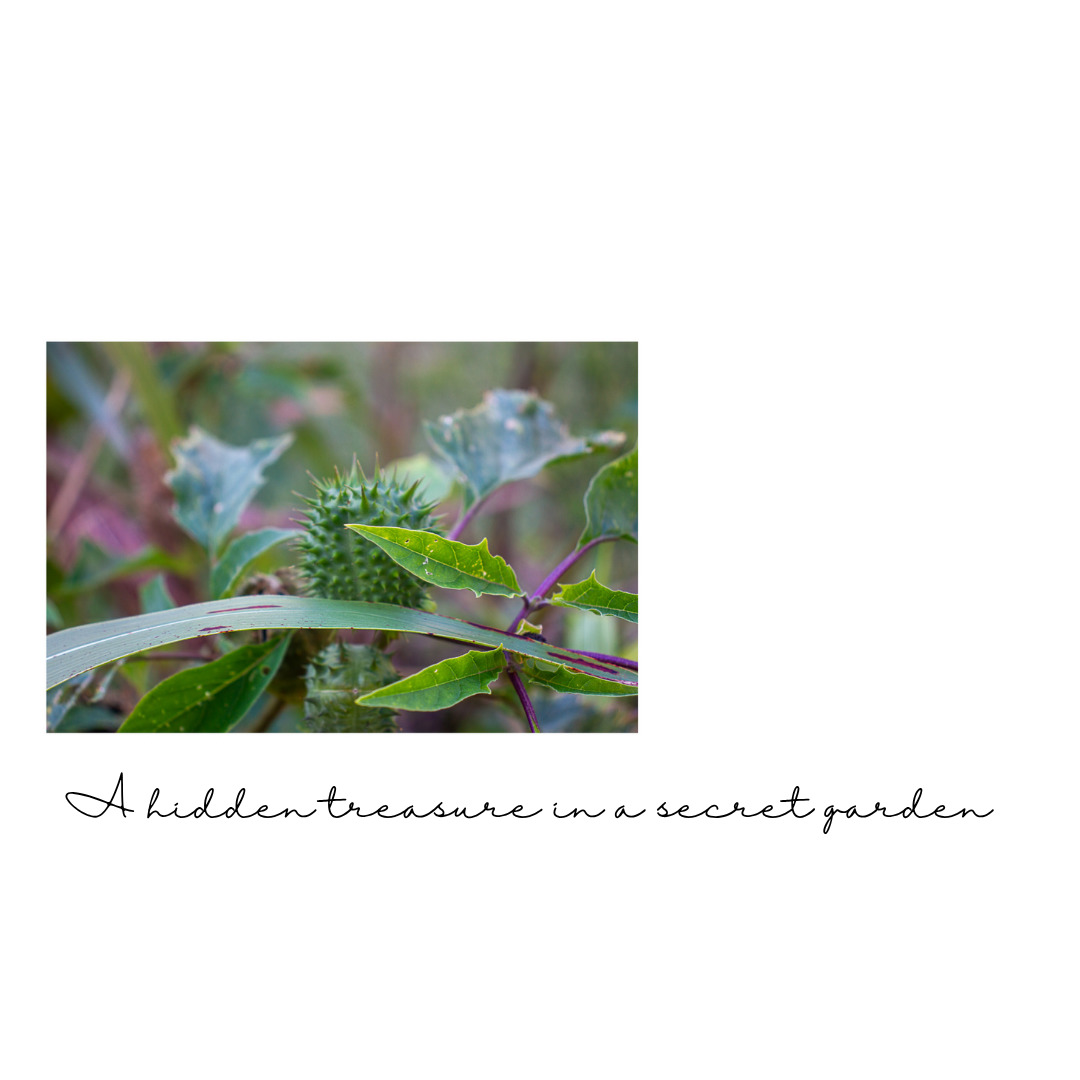
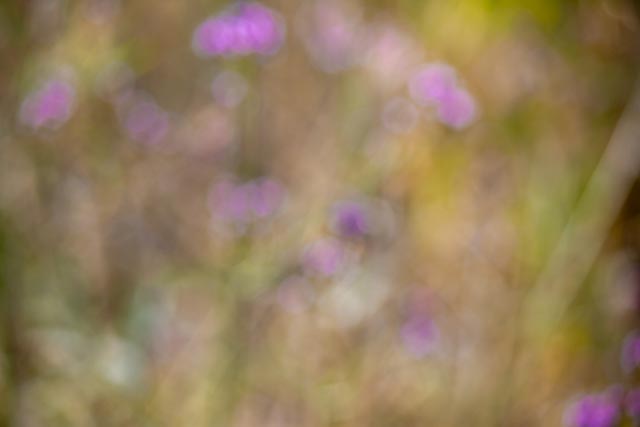
One of my misfires is this one:

It is all out of focus! Yet it is the lack of focus that speaks to me–the quiet greens and soft purples. The suggestion of late summer.

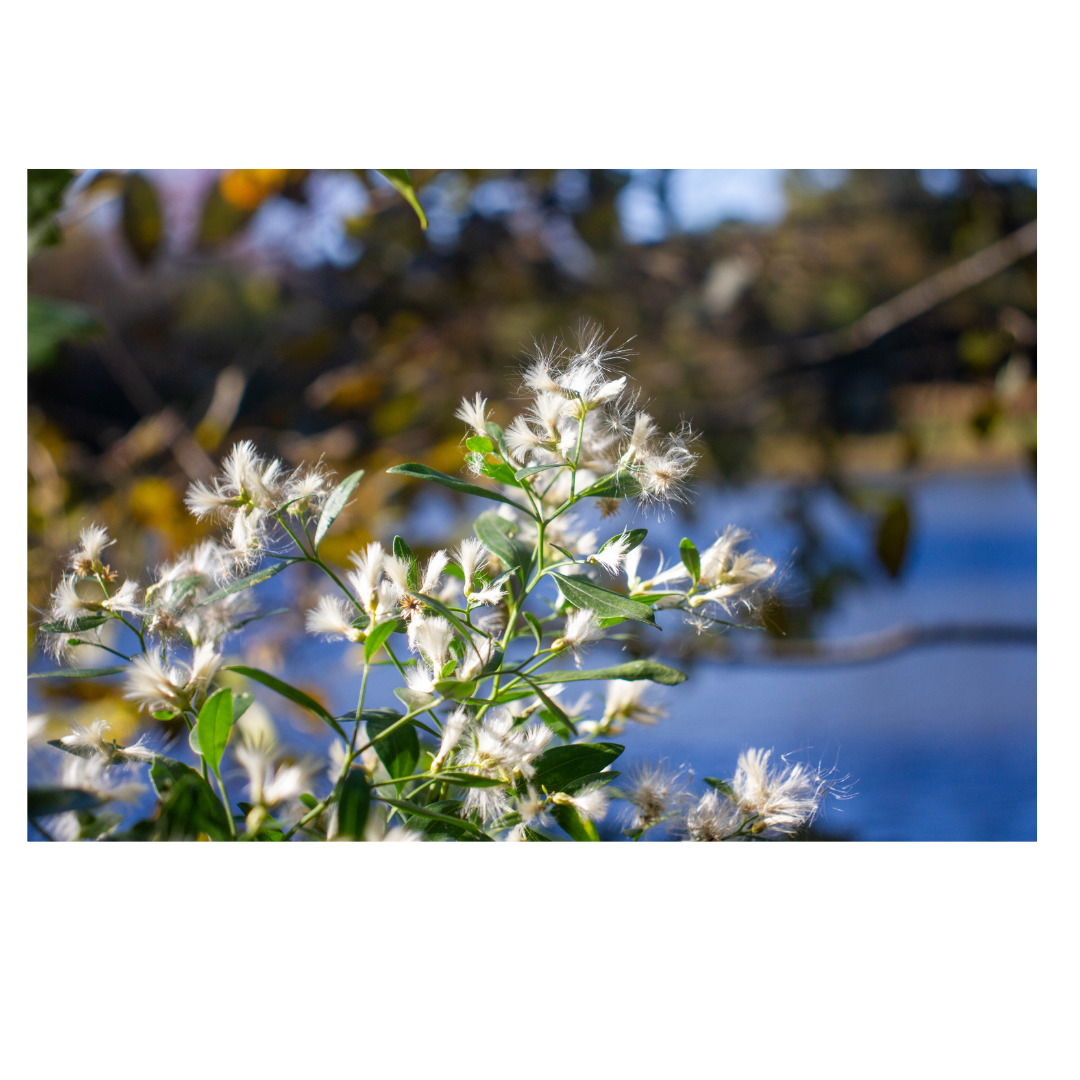
Some other things that were hiding in plain sight:

All I have to do is look for the beauty that hides in plain sight. It’s there.

Where Were You When the World Stopped Turning?

This morning, I woke up earlier than usual because the HVAC technician was coming to inspect the AC system in our home. I opened Facebook to read a reflection on September 11. That put me in mind of the Allan Jackson song, “Where Were You (When the World Stopped Turning)?”

Then I saw the Budweiser ad with the Clydesdales.

And I thought, “Twenty-four years.”

Twenty-four years ago, I was in my Newberry High School classroom, room 102, getting ready for a full day of classes. During the first period, we watched the news on TV (was it Channel One?) and moved into the lesson. It was an ordinary day. I don’t remember whether we had moved to alternate-day block scheduling yet. I don’t even remember what English course I was teaching during that first period. The second period began with a room of twelve tenth-grade boys. English II. The lesson started (who knows what I was teaching that day!), but around 9:30, the English department chair interrupted and told me to turn on the TV. I did, and we watched–in horror and shock–as the second plane hit the World Trade Center tower, as the Twin Towers crumpled to the ground. One of the boys, leaning forward on his elbows on his desk, breathed, “Man, that was cool.” After a second student chastized him, he explained, “It’s like seeing something you would see in a movie. I won’t forget that moment, or that exchange.

September 11, 2001, is my JFK moment. Allan Jackson wrote, “Where were you when the world stopped turning?” In my classroom with those tenth-grade boys, perched on my stool. Literature, grammar, writing, reading–for the rest of the day, none of these were important. No one cared about state standards, PET evaluations, lesson plans, or anything else related to “school.” We weren’t prepared for this. I grew up during the Vietnam and Civil Rights Eras. I watched the war play out on TV every night with Chet Huntley and David Brinkley on the Six O’clock News on WIS-TV, the local NBC affiliate. And I heard about the Irish Republican Army’s attacks on England as Northern Ireland sought their independence from England. Terrorism was something that happened overseas in other countries; it couldn’t happen here in America. Oh, there were riots here in America as protests against the war and for civil rights turned violent, but these weren’t acts of terrorism.’

But on 9/11/2001, something changed. The United States became a target for terrorists. First, it was the Twin Towers of the World Trade Center, then the Pentagon, and finally a field in Pennsylvania, where American passengers on a flight headed toward Washington crashed the plane so that it would not strike the third target–the White House. “No greater love has any man than to lay down his life for another.” (That’s not the exact quote, but you get the gist.)

We thought 9/11 brought Americans together, unified us as “one nation… indivisible”. Today, the world has stopped turning for different reasons. We are no longer united in one purpose. Sometimes, I think we look for reasons for division–race, creed, nationality, color, sexual orientation, political ideology–the list is endless. We may put “All Are Welcome” on our churches’ signs, but what we really mean is “All who think and believe like I do are welcome here.” We may live in a world more connected than ever by our cell phones and apps and by social media, but in many ways, we are more separated and isolated individually than every before.

Where were you when the world stopped turning? I’m not sure the world has started turning again.

Allan Jackson ends his song with the reminder from 1 Corinthians 13 that we have been given three gifts, faith, hope, and love, but the greatest of these gifts is love. I want a world where love is our greatest gift to each other.

Reframing through Daily Practice

A friend of mine began a practice of posting “three good things” on Facebook when she was diagnosed and treated for breast cancer. While I didn’t have anything nearly as serious as that, I decided that I needed to record the good things about my days. I just didn’t post them on Facebook. I bought an inexpensive planner and began listing the good things on most days. That began a practice I have kept for the last couple of years or so.

When I began this practice, I would try to write at night before I went to bed, but sometimes, I waited (er procrastinated?) until the next day, but I struggled with what to write. Sometimes, what I wrote seems so trivial or repetitive that I simply skipped a day or a week. I think in my mind, the good things had to stand out in some way. Along the way, a scrapbooking blogger and memory-keeper I had followed for years offered a class called “Here: Five Things.” She offered a prompt every day for a month for us to list five things we noticed or thought about that day. Sometimes, it might be to list five things we see from our window or five books we love. Often, the prompt was something simple and “everyday.” This month, she is offering a class called “Everyday Tiny Miracles,” along the same lines as the “Five Things,” but without the number five. Liz asks us to notice and pay attention to our days and look for the ordinary miracles around us.

These practices of listing the “good things” has been a blessing to me this summer. It has been a year of conflict and upheaval, personally and spiritually. I had to find a way to shift my thinking from the negative to the positive. I pulled out a lovely sky blue dot-grid notebook and dedicated it to the good things. Each evening, I told my inner critic, who is much harsher than any other critic, to step aside and “be quiet!” And I deliberately found three things about that day that were good. I began listing such things as the aroma of hot spice cinnamon tea in the morning, the puffy white clouds towering in the blue sky, a day without rain. Does it get repetitive? Yes. However, that doesn’t bother me as much anymore. Do I always write poetically? Heavens, no! Sometimes, I am lucky just to be able to spell correctly and use complete sentences! More often than not, my good things are bullet lists.

While researching some templates to guide my morning Bible study, I found a “gratitude” journal that had several elements: an affirmation, a place for a Bible verse and a prayer, and a place to list the gratitudes. I adapted that template for my “Good Things” journal. Each morning, I write an affirmation that I hope will guide my day. It might be as simple as “Pause and breathe,” or as spiritual as “I am a child of God.” Sometimes it might be a reminder that I am “enough” so that I quiet that very loud and obnoxious inner critic. Then, I list three or more things for which I am thankful. Again, I have to remind myself that my list doesn’t have to be grand; sometimes, I am simply thankful that I can breathe again after having a cold and spent the week prior congested. Or I am thankful for that cup of tea in the morning. Then, before bed, I list the good things about the day–the walk around the pond, the sight of the beaver head popping up out of the water in the pond, or the orange butterfly that wouldn’t hold still for the photo op.

The upshot of all of this is that this practice of morning affirmations and gratitude and evening “good things” has helped me be more positive on days that feel so heavy, and there have been a lot of those days recently. Anything can become an “ordinary miracle,” as Sarah McLachlan sings. It just makes life gentler.

This practice is not hard.

Take it one day at a time.

Begin with one thing, an affirmation, a gratitude list, or “three good things.” You don’t have to do them all. Add one new thing as you establish the habit.

Nothing is too trivial; the small things matter, too. Look for the “tiniest of the tiny.”

Pause your inner critic. Sometimes, you just need to tell it to “be quiet.”

I invite you to try your own version of this practice. Feel free to share in the comments.

While Stalking an Egret

I heard the ground squelch with each step,
The hidden cicadas humming in the shadow of the woods,
The whisper of leaves in the wind.
I felt the spongy earth beneath my feet shod in the “barefoot” shoes,
The fan of the breeze against my skin,
The heat of the sun,
 and the moist Southern air enveloping me.
I saw dappled light through the tall pines,
A bank of lavender-pink stars with golden halos in their centers,
The flash of white as the egret glided to a graceful landing at the far edge of the pond,
Persimmons beginning turn even before the first frost,
Leaves with the first red, yellow, and brown of the coming fall.
The air was clean without the fishy smell of the heated summer; it was the clean smell that follows a day of rain.
Clouds drifted, building white and silver towers in the vast blue,
Streaks of green algae painted the pond’s dark canvas with ever shifting scenes.

And for a few moments, my world was an insulated microcosm,
Teeming with life as minnows darted into the safety of the water weeds 
And black and brown dragonflies flitted from one grass stalk to another.
The egret took flight and glided against the blue sky.

All is right with the world

Place-based Writing

Yesterday, I opened an email from a Substacker (The Art of Noticing) about the National Writing Project’s (NWP) annual Write Out event. Begun in 2018 in partnership with the National Park Service (NPS), the event encourages anyone to spend time outdoors observing nature and then writing about those observations. Educators, writers, and park service personnel offer prompts for all ages, children and adults alike.

I’ve been interested in the idea of place-based writing. It’s an idea that has nagged at me for quite some time, but I haven’t pursued it. This may be the year to pursue it actively. I am working on an idea of combining my Kinship exploration of the four elements of earth, air, fire, and water through photography with writing. A prompt from last year’s Write Out comes from Poet Laureate Amy Limon: What would you write in response to the landscape around you?

This is not actually a “landscape” photograph. It’s really more a “portrait” of the great egret that visits the edge of the pond in the backyard. I came home from a book club meeting to see this:

Such a beautiful and graceful bird. It stood statue-still on the bank of the pond for at least ten minutes, or perhaps longer. The egret stood perfectly still in the same spot even after I left the car and retrieved the camera with the zoom lens from inside. I was able to creep up to the edge of the pond on the opposite side to take several pictures.

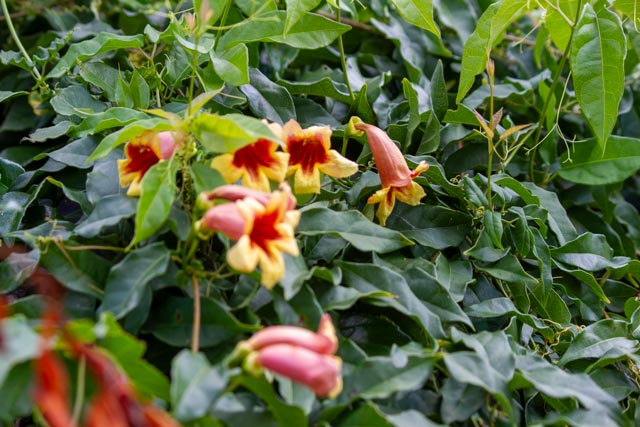
I am amazed by what I see in the landscape of that big two-acre pond (known to family as “The Big Pond”): turtles sunning themselves on the bank, fish darting through the weeds growing thickly in the shallow water at the edge of the pond, clouds reflected on the smooth surface. Clouds billow above. Deer creep out of the woods to drink from it and to eat the vegetation that grows there. Red trumpet flowers fall from the vines growing high in the treetops. Breezes ripple the water. Dragonflies dart from dandelion blossom to blossom. Cicadas and grasshoppers chirp, hidden away by the grasses, weeds, and wildflowers. Blackberries ripen to the darkest purple at the edge of the woods. White and yellow fleabane bloom as stars fallen to earth.

There is no shortage of beauty here.

If you’d like more information about the NWP/NPS annual Write Out, visit the NWPWrite Out page . Resources from past years are available.