E is for . . . .

Tough letter: enthusiasm, engagement, excitement, electric/electricity? All of the above?

What am I enthusiastic about these days? What makes me excited? Well, one thing is visiting my grandson (tomorrow!). He is at that age when everything is new to him. He will be four years old in October. I can tell you that he is full of energy. I know he will be going nonstop during our visit.

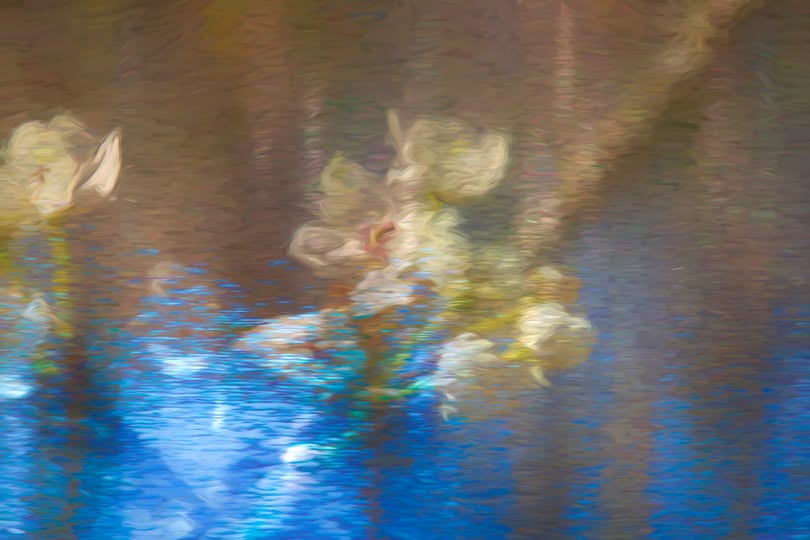
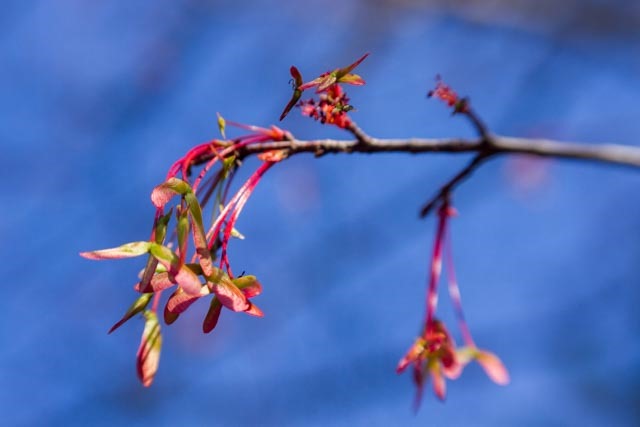
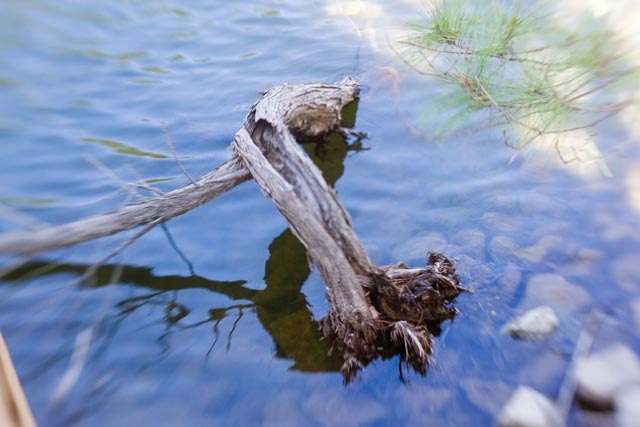
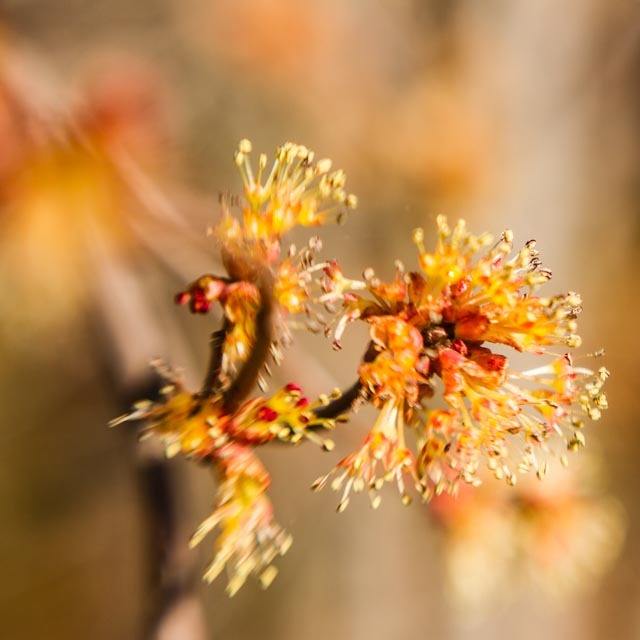
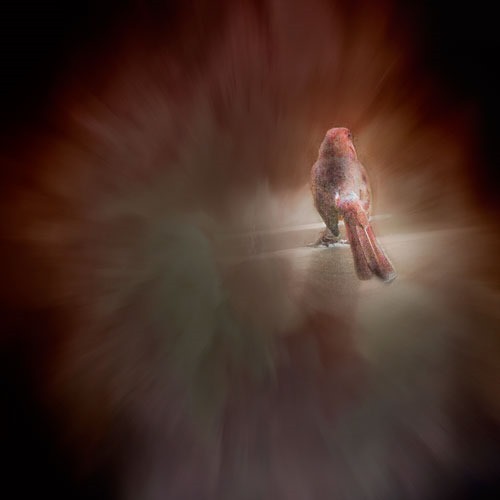
I am looking forward to some new photography classes through the Kinship Collective. I haven’t been as active in the collective since the first part of the year, but I am looking forward to renewing my love for creating photographic art. I have been participating in the Year of Creative Photography classes since January, and this month’s theme of impressionism has really captured my Interest. I’m working on the more “artistic” elements in post-processing. I have a lot to learn. I created this image last night:

This class reminded me that “way back when”, I purchased some presets/plug-ins from Topaz Labs. I resurrected those, reinstalled them, and played with them this month. I had fun!

E is also for EXPLORE, and EXPLORE is my word for this year. I have done a little exploring—mostly in terms of photography and a lot in reading. I’m exploring new ways of recording my “life” in art and in writing. I have to work on my One Word album. I’m a couple of months behind in recording. Now that the winter doldrums are passing, and the sap is rising, as the saying goes, I will get back into the work of exploring. I have two tools to encourage my explorations–kinds of adventure bucket lists, one for places to explore in South Carolina, and another for personal adventures. I haven’t opened either one except for a quick glimpse. It’s time to go for it!

So, excitement, enthusiasm, electricity, and explorations–all E-words to guide me.

Spring Has Sprung–Almost

It has been a long winter. It’s been cold (even though some of the news articles I’ve seen have reported that the 2024-2025 winter has been warmer than usual); I have shivered and worn more layers than usual. Maybe it’s my age.

Regardless of the meteorological data, I am seeing signs of spring: the daffodils on the pond dam are blooming. The cherry, plum, and apple trees are in full bloom. A. E. Housman described the white cherry blossoms as “snow.” This is the kind of snow I like!

With spring comes the #100dayproject and the One Little Word month of developing a practice. I’m working on both of those this month. For the One Little Word practice for March, I have chosen to write “morning pages” a la Julia Cameron in The Artist’s Way: three pages first thing in the morning. I confess that I find Cameron’s practice a bit restrictive, so I modify it to suit me. Sometimes, I write three pages; sometimes not. Sometimes, I write later in the day. I don’t want my practice so restrictive that I don’t do it.

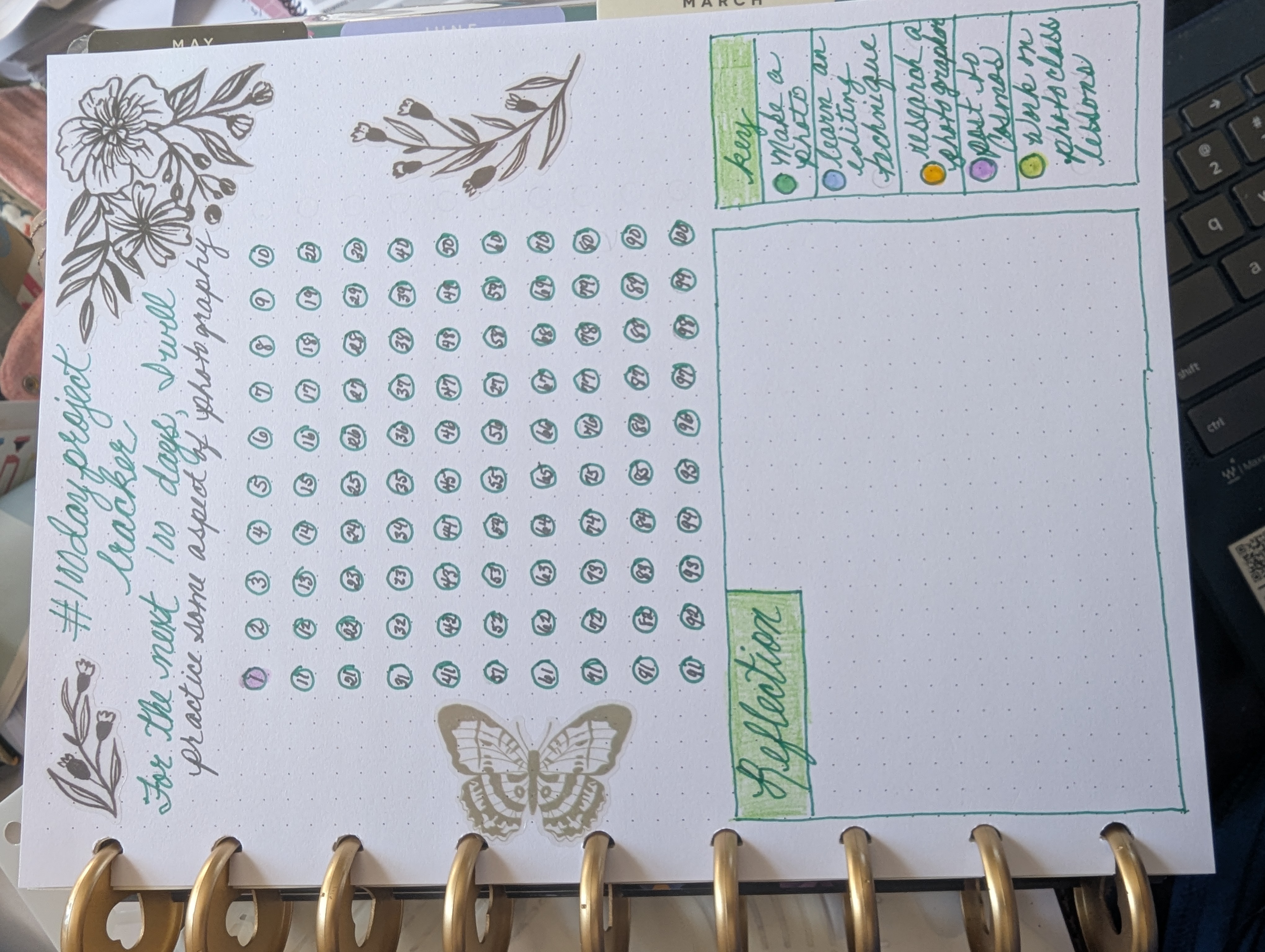
The morning pages are just part of a larger practice for the year. My word for this year is EXPLORE, and one element I want to explore is self-expression through “art”–writing, photography, doodling, drawing, etc. So, my 100 Day Project will center around developing my photography skills. I have set up five ways to work on this goal:

  1. Make photographs. Yeah, that seems simple enough. Just pick up the camera and go out and shoot. Or use my phone camera. I have a new Lensbaby, the Velvet 56, and I haven’t practiced enough with it to be “good.” That will certainly be one of my goals while making photographs.
  2. Learn new photo editing techniques and develop Lightroom and Photoshop skills. One of the things I like about the Year of Creative Photography class is that each month, Lori introduces a photo editing technique. I plan to experiment with them throughout the year.
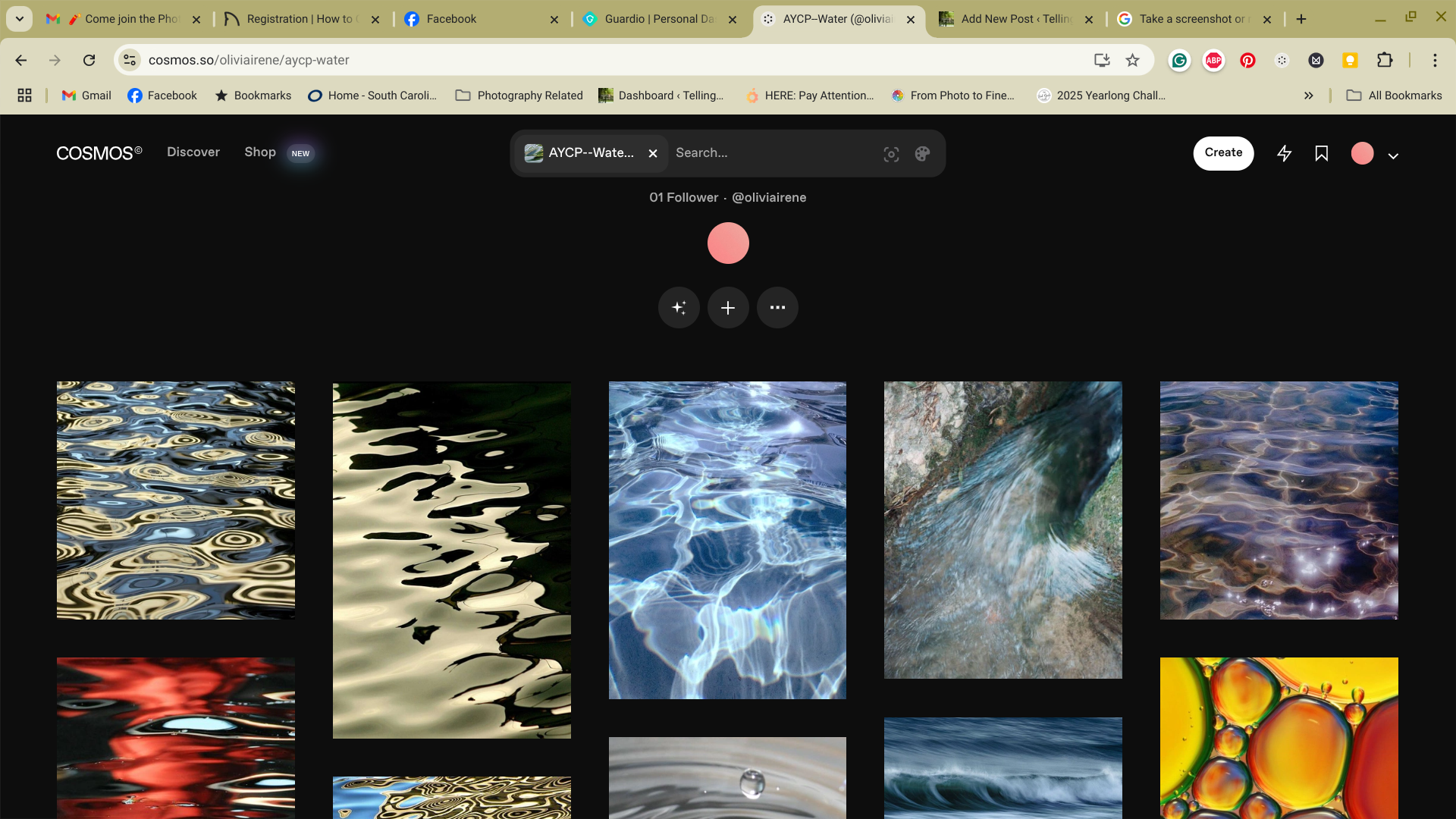
  3. Post things in Cosmos. Kim Klassen introduced Cosmos in a short four-week class last fall. Unlike Instagram, there is no need to write commentary (although there is a way to post notes and text). It’s not so much a social media share-to-brag site as it is a gigantic vision board from which to draw inspiration. By creating clusters around topics, I can search for inspiration and add photos, quotes, and videos to use as reference.
  4. Research other photographers. Again, the Year of Creative Photography has case studies of various artists and photographers in each month’s lessons as guides and inspiration for things to try. I will research other photographers as well to learn from them as much as I can.
  5. And, most importantly, work on the photography classes I signed up for. I have a bad habit of starting an online class and then giving up half-way through. So, I want to make follow through part of my practice.

I made a tracker for my planner to note by progress. I use reading trackers in my book journal, and I have a 31-day tracker in my OLW album to track my month-long practice of writing in my journal.

There is something to be said about putting one’s intentions out there in the world. If one announces it publicly, then there is a certain commitment to completely the things. So, I’m putting myself out there in the world. Day one has begun. (But there is also something to be said for every day being Day One. If I falter, I can always pick it up and make today Day One.)

By the way, I can color in my 100 Day tracker for gathering elements for the AYCP–Water cluster in Cosmos. I hope this gives me some ideas to try when I take out the camera later today.

Just a portion of my cluster for AYCP–Water cluster of images.

Monday is for

Sharing art—at least this Monday is all about sharing art. I’ve been recovering from full-on wedding mode. While being the mother of the groom may not have the same “trials and tribulations” as being mother of the bride (I wouldn’t know; I’m a MOB, mother of boys), there are all kinds of stresses—getting the right dress and shoes (sheesh! My sister and sister-in-law are tyrants when it comes to the right shoes! They didn’t like my “comfortable” choice) and planning the rehearsal dinner. Never mind that the rehearsal and wedding fall right in the middle of the April mod at Remington College, where I teach part-time. Add to the stress, the director of education for the Columbia Campus asked me to sub in three days a week for the first two weeks! And then, on top of everything else, I get hit with bronchitis and sinusitis.  Everything came to a screeching halt. Imagine the sound of train wheels on railroad tracks as the engineer and brakeman try to stop the train “on a dime.”

Creating and making art has been the last thing on my mind.

But, I am in create mode, sort of (still trying to get through the day without coughing). I made some images last week of the spring wild flowers (aka weeds), and on Sunday, I worked on transforming them with Photoshop using textures, overlays, and other techniques. Ever since Kim Klassen introduced me to using textures, I have been in love with the way they can enhance the mood or even transform the mood. And then came Denise Love of Two L’il Owls (beautiful textures and other design elements) and Sebastian Michaels’s Photoshop Artistry class (I keep repeating the first two modules over and over; I still have worked through the one on vectors!), and a host of other photographic artists. I keep learning more and more tools to use.

This is a long-winded introduction to the reveal of the creations from Sunday’s work.  Monday is for sharing art.

trumpetvinewildflower

I love the various graphic elements that come from the Graphics Fairy website. Many of them are free, and the monthly subscription is reasonable, less than $10.00 a month. The downloads are incredible. And the downloads from Ephemera’s Vintage Garden are so beautiful. In the top image, I used a cabinet card cover that was intended to be used as a junk journal cover, layered it with a photograph of a trumpet vine growing in the crepe myrtle tree in the backyard, a postcard from a collection of ephemera and design elements from Denice Love and Two Lil Owls in a bundle put out by Design Cuts, and some textures to blend everything together.

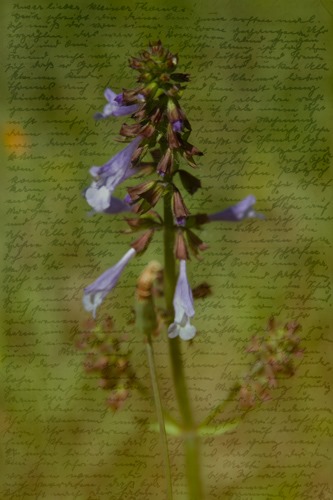
In the second image, I did a web search for a vintage postcard that had a vertical orientation rather than a traditional horizontal one, and I didn’t find what I was looking for. I did find a page of script that I liked. I used the script as an overlay over the image of the wildflower (I don’t know what it is), used a soft brush to mask out the script over the flower, applied a Denise Love texture and a custom gradient to unify the elements.

One of my business goals is to create products from my photography to sell, and I am practicing and working on the artistic elements. Another goal is develop a series of images for a gallery showing.  I think I am on the way. There is a lot of learning to be done.

Today, think about how you can share your creative pursuits. You don’t have to be a photographer, an artist, a writer, a musician to be creative. Your everyday life is “art.” When you cook and substitute allspice for the nutmeg the recipe calls for, put those fresh flowers you bought from Publix in a vase, arrange that rocking chair your mother made in just the right spot at just the right angle, you are being creative. And more importantly, share your creations with others.

Words and Wednesdays

I’ve had an “itch” to write recently—well, more than recently. I’ve been writing since I was in high school. I remember giving my high school English teacher a short story I had written. She liked it. My college English profs told me that I thought—and wrote—well. One even asked me in front of the class how I had learned to write. I was between my junior and senior year in high school taking a second-year college level British lit course from Beowulf to the beginning of the nineteenth century, using the ubiquitous Norton Anthology of British Literature, Volume 1, with the famous portrait of Queen Elizabeth I on the cover.

I don’t know when I fell in love with words, with reading. Mama says it was from birth. She read to me and to my sister all the time, often falling asleep herself before I did. She grew desperate and tried everything to read me to sleep: the “begats” from the Bible, dictionary definitions, and even encyclopedias. I would wake her to “finish the story.” The love of words has never worn off.

I am in a writer’s group on Facebook, and one of our regular rhythms is Wednesday Words That Work. I think about the words that work. I am not a good memorizer, but I remember things that I have read and heard that resonate with me:  Tennyson’s short poem “The Eagle,” “He clasps the crag with crooked hands. . . . “; the scene at the end of Keats’s “The Eve of St. Agnes” when the lovers slip through the quiet halls of the castle as if in a dream; the “unquiet slumbers” of Cathy and Heathcliff at the end of Wuthering Heights; even the opening lines of Pride and Prejudice and the reminder that every young lady needs a husband (not much has changed in the last two hundred years!) I could probably go on for a long time remembering the words that worked for me.

The words that work for me are those that I visualize. As a teacher, I have taken all kinds of learning styles inventories, and the results are remarkably similar: I am a visual learner. It is not surprising, then, that I am also drawn to photography and other visual arts. Pictures may be worth a thousand words, but a phrase or two of well-chosen words can inspire a thousand pictures as well. While I devour Regency romances by the dozens (finishing one this afternoon, probably), I will forget about these novels quite quickly. The novels and books I remember are the ones that use words to create vivid pictures and scenes as I read.

As I write, I think about the poetry, too, that has been inspired by art. (There is a fancy name for that kind of literature): Browning’s “My Last Duchess” ( which may or may not have been inspired by real people or real paintings—with Browning, who knows?); “Musee des Beaux Arts,” and quite a few others.

icarus.jpg (80610 bytes)

Pictures, words, images.  Stay tuned for more about an online course I am writing.

In the meantime, please enjoy this new-to-me blog, Words and Images by Cynthia which combines words and images. I have gotten lost in Cynthia’s writing and photography. I found her through another interesting and inspiring website, The Creativity Portal.

He Said, She Said

untitled-10

I posted some pictures of “spring” that I received during my walk through the Dreher Island State Park on Thursday. Folks, it’s FEBRUARY, and I was wearing a short sleeved T-shirt. Temperatures are almost 80 degrees! It was gorgeous. My “fan club” appreciated them; I received a few “likes” and “Loves” and “Wows” and a couple of comments. And then, there was this:

You are an artist, lady.

This comment came from a colleague with whom I had taught for quite a few years. He taught chemistry and physics, and, interestingly enough, he has degrees in theology as well. And he said, “you are an artist.”

untitled

My first response was (in my head), “Boy, do I have you fooled!” My written response was, “Well, thank you. It’s a passion.”

Like so many others I know, I have trouble accepting that label: “you are an artist.” I tend to compare my work to the work of other photographers, both amateur and professional, friends in-person, and friends on-line; and I feel that I come up short.

Last night, I stepped back a bit. I looked at the images I created. I thought a bit about what art is. And here is what I’m thinking this morning, at the edge of a weekend. Art is the way we share our vision of the world. For some, that sharing comes through painting or sculpture or sketching and drawing, through cooking and recipes, through musical compositions or performance, through writing poetry or novels or essays or nonfiction or drama; through acting, through designing and building—I’ve discovered there is an art to hammering a nail straight into a board! (I don’t have that art.)

untitled-16

I choose to see beauty in the world, and my photographs receive that beauty. I, like so many, can get caught up in the “big picture”—the sight of that majestic pine that has stood in place for years and years and years; the expanse of water where it meets the horizon, a whole field of sunflowers or grain. . . . But then there are the details, that cluster of “baby pine cones” (did you know they are pink?), the end of the stamen covered with thick yellow pollen standing out like spider legs, the amazing depth of blue sky, white clouds rimmed with gray (for contrast!).

untitled-13

I suppose I am an artist. I have “the art of seeing” and receiving those images reminds me that there is beauty everywhere.

Textures—the Tuesday Technique

I love the “artsy” look that textures can add to photographs. Sometimes, I get carried away when I use them myself. And I go through spells when I use them a lot.

Today, my focus in some tips for applying textures to images.

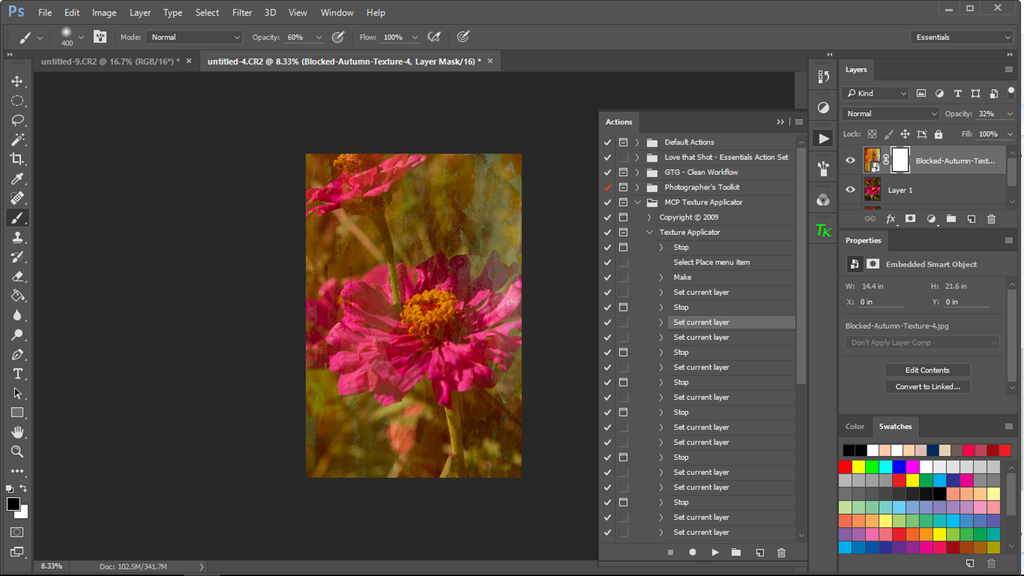
I confess: I “cheat.” I use the MCP free Texture Applicator action to apply textures to images. It’s easy to use: just a few clicks, and the texture is imported into Photoshop and placed over the image; then drag the corners to resize if needed, double-click on the image, and the texture is placed. Of course, there are some tweaks—blending mode, opacity, and the like.

The MCP action creates a layer mask with the defaults of white and black for the brushes. The idea is that you can brush off the texture with a black brush over the places where you might not want texture, such as over skin in a portrait or perhaps over the flower in a “portrait of a posy.” But there are other ways to handle textures.

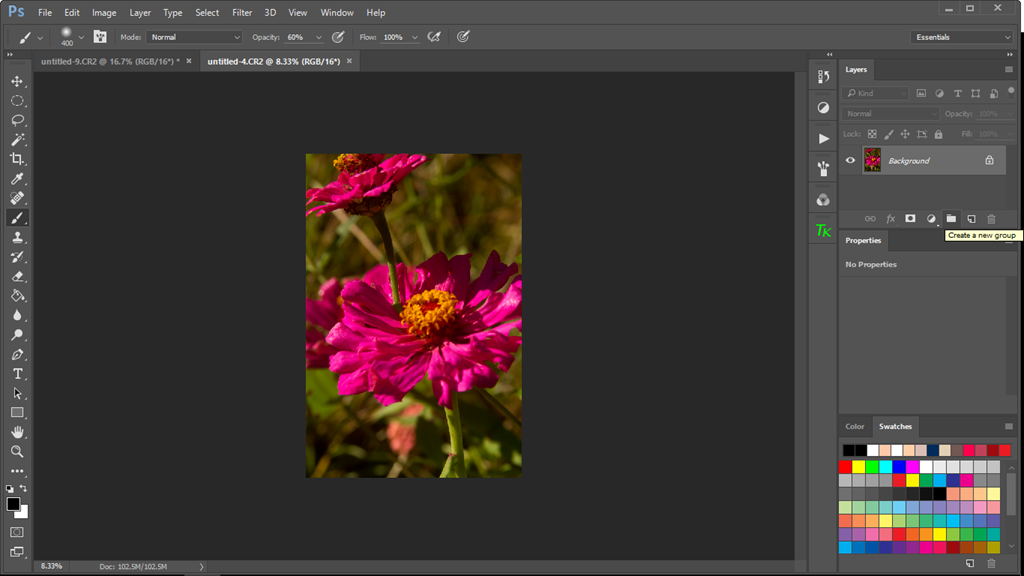
I’m going to play with this image today.

image

As usual, I made basic edits in Lightroom to adjust white balance, set the white and black points, and tweak the contrast, saturation/vibrance, and the like. Then I sent it into Photoshop CC for the final edits.

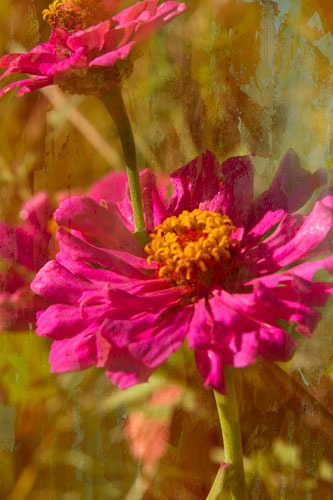
I want to add some fall color to this image as this is probably some of the last of the zinnias that will bloom in my little garden before frost. I don’t really need texture because the background has plenty of it. I want the texture to create a mood, though, that is not present in the original.

I am using one of Jai Johnson’s blocked texture from the Autumn Collection pack that is part of the the Design Cuts bundle deal. There are some gorgeous textures and patterns in this bundle.

image

Already, I like the look. It’s painterly, and I love that look for floral images. But do I really want all that texture on the flowers themselves? This is where it’s fun to get creative.

First, I am going to experiment with the blend modes. It’s set for normal right now with an opacity of 32%, which allows the original image to be seen through the texture layer. For this image, I like the Screen mode at about 50%, but I want more of those magenta/purple zinnias to show. I can do a couple of things. I can lower the opacity of the brush to something like 20 or 30% and retain some of the texture and the color, or I can removed the texture and color all together. There is a third technique as well that softens the texture while retaining some of the color: using a filter layer with Gaussian blur. I’ll show you the results of each.

First, here is the result when I brush off the texture at about 30% opacity.zinnias-with-30%-texture

It still retains the texture that gives it a more “autumn” look with the oranges and golds, but more of the color of the flower comes through.

This version removes the texture but retains the color by applying a Gaussian blur selectively over the flower itself. When you use this method, be sure that you click on the texture thumb nail in the texture layer. Use the lasso tool and draw around the subject; you don’t have to be exact. Select Filter>Blur>Gaussian Blur from the top menu. Use the Radius slider and pull to the right until the preview is smooth. I went up to about 55 pixels. Then click okay.

zinnias-with-gaussian-blur

More of the color of the texture layer is retained but there is less texture on the main flower. I still have painterly look but with a more muted flower color. I could go back to the layer mask and brush out some of the color as I did with the image above, or I could lower the opacity of the layer itself. It’s your personal taste and your vision for the image.

A Day of “Arting”

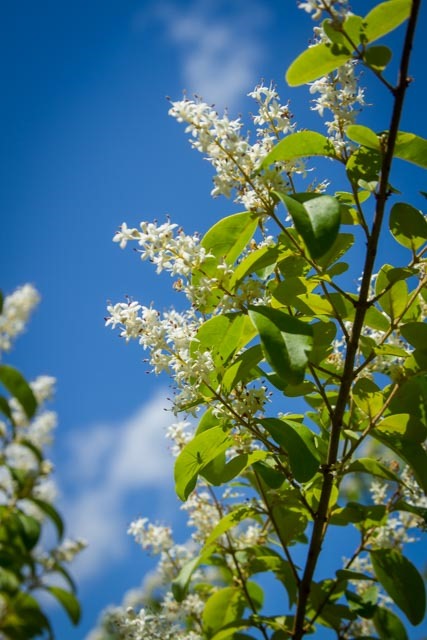
Yesterday, I saw a shrub of some sort waving its white branches at me. I had to fill the bird feeders anyway, so I grabbed the camera and went out for a quick photo shoot. After asking on Facebook for an identification, I found out that it is privet hedge. It is beautiful and smells heavenly. I started with this image:

untitled-2

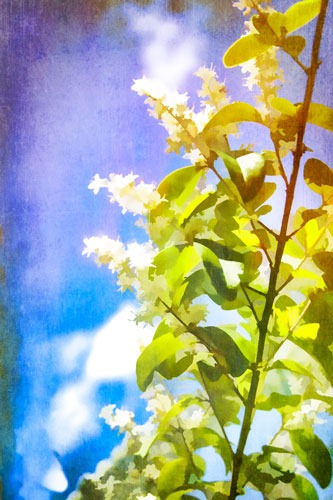
I applied a texture layer and used Topaz Simplify 4 to apply the “impressionist” effect, and ended with this:

privit-hedge

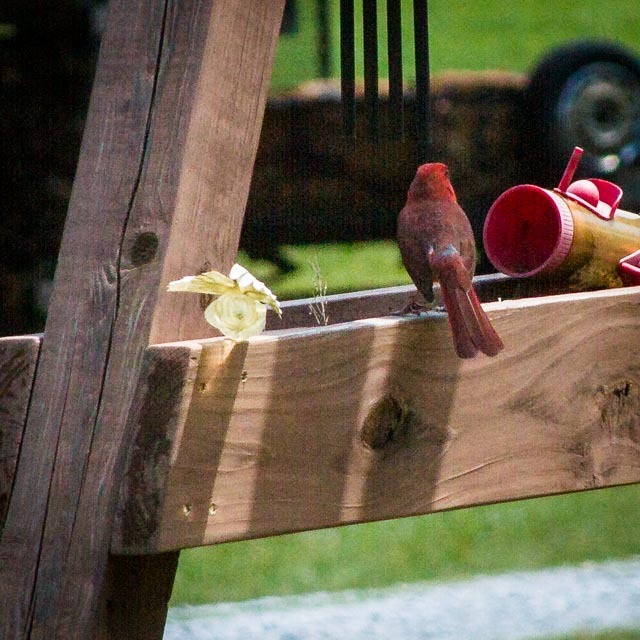
I like this image. But I wasn’t done playing with the images I received yesterday. A lone male cardinal visited the feeders after I filled them. I really did not have the best lens on my camera to get this shot, but I had to try. Cardinals do not like to pose for photographs, and I was hasty. My original image was underexposed, but with a little Lightroom magic, I was able to recover enough details to work with the image. In addition, the background is busy and distracting, and I really had to work with the background to get something I was pleased with.

untitled-7

I cropped the image to a square. Then I used some techniques from Susan Tuttle’s book Digital Expressions to desaturate the background while keeping the color of the subject (the cardinal) and creating a vignette with a color fill layer. This is the result:

cardinal

I wasn’t quite satisfied, so I played a little more. I added a texture overlay in vivid light mode and the spot light effect from the filter|Render menu in CS6. After playing a bit with opacity, I ended with this:

cardinal-2

There is a Native American legend that says that cardinals are visitors from heaven. I suppose this little bird is such a visitor.