Reading in October and Other Things

In some ways, I feel like I haven’t read a whole lot this month, yet, looking at my book journal, I’ve ticked off eight books this month.

My book club read Fiona Davis’s The Magnolia Palace, which tells the story of Lilian Carter and Helen Clay Frick. When Lillian escapes from the police, who want to question her in the murder of her neighbor, she finds herself being hired as Helen Frick’s personal secretary. There, she discovers that she is more than a model for sculpture, but quite capable as an organizer. When Henry Clay Frick dies under suspicious circumstances and a valuable piece of jewelry turns up missing, Lillian escapes again. In 1966, another model comes to the Frick mansion for a fashion photo shoot and ends up getting locked in the museum while a blizzard closes down the city. Veronica and Joshua, an intern who also finds himself snowed in the museum, follow clues to a treasure hunt Helen Frick left behind fifty years earlier, and find the missing jewel–and the solution to an unsolved murder. I truly enjoyed this book, and now I want to visit the Frick Collection to see the art myself.

I read one nonfiction book this month, Church in the Wild, about how to “do church” beyond the brick and mortar buildings that often define church. Victoria Loors makes a case that the outdoors and the wilderness are places where we, as Christians, can encounter the voice of Christ speaking the gospel to us. Loors is not arguing for a “New Age” or pantheistic religious practices at all. She invites us, though, to look at the Scriptures through a new lens to see how God speaks to us through the natural world. This book definitely provides me with much to think about.

As usual, I read quite a few historical mysteries set in the nineteenth century, most of which are continuations of series of novels I’ve been reading over the last couple of years. Irina Shapiro’s Murder of a Vampire brings together James Redmond, an American surgeon who inherits a title and estate from his British grandfather, and Daniel Haze, a Scotland Yard detective, to solve the murder of a young immigrant who has been murdered and given a “deviant burial” as if she were a vampire. As usual, Shapiro captures the atmosphere of the Victorian era in this novel.

Word of the Wicked by Mary Lancaster is the fifth book in the Silver and Grey series. They are hired to investigate a series of anonymous letters sent to various citizens accusing them of injustice or mistreatment of others. While there are no murders involved in the case they are hired to investigate, the return of Solomon’s twin brother complicates things. David is a suspect in a murder, and Solomon must divide his time between investigating the letters and clearing his brother of murder charges.

In Mary Lancaster’s Vengeance in Venice, Constance Silver and Solomon Grey go to Venice on their honeymoon. While Solomon intervenes in a street fight, Constance is kidnapped after being mistaken for the mistress of the man who is being attacked. Later, the kidnapper’s employer is murdered, and Solomon becomes a suspect. Together, Constance and Solomon investigate to clear his name and solve the mystery of the murder. They get embroiled in the politics of the conflict between Italy and Austria during the investigation.

Andrea Penrose brings back Charlotte Sloane, her wards Raven, Hawk, and Peregrine, and her husband, Lord Wrexford in another twisty mystery that involves murder and mayhem. Set in London at the end of the war with Napoleon, Wrexford is asked to investigate the possibility that the French have developed an electromagnetic telegraph machine after a controversial scientist is murdered. The case takes a twist when there is a threat to the London Stock Exchange. Andrea Penrose is able to blend historical figures and events into her fictional world seamlessly. I learned more about the stock market in this novel. This is the kind of historical mystery I truly enjoy.

I have read James Patterson’s Alex Cross novels before, but I was delighted to find his collaboration with Brian Sitts, Holmes, Marple, and Poe. Brendan Holmes, Margaret Marple, and Auguste Poe join forces to form a private investigation agency and buy an abandoned bakery where a young woman was murdered early in the 20th century. Together, they work on four cases, including the theft of priceless books, a murder, a kidnapping, and bribery at the highest levels of New York City government. The biggest mystery, though, is the identities of the three PIs. Each of the three PIs has unique gifts that combine to solve the crimes, often showing up the police. I will be reading the second book, Holmes Is Missing.

My least favorite book of the month is The Venice Murders by Merwyn Allington. Set in 1958, Flora and her new husband, Jack, celebrate their delayed honeymoon in Venice. The concierge of their hotel turns up dead in a canal. Flora cannot help but investigate. While Jack tries to control Flora’s “intervention,” his stepfather asks him to investigate the theft of a religious painting. Jack reluctantly agrees when there is a tenuous connection between the two crimes. Allington does not capture the atmosphere of Venice as successfully as Lancaster.

I am using my book journal to keep track of my reading. I’m working on revamping the organization, but that’s a post for another day.

March Reading Roundup

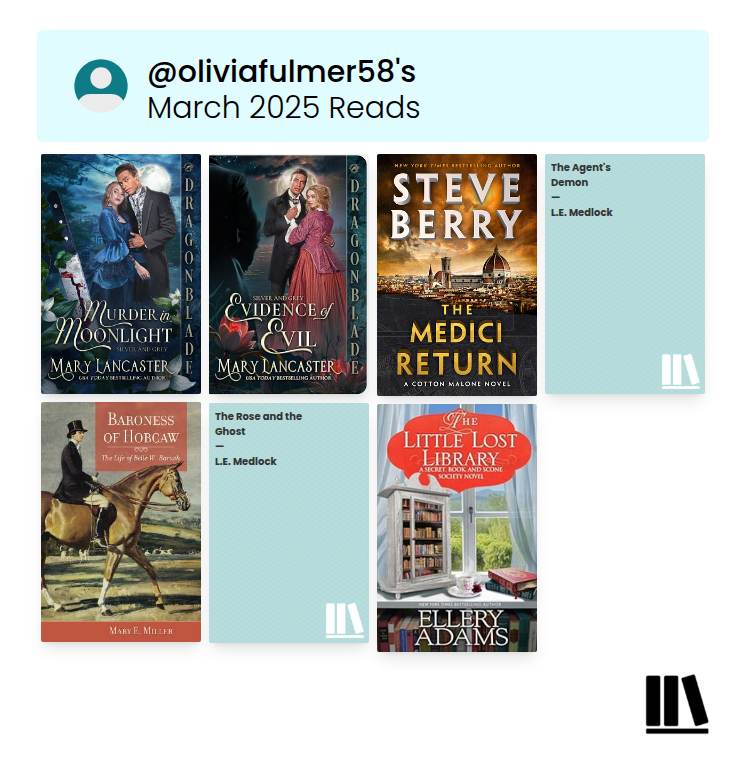
This has been a strange month for reading. It seems I have started a lot of books, but didn’t finish them for some reason or another: Persuasion by Jane Austin, Women of the Word by Jen Wilkin (almost finished–I’m on the last chapter), The Let Them Theory (just started, so I can’ complain too much about not finishing that one). . . . I put The Covenant of Water on pause, but do plan to get back to it in April. It is such a beautifully written book that I do not want to abandon it. So, what did I read? A lot of “fluff”!

I started the Locke and Steele series with The Agent’s Demon and The Rose and the Ghost. The Agent’s Demon has paranormal investigator Agent Hazel Locke and her demon partner investigating the Whitechapel Murders of Jack the Ripper. When they discover the identity of the Ripper, they must flee England to Paris to save their lives. While in Paris, they plan to investigate the murder of Steele’s family. The Rose and the Ghost tells the story of the search for the identity of the murderer of Steele’s family, but also includes a retelling of The Phantom of the Opera. Reading the latter book has prompted me to read the classic Phantom although I may be singing the songs from the musical in my head while I read. These were enjoyable paranormal mysteries with a bit of history thrown in, but I’m not likely to reread either of them although I will read the next installment when it comes out.

Ellery Adams is a “local” author from North Carolina. I thoroughly enjoyed her Book Retreat mystery series and started the The Secret, Book, and Scone Society series last year. The Lost Little Library was another fun read that kept me guessing until the end. Nora, Grant McCabe (the sheriff and Nora’s lover), and the women of her book club have two mysteries to solve: the mysterious death of Lucille Wynter, who leaves Nora a book that takes her on a scavenger hunt for various items that will uncover a family secret and the theft of YA books from her book store. What I love about Adams’s two series is the allusions to all kinds of books, so much so that I regret not writing down the titles as I read so that I can read them as well! This is another series I look forward to the next installment.

Another mystery series that held my interest was Mary Lancaster’s Silver and Grey mysteries. Constance Silver and Solomon Grey team up to solve a couple of murders in this series. They work well together, and there are the beginnings of a potential romance. I will be looking forward to continuing this series as well.

I can’t lose when there is a Steve Berry book. The Medici Return is the latest book in the Cotton Mather novels. Mather is a retired agent from the Magellan Billet, a top secret intelligence organization in the U. S. government. In this installment, Mather is sent to Italy to investigate the possible criminal activities of an archbishop. However, things get complicated when a businessman and member of the Italian legislative body claims to be a direct descendant of the Medici family, to whom the Vatican owes a great deal of money. I love all the history and “local color” that Berry infuses into his novels–and the fact that he can keep me guessing about the outcome until the very end.

I am well on my way to meeting my goal of six nonfiction books. So far, I’ve read Maya Angelou’s The Heart of a Woman in her series of autobiographies and Mary Miller’s biography of Belle Baruch, who is responsible for a true South Carolina treasure, Hobcaw Barony, which she set up with the state to be an educational and research facility in the Low Country. This book was interesting in so many ways. First, Belle Baruch was an interesting woman, a feminist and women’s libber before there were such things. Second, she was a paradox, known for her generosity and kindness but also somewhat bigoted and prejudiced. It was her love of nature, though, that stands out. As I read the book, I kept thinking, “Why haven’t I learned about this?” There was so much South Carolina history, as well as U. S. history in the biography. I didn’t know there were U-boats off the coast of South Carolina or that German spies actually made landfall in the Low County. I didn’t even know about Bernard Baruch’s role in history as advisors to seven presidents. It was an eye opening experience reading this book, and we had a lively discussion during the book club meeting.

I will probably finish Women of the Word this week. This book describes a method of Bible study that goes deep into the Word of God. Although the target audience is women, the method of study outlined by Jen Wilkin is applicable to anyone who wants to study Scripture in a meaningful way. I have tried several study methods over the years, but Women of the Word brings them all together. I am also using another method, the James Method, which incorporates many of the same elements (but with different names) as Wilkin’s method.

This morning before I began this post, the Book of the Month Club posted its April selections. I’ve chosen Six Days in Bombay, a historical novel; Famous Last Words (a BOTM exclusive), and The God of Woods (I’m late to the party for this book). Hopefully, I will be able to get into the books more in April.

Oh, by the way, April is National Poetry Month, and my “practice” for this month will be to collect quotes from poems every day of the month into a handmade commonplace book. I am starting with Mary Oliver’s collection, Devotion.

Jumping on the Empyrean Bandwagon

Time flies when you’re having fun, right? January certainly flew by. Maybe it just seems that the months go by faster because I’m getting older.

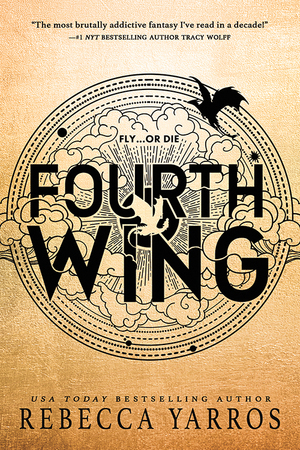
So, I jumped on the Fourth Wing/Empyrean series flights this week. I just finished the second in the series this morning after two days of almost marathon reading sessions, thanks to my Kindle Unlimited subscription. And because I didn’t want to wait until the third book went to KU, I bought it and will probably start it this afternoon (after I do some laundry and eat lunch).

My take on the series: First, I enjoyed the story. I enjoyed the “enemies to lovers” subplot. I thought Rebecca Yarros created a believable fantasy world that allowed me willingly to “[suspend] disbelief,” as Samuel Taylor Coleridge says we have to do in order to engage our imaginations. I was able to buy into the world of the “war” college, the use of dragons, and magic and all that. My major criticism has to do with the language in the book. I am not really a prude; I do not pepper my own language with four-letter words because that’s not how I was brought up. I found the graphic language excessive. In fact, I found it distracted from what the characters were saying. Perhaps because I expected it in the second book, it was not as distracting, but I don’t think it was as prevalent.

Of the first two books, I actually liked Iron Flame better even though it seemed longer. I liked the twist at the very end (no spoilers, other than to say, there is a very interesting twist in the cliffhanger ending). I can’t help it; I’m a retired English teacher, so I do look for themes and foreshadowing and the like, and one of the themes that strikes me is the “power corrupts, and absolute power corrupts absolutely” theme. This theme is especially strong at the end of Iron Flame. Other motifs that appear throughout the series are “coming of age,” even though the characters are adults in their twenties (the characterization, though, makes them seem more like adolescents than adults), loyalty and betrayal, family/sibling/parent-child relationships, and the “found” family.

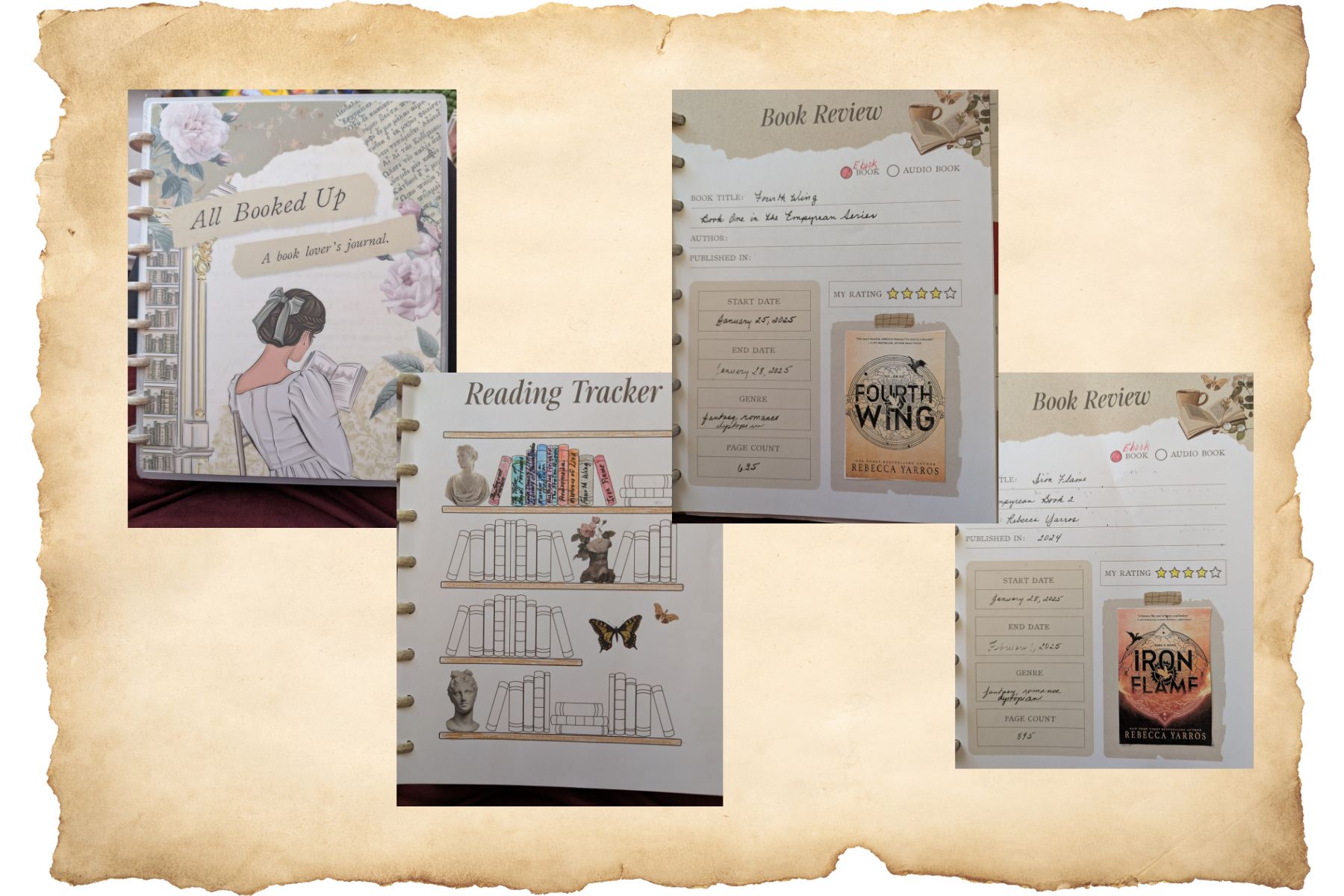
Last year, I began keeping a book journal/reading log, and I am continuing the practice this year. One of the things I do is list the genre of the books I’m reading because I will get into a rut if I am not making conscience decisions about what I’m reading. Sometimes, making those classifications is not easy. Fourth Wing and Iron Flame are definitely in the fantasy genre with its use of talking dragons and magic, and it is a romance as it traces the development of the relationship between Violet and Xaden. (The new term is romantasy), and I think it falls in the YA classification with the young protagonists. That being said, I would not recommend this novel for younger teen readers. I also classify this book as dystopian in many ways. It has the autocratic leadership with a secret agenda hidden from the citizens in the name of protecting them as well as the use of fear to control the characters. Fourth Wing reminded me of The Hunger Games in the way the cadets were allowed to kill each other off in order to secure their places as riders.

After I finish Onyx Storm, I will return to By Another Name. I do have a tendency to binge-read when I start a series in progress. Unfortunately, I will have to wait a couple of years before the fourth book in the Empyrean series is published. Rebecca Yarros has stated that she is not committing to the one-year turn around for this next book due to the mental and physical stresses that schedule puts on her. And there are some new books coming from the Book of the Month Club and the Aardvark Book Club in the next couple of weeks as well. February will be a busy reading month, too.

January Reading

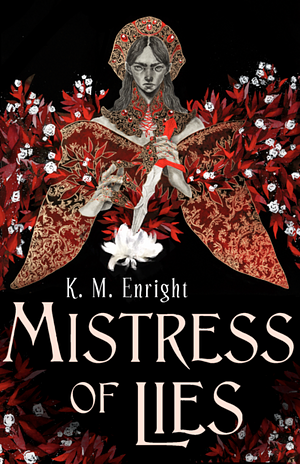
My tally for the month of January is probably nine books (unless I finish Iron Flame by Rebecca Yarros in the next day or two). I finished Mistress of Lies by K. M. Enright last week and Fourth Wing by Rebecca Yarros yesterday.

Both books are fantasy; Both books have some questionable characters, meaning I’m not sure I like them. However, I did like the books. Mistress of Lies addresses the question of what to do about a leader and government that are oppressive. Questions of class and gender are also at play in the novel. Politics and deception are the tools of survival in this dystopian-like novel.

Fourth Wing is a faster read. It relies on action to tell the story. My jury is still out on how many stars I would rate this book (if I were the rating type). I found the profanity and graphic language excessive; the use of the f-bombs and s-words did nothing to develop characterization or the atmosphere or tone of the novel. They were more annoying to me than anything else. The setting of the riders’ quadrant and the “fly or die” and the weeding out of the weak through death reminded me of The Hunger Games where the only way to win is to survive. While some of the characters do form alliances–and romances, the overall attitude of “every rider for him/herself” is prevalent as is the spirit of distrust among the characters. While there are some genuine loyalties formed, there are not many.

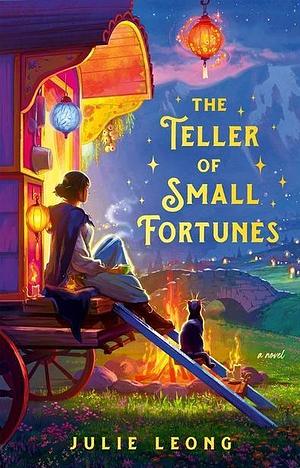
My pick of the month, though, is The Teller of Small Fortunes by Julie Leong, the story of a seer who must travel across two regions to find her family of a former thief, an apprentice baker, and a mercenary in search of his missing daughter, and a reconciliation with her mother. It is a “feel-good” story in the end.

Now, I have to finish By Another Other Name by Jodi Picoult and Yarros’s Iron Flame. Also in my TBR stack is the latest installment of the Makaela Forsythe and Angus Brodie mysteries, Deadly Curse, a fun mystery with a feisty protagonist and her broody Scots “side kick” (although Brodie would definitely bristle and make that uniquely Scottish noise if he knew I called him a sidekick!).

Mid-month Reading Round-up

For the second year in a row, I have set a reading goal of 100 books. I managed to read and/or listen to 119 books. I have always been a voracious reader, resorting to reading cereal boxes when there was nothing else handy to read. I will probably exceed the 100 books again this year at the rate I’m going. So far, I’ve read seven books. I’ve broken down my goal into smaller ones as well: to read a classic a month, to read six nonfiction books this year, and to complete a formal reading challenge.

My reading challenges come from two sources: The Book Girls, who host several challenges such as the Book Lover’s year-long challenge with a different book related theme each month, a decades challenge, a “lifetime” challenge, and an In-case-you-missed-it challenge. Read with Allison also has a challenge list that inspires me to push out of my comfort zones. I also subscribe to the Book of the Month Club and the Aardvark Book Club as a source of books.

So far in January, I have finished seven books already.

I actually started two books in December of last year, The Secret Garden and The Teller of Small Fortunes. I had never read The Secret Garden as a child, but I had seen the movie with Gary Oldman several years ago and enjoyed it. I was entranced by the book and the way Mary and Colin grew as characters.

The Teller of Small Fortunes was a slow starter for me, and I put it aside during the holidays. However, once I picked it up again, I was hooked. This is the story of a fortune-teller who finds a family as she travels from town to town telling “small fortunes,” hoping to avoid the attention of the guild of magicians and seers. It is also a story of reconciliation and second chances.

Lula Dean’s Little Library of Banned Books caught me by surprise. I expected it to be more humorous, and there are some comic moments. But the subject is all too serious–and timely. Lula Dean sets out to clean up her town by getting rid of books that she believed would corrupt the young people. Strange things begin to happen, though, when she sets up her own Little Library in her front yard, stocked with “safe” titles, she thinks. People start getting books and adding their own. Then Lula decides to run for mayor after her rival runs on a plank to remove the statue of a Civil War general, who just happens to be Lula’s great-great-great grandfather. That’s when all you-know-what breaks out and the truth about the popularity of Lula Dean’s library comes to light. The novel is so timely because it mirrors what is happening throughout the country today as more and more communities face questions of censorship.

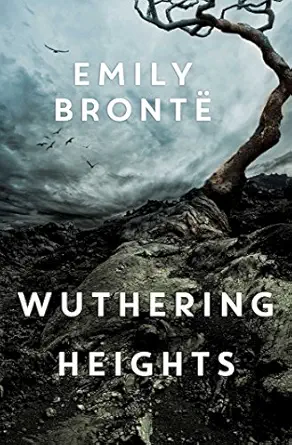
Every so often I have to reread a favorite classic. I have had a love-hate relationship with Wuthering Heights since I was in high school and my English teacher wanted me to read it. It was one of those books that I was not quite ready for at sixteen, but ten years later, it became MY book and the basis for my master’s thesis. On StoryGraph, Wuthering Heights is classified as a romance, but it is unlike the typical romance. If Cathy and Heathcliff are in love, it is a dangerously obsessive love. What I love about this novel now is the language Emily Bronte uses. It is clear that she is heavily influenced by the first generation Romantic poets Wordsworth and Coleridge as well as by Byron and other later Romantic writers. The final paragraph of the novel has to be my all-time favorite passage in literature:

“I lingered round them, under that benign sky; watched the moths fluttering among the heath, and hare-bells; listened to the soft wind breathing through the grass; and wondered how any one could ever imagine unquiet slumbers for the sleepers in that quiet earth.”

Lord Redmond and Daniel Haze return in Irina Shapiro’s latest mystery in the Redmond and Haze Mystery series. This time, they investigate the murder of a medium who had helped them in a previous case locate Daniel’s missing daughter. They also grapple with their trust of those who claim to communicate with the dead. Daniel uses his expertise as a police officer working for Scotland Yard while Lord Redmond uses the medical sciences to provide important clues to solve the crime. I’ve already pre-ordered the next book in the series.

The Stolen Queen is a historical mystery/thriller, according to StoryGraph. When an important artifact, a fragment of a statue of a little known female Egyptian pharaoh is stolen during the annual Met Gala, a curator must face a tragedy in her past to recover the stolen piece. She must also return to Egypt, the place where she faced that tragedy. With the help of Annie, Charlotte not only recovers the stolen artifact, but she also recovers her family. I enjoyed the dual time periods. The novel starts slowly; however, the last third of the book moves very quickly, and I was hard pressed to put it down. (I may or may not have stayed awake until the wee hours of the morning reading.)

I’m not sure what to say about Therese Bohman’s Andromeda. It is a very short novel, just under 200 pages. It is beautifully written, the language often poetic. Bohman creates some beautiful metaphors about reading and the importance it can have. There are two narrators: Sofie, a young intern hired to become an editor for the publisher’s Andromeda imprint, and Gunnar, the editor-in-chief, who mentors and grooms Sofie with the idea that she would take his place when he retired. The book is roughly divided into two halves with each narrator telling his or her story. Sofie focuses on her relationship with Gunnar and the publishing business whereas Gunnar narrates his “life story.” The thread that runs through both parts is the importance reading and books had in their lives and in their relationship. I have to admit, though, that I’m not sure I can say I liked the book, but I will say that I’m glad I read it.

Now, I’m ready to start book number eight from a pile of books I bought last year. That’s another one of my goals: to read last year’s purchases. I think I’m going to read Mistress of Lies by K. M. Enright next. I’ve seen it come up on several “best of 2024” lists recently. It’s been collecting dust for a while.

Year-end Reading Wrap-up

I did it. I set a reading goal of reading at least 52 books this year, and I met that goal before June. Then I set a new goal of 100 books and met that goal in October. As of today, I have read 119 books, and will probably read and finish one more before December 31. I started The Teller of Small Fortunes earlier this month but have not finished it.

In some ways, this was a slow month; I finished seven books. It was also a busy crafting month to get ready for Christmas as well as the other busy-ness that comes with the holiday season. I have to admit that I started a few and put them away or they are still in progress.

Five of the books I read this month fall into the category of historical novels, some with more romance than others. I read the latest installment of the Tabitha and Wolf novels, An Intrepid Woman, and enjoyed it. It is an easy read with a story that is more plot driven than character driven. Actually, the same can be said for the first five books. Of those books, I especially liked the Victorian mystery An Exhibition of Malice by Emily L. Finch, which is set against the background of the Industrial Revolution and the Great Exhibition of 1862, ten or so years after the exhibition sponsored by Prince Albert in the middle of the 19th century. If we think industrial espionage is only a modern thing, this novel suggests that stealing plans for inventions has been around for a whole lot longer.

The two contemporary novels, The Most Wonderful Crime of the Year and The Last Love Note were both good reads. The Most Wonderful Crime of the Year was a lot of fun. It is light-hearted and funny as well as a good mystery. It makes use of the “enemies to lovers” trope even though the enemy part is one-sided. And, of course, there is the happily ever after ending. This novel makes use of the Agatha Christie country-house mystery and a locked-room disappearance. Ally Carter also uses Agatha Christie’s own mysterious disappearance for inspiration in this novel.

When I began The Last Love Note, I thought I was going to read a rom-com. The first couple of chapters made me laugh out loud; however, the novel started getting pretty heavy as it developed into the story of a forty-year-old widow’s coming to terms with the death of her husband from early onset and rapid Alzheimer’s and single-parenthood. Yet, in spite of the heaviness of these plot threads, there is a lightness and at times some comic relief as she slowly learns that she can have a new life (and love) and a second chance at happiness. I admit that I did the ugly cry through the last ten chapters of the book.

As I finished this book, I thought back over the books I have read this year and looked at my list of best books of each month:

January–The Fury

  • January–The Fury
  • February–The First Ladies
  • March–The Lost Apothecary
  • April–Touch Not the Cat
  • May–Shakespeare: The Man Who Paid the Rent
  • June–The Women
  • July–The Lost Story
  • August–The Cliffs
  • September–Emily Wilde’s Encyclopedia of Faeries
  • October–Lady Macbeth
  • November–Before the Coffee Gets Cold
  • December–The Last Love Note

All of these books were such good ones, and it is hard to pick my favorite. I am going to go with The First Ladies, though. It is a novel about the friendship between Mary McLeod Bethune and First Lady Eleanor Roosevelt. These two women are often footnotes in the history books, and their roles in the civil rights movement are overshadowed by likes of Martin Luther King, Jr., Malcolm X, and other men. Yet this novel showed how important their work was. Moreover, it also showed how difficult interracial friendships can be, even today, when we are supposedly more enlightened. I often learn more history from the historical novels I read than from the history books, and this one certainly played into my interest in history.

I tried to read more nonfiction this year and actually finished three really wonderful books: Judi Dench’s autobiographical Shakespeare: The Man Who Pays the Rent, Killers of the Flower Moon, and The Boys in the Boat about the 1936 US Olympic eight-man rowing team. It would be hard to choose which is the better book, but I will admit that Shakespeare:The Man Who Pays the Rent is my favorite. Dame Judi Dench gave me such insight into the characters from the plays she performed, and I almost wished I were teaching again so I could share those insights with my students. I listened to both of the books on Audible and realized that I loved listening to nonfiction more than fiction. Killers of the Flower Moon is a difficult book to read and listen to because of its subject, the exploitation of Native Americans out of greed. I highly recommend this last book.

I am already lining up my books for the coming year. I can’t wait to see what selections will be offered in the Book of the Month and the Aardvark Book clubs. My book group that meets monthly at the local coffee shop will be reading Wuthering Heights as our first book of the year. I am looking forward to reading that one again. I wonder how much it has changed since I read it as a sixteen year old, a twenty-six year old, a thirty-something, and now as a sixty-six year old. And I wonder how my reading will compare to our high school senior’s reading. (Imagine a book club with three sixty-something women and one seventeen-year-old! We do love our girl, though. She has been a wonderful addition to our group!)

November Reading Update

I really slowed down my reading this month. Perhaps it was because some of the books were longer and “slower” reads. It’s also the beginning of the holiday season, and things get busy.

I seem to be falling back into familiar and comfortable genres this month–historical romances and mysteries as well as some fantasy and magical realism.

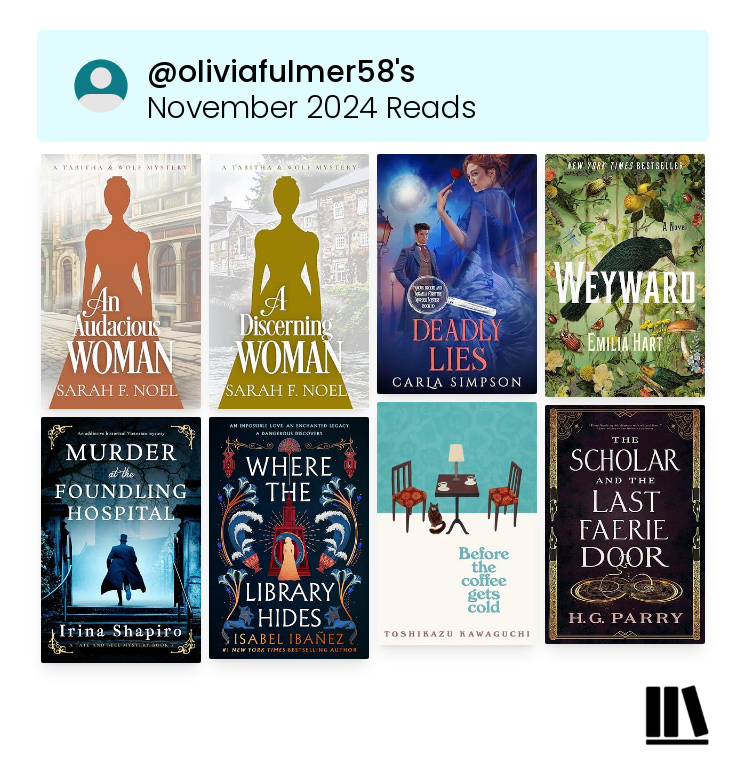
An Audacious Woman, A Discerning Woman, Deadly Lies, and Murder at the Foundling Hospital are all historical mysteries set in the 19th century. Sarah F. Noel’s “Tabitha and Wolf” mystery series features the recently widowed Lady Pembroke (Tabitha) and the new Earl of Pembroke (Wolf) as they investigate various murders while navigating a tricky romance. These novels are light and sometimes humorous, especially when Tabitha’s mother-in-law, the Dowager Countess of Pembroke decides she wants to become an investigator. Besides the mystery aspect, the novels are also about finding one’s family and belonging as Tabitha’s family includes not only the new Earl and the Dowager Countess, but a trusted family friend and two street urchins who become her wards.

Deadly Lies is the latest book in the Angus Brodie and Mikaela Forsythe Murder Mystery series by Carla Simpson. Lady Forsythe is an independent woman of the late nineteenth century who becomes involved with the often surely Angus Brodie when her sister goes missing (Book I). In this latest installment, they investigate the murders of two young women found with a red rose. Mikaela narrates the story as it unfolds with occasional glimpses into Brodie’s point of view when he goes off on his own. Mikaela, like her elderly great-aunt who raised her and her sister after her parents’ deaths, is intelligent, witty, and more than a little free-spirited. This series is mostly light-hearted and fun.

Murder at the Foundling Hospital is the third installment of the Tate and Bell series by Irina Shapiro. Set in London in the latter half of the nineteenth century, the novel follows Detective Bell and Nurse Gemma Tate as they investigate the murder of Amanda Tate, a fourteen-year-old foundling. Together, they piece together the clues that eventually bring the killer to justice, but at the expense of Gemma’s job at the Foundling Hospital. Shapiro uses more history in the development of the plot than Noel or Simpson as she draws on the details of the Crimean War for context. This novel is darker in tone and without the humor of Noel’s and Simpson’s novels, but it is no less a good read.

I seem to be choosing more books from the fantasy and magical realism genres. Weyward, Where the Library Hides, Before the Coffee Gets Cold, and The Scholar and the Last Faerie Door all incorporate some measure of paranormal or supernatural elements. Emilie Hart’s Weyward tells the story of three women of the Weyward family from three different time periods: one a 17th century woman accused and tried for witchcraft, a teenager from the 1940s, and a young woman from the present who retreats to her great-aunt’s cottage to escape an abusive marriage. All three women have an affinity with nature that is often called “witchcraft.” All three women have complicated and even dangerous relationships with the men in their lives. However, although bad things happen to these women, they come through their experiences stronger and more independent than ever. Resilience is the key. I enjoyed this book and truly did not want it to end. Perhaps there will be another Weyward book that tells the story of Kate’s daughter named after her ancestors, Altha the 17th century “witch” and Violet the 20th century botanist and scientist.

Where the Library Hides by Isabel Ibanez continues the story begun in What the River Knows. Inez has gone to Egypt at the end of the 19th century to find out what happened to her parents. At the end of the first novel, she discovers that her mother is still alive, and she receives a rather unromantic marriage proposal from her uncle’s assistant Whit. Where the Library Hides has the two, now married, searching for the lost loot from Cleopatra’s tomb and Inez’s mother. Ibanez throws in a plot twist near the end of the novel that I truly did not expect, but it made sense. This sequel ties up all the loose ends and brings the mystery to a very satisfactory close. The epilogue, though, may foreshadow some more books about characters introduced in this novel. I will be following Ibanez for other books.

Before the Coffee Gets Cold was our choice for the November book club. It also falls into the genre of magical realism. Four characters have the opportunity (and the desire) to travel in time. There are several rules, though, that govern their time travels: they can only meet people with whom they have met in the coffee shop; they will not change the present by going to the past or the future; and they can stay away for only as long as the coffee stays warm. Failure to drink the coffee before it gets cold will turn them into a ghost. Three choose to go back in time while one character chooses to go into the future. All three come away from their time travels with new understandings of themselves and others. I had my doubts about this book when I started it. It felt too objective. However, as we followed each character into their pasts, presents, and futures, the reader does get to know them and feel engaged with them. By the end of the first vignette, I was fully engaged and ready to devour the stories. I will certainly be reading the other books in the series.

H. G. Parry’s The Scholar and the Last Faerie Door combines the history of the post-World War I Lost Generation with fantasy. I’m not sure there’s a name for this genre! It’s a combination of historical fiction and fantasy and romance. Clover Hill wants to learn to do magic so that she can release her older brother from a Faerie curse he received at the battle of Amiens during the first world war. She attends Camford University where she becomes friends with three students who come from the class known as the Family, people who have had magic in their blood for generations. What makes Clover different is that she is not from a magical family but is an ordinary farm girl. However, through hard work, study, and research, she does learn magic and eventually obtains the spell to release her brother. However, she had to pay a high cost. This is a heart-breaking story of love and friendships that go awry and of lost trust; it is also a story of restoration, forgiveness, and reconciliation. Even though events become quite dire, there is a thread of hope throughout.

It was hard to pick a best book for the month, but I think I decided on Before the Coffee Gets Cold. It is an easy-to-read novel, even in translation from Japanese. The characters are for the most part likeable and relatable. There are really no villains in this book at all, unless, that is you count death, Alzheimer’s, and loss as villains. There are no murders to solve. In the end, the book is full of love and hope.

As the Christmas season approaches, I know I will have more books to read. I haven’t selected specific holiday books (yet), though I have started Tommy Orange’s book Wandering Stars, which follows a survivor of the Sand Creek Massacre. It’s a heavy way to begin this season of joy.

Mid-October Reading Roundup

October is “Spooky Month,” and this month’s reading includes its share of spooky reads.

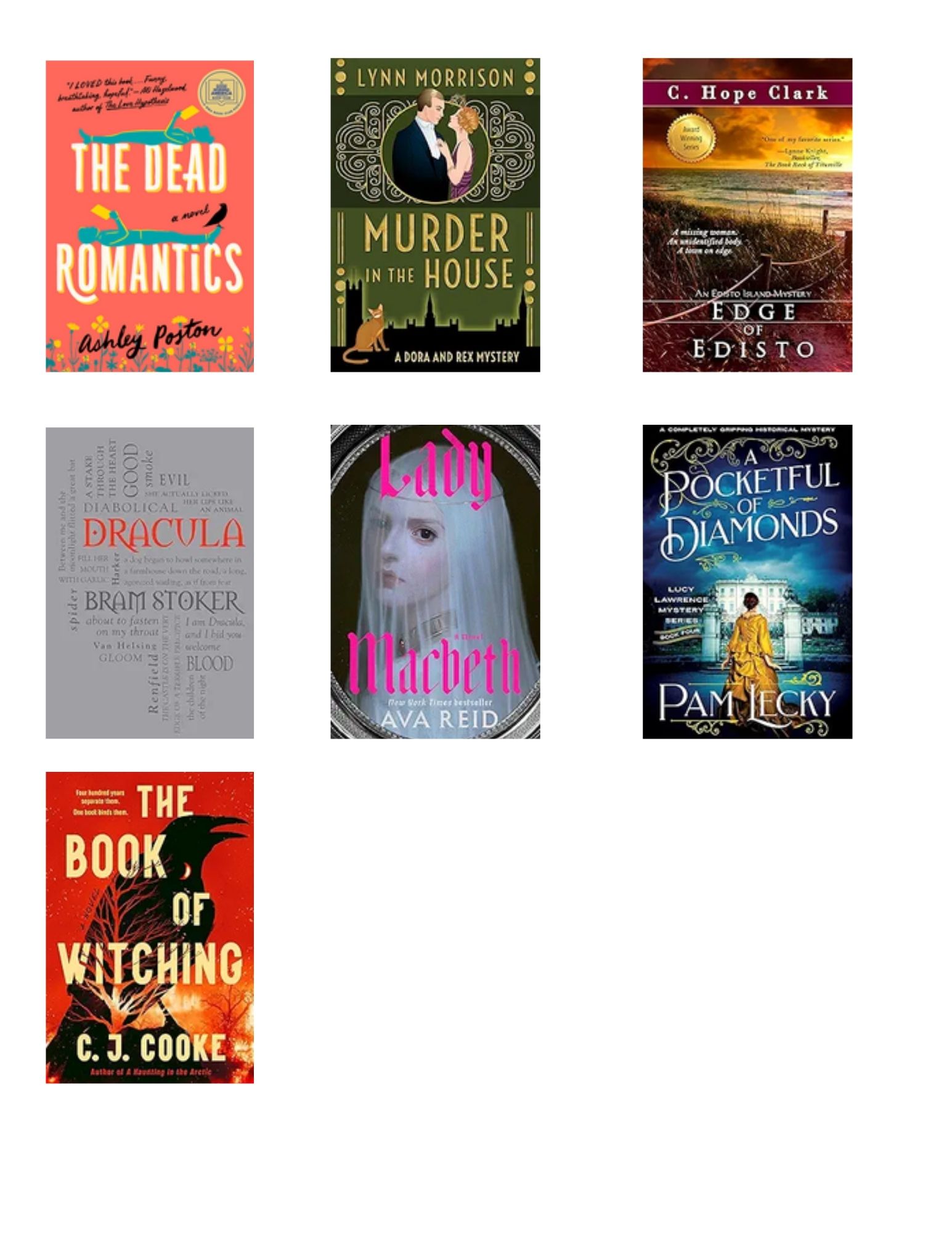
The Dead Romantics is a fun rom-com featuring a ghost writer haunted by her almost dead editor. Florence Day has the job of ghost writing for a popular romance author, but lately Florence hasn’t been much in the mood to write the typical romance novel with true love and happy endings after her break-up with her boyfriend. And to make matters worse, her father died, and she returns to her home in South Carolina. Oh, Florence also sees dead people. While she is home for the funeral, she is haunted by her new editor and falls in love with him. I enjoyed this novel. It is a light read.

Murder in the House by Lynn Morrison is the latest in the Dora and Rex mystery series. Dora and Rex assist their friend Clark Kenworth, Lord Rivers, investigate the death of the clerk for the Labor Party leader in the House of Lords of the British Parliament. Clark, a recurring character in the series, takes the lead in this book. I enjoy reading historical novels because I do learn about the history of the time and place of the setting. In this book, set between the two world wars, the conflict between the Communist Party and the Labor Party–and the growing threat of Hitler and the Nazi Party–form the backdrop. I enjoyed seeing how Clark is maturing as he takes on his role in the House of Lords.

Edge of Edisto is the last book in the Edisto mysteries by C. Hope Clark. In this novel, Callie has two cases to solve–a missing person case and a murder that at first seem unrelated. She also discovers a secret that the island community of Edisto Beach has kept for thirty years. Callie is coming into her own at last in this novel, and I think it is one of the better ones in the series for that.

An October reading list cannot go without including the classic Dracula by Bram Stoker. Horror is not my genre, but I have read and reread Dracula, both for my own “pleasure” and as a class novel in my English IV classes. I decided to reread Dracula after watching an episode of the Murdoch Mysteries in which Margaret Brakenreid reads the novel for her book club and comes away with the idea that it is about redemption. And it is, to some extent. What I noticed more this time as I read was the interplay of science, faith, religion, and superstition, especially in the character of Van Helsing. Of course, I also noticed the theme of “the New Woman” in the portrayal of both Lucy and Mina.

The Book of Witching by C. J. Cook could also fall into the horror category, but it is not the frightening kind of horror. When Erin goes on a three-week camping trip with her boyfriend and her best friend, no one expects that one will die, another go missing, and Erin end up in the hospital with third and fourth-degree burns–and that Erin will insist that she be called Nyx. Her mother then investigates to discover the cause of her daughter’s trauma. What I enjoyed about this novel was the dual time period narrative: the story of Alison Balfour, the first woman to executed for witchcraft in the Orkneys in 1594, and Clem’s determination to find out what happened to her daughter. The ending of the novel, which ties the two time periods and characters together, is satisfying.

A Pocketful of Diamonds by Pam Lechy is a historical mystery set at the end of the nineteenth century. Lucy Lawrence and Phineas Stone’s honeymoon in Paris is interrupted when Phin’s sister sends them a telegraph asking them to come to Lake Como to search for her missing husband. Murder and intrigue take the newlyweds into the criminal element of the Lake Como district and Milan. Of course, they do solve the case, but not before Ludy is kidnapped and Phineas targeted for assassination himself. This book feels like it could be the end of the Lucy Lawrence series, though.

Lady Macbeth by Ava Reid is NOT your English teacher’s version of the Macbeth story. Told from Lady Macbeth’s point of view, the protagonist Roscille is Macbeth’s second wife. Growing up, she was considered “otherworldly” or touched by a witch with her silver hair and strange eyes that were said to bewitch men. As a result, she always wore a veil so that men did not have to look into her eyes. At one point in the novel, Macbeth tells her that she will be the dagger in his hand. Macbeth is portrayed as almost larger than life–a large man with an even larger ambition to be “King Hereafter,” and he will do just about anything to ensure that he not only gets the throne of Scotland but keeps it, even if it means locking his own wife in the dungeon. Reid does take the traditional prophecies for Macbeth from Shakespeare’s play, but she turns everything on its ear. In addition to the witches, there are a few other fantastical beasts. Reid combines history and fantasy in this story of Lady Macbeth.

The next book on my reading list is The Stone Witch of Florence, another historical fantasy (is that a genre?) set in Florence, Italy, during the time of the Black Death. I am looking forward to reading it.

September Reading Wrap-up

I know, it’s only the 26th and there are four more days. I probably will finish another book before the end of the month, but I’ve read the bulk of the books for the month. I didn’t read as many books as I have some months, but that’s okay. I started a couple that I haven’t finished, though, so I’m still reading.

Most of the books I read this month were lighter fare. At least four were murder mysteries of one sort of another. A couple could be classified as romance novels. One of the books fell into the category of magical realism. Several were historical novels.

Irina Shapiro did not disappoint in the latest addition to the Redmond and Haze series. Murder of Innocents had Dr. Jason Redmond and Detective Daniel Haze searching for the murderer of two little boys. Dr. Redmond may be an aristocrat, but he is from America. He served as a surgeon for the Union army during the American Civil War and spent time as a prisoner of war in the infamous Andersonville prison. His knowledge of anatomy and medicine and Haze’s skills as an investigator make them a formidable team.

C. Hope Clark’s Reunion on Edisto follows the career of Callie, Edisto Beach’s first female police chief. In the seventh installment of the series, Callie, now sober for nearly a year and in a stable relationship with Mark, the owner of the new Mexican restaurant, El Marco, has to search for a missing classmate who has come to the island to plan a class reunion. As Callie works the case, she also solves a cold case from her high school days. While I was not sympathetic to Callie when I first began the series, I began to like her as I near the end of the series.

I read two books by Madeline Martin last year, The Last Bookshop in London and The Keeper of Hidden Books, both set during World War II. The Booklover’s Library is also set during World War II. Like The Last Bookshop in London, The Booklover’s Library is set in England. The Booklover’s Library begins before the Blitz and tells the story of a young widow who must make the agonizing decision to send her daughter to the countryside for safety. She also must find a job to support herself during this time. The novel speaks to the power of books to comfort during hard times. I learned more about the effects of war on women and children from this book. That’s the power of a good historical novel; it brings the history to life.

The Inheritance of Orquidea Divina is way out of my comfort zone in terms of genre. I liked the book. However, it took me quite a few pages and chapters to buy into the elements of magical realism. There are a couple of things that really struck me in the story. Orquidea’s need to have roots takes on a physical aspect when she turns into a tree the day she dies. We all need that place we can put down roots and belong. Marimar finds that place in Four Rivers on her grandmother’s estate. The second thing that resonated was the idea of “inheritance.” What do we actually inherit from our ancestors?

The book I disliked this month is That Night in the Library. I could not sympathize with any of the characters; they were all unlikable to some degree. The death from some kind of poisoning of one member of the small group gathered to re-enact an ancient Greek ritual sets off a series of additional deaths. By the time the group is rescued, only two of the seven remain alive. Moreover, with the exception of Kip, the first to die, nearly every one of the others kills, helps to kill, or witnesses the violent death of others. This is a “locked room” mystery in the vein of Agatha Christie, but there are no redeeming characters in this novel, and no feeling that justice has been served in the end.

Studies at the School by the Sea is a light-hearted romance of two teachers from two different schools, both English teachers, and both concerned with the well-being of their students. However, there are obstacles to their romance ranging from an ex-fiance’s accident to the lack of privacy on a school Outward Bound retreat. I haven’t read the first three books in the series; however, that did not hinder me from enjoying this book.

My pick, though, for the book of the month is Emily Wilde’s Encyclopedia of Faeries. Emily goes to an isolated island in the Arctic Circle to conduct research for book, an encyclopedia of faeries. From facing hostile villagers and down-right mean changelings, Emily has a number of adventures. When her colleague joins her, though, things get really interesting, and she discovers his secret identity. I had fun reading this book! I do enjoy a good fantasy.