
I haven’t always given much thought to the four elements of earth, air, fire, and water, but the Kinship Photography Collective’s Call to Engagement has made me think. I’ve written some about it in my journal(s)–yes, I am one of those people who keep multiple notebooks and journals. I’ve decided that I’m going to make this engagement my year-long photography project and use the elements as a framework to explore my relationship to land, family-owned land in particular, but also shared, public land as well.
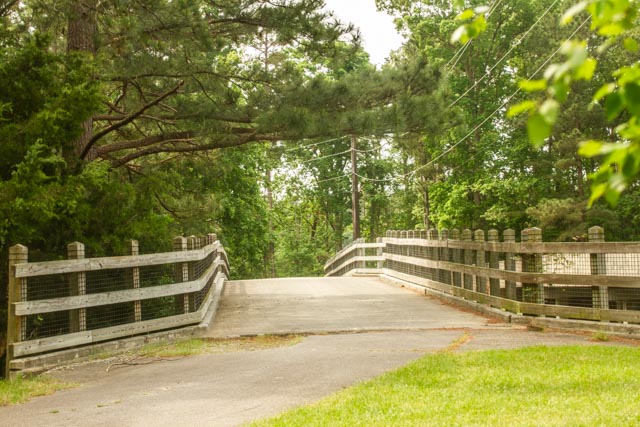
Right now, two questions are kind of guiding me:
- How do my images fit with my exploration of relationship to the land, both family-owned (generational) land as well as more public, shared land (i.e., public parks, state/national parks, etc.)?
- How does being aware of the four elements of earth, air, fire, and water relate to that relationship between humans and land?
These questions relate to the notion of “sense of place.” We live in such a mobile society. Some people seem to move frequently and never establish “roots” in any one place. Other people live on land or in places that have been passed down from parents to children for generations. There is a connection one has makes that generational land feel like part of the family, and separation from it is difficult. I’m wondering if that feeling extends to the environs, the other bits of land that surround us. I hear people say, “I can’t imagine living anywhere else.” What makes us feel that kind of attachment?
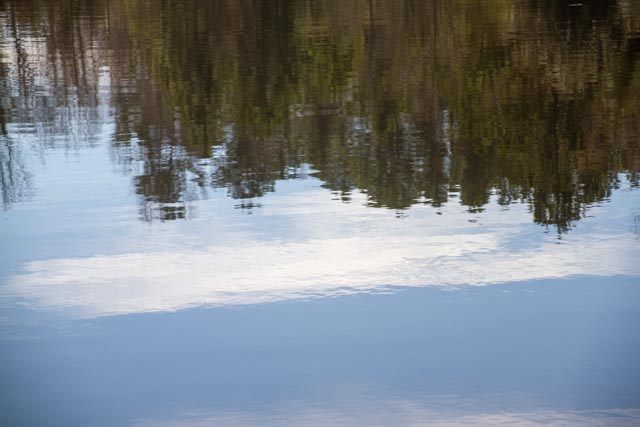
I live in a rural area. I grew up on a working farm; my parents were subsistence farmers. We lived on “the hill,” which meant, in part, that we couldn’t see the neighbors’ houses, even though they were in shouting distance away. Our house was surrounded on three sides by pasture land and woods. That pasture supported a half dozen head of cattle and four or five horses at any given time. The barnyard held pens for the three or four hogs Daddy grew out for butchers, the meat destined for our freezer, and his hunting dogs. We had a garden that provided the vegetables that fed us through the winter. I can’t tell you the number of days my sister, brother, mother, and I spent shelling butterbeans and peas and stringing beans to freeze, shucking and freezing ears of corn (both on the cob and cut off the cob), peeling and canning tomatoes, and making jelly. Some days it was so hot in the kitchen that we had two fans going–a box fan at the door to the family room to bring in some cooler air, and an oscillating fan to circulate the air in the kitchen. (We did not have central air conditioning.)
I still live in a rural area, but without a pasture or garden. My meat and vegetables come from the grocery store, prepared by hands unknown. In many ways, that has changed my relationship to the land. I am not dependent on it for survival or sustenance as I once was. Of course, intellectually, I know that someone else is depending on the land where my food comes from, and they depend on the land for survival and sustenance.
Still, the land does sustain me; it grounds me in both the physical sense and the metaphorical sense. It gives me a feeling of spaciousness. I can stretch my arms out and not touch anything; I can move about freely. I can breathe (mostly) clean air. I can hear the sounds of nature–birds, insects, rustling leaves, skittering animals–even with the sometimes constant sound of the traffic on the road in front of the house (almost nonstop this morning–where are all these people going?)
This year, as I explore the “elementals,” as I begin with the focus on air, I realize I cannot separate one from the other. Without air, there would be no water, fire, or earth. We cannot exist without breathing and respiration. Fire cannot burn without the oxygen in the air. Vegetation cleanses the air of carbon dioxide and replaces oxygen. Each element is necessary for life.

Now, the problem to solve is how to document these ideas into images.
 Telling Stories