Summer Feelings

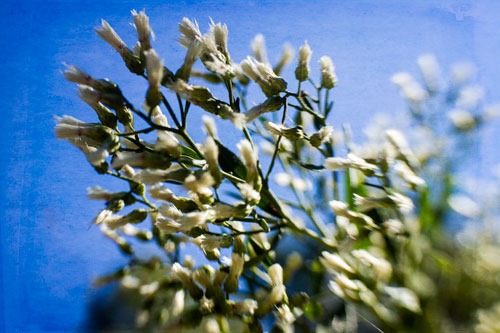
The photography “challenge” for the Kinship Elemental Life practice circle has been to photograph what summer feels like. How do you capture the feelings of upheaval and unrootedness that I’m feeling this summer? What represents those feelings? How do you express feelings caused by destruction and dismantling?

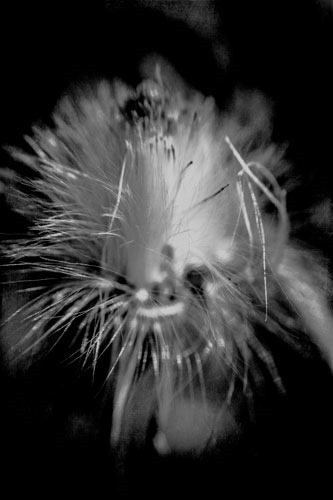
There is a thistle in the front yard. Three weeks ago, it was in bloom with vibrant purple blossoms. Last week, those blossoms were white, fluffy seed heads. Today, those seed heads look bedraggled and stringy after the rainstorms of last week. The weather caused an upheaval.
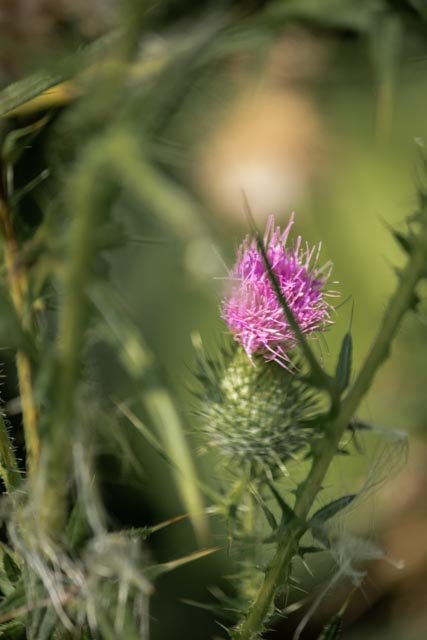
Somewhere, though, in this weather event, there is a necessity. Those seeds need to spread to propagate. Nature does remain in statis.; it moves; it changes. There are natural upheavals: thunderstorms, hurricanes, tornadoes, earthquakes, volcanic eruptions. Sometimes, they are gentle: the dandelion and thistle seeds blowing in a breeze. Othertimes, it is two twin tree trunks still standing in the midst of lush greenness, even though they are dead. One day, those trunks will fall.

There is an old hymn that begins, “Built on a rock, the church doth stand.” A few lines later, the hymnist wrote, “crumbled are spires in every land.” The world is not static, either; it is in a constant state of change, destruction, and rebuilding, renewing itself. Structures and systems crumble and collapse. William Butler Yeats wrote in his poem “The Second Coming,” “Things fall apart; the center cannot hold.” And sometimes, it seems that everything devolves into chaos.

How, then, do I find a place of “soft belonging” amid upheavals and uprootedness?
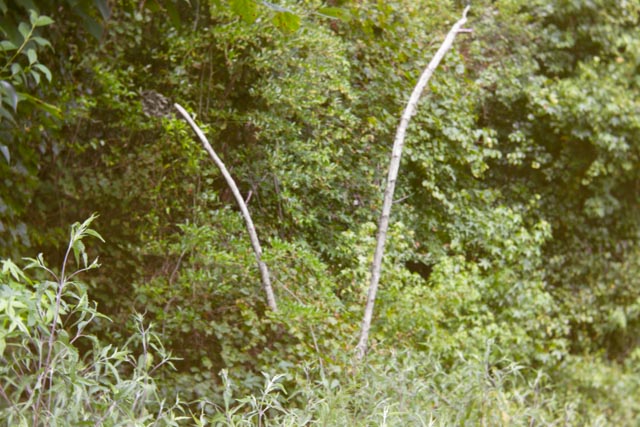
I look for beauty. There is beauty in the twin trunks of dead trees reaching up out of the lush green vegetation around them. Life and death coexist. You can’t have one without the other. You can’t have the heat and “fire” of summer without the chill of winter. Ice doesn’t exist without water; steam doesn’t exist without fire. The fire of upheaval may be necessary. “Things fall apart; the center cannot hold.” Maybe a new center forms. The seed head of the thistle gives way, and the seeds scatter, only to germinate somewhere else and form a new center.

Upheaval will give way to peace. Life will give way to death. Death will give way to resurrection.

Such is the circle of life.

H, I, and J–A Day to Catch Up

I am behind by three letters. My husband had to have a medical procedure this week, which threw off my schedule and routines for writing. We did get a very positive result from the procedure, and all is well.

The letters this time around are H for harmony, I for inspiration, and J for joy. Ho boy, what letters!

When I think of harmony, naturally, I think of music and the pleasing blend of notes into chords and melodies. I think of the old, traditional hymns I grew up singing in the Lutheran church, of old-time gospel music, and a capella groups like Home Free and Straight No Chaser and Pentatonix. But then, I also think of harmony among people, that quality of “getting along” and how that kind of harmony seems to be a thing of the past, and I wonder how we can get that notion back. I just know that I will do what I can to live my truth and seek that sweet place of harmony with others as I do.

What inspires me? And who inspires me? I am inspired by beautiful writing–John Donne’s poetry, especially the love poetry written to his wife. “A Valediction: Forbidding Mourning” is one of my favorites. Emily Dickinson’s playfulness: can’t you just see the “narrow fellow in the grass”?; Mary Oliver and her poetry of nature. Who cannot be inspired? After a six-week Bible study combining the art of Vincent van Gogh and the Gospel lessons for the six Sundays in Lent, Maundy Thursday, and Good Friday, I am inspired to see the world through the eyes of the artist. And there are people–living–who inspire me to be better and to speak out. One such person is Anne Lamott. Though not a writer of religion per se, she calls me to see the world through the eyes of the Christian and to be an activist in whatever small way I can.

What is more joyful that watching a three-year-old run around his backyard with a bubble blower, making a bubble trail behind him? I gave my grandson a Bluey bubble “machine” on Sunday as an early Easter gift, and he had to go outside to make bubbles. And it was a joyful sight! There is joy in the crop of yellow dandelion flowers in the yard. (I don’t care that they are considered weeds!) The birds chirping in the holly tree by the house or flitting away from the feeders when I go outside, the wind blowing ripples across the pond, bunnies hopping away when I drive up in the yard–all of these bring joy, and that’s just the beginning.

By not starting on April 1, I honestly don’t know if I am at the half-way point in this 30 day challenge, but I’m close. I just have to stick with it for a couple more weeks! For the rest of the day, I will think about these three letters and their words: harmony, inspiration, and joy. Maybe they are more connected than I thought when I started writing this afternoon.

Wild Writing

[Note: the following is inspired by the poem “Eating the Avocado by Carrie Fountain. Linda Wagner provides prompts based on poetry for “wild writing.” This was the prompt for October 23.]

“I’ve Never Described”

I’ve never described the morning light through the living room window,

the slashes of light and shadow on the wheat-colored wall perpendicular to the window

the diagonal lines of light and dark that shorten and eventually disappear as the hours pass.

I’ve never described the cherry tree in the backyard,

the one my husband cut down because it didn’t produce edible fruit.

But he didn’t see, as I see, the value of the snow-white flowers with hints of pink,

the reminder in the still cold month of February that spring is not far away.

I’ve never described the surprise of the sesanqua in the backyard and the frilled pink blossoms that become transparent when the afternoon sun shines through them and I see the veined beauty in each petal.

This bush reminds me of the petite grandmother,

the source of the sesanqua and the red cameila that will bloom in January.

I’ve never described these red petals, either, with the golden crown of the sepals in the middle.

I’ve never described the feeling that when they bloom, I know Grammaw is nearby in spirit and that she has left a legacy of beauty for me.

I’ve never described the soft skin of a toddler, my sons as they were thirty-plus years ago (when did they become men of thirty-five and thirty-one years?) or that of my three-year-old grandson,

the tenderness and fagility of that white skin, unblemished and unscarred by time,

the soft velvet feel when I caress their cheeks,

the bow of their lips relaxed in sleep, tucked against my arm as I hold them those last few minutes before putting them down for the night,

the soft wisps of blond hair across their uncreased foreheads,

thankful that they do not know the worries and cares the next day might bring.

Finding Joy

[NOTE: This piece is inspired by the poem “I Do Not Order Two Sugars in My Americano” and the prompts from Linda Wagner’s 27 Powers Wild Writing prompts.]

Joy always finds me when I see the egret and the heron wading in the weeds at the shallow edges of the pond. I watch their stillness, statue-like, as they stare into the water for the dart of a small, silver fish. I study the graceful curve of their necks, the jaunty-jolty steps as they stalk their prey along the green edges. How can they see those small fish in that dark, murky water? I admire their graceful take-off when they spread their wide wings and lift off to glide inches above the sunlit water of the pond.

Joy finds me in the soft lapping of the water at the edge of the Lakeshore as I walk around the park or the shore at the church.

Joy finds me in the bright smile and giggles of my three-year-old grandson as he plays with his cars and trucks or wages a dinosaur war with his Nana.

I find joy in hearing and singing those old hymns of faith–and hearing in my head the sound of my father’s baritone as he sang those same hymns when he came home from church and walked through the house to change into his “everyday clothes.” I find joy in singing the hymns we used for his funeral service–even as the tears form and run down my face. (Has it really been nine years since he passed on?)

I find joy in seeing words crawl across the blank page when I write–and write and write more. Joy finds me in the old-fashioned fountain pens even when they spring a leak and my fingers are covering in black ink.

I find joy in hearing the birds sing and chatter outside my window. Joy finds me in the migration of those black birds (whose name I do not know, grackles, maybe?) that chatter and fly in in droves to cover the limbs of the trees and the brown grass each autumn. It won’t be long before they arrive again.

Joy finds me in the cup of hot cinnamon spiced tea served up in my favorite Pioneer Woman mugs. Before I take that first sip, I hold my hand over the cup to let the steam soothe the ache of muscles around the surgical scar. Then I take that first not-so-scalding hot sip and let the cinnamon “burn” across my tongue and down my throat to warm me through and through.

Even when I least expect it, joy always finds me.

A Walk around the Ponds–Wildflowers

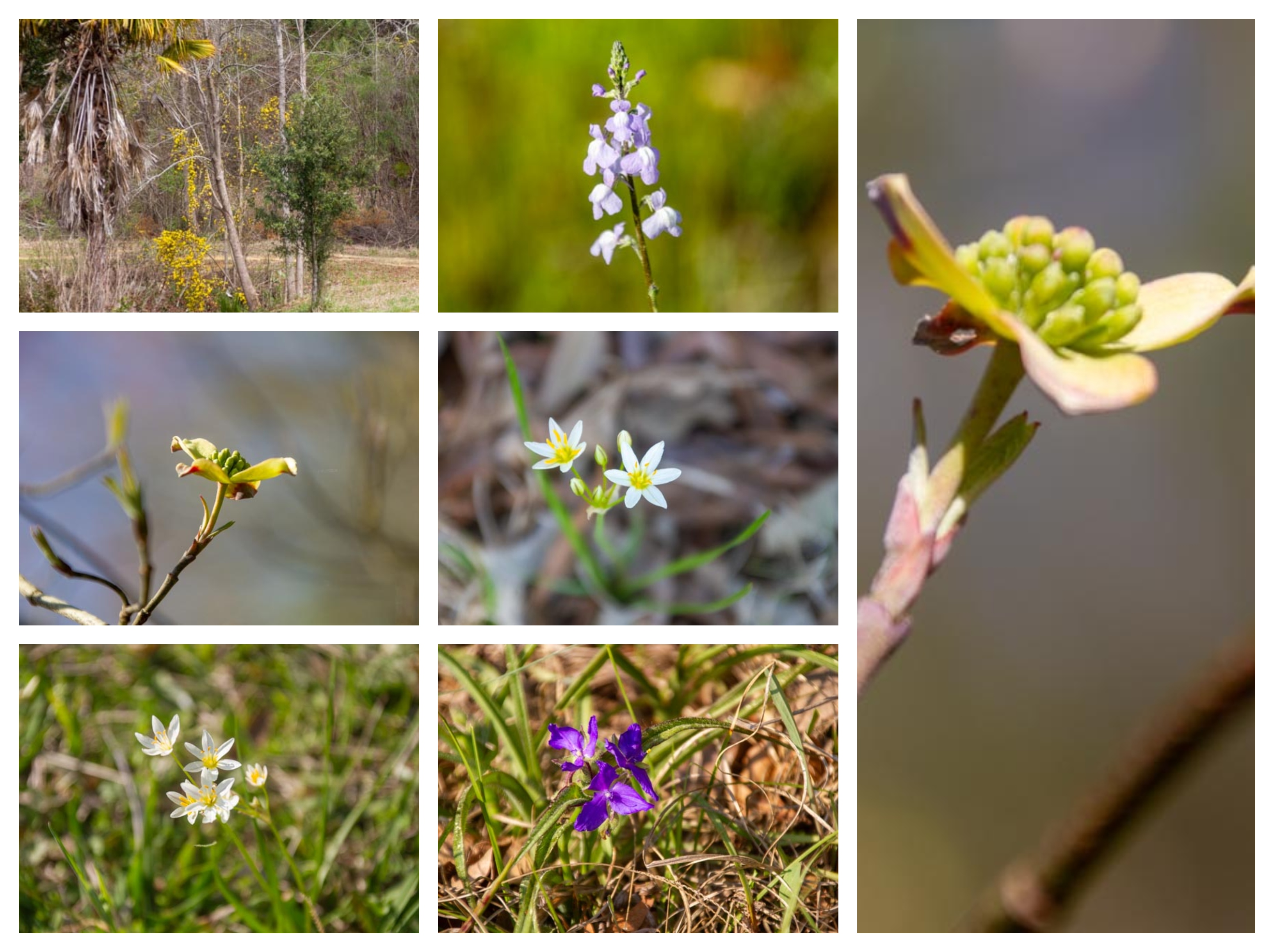
I enjoy making photo collages after I’ve taken a walk. I went out this afternoon for a walk around the ponds. The dogwood is beginning to bloom, and jasmine is hanging from the trees. There are all kinds of wildflowers starting to bloom. I downloaded a plant identifier app to my phone and discovered that something that what I thought were weeds are actually plants that can be cultivated. Those tiny little star-like flowers are called false garlic and can be used as accent plants. The purple plant (bottom center) has an interesting name: Crow poison. According to the plant identifier app, the name comes from a Cherokee legend that the plant could be used to poison the crows that ate their corn.

And now a poem:

The Singular and Cheerful Life

  by Mary Oliver (from Evidence

The singular and cheerful life

of any flower

in anyone’s garden

or any still unowned field–

if there are any–

catches me

by the heart,

by its color

by its obedience

to the holiest of laws:

be alive

until you are not.

Ragweed,

pale violet bull thistle,

morning glories curling

through the field corn;

those princes of everything green–

the grasses

of which there are truly

an uncountable company,

each on its singular stem

striving

to rise and ripen.

What, in the earth world,

is there not to be amazed by

and to be steadied by

and to cherish?

Oh, my dear heart,

my own dear heart,

full of hesitations,

questions, choice of directions,

look at the world.

Behold the morning glory,

the meanest flower, the ragweed, the thistle.

 Look at the grass.

The Simple Things

It’s the smallest things

the petals of the apple and cherry blossoms littering the ground like so many snowflakes;

tiny purple flowers like stars that have fallen between the blades of grass;

jasmine trumpets hanging in the tree branches.

It’s simple things

the sweet burn of the hot cinnamon spiced tea at breakfast.

It’s as simple as

the turtles sunning themselves on the water-soaked logs in the lake;

pollen-swollen pinecones in the making;

the rumble of thunder before the rain.

It’s the simple smell of bread baking and the taste of butter melting over hot-cross buns during the Lenten season.

It’s the glitter of sunlight on the water and the shadow of trees on the pavement.

It’s the sound–or rather the silence–of my steps along the straw-covered path through the woods.

Words and Wednesdays

I’ve had an “itch” to write recently—well, more than recently. I’ve been writing since I was in high school. I remember giving my high school English teacher a short story I had written. She liked it. My college English profs told me that I thought—and wrote—well. One even asked me in front of the class how I had learned to write. I was between my junior and senior year in high school taking a second-year college level British lit course from Beowulf to the beginning of the nineteenth century, using the ubiquitous Norton Anthology of British Literature, Volume 1, with the famous portrait of Queen Elizabeth I on the cover.

I don’t know when I fell in love with words, with reading. Mama says it was from birth. She read to me and to my sister all the time, often falling asleep herself before I did. She grew desperate and tried everything to read me to sleep: the “begats” from the Bible, dictionary definitions, and even encyclopedias. I would wake her to “finish the story.” The love of words has never worn off.

I am in a writer’s group on Facebook, and one of our regular rhythms is Wednesday Words That Work. I think about the words that work. I am not a good memorizer, but I remember things that I have read and heard that resonate with me:  Tennyson’s short poem “The Eagle,” “He clasps the crag with crooked hands. . . . “; the scene at the end of Keats’s “The Eve of St. Agnes” when the lovers slip through the quiet halls of the castle as if in a dream; the “unquiet slumbers” of Cathy and Heathcliff at the end of Wuthering Heights; even the opening lines of Pride and Prejudice and the reminder that every young lady needs a husband (not much has changed in the last two hundred years!) I could probably go on for a long time remembering the words that worked for me.

The words that work for me are those that I visualize. As a teacher, I have taken all kinds of learning styles inventories, and the results are remarkably similar: I am a visual learner. It is not surprising, then, that I am also drawn to photography and other visual arts. Pictures may be worth a thousand words, but a phrase or two of well-chosen words can inspire a thousand pictures as well. While I devour Regency romances by the dozens (finishing one this afternoon, probably), I will forget about these novels quite quickly. The novels and books I remember are the ones that use words to create vivid pictures and scenes as I read.

As I write, I think about the poetry, too, that has been inspired by art. (There is a fancy name for that kind of literature): Browning’s “My Last Duchess” ( which may or may not have been inspired by real people or real paintings—with Browning, who knows?); “Musee des Beaux Arts,” and quite a few others.

icarus.jpg (80610 bytes)

Pictures, words, images.  Stay tuned for more about an online course I am writing.

In the meantime, please enjoy this new-to-me blog, Words and Images by Cynthia which combines words and images. I have gotten lost in Cynthia’s writing and photography. I found her through another interesting and inspiring website, The Creativity Portal.

Divergency? A Thoughtful Thursday

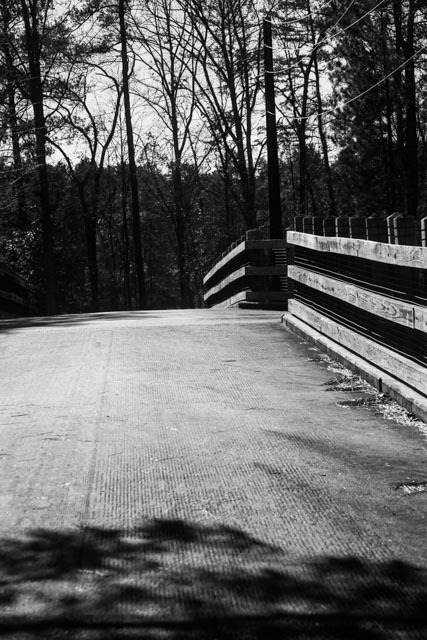
I went for a walk today at the state park. It was a beautiful morning—temperature outside right at 70 degrees (in January, no less!), blue sky, breezy, but not so breezy that I felt as though the wind were pushing me down the road. I was in a thoughtful mood, trying to figure out what I wanted to “say” with my images today. I received an email from David du Chemin, one of my “mentor photographers,” even if he doesn’t know it!, announcing his next project about storytelling in photographs. I has some ideas of things I wanted to look for.

untitled-6

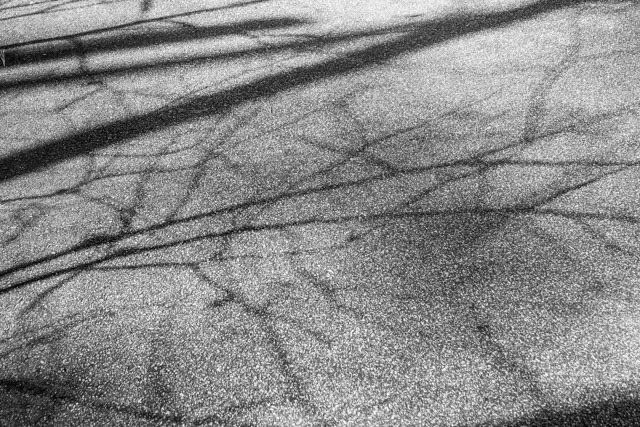
I wanted to explore the idea of openness again since the theme for Adventures in Seeing—The Book is openness. I was also looking for light and shadow and contrasts—and anything else that presented itself to me.

untitled-36

What I found was “divergency.”  I thought of Robert Frost’s poem that begins, “Two roads diverged in a wood.” And the idea of divergence as splitting apart into more than one way came to mind. How often do I come upon situations wherein there is more than one way to get to the same point? As an educator, I thought about divergent learners who do not always follow the linear path we teachers set for them. Again, the idea is that there is more than one way to reach the same destination. And, of course, there is the book Divergent, which I must admit I never quite finished. I noticed as I received the images today, that my photographs are definitely “divergent.”untitled-48

One thing that focusing on the concept of contemplative photography has taught me is that I have to be open to new ways of seeing even when I am seeing the “same old, same old.” I thought about that as I walked through the park. I have walked there regularly for a whole bunch of years, and the road I follow has not moved; the curves are still in the same places. . . . Yet, each time, it is different. The camera helps me see the new things.

“You don’t make a photograph just with a camera. You bring to the act of photography all the pictures you have seen, the books you have read, the music you have heard, the people you have loved.” – Ansel Adams

untitled-55

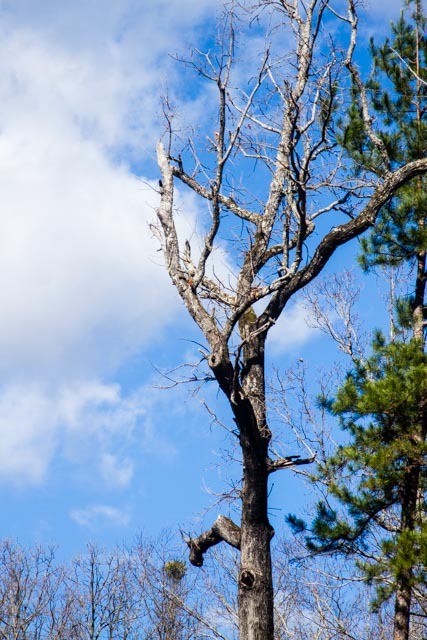
And then I saw this “story.” One of the very first poems I found that has stayed with me (besides “Nothing Gold Can Stay”) is Tennyson’s poem, “The Eagle.” I can imagine an eagle sitting in the top of this tree overlooking the lake, waiting for the precise moment to release his talons and dive for his prey.

The Eagle

BY ALFRED, LORD TENNYSON

He clasps the crag with crooked hands;

Close to the sun in lonely lands,

Ring’d with the azure world, he stands.

The wrinkled sea beneath him crawls;

He watches from his mountain walls,

And like a thunderbolt he falls.

Pictures and Words

When I was new to scrapbooking, I followed Ali Edwards’s blog. Her philosophy of scrapbooking is “pictures and words.” Together both tell the story of our lives. I no longer scrapbook in a formal kind of way although I may start again. What I have found, though, is the importance of letting photographs and images convey stories. And I’m rediscovering my love of poetry.

Last week, I was walking around the ponds with the camera. It’s winter here in South Carolina (even though the temperatures are not very winterish). But I was out in the coolness, bundled in my son’s Marine Corps sweatshirt, looking at whatever caught my eye. And this cedar caught my eye.untitled-16

And as I looked at the cedar, and then later at the image, Robert Frost came to mind:

Nature’s first green is gold, 
Her hardest hue to hold. 
Her early leaf’s a flower; 
But only so an hour. 
Then leaf subsides to leaf. 
So Eden sank to grief, 
So dawn goes down to day. 
Nothing gold can stay. 

Remember that poem Johnny quoted in The Outsiders by S. E. Hinton? I read that book way back when I was in seventh or eighth grade. The poem “Nothing Gold Can Stay” has stayed with me for more than forty years (yes, I’ve been out of high school for almost 41 years!).  The gold tips of the cedar reminded me that this gold will subside into green as the cedar needles continue to grow. Perhaps if I were to go back to that same tree on the other side of the pond, take a picture of the same branch, those gold tips would be green now. Time passes; youth become adulthood. . . .

The gold of autumn, too, has subsided. I’m waiting for my grandmother’s camellia to bloom in the next month or so. I’m still waiting for the sasanqua camellia to bloom as well. I think I saw some golden buds on the bushes last week. . . . .

This week, look for the gold. And look for the beauty.

Imperfectly Perfect—Contemplative Photography

There is a philosophy in Japanese art called wabi sabi. It’s not easily defined, however, and my understanding of it is growing daily. In this way of thinking, one understands that nothing is permanent and nothing is completely perfect; there are, though, perfect imperfections. And those imperfections make something “perfect.” It’s a paradox.

Even Robert Frost the poet recognized that nothing is permanent or perfect in the poem “Nothing Gold Can Stay.”

Nature’s first green is gold
Her hardest hue to hold.
Her early leaf’s a flower;
But only so an hour.
Then leaf subsides to leaf.
So Eden sank to grief,
So dawn goes down to day.
Nothing gold can stay.

I am terrible about knowing the names of the plants and bushes and flowers that grow around my home. But we have this bush that grows around the pond with these wonderful feathery flowers, I guess you call them. They last just a short time, and then they become seeds blowing in the wind.

edited-with-textures

In just a few days, these “feathers” open up and become this:

fuzzy-flower

Soft, ethereal, transient. . . . “Nothing gold can stay.”