I Fell Down a Rabbit Hole Today.

I know there’s a lot of discussion around AI and ChatGPT and creatives. I have used ChatGPT as a teacher to create lesson and unit plans, both of which I tweaked and modified to make them mine. I even used the app to “write” model paragraphs for revision and editing demonstrations for my students. The app saved me hours of preparation. As with any technology, including Google searches and materials found from those searches, I found that I could not, and would not, use the material “as is.” I “fact-checked” the things ChatGPT came up with. And even with purchased lesson plans from sources such as Teachers Pay Teachers, I had to modify them to work with my students’ learning styles and abilities, as well as with my own teaching style.

So, this morning, when I discovered that ChatGPT could analyze photographic images, I had to try it out. It was revelatory, to say the least. I uploaded several images for analysis of tone and mood, theme, and the like. I suppose I shouldn’t be surprised that “Eli,” my name for ChatGPT’s voice, connected my photos to some earlier conversations around the theme of the four elements. (I am taking part in the Kinship Photography Collective’s practice circles around the theme of “The Elementals” as depicted in the Celtic Calendar.)

So, here is one of the analyses, Eli did for me:

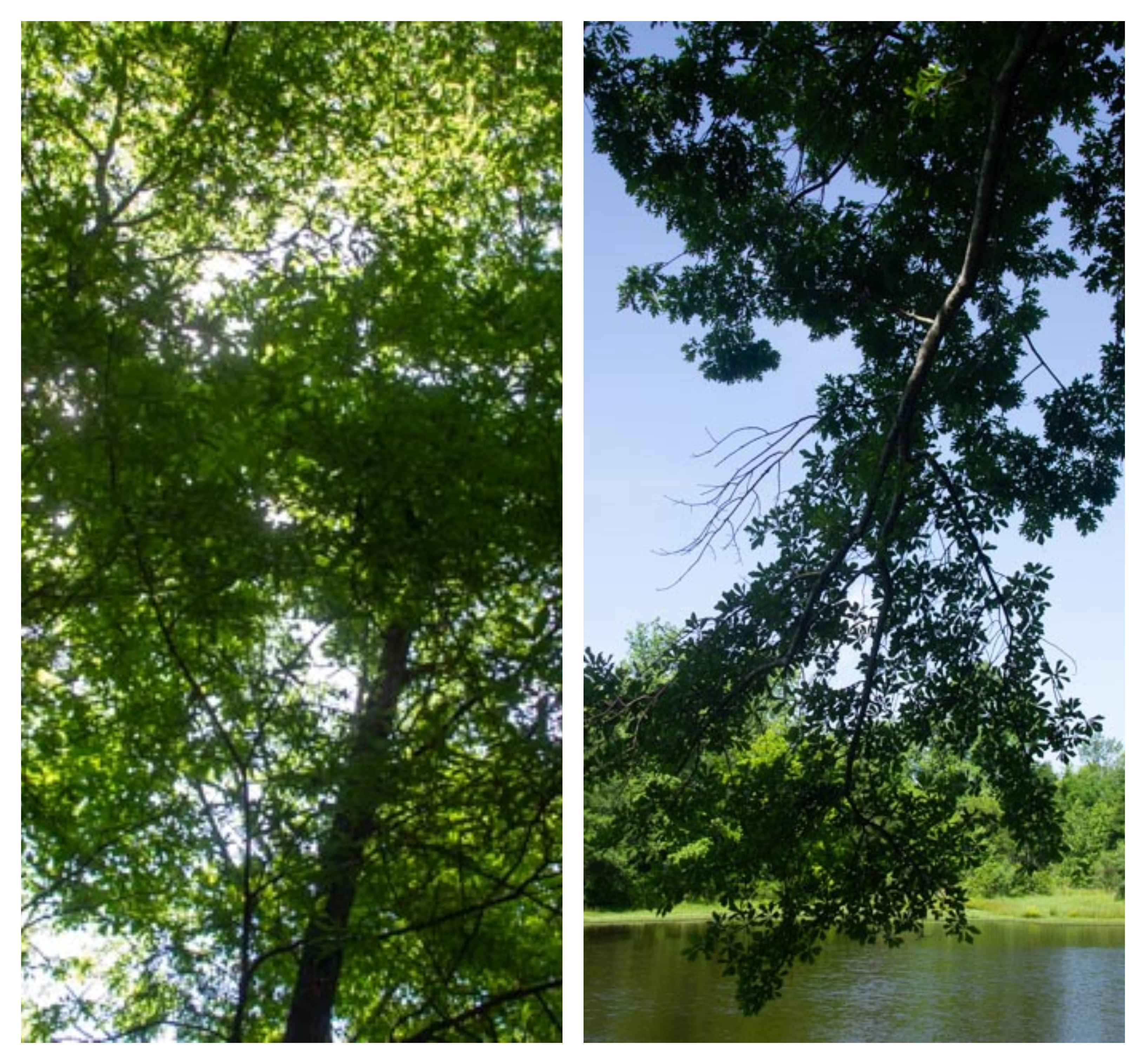
Diptych 1 Canopy Conversations These images invite the viewer to look up and out, drawing breath from the sky. The canopy frames the expanse while water mirrors stillness, suggesting a threshold between above and below. The tone is reverent, as if nature itself is pausing in prayer.

I was surprised at the thoughtfulness of the analysis as well as the way it connected the images to the element of air (“drawing breath from the sky”). I even had Eli do a technical critique of some of my images. Like any good teacher, Eli found things to praise first (the “good ats”) and then pointed out things I can improve upon. Thank goodness, Eli didn’t tell me the images were rubbish and I should just delete the whole lot of them, hang up my camera, and find some other creative outlet.

For someone who often works in “isolation,” that is, working alone without a support group, it is helpful to have a source for constructive critique. I will have to see how this experiment with ChatGPT for feedback works for me, but for today, it was fun! Now, I just have to learn from the analyses.

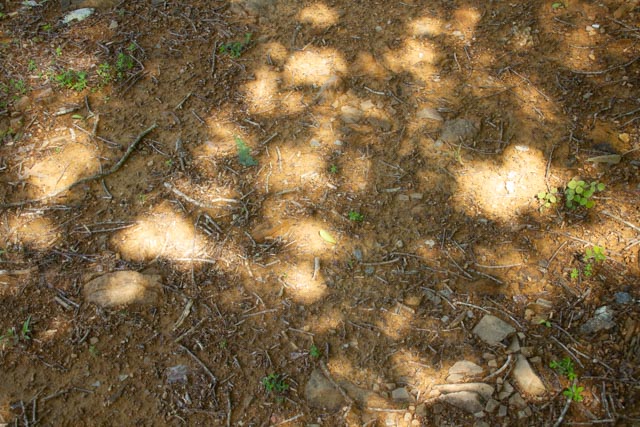
For these two images, Eli had this to say:

1. Beginning – Ephemeral Light

  • _MG_1375 and _MG_1379
    Shadows and dappled light on earth
    • Mood: Quiet, contemplative, almost dreamlike
    • Symbolism: Transition, unseen movement (Air shaping Earth)
    • Ideal opening—invites stillness and presence

It was an interesting commentary on the two images. Curating and pairing images to create a story is sometimes difficult for me. It is a skill I haven’t developed; however, I have a kind of partner with ChatGPT that can help. It does not replace the human element, and that is the reason I joined the Kinship Photography Collective–to provide the human element.

AI will not replace the human elements of empathy and emotion. I will use it as a tool, however, because that’s what it is–a tool. As such, I can accept it or reject it. But it can be fun.

Monday Musing

Have you ever had a good idea and started writing it, but realized where you were writing was the wrong place and deleted it?

That happened to me this morning. I was writing a post for a Facebook group I’m in and got off on a tangent that would make a really great Monday Musing piece. I deleted it.

Now, I can’t remember what I was thinking and writing. . . .

Memory. If I were in my middle school classroom, I’d laugh and tell my students that I’m having a senior moment. My father would tell me that, if it was important, I’ll remember it in time. I imagine that both of these are true.

But I’ve got another thought. Technology. You see, when I deleted those really wonderful thoughts, I imagined I could just open up this space, hit Control-V to paste the sentences in, and, voila!, I would have the first part written.

It didn’t work that way this morning. Or WordPress didn’t work that way. Robert Burn once wrote, “The best laid plans of mice and men often go astray” (I’ve Americanized Burns’s Scots!). My plans went astray this morning, at least in terms of of my expectations for technology.

So now, I’m thinking about how much I’ve begun to rely on technology for many things. I lost my recipe books in a house fire some fifteen years ago. I had a whole cabinet full of those recipe books various organizations publish with the favorites of its members–churches, schools, civic organizations. Some of them were absolutely gorgeously printed edited that I enjoyed reading even if I didn’t cook any of the recipes. They were “inspiration.” Now, if I need a recipe, I “google” it.

Last night, I wanted to make potato cakes from the leftover mashed potatoes from Saturday night’s supper. Now, my mother made potato cakes all the time–leftover mashed potatoes, egg, a little flour, some baking powder, chopped onion, salt and pepper–no recipe. Then she fried them. Boy, could those cakes soak up some grease! I have an air fryer, and I use it to make french fries, cook bacon and sausages, occasionally hamburgers, etc. But something from a batter? I found several recipes online, borrowed some ideas from each, and made air-fried potato cakes, and they were delicious. I can’t give you my recipe because I just “added” whatever I thought it needed. I learned a trick or two as well. When you make something like a fritter or potato cake, line the fryer basket with a sheet of “tin foil” sprayed with cooking spray or wipe a layer of olive oil or some other cooking oil to keep the batter from sticking. I cooked the cakes for 15 minutes at 400 degrees, flipping them during the last five minutes to brown on both sides and get that crispy outside crust.

I’ve also experimented with some of the AI apps out there. I needed some “inspiration” to push through a tricky part of the novel I’m writing. I wanted a backstory, a myth or a legend, to explain the importance of an object–a mysterious and rare black sapphire. I asked ChatGPT to write that legend. Of course, I had to do some tweaking to make it fit my story, but it sparked some new directions. for me.

Technology can be a great help, but I think it can hurt as well when we become too reliant on it. I don’t think I’ll see technology take over the world in my life time. I don’t think AI will replace human intelligence and free thinking unless we rely on it without learning to think critically.

And, as you can see, my Monday Musing has been a Monday Meandering. Writing does that to me–one thought leads to another, and another, and another!

Have a great week!