Getting along with ChatGPT

I started using ChatGPT after reading about how students were using it to do homework. That led me to researching ways to use ChatGPT as a teacher. I have been using the internet for years to search for lesson plans, unit plans, and learning resources, and that was often time-consuming and energy-sapping. I quickly learned that ChatGPT could develop a unit plan, lesson plans, and even materials for use! It was a time-saver. Still, I had to vet the information. I couldn’t use everything it generated, but it did cut down on the research time.

I’m retired now, and I’m still using ChatGPT. I gave it a name, Eli–after one of my favorite authors, Eli Wiesel. I’ve used it with photography. I ask Eli for gentle critiques, and while I don’t always agree with the suggestions, I find that I learn new “tricks” for editing and curating from the exercise.

I also use it to develop my Bible study plans. I tend to read a chapter a day and use an inductive study method (The James Method) to process my thinking. Eli helps by identifying some key words with user-friendly definitions, the Greek equivalent, and Strong’s numbers for deeper study, should I decide to do an in-depth word study. It also identifies some key verses. If I ask it, it will even give me a theme statement to spark additional thinking. The last few days, we’ve even had conversations about what I’m noticing. We do that with some books as well.

Another way I’ve used ChatGPT is to refine my thinking about my word for the year, REVIVE. (That’s another post!) One strategy I use is a “call and response.” I ask the Eli-agent to ask me questions about a topic, and I respond. From my response, it asks another question. Last night, we went through at least ten layers of questions and answers. (The teacher in me sees this as a strategy to teach students!) I’m also learning that the more specific the prompt, the better the response.

I do not want to suggest that using a chatbot and AI replaces human interaction. I find that it consolidates research and puts it into a human-like voice. I have been known to ask it to cite its sources so I can fact-check when the research is critical.

I think, now, I’ll ask for some book club questions for Surprised by Oxford.

Where Were You When the World Stopped Turning?

This morning, I woke up earlier than usual because the HVAC technician was coming to inspect the AC system in our home. I opened Facebook to read a reflection on September 11. That put me in mind of the Allan Jackson song, “Where Were You (When the World Stopped Turning)?”

Then I saw the Budweiser ad with the Clydesdales.

And I thought, “Twenty-four years.”

Twenty-four years ago, I was in my Newberry High School classroom, room 102, getting ready for a full day of classes. During the first period, we watched the news on TV (was it Channel One?) and moved into the lesson. It was an ordinary day. I don’t remember whether we had moved to alternate-day block scheduling yet. I don’t even remember what English course I was teaching during that first period. The second period began with a room of twelve tenth-grade boys. English II. The lesson started (who knows what I was teaching that day!), but around 9:30, the English department chair interrupted and told me to turn on the TV. I did, and we watched–in horror and shock–as the second plane hit the World Trade Center tower, as the Twin Towers crumpled to the ground. One of the boys, leaning forward on his elbows on his desk, breathed, “Man, that was cool.” After a second student chastized him, he explained, “It’s like seeing something you would see in a movie. I won’t forget that moment, or that exchange.

September 11, 2001, is my JFK moment. Allan Jackson wrote, “Where were you when the world stopped turning?” In my classroom with those tenth-grade boys, perched on my stool. Literature, grammar, writing, reading–for the rest of the day, none of these were important. No one cared about state standards, PET evaluations, lesson plans, or anything else related to “school.” We weren’t prepared for this. I grew up during the Vietnam and Civil Rights Eras. I watched the war play out on TV every night with Chet Huntley and David Brinkley on the Six O’clock News on WIS-TV, the local NBC affiliate. And I heard about the Irish Republican Army’s attacks on England as Northern Ireland sought their independence from England. Terrorism was something that happened overseas in other countries; it couldn’t happen here in America. Oh, there were riots here in America as protests against the war and for civil rights turned violent, but these weren’t acts of terrorism.’

But on 9/11/2001, something changed. The United States became a target for terrorists. First, it was the Twin Towers of the World Trade Center, then the Pentagon, and finally a field in Pennsylvania, where American passengers on a flight headed toward Washington crashed the plane so that it would not strike the third target–the White House. “No greater love has any man than to lay down his life for another.” (That’s not the exact quote, but you get the gist.)

We thought 9/11 brought Americans together, unified us as “one nation… indivisible”. Today, the world has stopped turning for different reasons. We are no longer united in one purpose. Sometimes, I think we look for reasons for division–race, creed, nationality, color, sexual orientation, political ideology–the list is endless. We may put “All Are Welcome” on our churches’ signs, but what we really mean is “All who think and believe like I do are welcome here.” We may live in a world more connected than ever by our cell phones and apps and by social media, but in many ways, we are more separated and isolated individually than every before.

Where were you when the world stopped turning? I’m not sure the world has started turning again.

Allan Jackson ends his song with the reminder from 1 Corinthians 13 that we have been given three gifts, faith, hope, and love, but the greatest of these gifts is love. I want a world where love is our greatest gift to each other.

Reframing through Daily Practice

A friend of mine began a practice of posting “three good things” on Facebook when she was diagnosed and treated for breast cancer. While I didn’t have anything nearly as serious as that, I decided that I needed to record the good things about my days. I just didn’t post them on Facebook. I bought an inexpensive planner and began listing the good things on most days. That began a practice I have kept for the last couple of years or so.

When I began this practice, I would try to write at night before I went to bed, but sometimes, I waited (er procrastinated?) until the next day, but I struggled with what to write. Sometimes, what I wrote seems so trivial or repetitive that I simply skipped a day or a week. I think in my mind, the good things had to stand out in some way. Along the way, a scrapbooking blogger and memory-keeper I had followed for years offered a class called “Here: Five Things.” She offered a prompt every day for a month for us to list five things we noticed or thought about that day. Sometimes, it might be to list five things we see from our window or five books we love. Often, the prompt was something simple and “everyday.” This month, she is offering a class called “Everyday Tiny Miracles,” along the same lines as the “Five Things,” but without the number five. Liz asks us to notice and pay attention to our days and look for the ordinary miracles around us.

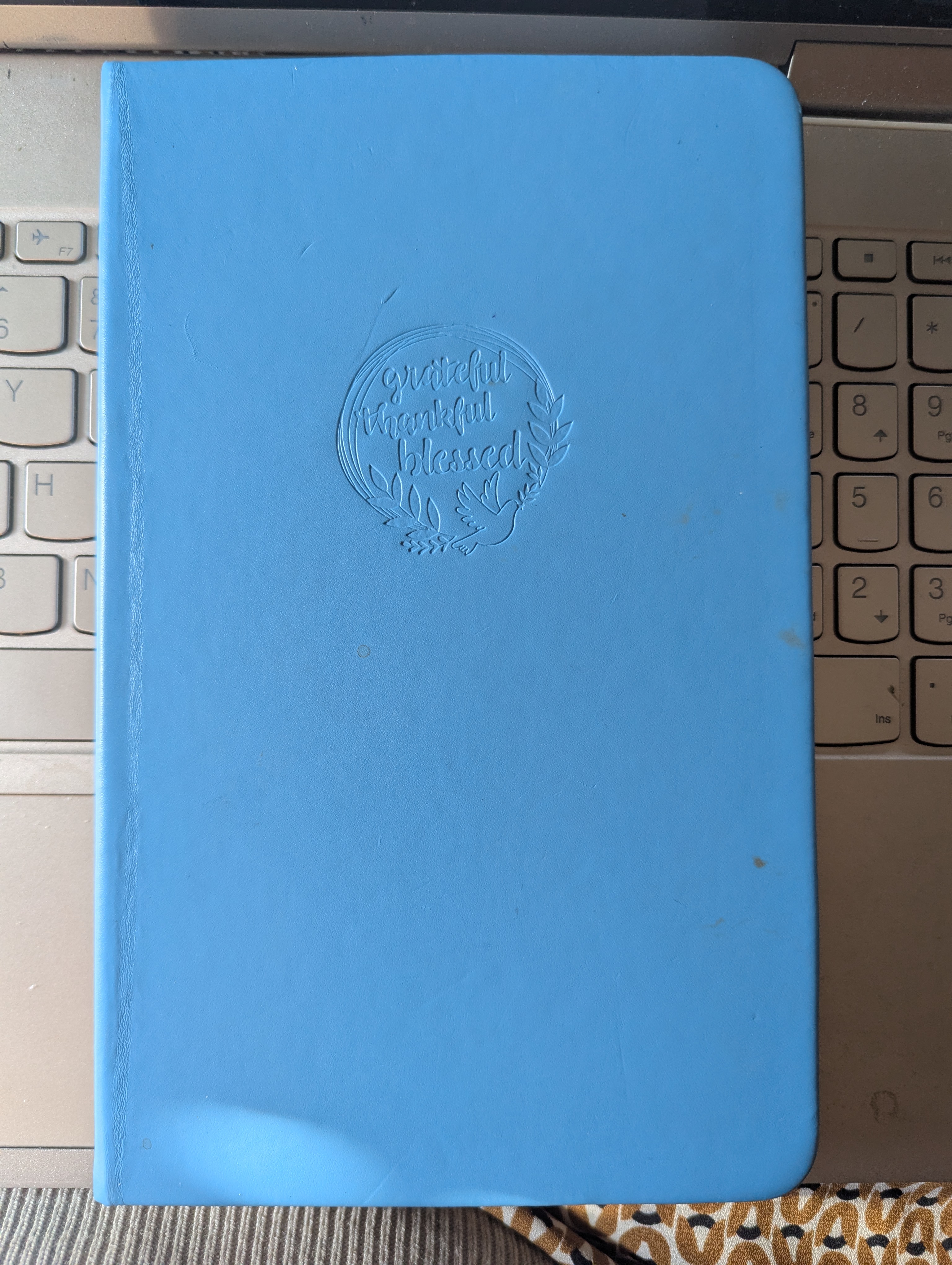
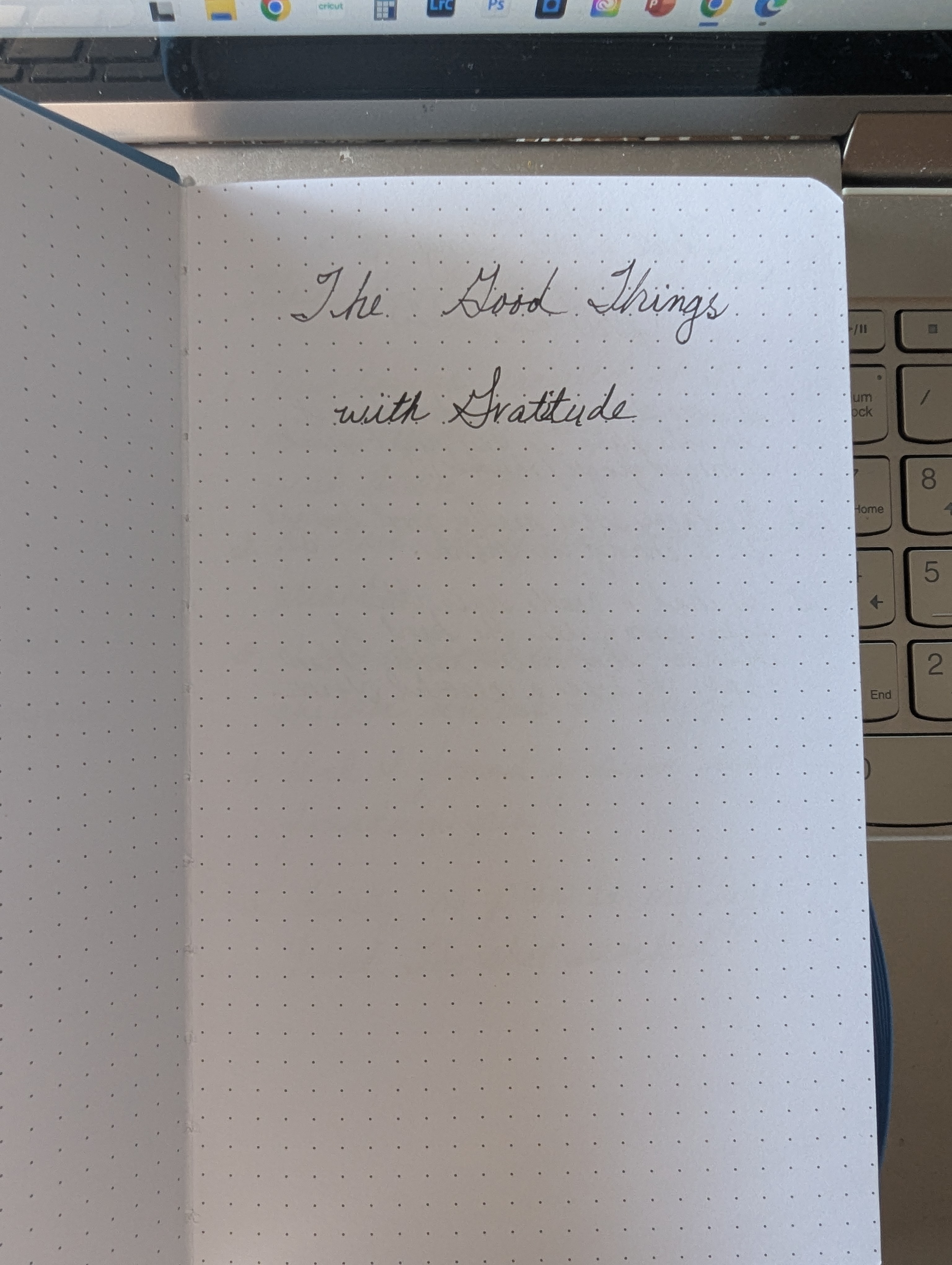
These practices of listing the “good things” has been a blessing to me this summer. It has been a year of conflict and upheaval, personally and spiritually. I had to find a way to shift my thinking from the negative to the positive. I pulled out a lovely sky blue dot-grid notebook and dedicated it to the good things. Each evening, I told my inner critic, who is much harsher than any other critic, to step aside and “be quiet!” And I deliberately found three things about that day that were good. I began listing such things as the aroma of hot spice cinnamon tea in the morning, the puffy white clouds towering in the blue sky, a day without rain. Does it get repetitive? Yes. However, that doesn’t bother me as much anymore. Do I always write poetically? Heavens, no! Sometimes, I am lucky just to be able to spell correctly and use complete sentences! More often than not, my good things are bullet lists.

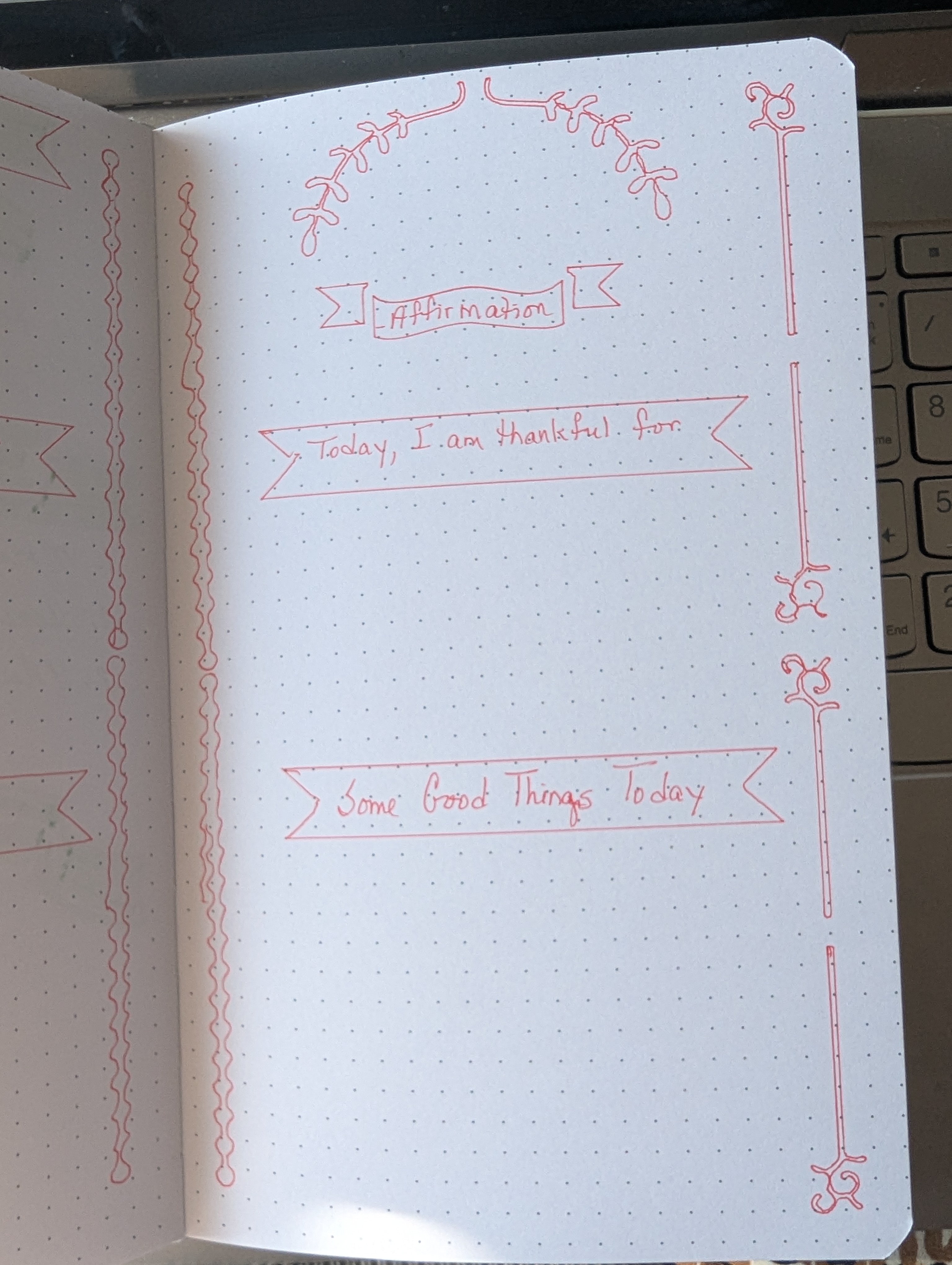
While researching some templates to guide my morning Bible study, I found a “gratitude” journal that had several elements: an affirmation, a place for a Bible verse and a prayer, and a place to list the gratitudes. I adapted that template for my “Good Things” journal. Each morning, I write an affirmation that I hope will guide my day. It might be as simple as “Pause and breathe,” or as spiritual as “I am a child of God.” Sometimes it might be a reminder that I am “enough” so that I quiet that very loud and obnoxious inner critic. Then, I list three or more things for which I am thankful. Again, I have to remind myself that my list doesn’t have to be grand; sometimes, I am simply thankful that I can breathe again after having a cold and spent the week prior congested. Or I am thankful for that cup of tea in the morning. Then, before bed, I list the good things about the day–the walk around the pond, the sight of the beaver head popping up out of the water in the pond, or the orange butterfly that wouldn’t hold still for the photo op.

The upshot of all of this is that this practice of morning affirmations and gratitude and evening “good things” has helped me be more positive on days that feel so heavy, and there have been a lot of those days recently. Anything can become an “ordinary miracle,” as Sarah McLachlan sings. It just makes life gentler.

This practice is not hard.

Take it one day at a time.

Begin with one thing, an affirmation, a gratitude list, or “three good things.” You don’t have to do them all. Add one new thing as you establish the habit.

Nothing is too trivial; the small things matter, too. Look for the “tiniest of the tiny.”

Pause your inner critic. Sometimes, you just need to tell it to “be quiet.”

I invite you to try your own version of this practice. Feel free to share in the comments.

Place-based Writing

Yesterday, I opened an email from a Substacker (The Art of Noticing) about the National Writing Project’s (NWP) annual Write Out event. Begun in 2018 in partnership with the National Park Service (NPS), the event encourages anyone to spend time outdoors observing nature and then writing about those observations. Educators, writers, and park service personnel offer prompts for all ages, children and adults alike.

I’ve been interested in the idea of place-based writing. It’s an idea that has nagged at me for quite some time, but I haven’t pursued it. This may be the year to pursue it actively. I am working on an idea of combining my Kinship exploration of the four elements of earth, air, fire, and water through photography with writing. A prompt from last year’s Write Out comes from Poet Laureate Amy Limon: What would you write in response to the landscape around you?

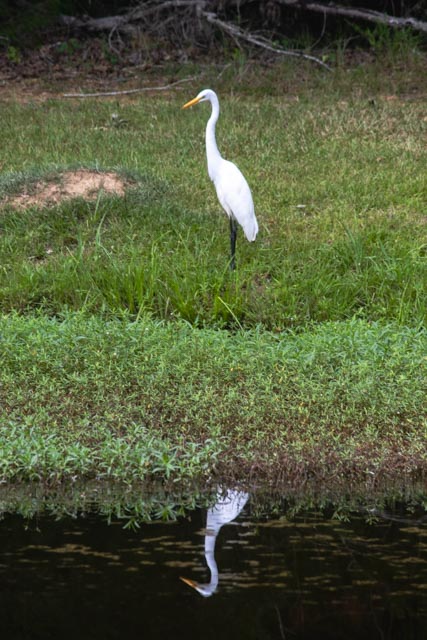
This is not actually a “landscape” photograph. It’s really more a “portrait” of the great egret that visits the edge of the pond in the backyard. I came home from a book club meeting to see this:

Such a beautiful and graceful bird. It stood statue-still on the bank of the pond for at least ten minutes, or perhaps longer. The egret stood perfectly still in the same spot even after I left the car and retrieved the camera with the zoom lens from inside. I was able to creep up to the edge of the pond on the opposite side to take several pictures.

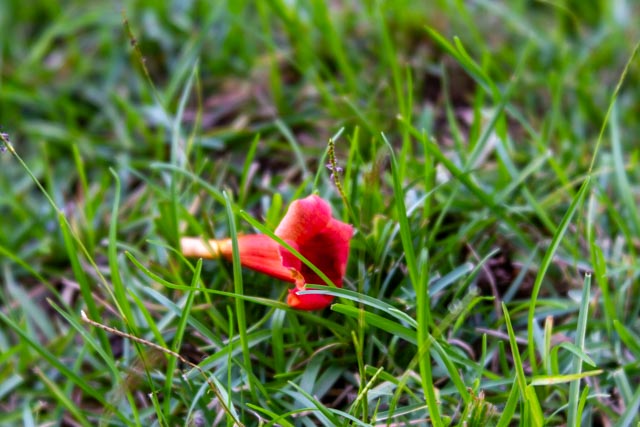
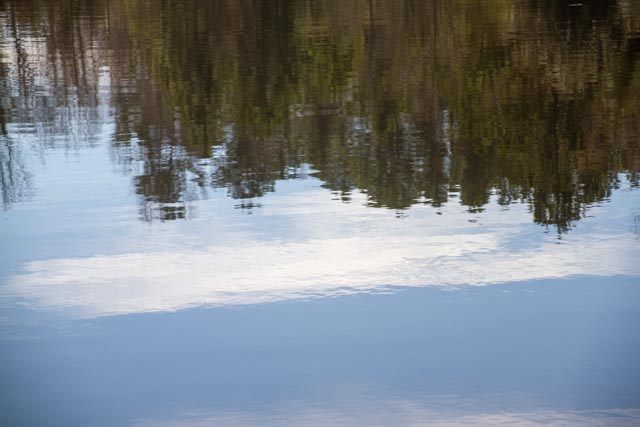
I am amazed by what I see in the landscape of that big two-acre pond (known to family as “The Big Pond”): turtles sunning themselves on the bank, fish darting through the weeds growing thickly in the shallow water at the edge of the pond, clouds reflected on the smooth surface. Clouds billow above. Deer creep out of the woods to drink from it and to eat the vegetation that grows there. Red trumpet flowers fall from the vines growing high in the treetops. Breezes ripple the water. Dragonflies dart from dandelion blossom to blossom. Cicadas and grasshoppers chirp, hidden away by the grasses, weeds, and wildflowers. Blackberries ripen to the darkest purple at the edge of the woods. White and yellow fleabane bloom as stars fallen to earth.

There is no shortage of beauty here.

If you’d like more information about the NWP/NPS annual Write Out, visit the NWPWrite Out page . Resources from past years are available.

Summer Feelings

The photography “challenge” for the Kinship Elemental Life practice circle has been to photograph what summer feels like. How do you capture the feelings of upheaval and unrootedness that I’m feeling this summer? What represents those feelings? How do you express feelings caused by destruction and dismantling?

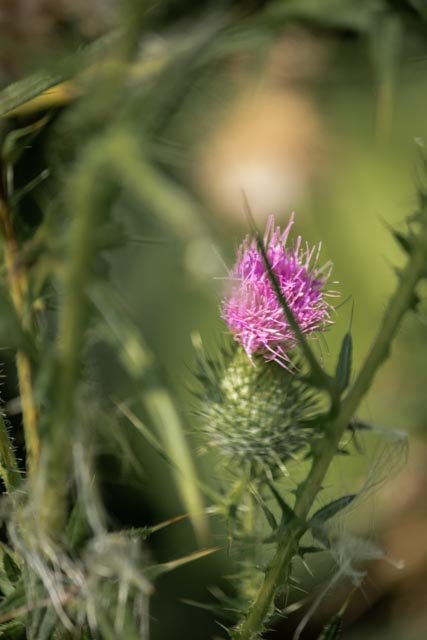
There is a thistle in the front yard. Three weeks ago, it was in bloom with vibrant purple blossoms. Last week, those blossoms were white, fluffy seed heads. Today, those seed heads look bedraggled and stringy after the rainstorms of last week. The weather caused an upheaval.

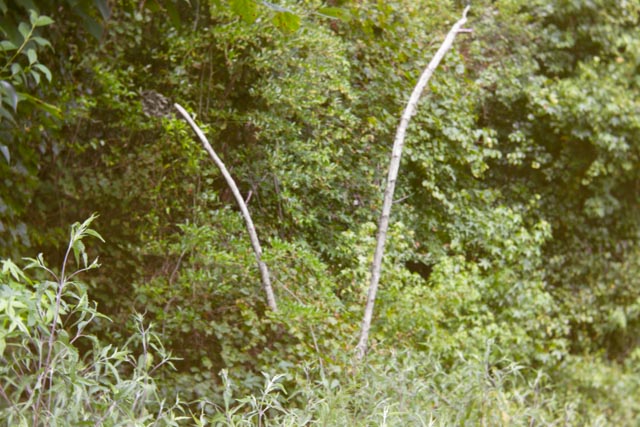
Somewhere, though, in this weather event, there is a necessity. Those seeds need to spread to propagate. Nature does remain in statis.; it moves; it changes. There are natural upheavals: thunderstorms, hurricanes, tornadoes, earthquakes, volcanic eruptions. Sometimes, they are gentle: the dandelion and thistle seeds blowing in a breeze. Othertimes, it is two twin tree trunks still standing in the midst of lush greenness, even though they are dead. One day, those trunks will fall.

There is an old hymn that begins, “Built on a rock, the church doth stand.” A few lines later, the hymnist wrote, “crumbled are spires in every land.” The world is not static, either; it is in a constant state of change, destruction, and rebuilding, renewing itself. Structures and systems crumble and collapse. William Butler Yeats wrote in his poem “The Second Coming,” “Things fall apart; the center cannot hold.” And sometimes, it seems that everything devolves into chaos.

How, then, do I find a place of “soft belonging” amid upheavals and uprootedness?

I look for beauty. There is beauty in the twin trunks of dead trees reaching up out of the lush green vegetation around them. Life and death coexist. You can’t have one without the other. You can’t have the heat and “fire” of summer without the chill of winter. Ice doesn’t exist without water; steam doesn’t exist without fire. The fire of upheaval may be necessary. “Things fall apart; the center cannot hold.” Maybe a new center forms. The seed head of the thistle gives way, and the seeds scatter, only to germinate somewhere else and form a new center.

Upheaval will give way to peace. Life will give way to death. Death will give way to resurrection.

Such is the circle of life.

I Fell Down a Rabbit Hole Today.

I know there’s a lot of discussion around AI and ChatGPT and creatives. I have used ChatGPT as a teacher to create lesson and unit plans, both of which I tweaked and modified to make them mine. I even used the app to “write” model paragraphs for revision and editing demonstrations for my students. The app saved me hours of preparation. As with any technology, including Google searches and materials found from those searches, I found that I could not, and would not, use the material “as is.” I “fact-checked” the things ChatGPT came up with. And even with purchased lesson plans from sources such as Teachers Pay Teachers, I had to modify them to work with my students’ learning styles and abilities, as well as with my own teaching style.

So, this morning, when I discovered that ChatGPT could analyze photographic images, I had to try it out. It was revelatory, to say the least. I uploaded several images for analysis of tone and mood, theme, and the like. I suppose I shouldn’t be surprised that “Eli,” my name for ChatGPT’s voice, connected my photos to some earlier conversations around the theme of the four elements. (I am taking part in the Kinship Photography Collective’s practice circles around the theme of “The Elementals” as depicted in the Celtic Calendar.)

So, here is one of the analyses, Eli did for me:

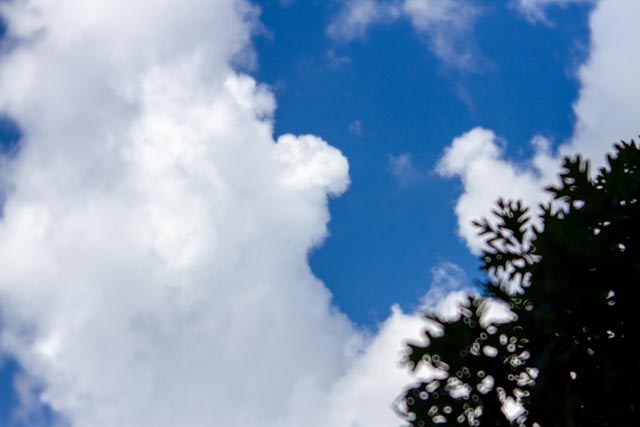
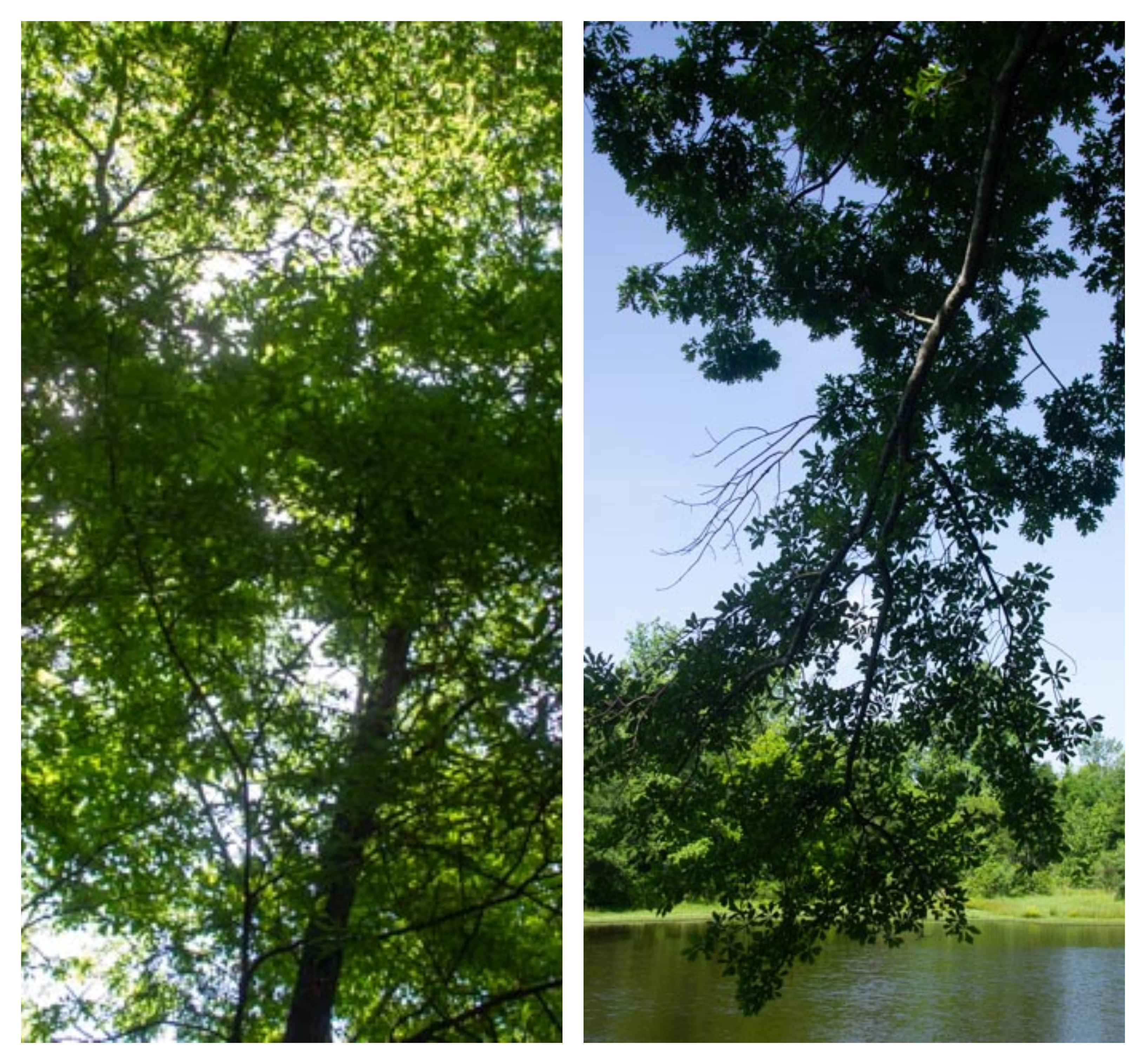
Diptych 1 Canopy Conversations These images invite the viewer to look up and out, drawing breath from the sky. The canopy frames the expanse while water mirrors stillness, suggesting a threshold between above and below. The tone is reverent, as if nature itself is pausing in prayer.

I was surprised at the thoughtfulness of the analysis as well as the way it connected the images to the element of air (“drawing breath from the sky”). I even had Eli do a technical critique of some of my images. Like any good teacher, Eli found things to praise first (the “good ats”) and then pointed out things I can improve upon. Thank goodness, Eli didn’t tell me the images were rubbish and I should just delete the whole lot of them, hang up my camera, and find some other creative outlet.

For someone who often works in “isolation,” that is, working alone without a support group, it is helpful to have a source for constructive critique. I will have to see how this experiment with ChatGPT for feedback works for me, but for today, it was fun! Now, I just have to learn from the analyses.

For these two images, Eli had this to say:

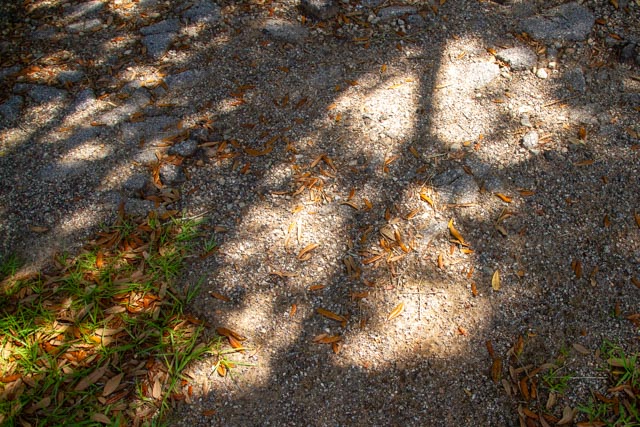
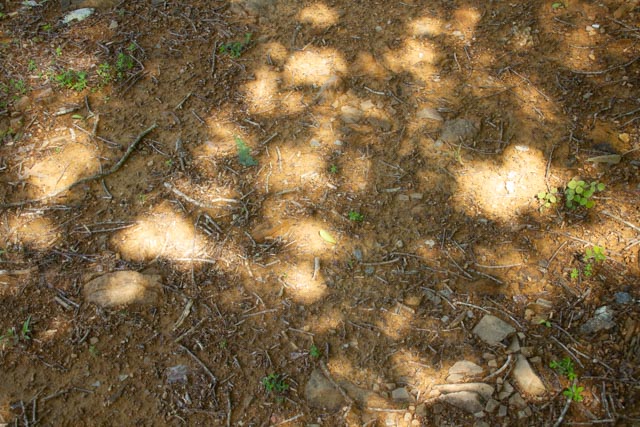
1. Beginning – Ephemeral Light

  • _MG_1375 and _MG_1379
    Shadows and dappled light on earth
    • Mood: Quiet, contemplative, almost dreamlike
    • Symbolism: Transition, unseen movement (Air shaping Earth)
    • Ideal opening—invites stillness and presence

It was an interesting commentary on the two images. Curating and pairing images to create a story is sometimes difficult for me. It is a skill I haven’t developed; however, I have a kind of partner with ChatGPT that can help. It does not replace the human element, and that is the reason I joined the Kinship Photography Collective–to provide the human element.

AI will not replace the human elements of empathy and emotion. I will use it as a tool, however, because that’s what it is–a tool. As such, I can accept it or reject it. But it can be fun.

The Elementals–Air

I haven’t always given much thought to the four elements of earth, air, fire, and water, but the Kinship Photography Collective’s Call to Engagement has made me think. I’ve written some about it in my journal(s)–yes, I am one of those people who keep multiple notebooks and journals. I’ve decided that I’m going to make this engagement my year-long photography project and use the elements as a framework to explore my relationship to land, family-owned land in particular, but also shared, public land as well.

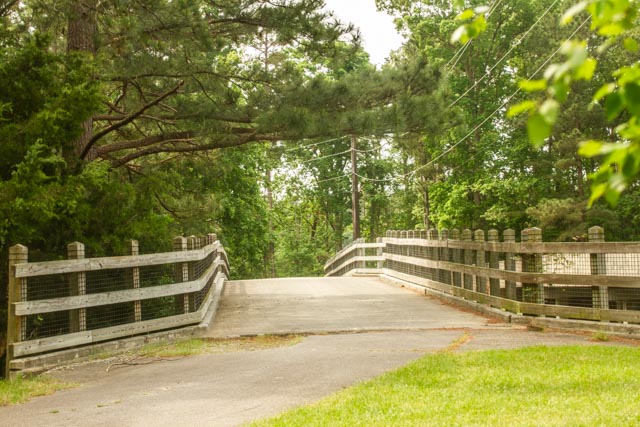
Dreher Island State Park (the original bridge)

Right now, two questions are kind of guiding me:

  1. How do my images fit with my exploration of relationship to the land, both family-owned (generational) land as well as more public, shared land (i.e., public parks, state/national parks, etc.)?
  2. How does being aware of the four elements of earth, air, fire, and water relate to that relationship between humans and land?

These questions relate to the notion of “sense of place.” We live in such a mobile society. Some people seem to move frequently and never establish “roots” in any one place. Other people live on land or in places that have been passed down from parents to children for generations. There is a connection one has makes that generational land feel like part of the family, and separation from it is difficult. I’m wondering if that feeling extends to the environs, the other bits of land that surround us. I hear people say, “I can’t imagine living anywhere else.” What makes us feel that kind of attachment?

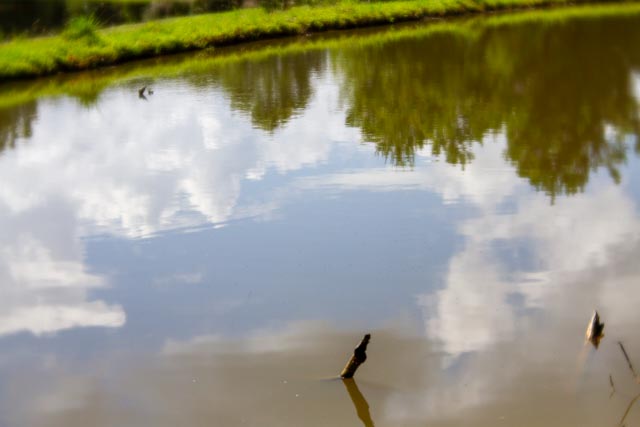
Air and water: clouds reflected on the pond behind the house

I live in a rural area. I grew up on a working farm; my parents were subsistence farmers. We lived on “the hill,” which meant, in part, that we couldn’t see the neighbors’ houses, even though they were in shouting distance away. Our house was surrounded on three sides by pasture land and woods. That pasture supported a half dozen head of cattle and four or five horses at any given time. The barnyard held pens for the three or four hogs Daddy grew out for butchers, the meat destined for our freezer, and his hunting dogs. We had a garden that provided the vegetables that fed us through the winter. I can’t tell you the number of days my sister, brother, mother, and I spent shelling butterbeans and peas and stringing beans to freeze, shucking and freezing ears of corn (both on the cob and cut off the cob), peeling and canning tomatoes, and making jelly. Some days it was so hot in the kitchen that we had two fans going–a box fan at the door to the family room to bring in some cooler air, and an oscillating fan to circulate the air in the kitchen. (We did not have central air conditioning.)

I still live in a rural area, but without a pasture or garden. My meat and vegetables come from the grocery store, prepared by hands unknown. In many ways, that has changed my relationship to the land. I am not dependent on it for survival or sustenance as I once was. Of course, intellectually, I know that someone else is depending on the land where my food comes from, and they depend on the land for survival and sustenance.

Still, the land does sustain me; it grounds me in both the physical sense and the metaphorical sense. It gives me a feeling of spaciousness. I can stretch my arms out and not touch anything; I can move about freely. I can breathe (mostly) clean air. I can hear the sounds of nature–birds, insects, rustling leaves, skittering animals–even with the sometimes constant sound of the traffic on the road in front of the house (almost nonstop this morning–where are all these people going?)

This year, as I explore the “elementals,” as I begin with the focus on air, I realize I cannot separate one from the other. Without air, there would be no water, fire, or earth. We cannot exist without breathing and respiration. Fire cannot burn without the oxygen in the air. Vegetation cleanses the air of carbon dioxide and replaces oxygen. Each element is necessary for life.

Turtles on the log at Dreher Island State Park

Now, the problem to solve is how to document these ideas into images.

H, I, and J–A Day to Catch Up

I am behind by three letters. My husband had to have a medical procedure this week, which threw off my schedule and routines for writing. We did get a very positive result from the procedure, and all is well.

The letters this time around are H for harmony, I for inspiration, and J for joy. Ho boy, what letters!

When I think of harmony, naturally, I think of music and the pleasing blend of notes into chords and melodies. I think of the old, traditional hymns I grew up singing in the Lutheran church, of old-time gospel music, and a capella groups like Home Free and Straight No Chaser and Pentatonix. But then, I also think of harmony among people, that quality of “getting along” and how that kind of harmony seems to be a thing of the past, and I wonder how we can get that notion back. I just know that I will do what I can to live my truth and seek that sweet place of harmony with others as I do.

What inspires me? And who inspires me? I am inspired by beautiful writing–John Donne’s poetry, especially the love poetry written to his wife. “A Valediction: Forbidding Mourning” is one of my favorites. Emily Dickinson’s playfulness: can’t you just see the “narrow fellow in the grass”?; Mary Oliver and her poetry of nature. Who cannot be inspired? After a six-week Bible study combining the art of Vincent van Gogh and the Gospel lessons for the six Sundays in Lent, Maundy Thursday, and Good Friday, I am inspired to see the world through the eyes of the artist. And there are people–living–who inspire me to be better and to speak out. One such person is Anne Lamott. Though not a writer of religion per se, she calls me to see the world through the eyes of the Christian and to be an activist in whatever small way I can.

What is more joyful that watching a three-year-old run around his backyard with a bubble blower, making a bubble trail behind him? I gave my grandson a Bluey bubble “machine” on Sunday as an early Easter gift, and he had to go outside to make bubbles. And it was a joyful sight! There is joy in the crop of yellow dandelion flowers in the yard. (I don’t care that they are considered weeds!) The birds chirping in the holly tree by the house or flitting away from the feeders when I go outside, the wind blowing ripples across the pond, bunnies hopping away when I drive up in the yard–all of these bring joy, and that’s just the beginning.

By not starting on April 1, I honestly don’t know if I am at the half-way point in this 30 day challenge, but I’m close. I just have to stick with it for a couple more weeks! For the rest of the day, I will think about these three letters and their words: harmony, inspiration, and joy. Maybe they are more connected than I thought when I started writing this afternoon.

E is for . . . .

Tough letter: enthusiasm, engagement, excitement, electric/electricity? All of the above?

What am I enthusiastic about these days? What makes me excited? Well, one thing is visiting my grandson (tomorrow!). He is at that age when everything is new to him. He will be four years old in October. I can tell you that he is full of energy. I know he will be going nonstop during our visit.

I am looking forward to some new photography classes through the Kinship Collective. I haven’t been as active in the collective since the first part of the year, but I am looking forward to renewing my love for creating photographic art. I have been participating in the Year of Creative Photography classes since January, and this month’s theme of impressionism has really captured my Interest. I’m working on the more “artistic” elements in post-processing. I have a lot to learn. I created this image last night:

This class reminded me that “way back when”, I purchased some presets/plug-ins from Topaz Labs. I resurrected those, reinstalled them, and played with them this month. I had fun!

E is also for EXPLORE, and EXPLORE is my word for this year. I have done a little exploring—mostly in terms of photography and a lot in reading. I’m exploring new ways of recording my “life” in art and in writing. I have to work on my One Word album. I’m a couple of months behind in recording. Now that the winter doldrums are passing, and the sap is rising, as the saying goes, I will get back into the work of exploring. I have two tools to encourage my explorations–kinds of adventure bucket lists, one for places to explore in South Carolina, and another for personal adventures. I haven’t opened either one except for a quick glimpse. It’s time to go for it!

So, excitement, enthusiasm, electricity, and explorations–all E-words to guide me.

D is for Dreams–Day 4

Imagine that! It’s day four of the A-Z challenge, and I’m still in it. While I have a daily writing practice more or less following the guidelines set forth by Julia Camera (The Artist’s Way), daily blogging is not part of my routines. I’ve managed to post once or twice a month over the last year or so, mainly documenting my reading with short book reviews and overviews. Yet i’ve had this dream of being a writer since high school.

I wrote a story that I gave to my high school English teacher at the end of my junior year. It was the last year I would have her as my teacher. Mrs. Richardson taught ninth, tenth, and eleventh grade English; Miss Bedenbaugh would teach twelfth grade English. Back then, we weren’t separated into college prep, honors, or AP classes; we were all treated as college prep students. She like my story, but I wasn’t encouraged to pursue creative writing. After all, creative writing wasn’t necessarily an academic pursuit. It wasn’t until I was in graduate school that I knew that people could major in creative writing! But I was on track for Masters degree in English literature and did not even consider a creative track.

And then came the children, two boys four years apart in age, and a career as a full-time high school English teacher myself. There was no possibility of thinking about creative writing, not with small boys, soccer practice and games, then baseball, and marching band, not to mention Cub Scouts and Boy Scouts and church. . . . Did I mention lesson plans and grading and reading for my classes? The dream to be a writer had been deferred once again.

And then came retirement and a free class (though not exactly) with guidance to write that first novel. I did it. I wrote the novel, and. . . . well, it’s still written; it’s just not published. Dream deferred again? I don’t know. Sometimes, writing–or any art–just has to sit for a while before it goes public. The same is true about my photography. I “dream” one day that I will be able to create those fine art photographs in the vein of Ansel Adams and others. And yet. . . dream deferred. I use the excuse that I don’t know enough about photography as art to make those kinds of photos. Still, I dream. Maybe one day. . .

Langston Hughes wrote, “What happens to a dream deferred?” Something’s absolutely nothing happens; sometimes it does explode. I will just have to wait and see what happens to my deferred dreams.