365, Life, and Intentions

I start each year the same. I set an “intention.” This year, it was to follow Katrina Kennedy’s Capture Your 365 daily prompts. That lasted about five days. Then I picked it up again in February for a couple of days, in March, and, now in April. I read the prompts, and sometimes, they do speak to me, and sometimes.  . . . .  not so much. I go days or weeks without looking at my camera sitting quietly on a chair or in the corner or on the back seat of my car, much less picking it up to use it!

And yet, as I drive down the road on my way to work, I cross the Adam’s Camp bridge and say to myself, I should get here when I’m off to take the picture of the fog rising from the lake at sunrise. Or I will see an interesting cloud formation or a beautiful sunset on the drive home from work. I see photographs daily even though I don’t take them. Maybe that is the point of doing a 365 project in the first place, not so much the photographs themselves, but the seeing, the observations, the being in the moment and being present enough to notice bits and pieces of life around us.

So, four months into the year, I’ll change my “intention,” from taking a photograph every day to seeing everyday, to notice things and to let them speak to me.

Today, I went for a walk around the ponds. It’s spring; it’s cool outside. This weekend was just plain cold in the mountains of North Carolina. I won’t even guess what the wind chill factor was Saturday! Needless to say, I was not as prepared as I should have been. But, I digress. . . .

I love the springtime, even if it doesn’t always love me (my itchy, allergy-ridden eyes; itchy, runny, stuffy nose; scratchy throat. . . . ).  Early spring is also a transition. There’s all kinds of evidence of new life, but there is also a reminder of the winter as well—a fallen leaf caught in the green grass;untitled-18

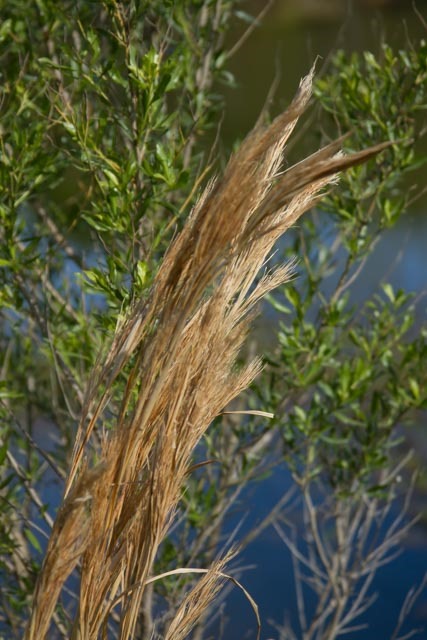
the brown broom straw in front of a newly leafed shrub;

untitled-17

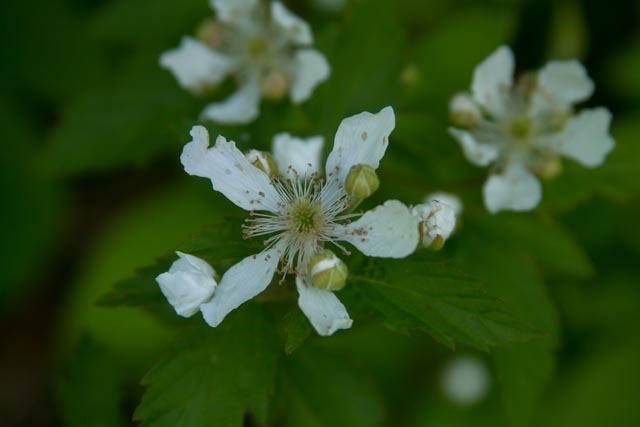
blackberries blooming (that’s another story!);

 untitled-10

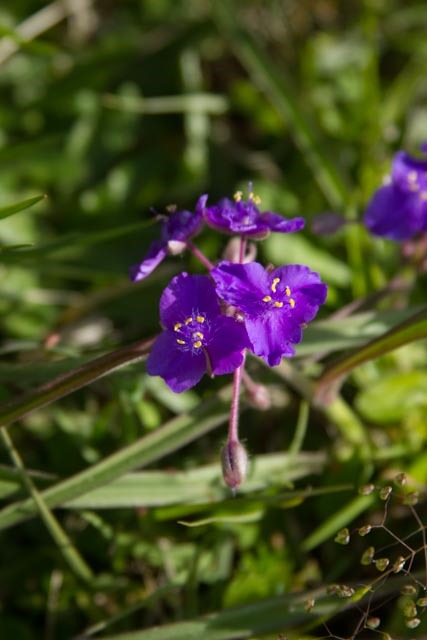
beautiful wildflowers (I won’t call them weeds—yet).

untitled-29untitled-35

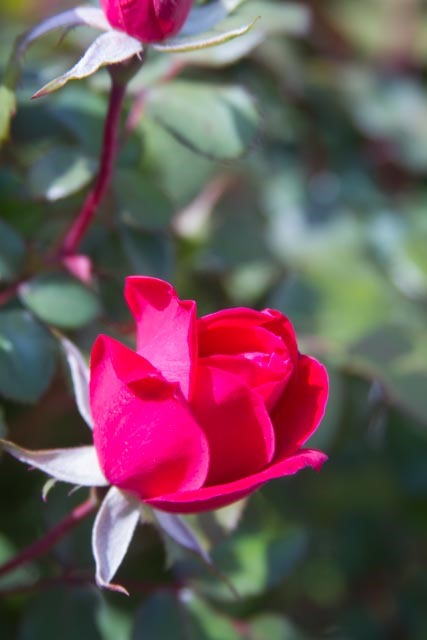
My red knock-out roses are in bloom;

untitled-5

the dianthus is opening.

untitled-4

The lavender looks good. Birds are singing loudly in the mornings. I’m waiting for them to rediscover the newly refilled feeders outside my living room window.

Learning to see, learning to be present. . . .  That’s Capturing Your 365, even when it doesn’t show up in the photos.

Time and Writing and Art

It’s been nearly a month since my last entry here. I have these “spells” when writing calls to me and I ignore the call. I’ve been doing that lately—ignoring the class. Oh, I’ve been writing—in my morning pages journal, in my art journal/documented life unplanner/right-brain planner, fauxbonichi journal—Oh, yes, I am writing. Just not here in this space. Just not for publication.

I have been reading a lot. I’m several chapters into Elizabeth Gilbert’s book, Big Magic. I have to thank my friend Mary for loaning me her book. Unfortunately, because she loaned it to me, I can’t mark it up! So, I bought my own Kindle edition so that I could highlight, underline, and comment. Oh, yes, I am writing quotes in my journals/planners/sticky notes, too.

And I’m reading one of Rick Sammons’ photography books on seeing creatively. I am reminded throughout the book that photography is more than settings on the camera and pressing a shutter button. It is about seeing the world, not merely glancing around, but looking deeply, and seeing what is not always obvious. I liked his analogy of using a shot-gun approach to photography versus a more considered approach. Sometimes, when we go out to photograph things, we take pictures of EVERYTHING in sight—aim and shoot! However, Sammons reminds me that while it’s okay to take the postcard pictures and attempt to capture everything, we also need to take the time to look closely, to see what “we” see and not what we’re necessarily expected to see.

The other aspect of Sammons’ book that I appreciate is that photography, especially digital photography, is not just about getting it right in the camera, but also about seeing our creative vision through in the post-processing stage. In most of the chapters, Sammons writes about some of the creative tools he uses—Lightroom, Photoshop, Topaz plug-ins, Nik software. .  . .

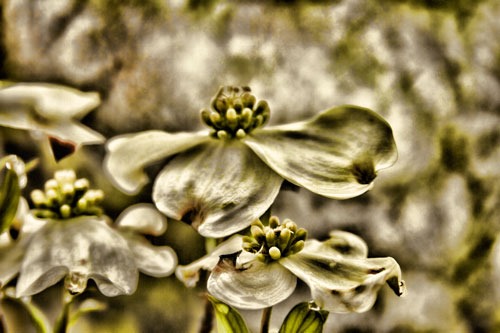
Last night, I played with some of those tools on images I took last weekend. And I played with layering textures and photo veils and other tools in my tool kit. I came up with this image of the dogwood. I think I like it. I like it very much.

topaz-adjustments-on-dogwood

untitled-13

This is the original (SOOC), and I like it, too.

I am trying to salvage this image of the heron that Mama and I saw while we were at Bennetts Point three weeks ago. It landed in the pasture next to our place there. I was not dressed to go outside to get a closer shot, and I had to shoot fast! I think those birds know when I’m coming with a camera and they are camera shy.

This is the original. Trust me, it’s a heron!

untitled-2

I cropped it, “fuzzed up” the grass a bit with a Topaz plug-in, and added several layers of textures, brushing each layer off the heron. This is the result.

heron at bennetts point

It does have a painterly look, and I like that. I like the softness of the background, but it’s still missing something, and I will come back to it again to see what I need to do.

Vision, creativity, writing, reading—it’s all part of what I want to do.

O Wind, If Winter comes, can Spring be far behind?

Anyone who knows me, knows that my received my Masters degree in English literature, specializing in the literature of the nineteenth century. I love my Romantic poets—Keats, Shelley, Byron, Wordsworth, Coleridge, the Pre-Raphaelites, the Brontes. . . . . The more Gothic, the better!

When I am walking and looking for images to receive in my camera, I tend to think in terms of poetry, especially metaphor and symbolism, mood, setting. Those elements speak to me somehow, and at times, I do think that photography is, as Chris Orwig says, “visual poetry.”

This winter has been gloomy—cloudy, rainy, wet. More often than not, I’ve been kept indoors by the rain than by the cold. In terms of temperature, it’s been a mild winter. Just WET!

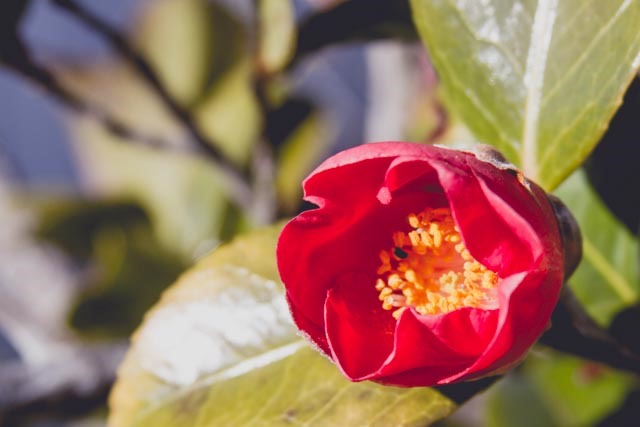
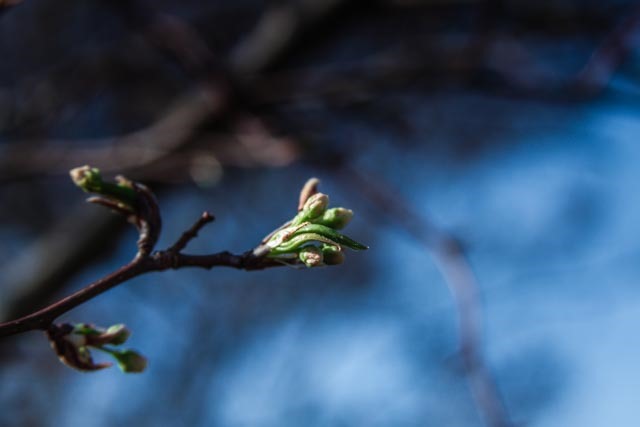
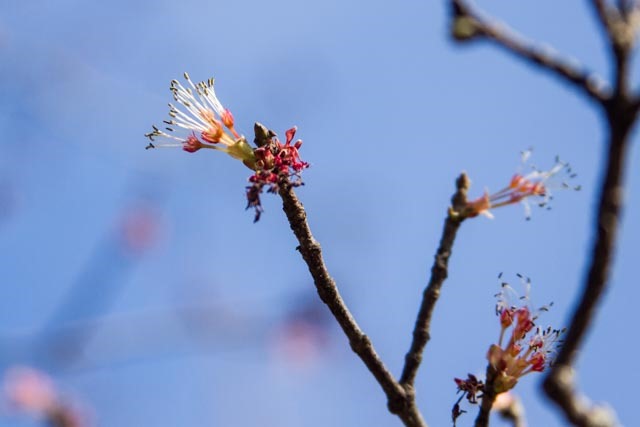
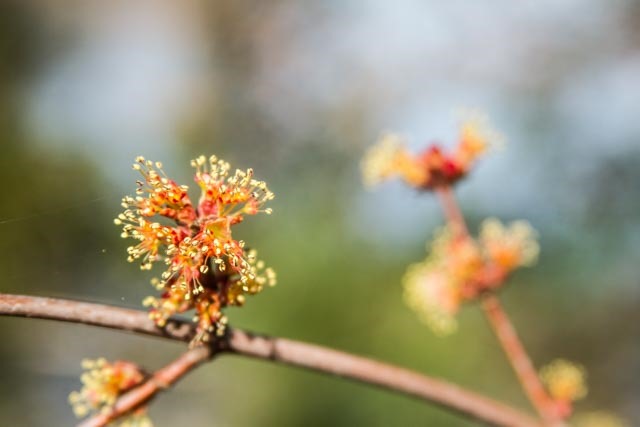
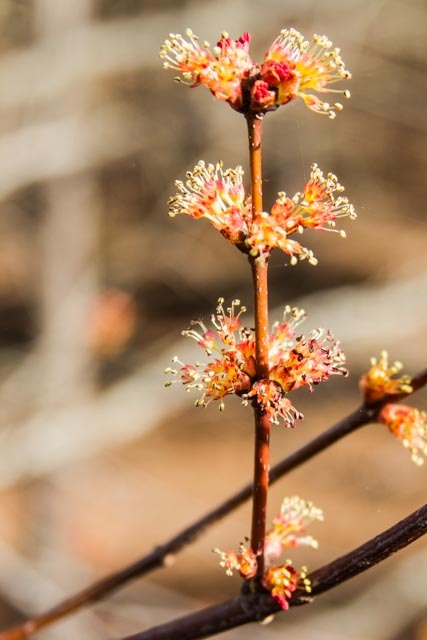
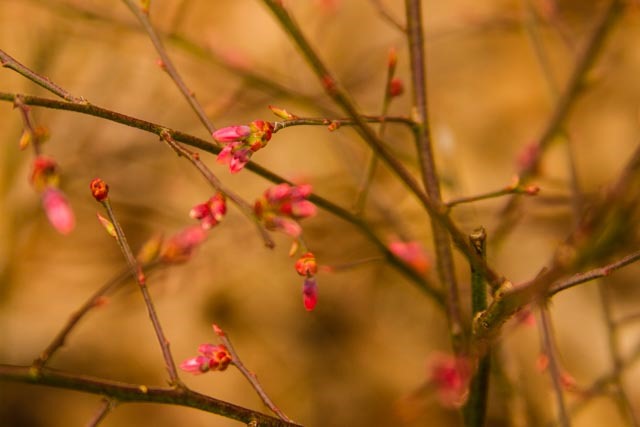
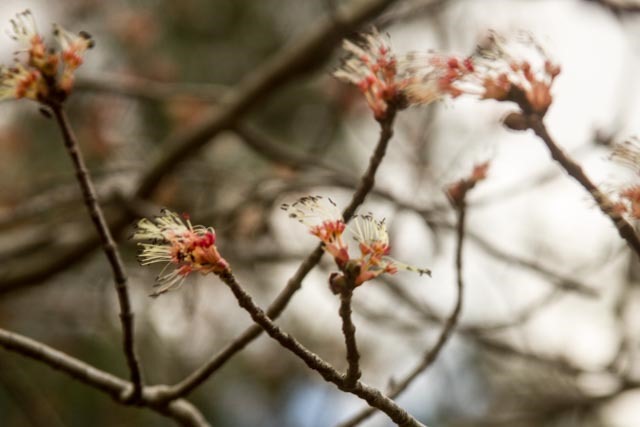
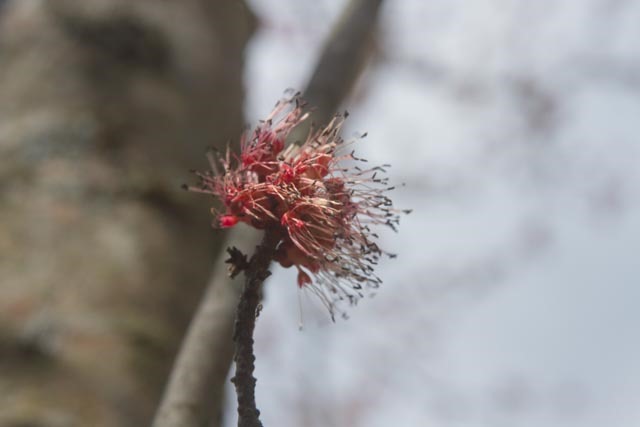
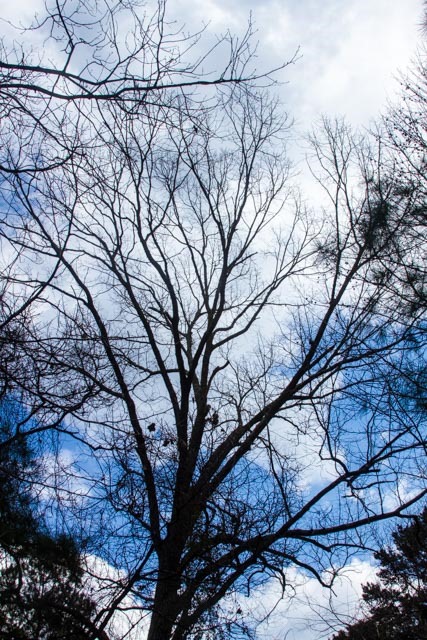
But lately, I’m seeing signs of spring. I went for a walk through Dreher Island State Park yesterday as well as through my backyard. Shelley had it right. When there is winter, spring is not far behind.

untitled-23

untitled-4

untitled-6-2

untitled-3

untitled-10

untitled-14

untitled-17

Here is Shelley’s complete poem:

Ode to the West Wind

Percy Bysshe Shelley, 1792 – 1822

I

O wild West Wind, thou breath of Autumn’s being,
Thou, from whose unseen presence the leaves dead
Are driven, like ghosts from an enchanter fleeing,

Yellow, and black, and pale, and hectic red,
Pestilence-stricken multitudes: O thou,
Who chariotest to their dark wintry bed

The wingèd seeds, where they lie cold and low,
Each like a corpse within its grave, until
Thine azure sister of the Spring shall blow

Her clarion o’er the dreaming earth, and fill
(Driving sweet buds like flocks to feed in air)
With living hues and odours plain and hill:

Wild Spirit, which art moving everywhere;
Destroyer and Preserver; hear, O hear!


II

Thou on whose stream, ‘mid the steep sky’s commotion,
Loose clouds like Earth’s decaying leaves are shed,
Shook from the tangled boughs of Heaven and Ocean,

Angels of rain and lightning: there are spread
On the blue surface of thine airy surge,
Like the bright hair uplifted from the head

Of some fierce Maenad, even from the dim verge
Of the horizon to the zenith’s height,
The locks of the approaching storm. Thou dirge

Of the dying year, to which this closing night
Will be the dome of a vast sepulchre
Vaulted with all thy congregated might

Of vapours, from whose solid atmosphere
Black rain, and fire, and hail will burst: O hear!


III

Thou who didst waken from his summer dreams
The blue Mediterranean, where he lay,
Lulled by the coil of his crystalline streams,

Beside a pumice isle in Baiae’s bay,
And saw in sleep old palaces and towers
Quivering within the wave’s intenser day,

All overgrown with azure moss and flowers
So sweet, the sense faints picturing them! Thou
For whose path the Atlantic’s level powers

Cleave themselves into chasms, while far below
The sea-blooms and the oozy woods which wear
The sapless foliage of the ocean, know

Thy voice, and suddenly grow grey with fear,
And tremble and despoil themselves: O hear!


IV

If I were a dead leaf thou mightest bear;
If I were a swift cloud to fly with thee;
A wave to pant beneath thy power, and share

The impulse of thy strength, only less free
Than thou, O Uncontrollable! If even
I were as in my boyhood, and could be

The comrade of thy wanderings over Heaven,
As then, when to outstrip thy skiey speed
Scarce seemed a vision; I would ne’er have striven

As thus with thee in prayer in my sore need.
Oh! lift me as a wave, a leaf, a cloud!
I fall upon the thorns of life! I bleed!

A heavy weight of hours has chained and bowed
One too like thee: tameless, and swift, and proud.


V

Make me thy lyre, even as the forest is:
What if my leaves are falling like its own!
The tumult of thy mighty harmonies

Will take from both a deep, autumnal tone,
Sweet though in sadness. Be thou, Spirit fierce,
My spirit! Be thou me, impetuous one!

Drive my dead thoughts over the universe
Like withered leaves to quicken a new birth!
And, by the incantation of this verse,

Scatter, as from an unextinguished hearth
Ashes and sparks, my words among mankind!
Be through my lips to unawakened Earth

The trumpet of a prophecy! O Wind,
If Winter comes, can Spring be far behind?

This poem is in the public domain.

Experiencing Doubts

I have been absent from writing regular posts—again. I think I wrote last week, but it has been more than a month since I’ve posted regularly. I doubted I had much to say. And I doubted myself as an artist. My work is kind of dull compared to others.

Yesterday and this morning, I think I know why I am in such a state of doubt. I spent an evening looking through a truly beautiful magazine, Digital Studio, published by Stampington and Co. It is a gorgeous magazine. I love their publications, Somerset Studio, Somerset Life, Art Journaling . I could spend a small fortune on subscriptions alone! Then I begin to compare my work to what I see, and I tell myself that I don’t measure up. And then I doubt myself.

I am working on shaking that mode. A wise friend told me yesterday that I should remember that my photography is for me and me alone and that I should not be concerned that others “don’t get it.” You know, that image that speaks only to me, like this one.

untitled-3

It is a perfect pinecone, for heaven’s sake. And it’s attached to the branch on which it grew, and there are still green needles at the end. And I could not resist taking the image. Beauty. To me. And a little bit of “apartness” and separation and perhaps “aloneness.” (Okay, I’m taking a page from Shakespeare: if he can make up works like fantastical, then why can’t I?)

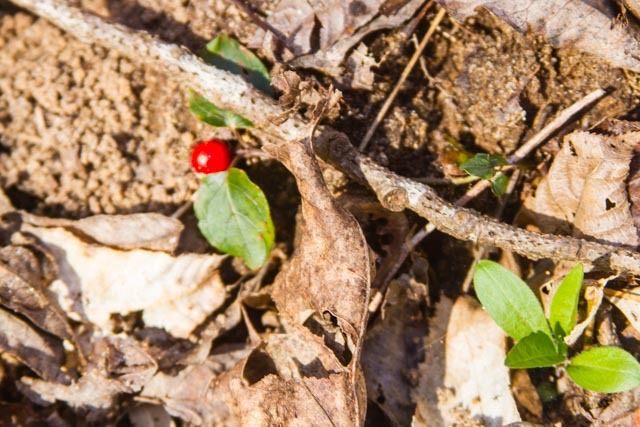
And there are details to notice in the world, like this:untitled-19

Again it’s only a holly berry lying on the brown earth, but it’s a spot of unexpected color. So, I received this tiny moment as that point of unexpectedness, recorded it, and moved on.

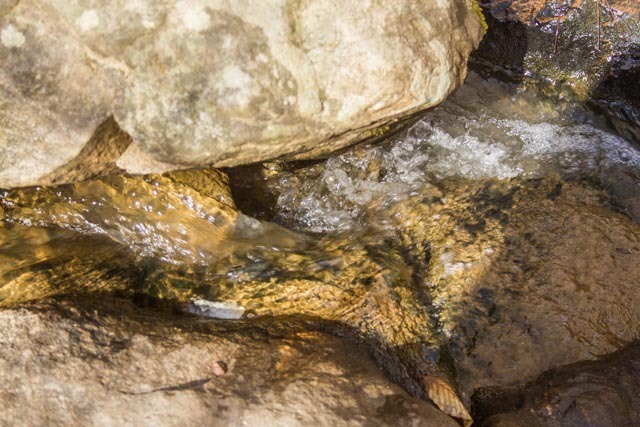
We walked by the creek/stream that runs through Lynch’s Woods yesterday. I admit that I am a “water person,” drawn to water and can abide by water. And I noticed more details—rocks, water, algae, texture.

untitled-15

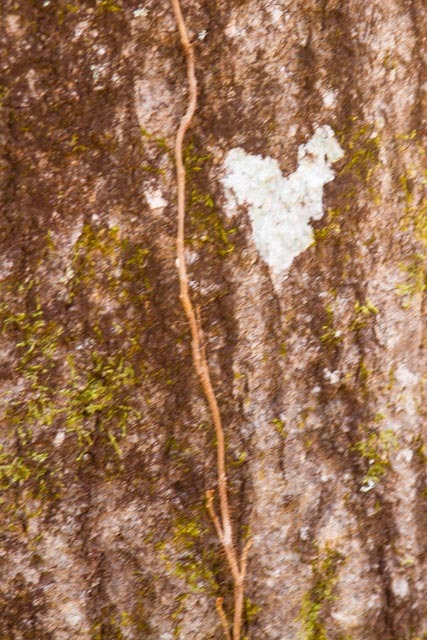
I listened to my wise friend’s advice and recorded the images that spoke to me. Near the end of the walk, we both spotted some lichen growing on the tree trunk:

untitled-38

Do you see it? There is a heart. And Madre Julie wrote to me on Facebook and said, “There is Love.” Someone understood. . . .

Tomorrow, I may face the demon doubt again and wonder if anyone understands what I’m trying to say through my art of photography. But for today, I will be content and know that at least one image has spoken and someone else “gets it.”

I will leave you with one more image of the blossoming of spring (and hope):untitled-55

The Best of Intentions . . . .

I did start the year with the best of intentions to write regularly in this space. Unfortunately, like so many intentions, this one fell by the wayside—again. The good thing about this space is that it is forgiving. it sits here waiting patiently until I come back to it.

Today, I made myself leave the house and go for a long walk. According to my FitBit, I walked for 71 minutes. Now you have to realize that I took the camera with me. So that meant I stopped—often—to take pictures, or to receive images, as Christine Valters Paintner would say. The weather was excellent, if breezy. At least the wind did not try to blow me off the planet as it did last week.

There were signs of spring and renewal all over Dreher Island State Park today. I will let the images speak for themselves.

untitled-5

I had to fight against the wind to get these images. I hope I can get back to the park to see how these beauties look in a few days when they are fully open. (I’m also waiting for my flowering cherry tree to bloom.)

untitled-7

untitled-14

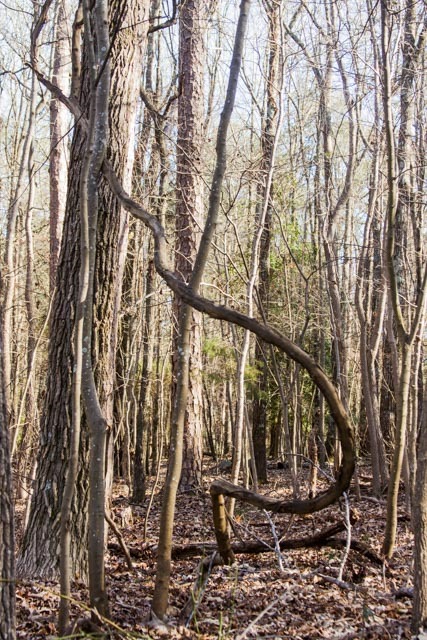
Today’s prompt for the Capture Your 365 Challenge was “spire.” I immediately thought of church spires and steeples, but rather than do the obvious, I chose to photograph trees reaching to the heavens, branches raised in a glorious hallelujah of their own.

untitled-17

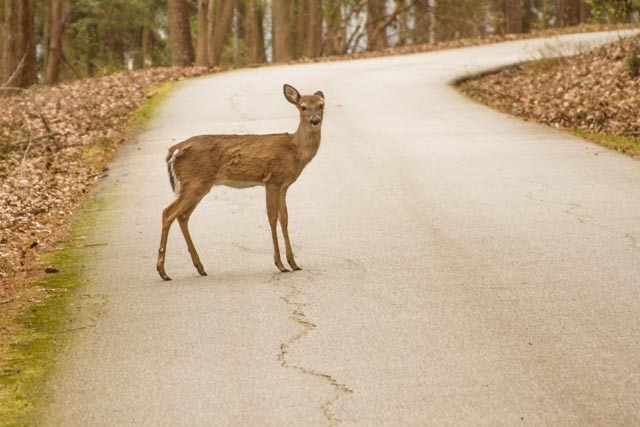
Because there is no hunting allowed in the state park, the deer are very tame. This is the last of four that crossed in front of me. I looked at the deer; the deer looked at me. Then satisfied that he had seen enough of the human with the camera, it walked sedately into the woods to join the rest of the herd.

untitled-46

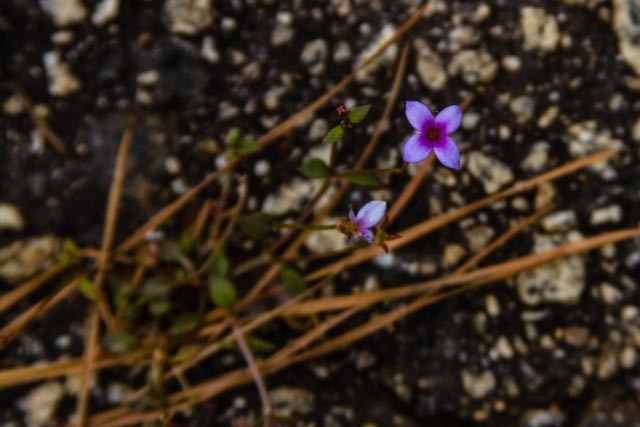
And we humans cannot stop nature from doing her thing. These tiny flowers were growing in the cracks of the asphalt parking lot. I don’t know what they are called, but to me, they are tiny purple stars.

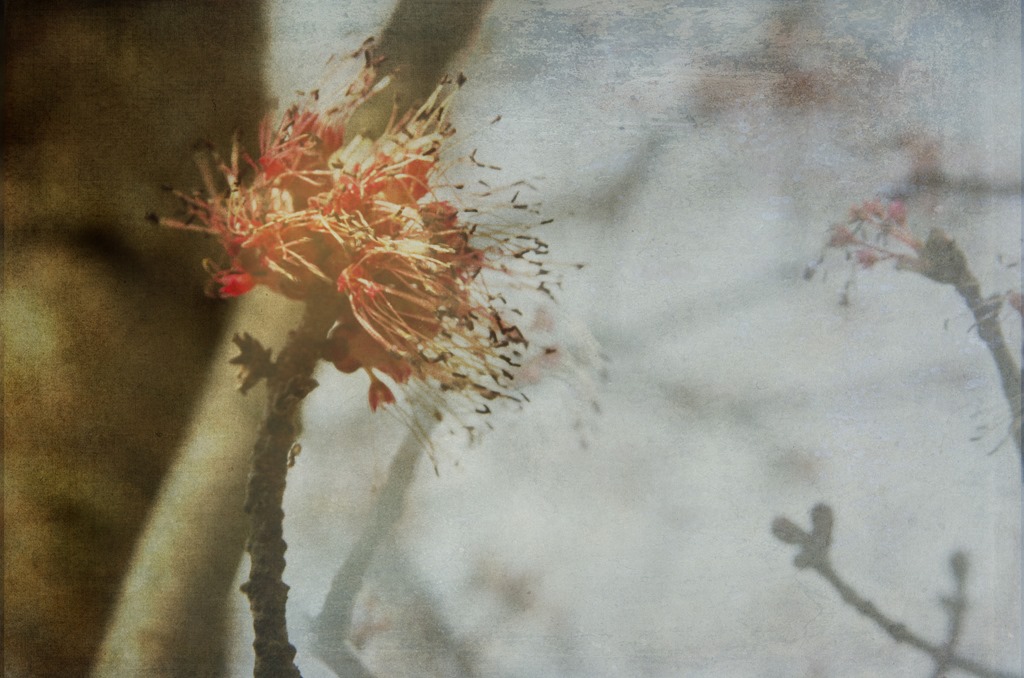
And after I came home and downloaded the images, I had to play in Photoshop.

You see the original in the second photo above. This is the final result.spring bloom

I like the “grunge” look, and I’ve been working through Sebastian Michaels’ Photoshop Artistry class to learn how to combine and blend layers to create something like “fine art.” I still have a lot to learn about manipulating layers. So much of what I do is trial and error. (However, my son likes it!)

The Book of Days: An Art Journal Approach to Planning and Documenting Life

I think it’s because I am a teacher and learned a long time ago that I needed to “plan.” I have to admit, though, that linear planning and step-by-step planning is not easy for me. I know what I need to do to accomplish a task, whether it’s writing a lesson plan for myself or for the substitute, or making a grocery list or organizing my “to-do” list for the day. But somehow, I get stuck. It doesn’t always work to my advantage. Yet, I know I need some kind of way to keep up with those things as well as to keep up with appointments and other events. There are times when I call my planners my “brain.”
untitled

I turned into a scrapbooker some seven or eight years ago. Since my boys are grown, I have not kept up with it, and in fact, I have to admit that I have not scrapbooked a layout for a couple of years I miss being creative that way. But one kind of project I’ve tried off and on is the “Book of Days,” a kind of informal scrapbook of snips and snaps and bits and bobs of everyday. Then I sort of dropped out of that project; life got in the way.

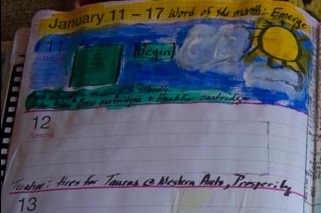
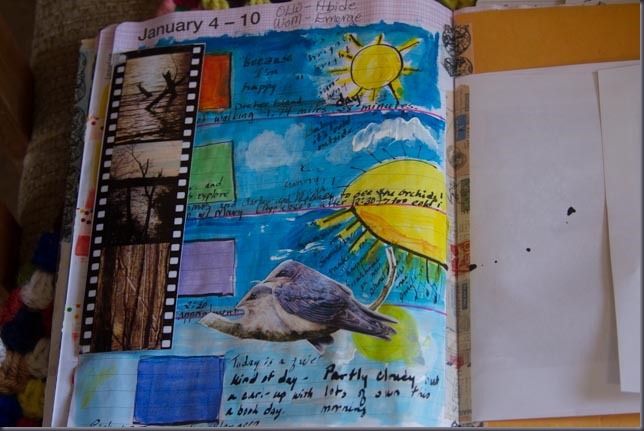
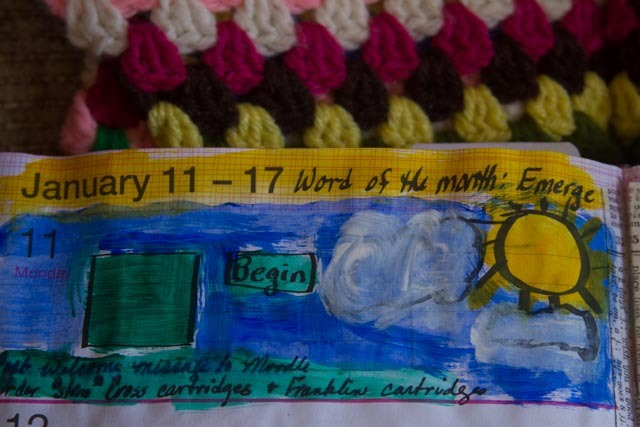
This year, I have returned to the idea of the book of days, but I also discovered a different way of planning and recording day-to-day life: art journals and creative planners. First, I discovered the “No Excuses Art” website and the daily approach to art journaling. I thought, “I can do that.” The idea is to take ten minutes or so a day and create a daily entry, using some sort of day planner. I bought an inexpensive week-at-a-glance planner from WalMart and jumped right in. Each day, I do these things: choose a color of the day and a word to describe my mood or feeling or motivation, and draw the weather. Once I get these ideas down, then I bring out the paints, either watercolor or acrylic, and I add color to the day. If there are any “events” or “marching orders,” I write those in, too. That’s the absolute minimum. It’s not much, bur it’s a little bit of art.

untitled-10

Another way I am using my planner is to keep my word of the year/month and the theme for the month in the forefront. My word this year is “abide.” I am still feeling my way around that word, and my word for January is “emerge.” The theme of the Documented Life Project for January is “Going Out on a Limb: Trying Something New,” and this art-journal approach to planning is certainly something new for me.

untitled-6

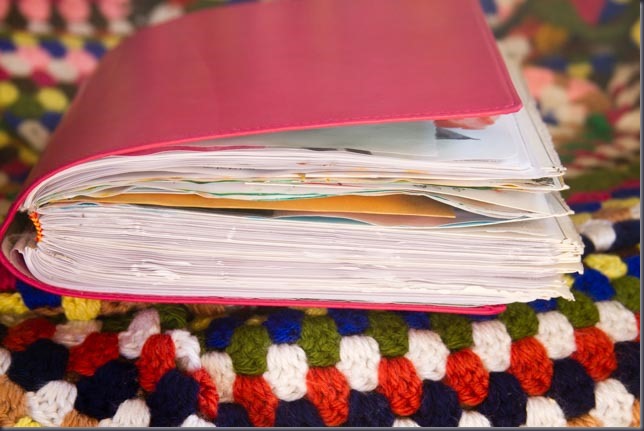
I’ve added things to my planner, too, such as envelopes to hold ephemera of all sorts, including feathers that I may find while walking outside, photographs I want to hold on to, things I’ve cut out from magazines, postcards—you name it, it goes in an envelope. I taped these envelopes into the planner with washi tape. I add tip-in pages taped to the edge of the page. I may print out a photobooth strip of photographs that I’ve taken that week and tape it as a tip in. I’ve also added additional pages for notes, drawings, doodles, and other attempts at “art.” It’s only January, and already my planner is thick and bulky, and I love it.
untitled-2

Now, the question is: is this making planning any easier? Not really. I think I will always resist the linear aspect of planning. However, this approach to keeping a planner is a little like keeping a diary of day-to-day activities. At some point, I can go back to my book of days and see what I’ve done, where I’ve been, and what was important to me at the time. When I return to more formal scrapbooking, I will have some kind of “record” that I can use to find material for the scrapbook layouts.

untitled-3

In a way, the book of days becomes a kind of scrapbook on its own. There are many scrappers who believe that everything should be acid-free and archival quality. For this project, I am not at all concerned about those things. I don’t anticipate this project “lasting” for very long, historically speaking. And if it does last, I’ll let my posterity worry about conserving it! This project is solely for me. And for now, I am enjoying it.

SUPPLIES:

  • some kind of day planner (I’m using the PlanAhead planner with the really big print!)
  • watercolor and/or acrylic paints
  • colored pencils
  • markers
  • journaling pens
  • glue sticks (I like the giant sized Elmer’s Craft Glue stick)
  • images, photographs, words cut from magazines, old books, newspapers, etc.
  • ephemera (ticket stubs, receipts, napkins, the sleeve from a disposal coffee cup from the coffee shop, etc.)
  • photographs
  • scotch tape
  • envelopes
  • tags
  • tabs to mark pages
  • scrapbook patterned paper and card stock
  • embellishments of all sorts
  • stamps and stamp pads
  • washi tape
  • stickers

Some useful websites and other resources:

No Excuses Art Journalingwww.noexcusesart.com This was the first art journal planner I saw. I bought the book No Excuses Art Journaling for my Kindle, and I have been using it as a source for ideas for my book of days. Gina offers a class, but it is pricey at $97.00, but her videos are interesting, and she demonstrates a lot of techniques. I am not sure I would buy the class again (although I believe that I have benefited from it greatly). Some of the classes and websites listed below have similar content for MUCH less or for free.

The Documented Life Projecthttp://www.arttothe5th.com/journal/2015/11/25/documented-life-project-2016-are-you-ready In order to take advantage of this resource, you have to buy the class, but it is very reasonable ($12.00 for the year). You get fifty-two weekly prompts, plus free downloads for materials to use, admission to a private Facebook group for inspiration, and access to the Art to the 5th resources. That’s pretty cheap, compared to some other classes I’ve signed up for!

The Right-Brain Planner– http://www.rightbrainplanner.com/ Teresa’s materials are for sale only, but she does have a Facebook group that you can join for inspiration and ideas. She posts frequently on her blog so that you can see how she plans. I have subscribed to her monthly pages (about $8.00 for the booklet of materials), and I get some really good ideas from her.

The Reset Girl– http://christytomlinson.typepad.com/christy_tomlinson_worksho/the-creative-planner-online-class.html Again, this is another online class, but it’s also fairly reasonable in price at $34.95. You get access to tons of videos of instructors who suggest and teach a variety of techniques as well as a list of resources to get supplies or to make your own. The only drawback to the classes and videos offered is that they are tied to a particular style and size of planner. However, I am finding that, as is the case in most things, you can adapt to use your own materials and re-create some of them using what you have without buying more stuff.

Pinterest: Don’t we all love Pinterest! Actually, I have a love-hate relationship with Pinterest. I look at what others have created, and let the ugly comparison bug get me. But there are numerous boards for creative planners. Just do a search for creative planners or art journal planners or some other variation, and you will have more inspiration that you can stand!

http://www.heathergreenwooddesigns.com/2015/05/my-mixed-media-art-worship-faith.html–I have only skimmed this page, which I found through Pinterest. I’m going to take another, closer look and maybe incorporate some of these ideas into my “book of days” as well. It is a Faith planner of sorts with sections for Bible study, prayers, sermon notes, and the like.

https://www.pinterest.com/mambipins/the-happy-plannertm/ I think this is another board I will have to check out.

Levenger– http://www.levenger.com/ I love the Arc notebook system, and I use their products for my school stuff. I even bought TWO of the special hole punchers so that I have one at home and one at school. You can add pages, rearrange pages, and insert “stuff” as needed. You can order from the Levenger website, or you can buy the materials from Staples (that’s where I get mine). Sometimes, as I work on my planner, I wish I had begun with the Arc system, and I may have to go to that if my planner does not hold up to use. (See how stuffed it is?)

Photojournal Monday—Out on a Limb

I think I am an online class junkie. I signed up for three classes, at least they are “sort of” classes: Ali Edwards’ One Little Word, Art to the Fifth’s Documented Life Project: the unPlanner 2016, and Theresa Robinson’s Right Brain Planner four-week class. (Am I nuts?) Notice I’m not taking any photography classes right now? Nope. It’s not that I don’t want to, but I need to focus on the ones I’ve signed up for that I haven’t finished yet! There’s the Photoshop Artistry class that I’m half-way through. And there are the saved lessons from Kim Manley Ort’s classes, and a couple of others from Katrina Kennedy. I need to find my focus, literally and figuratively.
The classes that have my attention right now are Documented Life Project and the Right-Brain Planner classes. For several years, I made and kept a mini-album I called “The Book of Days.” I used a variety of techniques to create calendars and then throughout the month, I would record snippets of my days. The DLP is similar. Someone else, though, has done the hard work of creating the templates! Thank you, DLP leaders!

In the DLP class, the theme for January is “Out on a Limb: Trying New Things.” Art journaling is a new thing for me. I’ve dabbled at it, but nothing seemed to take. Then I discovered this year, the No Excuses approach to art journaling, which led to the Documented Life Project 2015 (I just glimpsed it, didn’t sign up), and finally to Right-Brain planning. I have a mess. So, my limb is art journaling.

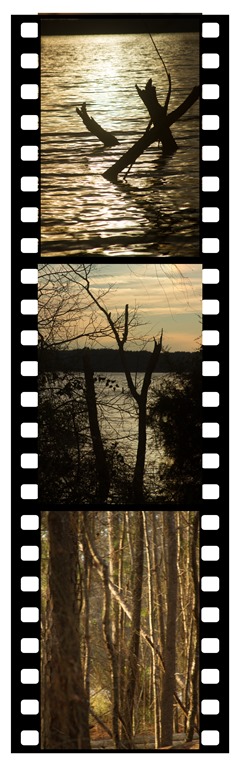
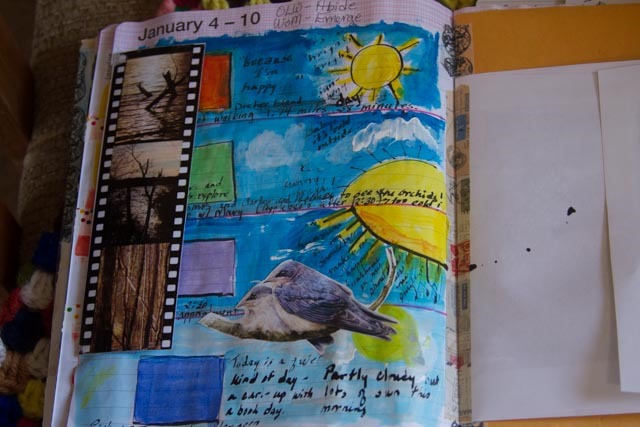
As a photographer, though, I have to include photographs and images in my journal. One way to do that is to create photo flimstrips. I think I love them. I can print out a strip, trim it down, and tape into my “unplanner” or art journal and have a record of my week or day or month—which ever I choose to document. I am not worried about whether my journals or planners are archival safe right now. I’m just working with the here and now. This project is for ME, not necessarily for posterity. If there is one thing that losing things in two house fires almost back to back has taught me is that the things of this world are just temporary.

So, here is my first filmstrip:

Out on a limb filmstrip

When I walked through Dreher Island Sunday afternoon, my photography “goal” or intention was to look for images that represented the literal aspect of this month’s DLP theme: Out on a Limb. I discovered that the hard part was finding isolated limbs. One of the things I love about photographing nature during winter is the graphic nature of things. Bare trees are lines and shapes and angles and curves. As you can see from a couple of the images I chose, I used backlighting to create a silhouette effect, and that just emphasizes the graphic qualities. I can see that I will use this template often to create a snippet of my walks and days and weeks and months.

Winter Solstice 2015

I am taking an online class called “Sacred Time” during this Advent season into the Christmas season. I think the class ends around Epiphany, January 6. One of the themes throughout these first two weeks of class is to find the rhythm of the day, and for me that would extend through the seasons.

I am writing on December 12. It is a rather warm December day, with the high around 73 degrees! Short-sleeve weather, right? I went out for a walk around the ponds behind the house, “the back forty,” as I call it sometimes. (I can only wish we had forty acres back there, but I’ll take what we have!) The last time I walked, there were still wild-flowers blooming. Today, those flowers have turned to seed, brown and crisp and fragile.
There are signs that the winter solstice is around the corner. In fact, a quick look at the calendar shows it to come on December 21, at 11:48 P.M. I had to do some research to remember why it is called the winter solstice. The short answer is that this is the day of the least amount of sunshine because the sun has reached its southernmost position in our skies. (I could get technical about Tropic of Capricorn and such, but that’s too much for me!)

Here are the signs that winter is here:

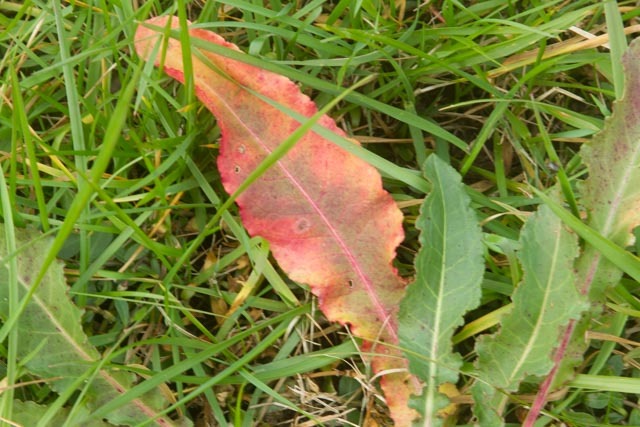
untitled-2

The dandelion has turned red.

untitled-3

This weed was yellow, but is now a fluffy white.

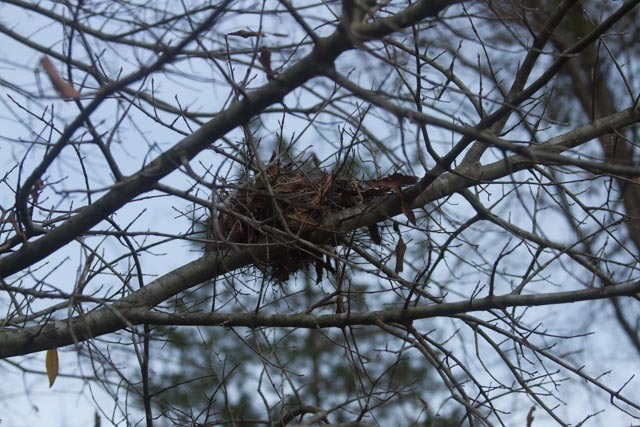
untitled-9

And the bird’s nest has been abandoned.

It is time to listen to the Christmas music now and other music that celebrates winter. It is time to have cups of hot chocolate and chai and coffee, to wrap up in hand-knit or –crocheted afghans, to wear fuzzy socks to bed.

Once a band parent. . . .

Always a band parent.

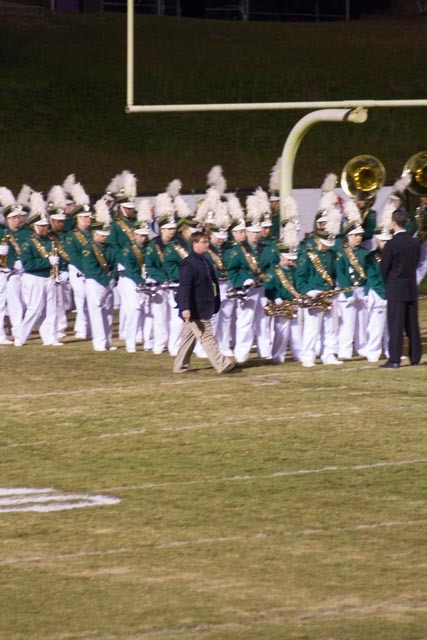
I thought my days of being a marching band parent were over. After all, Aaron is no longer a Newberry College student and does not play in the marching band. Both boys are no longer members of the Mid-Carolina Rebel Regiment, either. I thought I had retired.

That is, until my older son became the director of a high school marching band. And so it begins again. At least, I don’t have to attend the Friday night football games from the end of August until mid-November. I don’t have the chaperoning duties. I don’t have to make sure that uniforms are sent to the cleaners every week or so (depending on how much they sweat in those wool jackets).

untitled-6

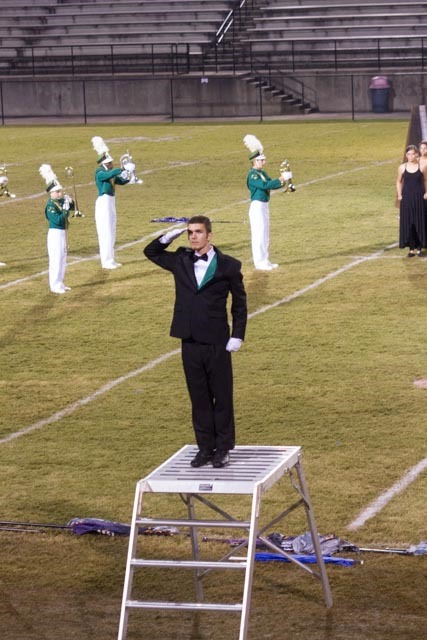
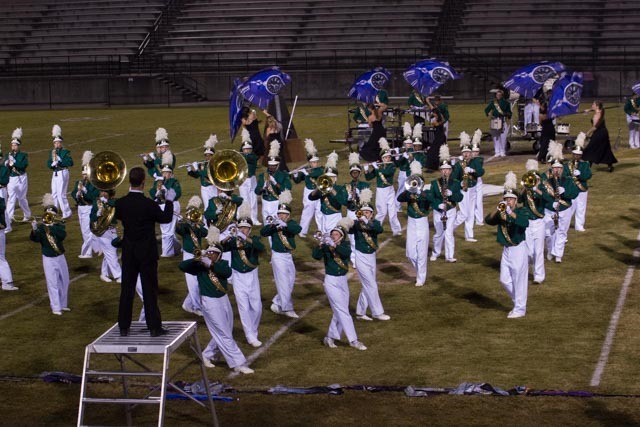
But I’m finding myself traveling to marching band competitions all over the state of South Carolina again. Two weeks ago, I sat in the stadium of Charleston Southern University to cheer my son’s Latta Marching Vikings to fourth place in the Lower State Marching Band Competition. This past Saturday, I sat in the stands while the Marching Viking Pride took seventh place in the State competition. I am proud of the young people and, of course, my son, who works hard to inspire his students to love music and performing as much as he does.

untitled-16

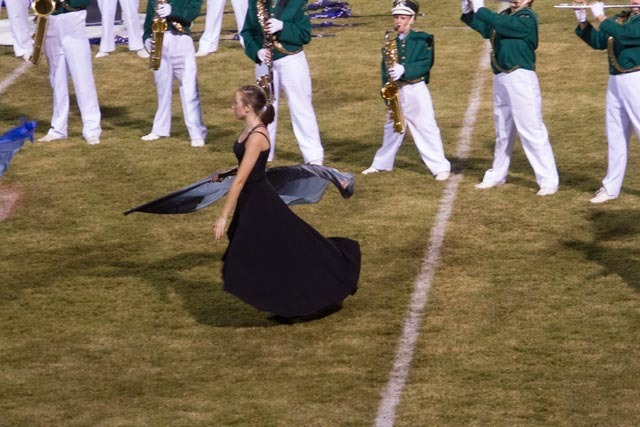
Marching band is as strenuous as just about any sport, I think. It certainly requires a great deal of coordination. Students have to memorize their music and be able to play while counting steps and time signatures, marching, and staying in formation. They have to be aware of their location at all times. In addition, they have to attend to matters of technique, both in their playing and in their marching. They have to learn to listen to each other so that they are keeping time and tune as well as appropriate volume so that the instruments blend. After all, the line from Drum Line says it all: “One band, one sound.”

untitled-19

As for me, I may complain about driving two and half hours across the state of South Carolina to watch a twelve and a half or thirteen minute performance, but what I see is more than just a performance. I see eighty young people who have devoted their time and talent to performing, to supporting each other, to developing leadership abilities. I see young people learn to cooperate. I see young people learning to respect each other. I see the future of the country.untitled-34

And you know what? I am optimistic because of these young people, not just in the Latta High School Viking Marching Band, but in the bands of all the schools in this state. These young men and women are our future.

Tuesday Photo Journal

untitled-34

I am working through Kim Manley Ort’s Photo by Design online course again. I had a delay in getting started, but I am catching up. In the first week, we looked at the effects of light and shadow in our photographs, and I found myself paying more attention to the quality of the light. I found that, as I paid more attention to the light around me, I was better able to set white balance both in the camera and during post processing.

Last week, we focused on lines. This is probably the most challenging for me. I see lines; however, I have trouble capturing the lines in ways that express my intentions.

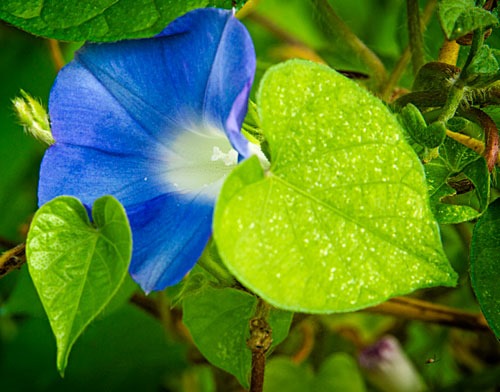
This week, the emphasis is on shapes. And this is where I found myself really enjoying the lessons. I first began looking through my archives to see if there are any patterns that I could readily identify. Two weeks ago, I received this image of a morning glory. The first thing I noticed was the heart-shaped leaves, which also are triangular. The placement of the leaves around the blossom also create a triangular frame for the flower itself.

untitled

Then this morning, while I walked through Dreher Island State Park, I found additional examples of shapes, lines, and light. As I looked for images, patterns of three and five, triangles, hearts, and spirals appeared everywhere in nature.

untitled-11

untitled-24

untitled-29

Photography by design is not just about the designs we see in the subjects, but it’s also about how we design the image. One of the problems of walking through a state park that is an island is that sometimes, it’s hard to get close to the subject without stepping in the water. But I gave it my best shot!

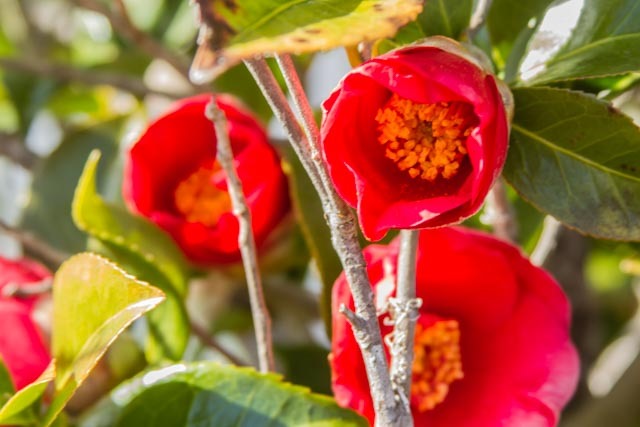
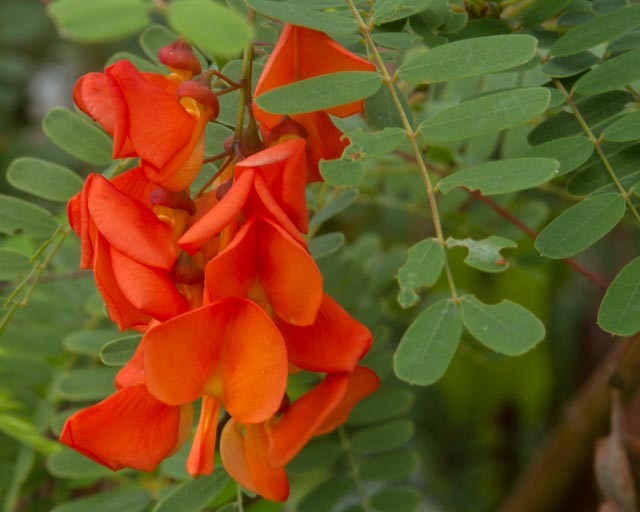
I have no idea what this shrub is, but I love the orange flowers.untitled

The petals are somewhat circular and curved; the stems are lines that bring the eye to the flower. The flowers also form lines that draw the eye down the photograph.