Black (and White) Friday

I am not rushing the Christmas shopping season with a Black (and White) Friday blog entry! Gracious, I’m all for waiting until Santa rides down Fifth Avenue in the Macy’s Thanksgiving Day Parade before I start the Christmas season.

No, I’m talking about Black and White conversions in Photoshop and Lightroom.

I chose two images from my recent trip to the mountains of North Carolina to play with. I used two methods of converting from color to black and white. The first method was done in Lightroom, with some tweaking and fine tuning in Photoshop, and the second was done in Photoshop. I’ll start with my process in Lightroom.

Mountain trip 2016 (10 of 17)

This is the original color image. I like this look. One reason I wanted to play with black and white treatments for this image is because it is already monochrome (with the exception of the green moss and the sprinkling of leaves).

First,  I began by setting the black and white points with the appropriate sliders in the Development menu. I have found that making these two adjustments does more to improve my images than anything else I do. Then I made the adjustments with the Shadows and Highlights sliders. This last bit is simply done “to taste.” Sometimes, I do not mess with these sliders at all. And usually, though, the adjustments are very slight, no more than 7 or –7 in most cases.

Next, I used the Clarity slider and pushed it pretty high. On this image, I think I went up to 70. I left the Vibrance slider alone. Then I went for the conversion. I moved the Saturation slider all the way to zero. My last Lightroom adjustment was to the Curves, and I applied the Strong Contrast preset. Then I imported it into Photoshop for a few minor tweaks to levels and curves and contrast. This is the result.

Linville-upper-Falls

The next image I used was also the Linville Falls. I am fascinated with the narrowness of this section of the falls and the texture of the rock formations.

Mountain trip 2016 (11 of 17)

Again, I like the color version. Like the previous image, it is also basically monochrome in nature, with a little pop of color from the fallen leaves. I decided to give this one the Photoshop treatment. But first—yes, I made my basic edits in Lightroom—adjusting the black and white points, the shadows and highlights, and the curves. I used the Medium Contrast preset on this one. Then I sent it to Photoshop for the rest of the edits.

I used a Levels adjustment layer to tweak the whites and the blacks by dragging the sliders to the left for whites and to the right for the blacks. Because of the adjustments in Lightroom, I had very little to do with this layer. Then I added an Brightness/Contrast layer and boosted the contrast to about 20 and tweaked the curve in a Curves layer by drawing down the highlights and raising the darker areas. Finally, I added a Hue/Saturation layer and completely desaturated the image. Here is the final result:

Linville-upper-Falls-2

The black and white works for both images because the images have a monochromatic feel to begin with. I’m still working on perfecting my black and white conversions.

Thankful Thursday

I’m sure I’m not the only one. I need constant reminders that I have much for which to be thankful. I get bogged down in the details of “life” and begin to think that thanks are just too hard. I forget to pay attention to the world around me. Just now, as I am writing, I glanced out the window to watch a couple of squirrels play chase with each other down by the pond. It’s been a very quiet day. This little scene of animals playing chase brought a smile to me.

I am constantly reminded that I am to give thanks and to rejoice in all circumstances. Thank goodness, I am not called to give thanks for those circumstances. I just need to give thanks and to be joyful in those circumstances. I know you’ve seen the Facebook meme that reminds of us that because we woke up in a bed, have a job to go to, have food in the refrigerator to put on our tables, among other “creature comforts,” we are richer than the majority of people on earth. I need to remind myself of that when I don’t have the very thing I think I want.

So, with those thoughts in mind, I’m going to revive my Thankful Thursdays at least through the end of November.

I am thankful for this week of quietness and less busy-ness, for time to read and write, to work with photographs, to walk around the ponds, to play the piano.

I am thankful for “home,” wherever that happens to be at the moment—the the place where I have resided for the last 32 years, for the place where I grew up, for the people who inhabit these places.

I am thankful that I live in a nation where I can express my opinion openly and freely without fear of retaliation, imprisonment, or even death. Not all of the world’s citizens are so lucky.

A Photograph Should not Mean But Be

Ars Poetica

BY ARCHIBALD MACLEISH

A poem should be palpable and mute   

As a globed fruit,

Dumb

As old medallions to the thumb,

Silent as the sleeve-worn stone

Of casement ledges where the moss has grown—

A poem should be wordless   

As the flight of birds.

                         *               

A poem should be motionless in time   

As the moon climbs,

Leaving, as the moon releases

Twig by twig the night-entangled trees,

Leaving, as the moon behind the winter leaves,   

Memory by memory the mind—

A poem should be motionless in time   

As the moon climbs.

                         *               

A poem should be equal to:

Not true.

For all the history of grief

An empty doorway and a maple leaf.

For love

The leaning grasses and two lights above the sea—

A poem should not mean   

But be.

“Ars Poetica” is one of my favorite poems. I know, it’s a twentieth century poem by an American poet, and I’m all about the Nineteenth Century British poets. But still, it’s one of my favorite poems because it is so full of visual imagery. Of course, MacLeish is talking about the written word and the power of the word to create word pictures in our heads. He’s also talking about the tendency to overanalyze a poem and beat it to death teasing out the deeper meanings.

Sometimes, we do the same thing to photographs. We overanalyze and try to find deeper meanings when the meaning is right there in the image. I love the image in the last stanza: “For all the history of grief/An empty doorway and a maple leaf.” Can you picture a photograph of an open doorway in an old house, weathered wood siding around it, filled with leaves that have fallen from nearby trees? There is something sad about a house that is no longer a home.

I am thinking about my own photographs today and the stories that they tell the viewer. Are my images illustrations of the old saying, “A picture is worth a thousand words”?

untitled-9

Contemplative photography practices have caused me to slow down before pressing the shutter, and sometimes, but perhaps not often enough, I ask myself about the story that I want the image to tell. Do I need words to express the story, or will the photograph tell the story by itself?

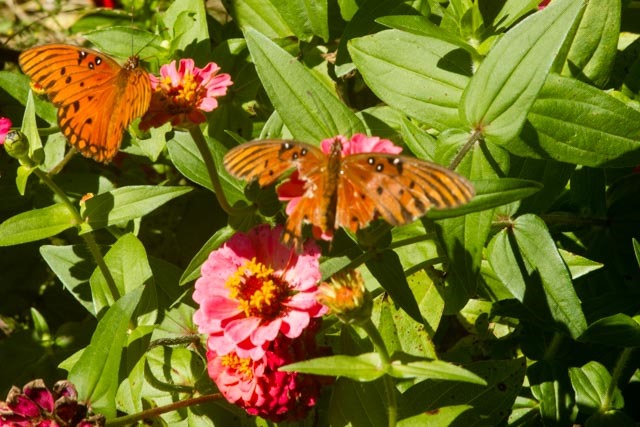
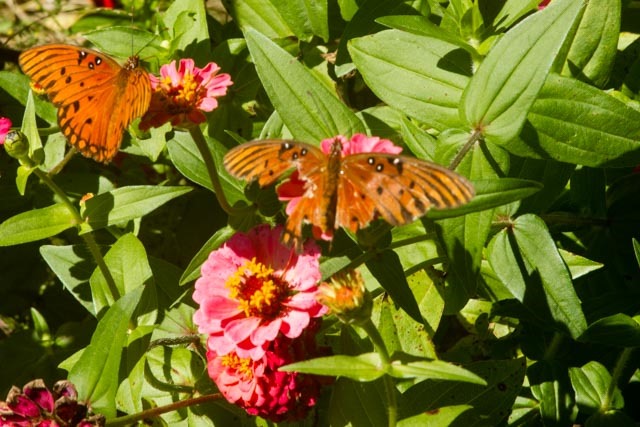
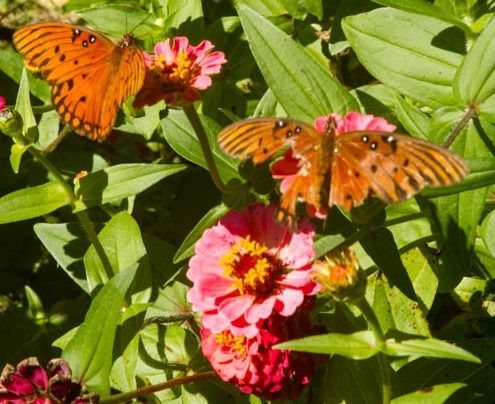
I think the image of the butterfly above is one of those images, the torn wings, pieces missing—this butterfly has had a hard life. It is juxtaposed with the fresher butterfly. There is a sadness to this image. This butterfly will not last long. But I don’t need the words to tell that story.

I’m thinking that Wednesday may become a “Wordless Wednesday” post. Check on my Telling Stories page on Facebook or the Seeing with the Eyes of the Heart page on Facebook for some Wordless Wednesday inspiration.

Technique Tuesday—Part Two of the Planner

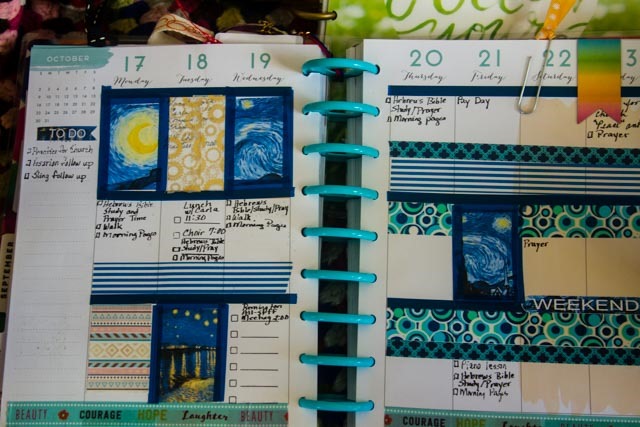
Yesterday, I wrote about how I’m trying to be a planner. One thing I do with my planner is keep “memories.” As I’ve said before, I have scrapbooked, and I still enjoy making the large 12 by 12 layout and playing with paper and embellishments and photos and words. But I’ve scaled down, too, to putting images in my planner instead of the larger scrapbook. Here is one thing I do.

After I make my basic edits in Lightroom, I save them in sizes that I can post to emails or to Facebook or to use in blog entries. (I use the For Email—Hard Drive setting in the Export menu of Lightroom). Then I have fun.

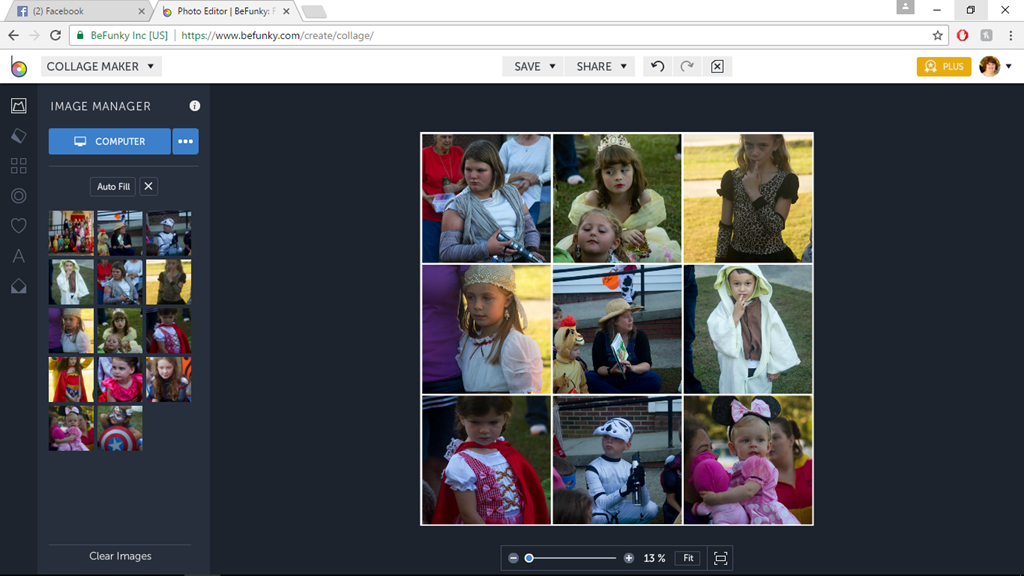
Now, I’m all about easy. There are templates and such in the Lightroom Print module to create photo film strips and collages, but you can’t beat the ease of the online app at www.befunky.com. It is seriously “easy as pie.” First, I select the images I want to play with and upload them to BeFunky.

Then I choose the Collage Maker option. image

From that point, I select the kind of collage I want—a Facebook cover (I haven’t done that yet) or a grid or some other option. Then I choose the autofill option, let the app plug in the photos, and rearrange them if I want to by dragging and dropping into place.

image

Then I save the completed image to my folder with the originals, and, Viola!, I am done. I can print out the image on my printer or just hold on it. The app also allows you share on Facebook, Twitter, Pinterest, or Tumblr.

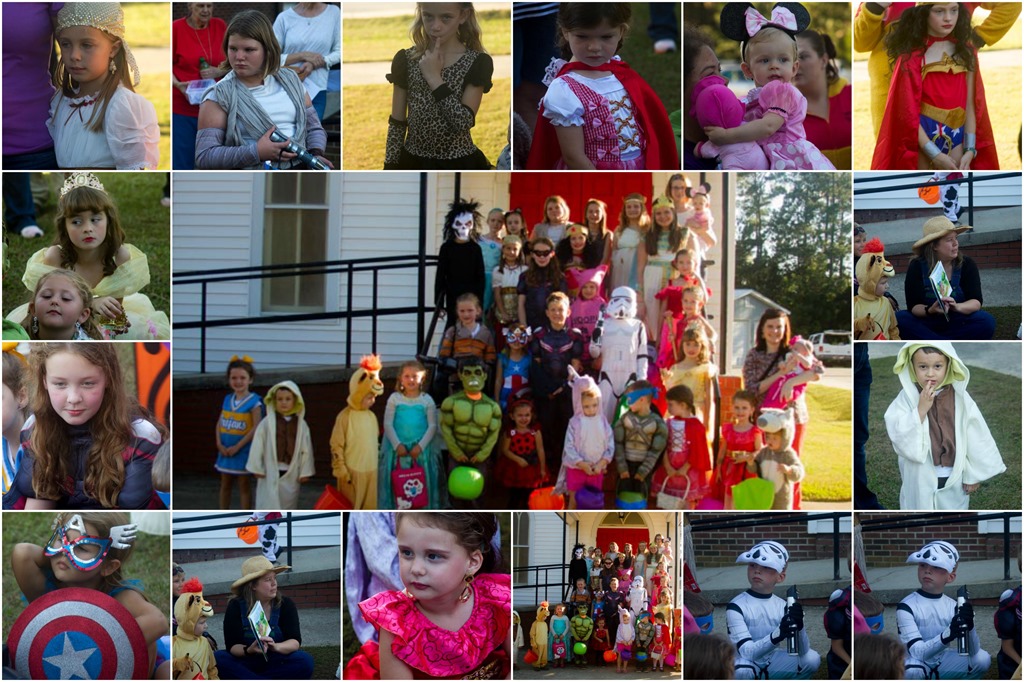
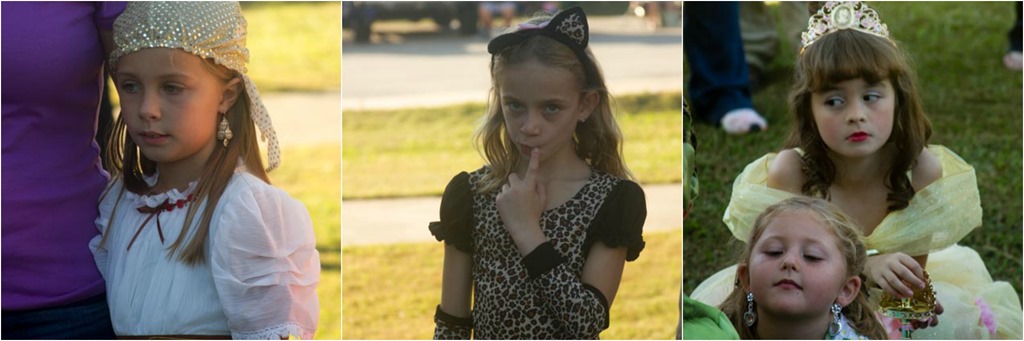
I used some images from Sunday’s Trunk or Treat at my church to create a couple of quick collages to put in my planner:

Trunk or Treat

Trunk or Treat 2

BeFunky is free, as are many photo editing apps online, but there is also a premium version that gives the user more options. I opted for the premium version, and I am glad I did. It is worth the $25.00 annually for more options and more ways to “express” myself with the images.

Starting the Week—Planning the Days of My Life

Are you a planner and super organized and know exactly how each day will go?

I am NOT a planner or an organizer; I tend to be more “big picture” and “spontaneous” when it comes to planning. I tend to think of things in terms of routines and practices rather than schedules and to-do lists. Sometimes, I wish I were more organized and scheduled and planned, but things are as they are, right? Maybe it’s just that I’m more flexible and adaptive.

I have been experimenting with different ways to plan or design my days. Maybe it’s because I’m a teacher, but I love planners and office supplies and pens and fancy paper clips (and not so fancy ones, too). I have a collection of colored pens and markers. I even have a box of 64 Crayola crayons! I print off planner stickers.

I have FOUR planners: one is for the “everyday” things; one is to track my daily Bible study and to keep prayer requests; a third one tracks my blog entries, and the fourth one is work-related to keep my class schedule and related meetings and tasks. untitled

When I started getting serious about planners and calendars, I found out that there are more ways to skin the planner cat than one. There’s “Right Brain Planning” (Teresa Robinson is the guru), Fauxbonici planning (based on the Japanese system of Hobonici planniing); bullet journaling, and “creative” planning. There are systems that invite you to set your goals for the day, week, month, year, five years, ten years, and life; there are systems that include appointment calendars and to-do lists. There are systems that use codes and symbols and colors. . . . And there are art-journal inspired planners (or unPlanners as one group calls them).

Is it any wonder that I am a bit overwhelmed now with planning and trying to get my life organized?

I have to admit, though, that I am caught up with the Happy Planner system produced by Me and My Big Ideas (MAMBI). here’s the story: I was a scrapbooker (and still am, though not as much as I used to be); I want to keep memories in some kind of way, whether through journaling or through scrapbooking or something else. However, now that my children are own their own, I do less scrapbook pages. I discovered, though that the Happy Planner is a convenient way to keep memories and do some planning and scheduling. It is becoming my way of keeping a record of life. I sometimes include photographs that are meaningful to that day. I punch holes in invitations that I want to keep, birth announcements, quote cards that I find, things like that. And you know what? I have a kind of scrapbook. I can look back and see what was important to me on a particular day or during a particular week or month. I can see what the important events were, like the days of Hurricane Matthew that created havoc for South Carolina’s coast or the church’s homecoming services and family reunions and my son’s band competitions. I can write ahead and put in future events—an upcoming bridal shower for my son’s fiancee, for instance, and keep track of the choir anthems that I need to learn.untitled-3

The main thing I’m learning about planning is that merely writing an event or a task down does not get it done. I list “photography” as one of my daily activities. (It’s almost noon and I haven’t picked up the camera yet! And I listed going for a walk as one of my activities for today, and I’m still in my pajamas. Nor have I yet practiced the anthem for Sunday morning, and we have choir rehearsal tomorrow night.untitled-5

I am using these planners, though, and someone in the future will have “fun” figuring out how I am through these little snippets of my days and weeks and months and years.

Homecoming, Part 2

Last week, my home church celebrated Homecoming. This week, the church in which I grew up celebrated Homecoming. It was the first time I had been back in Mt. Hermon since Daddy’s funeral. It was not sad, though. I felt very much at home. Most of the time, when I worshiped here, I sat with Daddy while Mama sat in the choir. This Sunday, I sat with Mama. Yet, Daddy was very much there. When the church added cushions to the pews, Daddy was not comfortable, so they had the upholsterer who made the cushions create a removable piece that Daddy could take out and sit on the bare pew. Well, when I looked down the pew I was sitting on Daddy’s “cushion.” It was almost like sitting with him. Then when I exited the church, Pastor Bishop showed me the cross he wore and told me that Daddy had made the cross for him out of walnut wood and signed his name “Floyd” on the back. Pastor Bishop said that he treasured that cross. (Yes, for those who know me, I cried.)

I did not take the camera this morning. I simply went to worship and visit and renew friendships.

Thomas Wolf wrote famously, “You can’t go home again.” But you can go home again. It may not be the same home you left, but it is still home. My former church is small in number. The walls are no longer “pea green.” But the pews are still a natural color, not dark stained. The pipe organ is still in use. There is no choir, and the dress is more casual. (No one wore a suit and tie, or hats, or gloves. My grandmother never went to church without her hat, which she had to remove when she put on her choir robe, and I remember her wearing her gloves as well.)

Still, the liturgy and the hymns remain nearly the same, the gospel message the same.

I can go home again.

Thankful Thursday

Some four or five years ago, I was part of a group of women who were called “Encouragers.” We led small groups of women with similar interests and encouraged each other. One of my group’s favorite days was “Thankful Thursday.”  In our little Facebook group, we shared things for which we were thankful. Somehow, whatever had happened throughout the week seemed less stressful once we started sharing the good things in our week.

I think I need to bring “Thankful Thursday” back. Why do we need to wait until Thanksgiving Day in November?

I think the first thing I am thankful for is the much cooler weather! I’m waking up to temperatures in the high forties this week, and highs in the low seventies. I love this time of year. untitled-2

I am thankful for the last flowers of summer. My hibiscus is still blooming beautifully. And my new plant (I don’t know the name of it. It’s just an unusual looking plant, and I definitely go for the unusual. My zinnias are still blooming, and are actually blooming more now in the cooler weather (and after the rains) than they did all summer long.

untitled-9

untitled

And I am thankful that we had less damage from Hurricane Matthew than we might have. John’s home in Mullins did not suffer any damage even though the area did suffer flooding, power outages, and lots of downed trees.

It doesn’t take long to make a list of the good things during the week. And yes, you can use photography to document those things.

More Stories

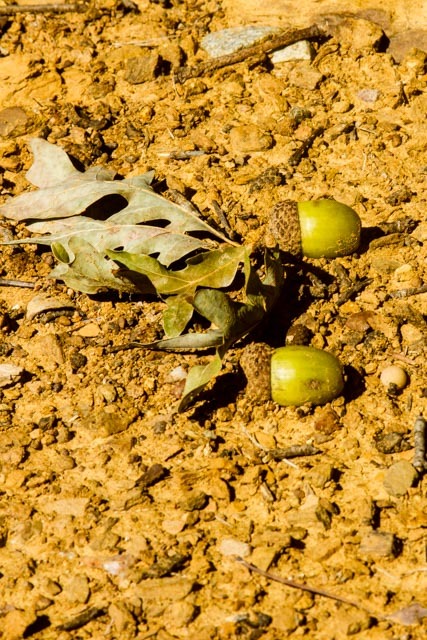
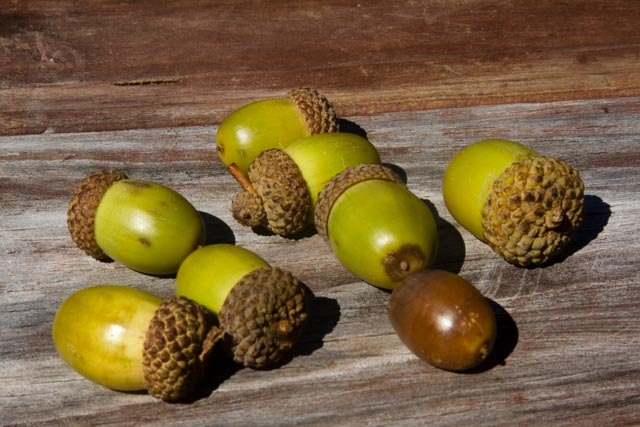
I went for a walk around the ponds behind my house this morning. Temperatures in the sixties invite me to go out, and it’s October, so there are some leaves beginning to turn and other signs of autumn apparent. As I walked under the big oak behind the house, there were dozens of acorns on the ground. I was walking “briskly” (meaning, I was trying to walk fast to get my heart rate up, and I was panting. . . . ), so I didn’t stop, but I thought about it! I also thought about how many times Daddy would come in from hunting or working in the yard and empty his pockets on the hearth. Often there would be other nuts, hickory, pecans, maybe a few peanuts (if the season was right). After my brisk walk, I went back to the oak with the camera in hand, and yes, I put a few acorns in my own pocket in memory of my daddy.untitled-31untitled-45

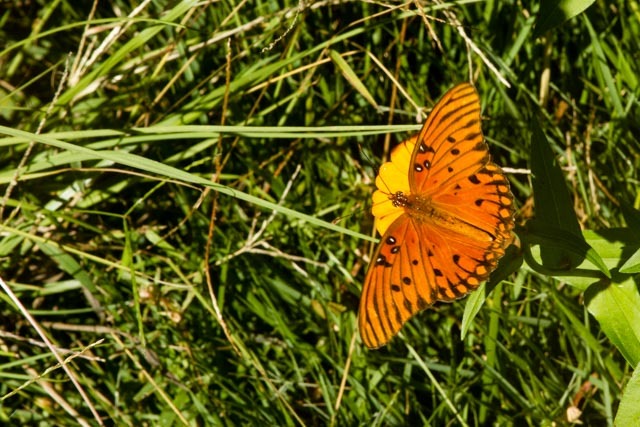
I walked around the house, too, to check out the zinnias. There were several butterflies getting the last of the nectar from the blooms. This one caught my eye, though. I wonder what happened to him. Did the winds from Hurricane Matthew tear his wings?

untitled-9

Or is he/she just an old butterfly at the end of its life?

Of course, there were other butterflies flitting around the flowers as well.untitled-12

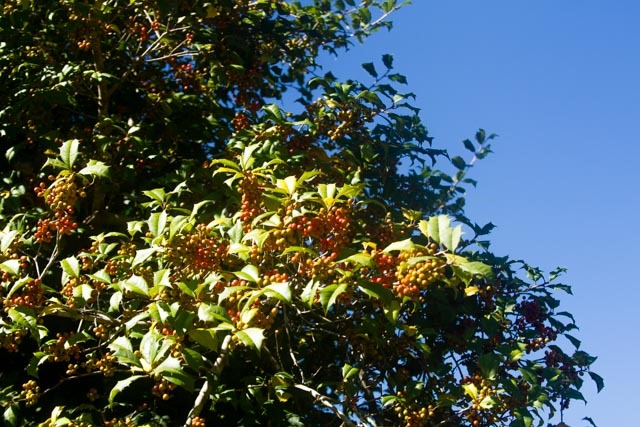
When Grady was clearing the land where we live for our house in 1984, his grandfather would often ride over on his old Ford tractor. One Saturday morning, I rode over to help Grandpa “supervise” the work. Grady was cutting down trees while we looked on. Then, Grandpa Hub looked at me, pointed to a tree with his walking cane, and said to me in all seriousness, “Now don’t let Grady cut down those hollyberry trees.” Grandpa unexpectedly passed away not too many weeks later, but for thirty-two years, I have held Grady to my promise until 2011. The largest holly tree next to our garage was badly damaged after the house burned, and Grady had to remove it. However, this holly, also damaged from the heat of the fire, survived. If you look closely between the branches, you can still see some of the fire damage. It is not very prettily shaped anymore, but it still stands. I would not let Grady cut it down five years ago. Now, it produces berries every year.untitled-42

In a few days, I will need to pull out my scrapbook papers, adhesives, and pens to put these stories in pages for my children to read.

These are important stories to me, and my photographs will help me tell them to the generations that come.

Story-telling: the Oral Tradition and Photography

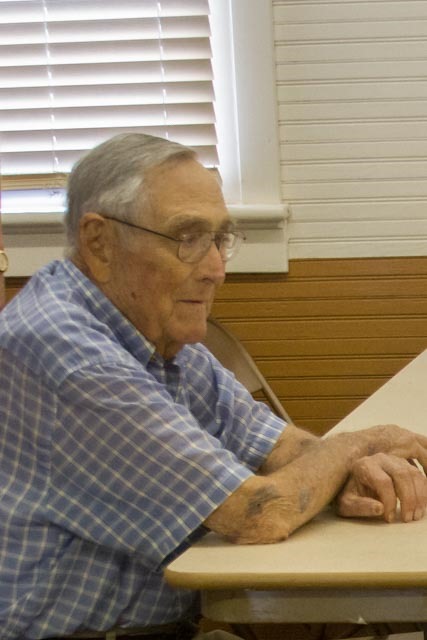
I have some vivid memories of my great-Uncle Jim visiting my Granddaddy Summer. Granddaddy was not much of storyteller, but Uncle Jim had storytelling down to an art. He would entertain us for hours and hours with stories of growing up in Peak, of his mother raising eight (or maybe nine) children after being widowed (Great-granddaddy TW Summer was only in his thirties when he died in a railroad accident), of working the fields around the “home place.” I don’t know that I’ve ever laughed so hard in my life than when Uncle Jim would tell his stories. Through his stories, I came to know some of my great-aunts and uncles who had passed on before I was born, to know my great-grandparents, and to know some of my family history. Those stories are important, and I wish I had written them all down before Uncle Jim passed away in 1977.

My father was also a storyteller; he inherited from Uncle Jim and from Aunt Mary (she also told good stories, but I didn’t see her as often or spend as much time with her as I did with Uncle Jim. They were brother and sister to my Granddaddy Summer). He told us stories of being stationed in Germany after World War II as part of the United States Army peace-keeping forces during the Occupation. I need to write his stories, too.

IMG_6182

(taken in May 2015; Daddy passed away on August 12, 2015.)

A fire five years ago stole my photographs of these two men and others. The photographic record is gone, and all that’s left is to tell their stories with the written word. Of course, other family members have pictures as well. There are pictures of TW Summer and “Ma Minnie,” my great-grandparents, and of my great-great-grandfather James Andrew Summer. I can visit their graves at little Capers Chapel United Methodist Church near my parents’ home.

In the years before television and radio, storytelling was entertainment, but for me it serves a much larger purpose. Storytelling passes along family history and family values. My father’s family were farmers. Even those of us who do not farm for a living have learned to value the land, not only for its usefulness, but for its beauty. I inherited almost forty acres of property that my father and grandfather purchased many years ago; we refer to them as the Red Field and the White Oak. These acres are part of my past; heaven knows, I spent a good portion of my childhood playing in the red road beside the field (before it was paved and straightened), helping to haul hay and bags of oats, and carrying ice water in mason jars wrapped in brown paper grocery bags. Daddy kept his farm implements in the shed across the road from the field, and no one even thought of stealing the plows and mowers and hay rakes and combines.

Stories are important, both the words and photographs. We are missing so much when we do not take time to tell our family stories to our children. We are too consumed by the stories we see on TV—the news, the sit coms, the dramas. Photography, the images we make and share are part of our history, perhaps the real history that our children need to learn.

Maybe one day, “Vincent” (I decided to name my camera after my favorite painter, Vincent Van Gogh) and I will write the story of my family and my childhood home in Peak, collecting the good and the not so good, the mysteries (I think every home town has those mysteries that are never solved), the love and respect.

I began scrapbooking almost twenty years ago, and even though I no longer scrapbook regularly, I know how important it is to record the stories of family. It is the only way to share the real history of people and places and events.

Storytelling and Photography

Today, I read Carol’s comments in “Focusing on Life” on the importance of telling our stories. She cited Elizabeth Gilbert’s podcast, which I still want to listen to. I am thinking a lot about this idea of telling stories and how I can do that through photography.

Yesterday, my home church had the annual Homecoming Sunday. It is a time for those who have moved away to come home and worship with family and friends. It is also a time for us to honor the Golden Agers of our congregation, those members who are seventy-five and older. And of course, there is the picnic on the grounds after services.

Gramps

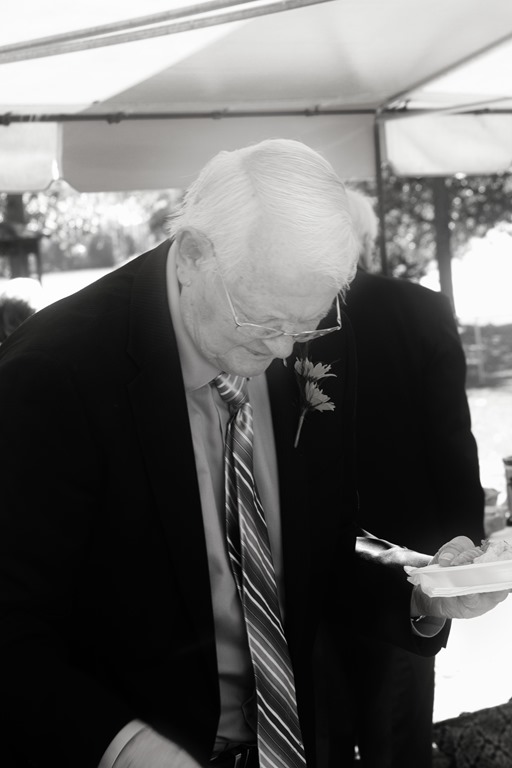
I did take my camera with me to help with the photography of the event. Unfortunately, or perhaps fortunately, I spent as much time talking and visiting as I did taking pictures! I did take the group picture before church and a few pictures of my family as they sat together in the pews. There were a few more of the golden agers fixing their plates. (Oh my goodness, the food on those tables. Yes, the tables groaned under the weight, and so did I after I finished eating!)

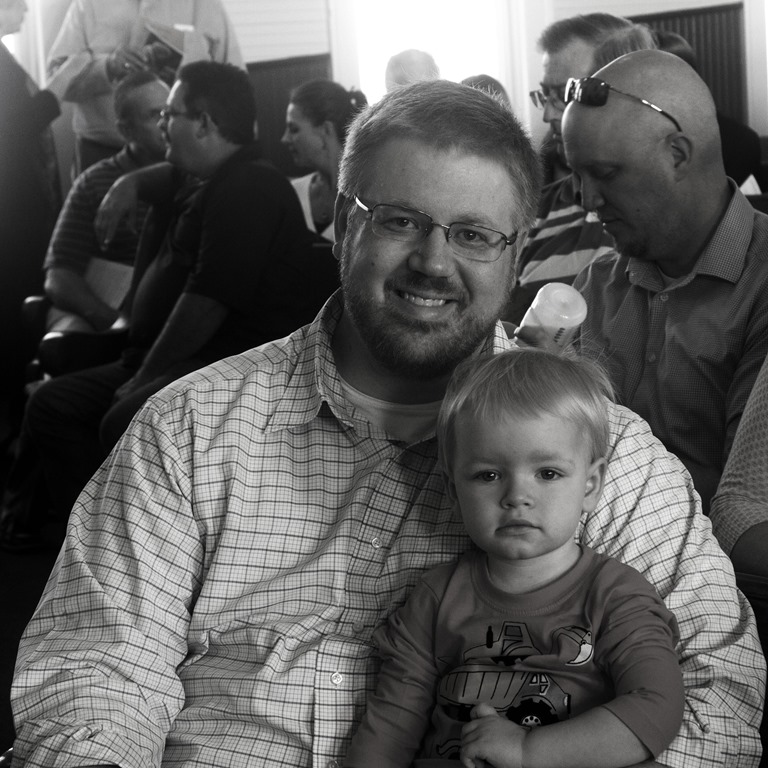
Ryan and Rhett

This is my nephew, Ryan, and my great-nephew Rhett. It’s not hard to figure out these are father and son! Unfortunately, Rhett’s twin sister was not in the mood to have her picture taken!

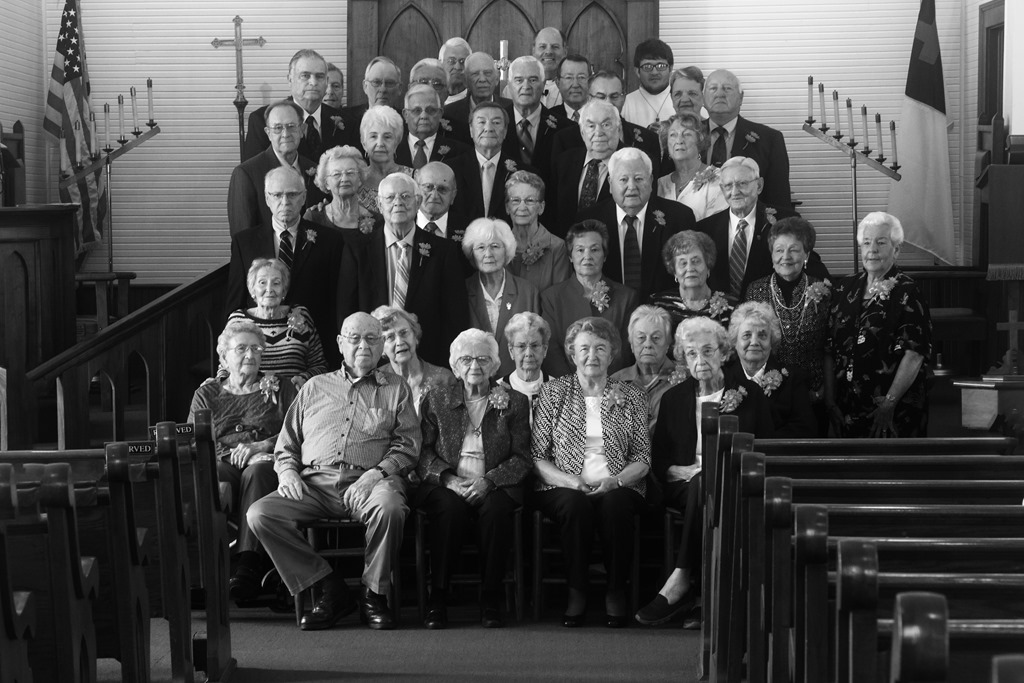
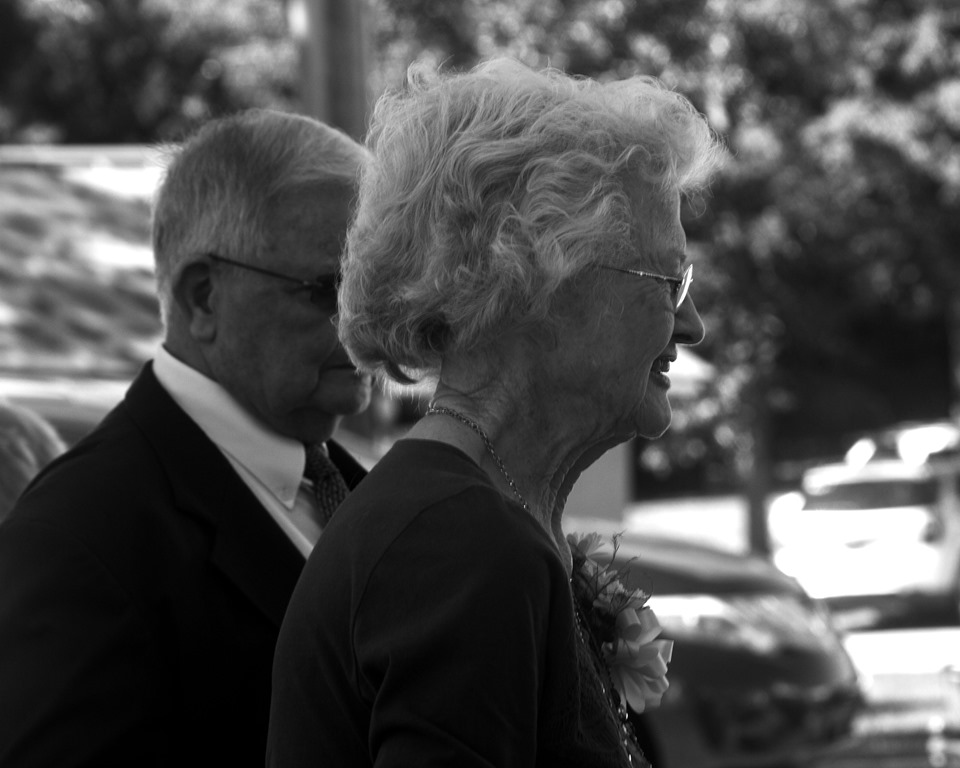
Golden Agers

There are some dear friends in this group of Golden Agers. Mr. Tommy is my surrogate father, a retired construction worker like my father was. He is always available to help neighbors. He had a serious heart attack a few years back and lost significant heart function, but that has not stopped him. He is a font of wisdom. Ms. Biba is one of my newest friends. She is a widow who took care of her invalid husband for several years. She inspires me. There are also others: my parents-in-law, my husband’s aunt, Pastor Lyerly, and so many others.

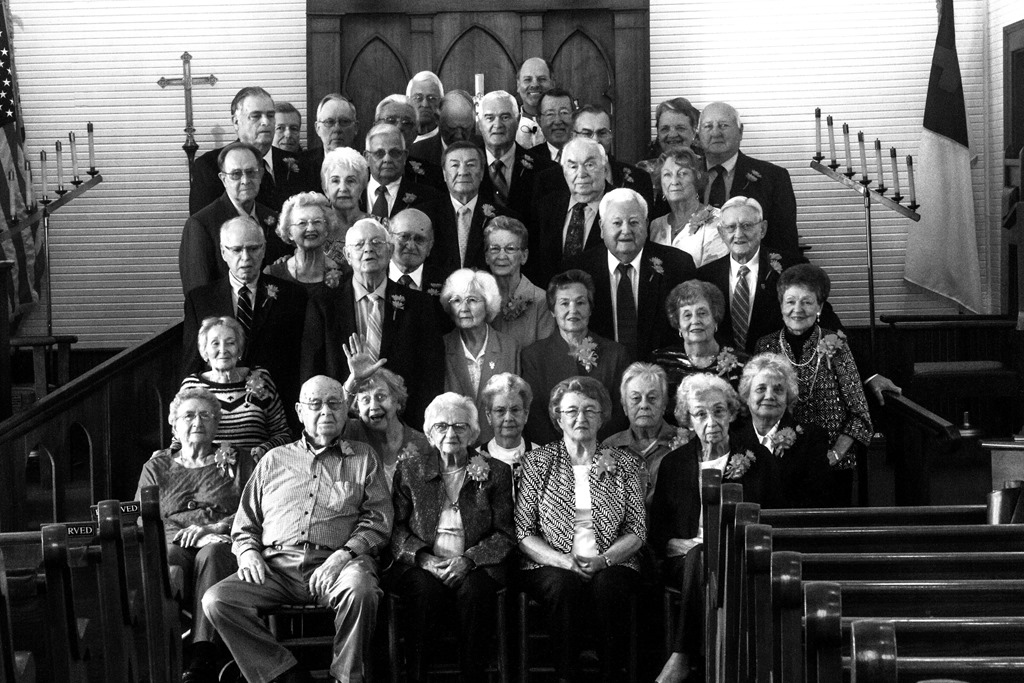
golden agers 2

The image above was one of my test shots before the actual picture. See the lady waving? That’s my mother-in-law, and that captures her personality! She is always glad to see her friends and family. I don’t know who she is waving at, but they cannot help but feel welcome!

Miriam

(The lady above is my husband’s aunt, Miriam.)

Each Golden Ager (or couple) receives a print of this image. These pictures will be part of each family’s story, a story of faith, perseverance, and, most importantly, love.