Starting the Week—Planning the Days of My Life

Are you a planner and super organized and know exactly how each day will go?

I am NOT a planner or an organizer; I tend to be more “big picture” and “spontaneous” when it comes to planning. I tend to think of things in terms of routines and practices rather than schedules and to-do lists. Sometimes, I wish I were more organized and scheduled and planned, but things are as they are, right? Maybe it’s just that I’m more flexible and adaptive.

I have been experimenting with different ways to plan or design my days. Maybe it’s because I’m a teacher, but I love planners and office supplies and pens and fancy paper clips (and not so fancy ones, too). I have a collection of colored pens and markers. I even have a box of 64 Crayola crayons! I print off planner stickers.

I have FOUR planners: one is for the “everyday” things; one is to track my daily Bible study and to keep prayer requests; a third one tracks my blog entries, and the fourth one is work-related to keep my class schedule and related meetings and tasks. untitled

When I started getting serious about planners and calendars, I found out that there are more ways to skin the planner cat than one. There’s “Right Brain Planning” (Teresa Robinson is the guru), Fauxbonici planning (based on the Japanese system of Hobonici planniing); bullet journaling, and “creative” planning. There are systems that invite you to set your goals for the day, week, month, year, five years, ten years, and life; there are systems that include appointment calendars and to-do lists. There are systems that use codes and symbols and colors. . . . And there are art-journal inspired planners (or unPlanners as one group calls them).

Is it any wonder that I am a bit overwhelmed now with planning and trying to get my life organized?

I have to admit, though, that I am caught up with the Happy Planner system produced by Me and My Big Ideas (MAMBI). here’s the story: I was a scrapbooker (and still am, though not as much as I used to be); I want to keep memories in some kind of way, whether through journaling or through scrapbooking or something else. However, now that my children are own their own, I do less scrapbook pages. I discovered, though that the Happy Planner is a convenient way to keep memories and do some planning and scheduling. It is becoming my way of keeping a record of life. I sometimes include photographs that are meaningful to that day. I punch holes in invitations that I want to keep, birth announcements, quote cards that I find, things like that. And you know what? I have a kind of scrapbook. I can look back and see what was important to me on a particular day or during a particular week or month. I can see what the important events were, like the days of Hurricane Matthew that created havoc for South Carolina’s coast or the church’s homecoming services and family reunions and my son’s band competitions. I can write ahead and put in future events—an upcoming bridal shower for my son’s fiancee, for instance, and keep track of the choir anthems that I need to learn.untitled-3

The main thing I’m learning about planning is that merely writing an event or a task down does not get it done. I list “photography” as one of my daily activities. (It’s almost noon and I haven’t picked up the camera yet! And I listed going for a walk as one of my activities for today, and I’m still in my pajamas. Nor have I yet practiced the anthem for Sunday morning, and we have choir rehearsal tomorrow night.untitled-5
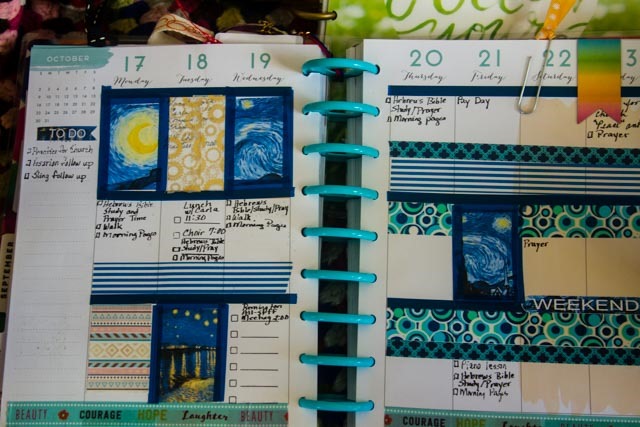
I am using these planners, though, and someone in the future will have “fun” figuring out how I am through these little snippets of my days and weeks and months and years.

Decisions Decided

So Monday, I wrote about the decisions I needed to make regarding my writing and the blog. I hate to admit it, but sometimes, blogging regularly does bog me down. There’s not that much to write about with feeling that I’m repeating myself. Maybe it’s because I still haven’t found my ideal focus.

But, I have decided: I will do my very best to do the Write 31 Days challenge in October. I don’t promise to have every entry ready to post by 7:00 a.m. in the morning, nor do I promise to write the requisite 800 words (or is it no more than 600? I never was very good at following strict rules). I have chosen my “theme:” Thirty-One Days of Photography. I need work on my skills again, and I will use some of the tools I already have—a few classes that I need to finish, a couple of books with exercises and opportunities to play, and other sources of inspiration. I think I will also look at the post-processing process to work on those skills as well.

Mixed in with these posts will be some reflections as I add the contemplative element to my photography.

I will be back on Friday!

Long Weeks, Shorter Days

It’s Saturday, and I am noticing a change in the air. The days are getting shorter, but the weeks seem longer. Perhaps it’s because I’m back at work for the September mod at Remington College.

It is September. In just two or three days, the autumnal equinox will occur. Now, I confess I’ve forgotten more than I ever knew about equinoxes and solstices except the summer solstice is the longest day of the year and the winter solstice is the shortest day of the year. I’m not sure what the equinox means anymore (except they fall between the solstices. I guess someone had to have a name for those “in-between” times).

Here’s what I’ve been doing since my last post.

1. Teaching. I’m still teaching composition courses for Remington College. I do so much enjoy teaching the adult learners. This mod, I have a whole slew of students! Twenty-two, in fact. Now, coming from a public school background, twenty-two may not sound that bad; I had up to thirty-six students in some of my high school classes. But for this small career college, a class of twenty-two is large. In fact, we had to change classrooms because I ran out of chairs and computers.
2. Photography classes. I am retaking Galia Alena’s Camera Craft series, which began in June. I will finish up the final lessons next week. This course series is “technical,” but not so technical that it ignores the more artistic side of photography. In the first four weeks, the emphasis was on the basics—composition, exposure, post-processing, and similar topics. The last four weeks focus on light, and not just the theory and technical aspects. I think I could take this course every year and still learn something new. I enjoy the more artistic aspects of the course, focusing on the aesthetics rather than the correctness.

3. Reading. Okay, I admit that I get in a rut when it comes to reading. I love Regency romances, those novels set at the beginning of the nineteenth century involving the aristocrats and nobility of England. These novels are pure fluff, brain candy, entertainment. I love a story with a happily-ever-after ending. But I have read a couple of things with more substance, although the entertainment value is still there: a couple of Steve Berry novels, including The Lincoln Myth, and the last Dan Brown novel, Inferno.

4. Learning some new Photoshop and Lightroom techniques, such as converting color images to black and white and using luminosity masks. I know converting to black and white is not really new. I’ve tended to use actions developed by others for Photoshop or presets for Lightroom or the black-and-white adjustment layer in Photoshop. But at the encouragement of Galia (see #2 above), I am trying other ways. And luminosity masks are rocking my world right now!

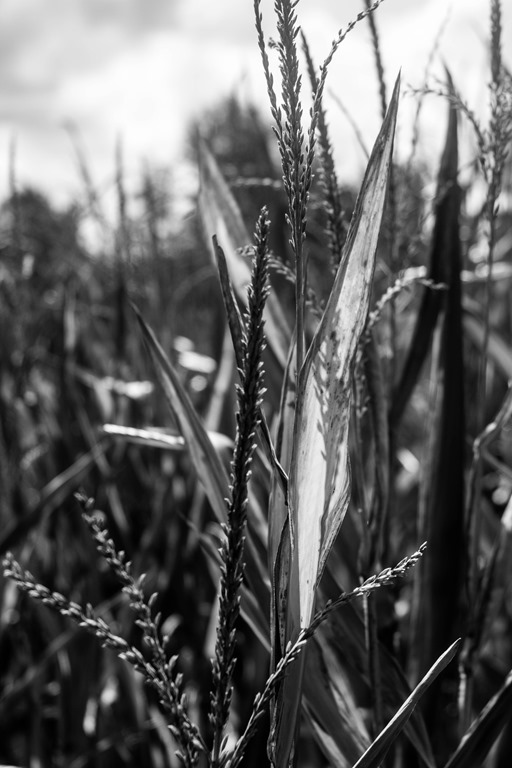
untitled-11

I took this image of the sun shining through the corn leaf at the beginning of the month. I used a luminosity mask in the blue channel, and lo! and behold! I found some detail in the sky! Oh, my goodness! The sky was pretty blown out when I started the editing process. And then I used the saturation slider to remove the color in Lightroom, the black and white sliders to set the points for pure black and pure white, and the highlights and shadows sliders to adjust for details. I really like the results. Just for fun, here is the original.

egret (2 of 5)

See what I mean? You can’t see the clouds in the sky.

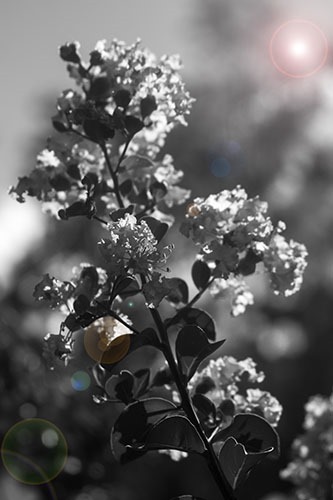
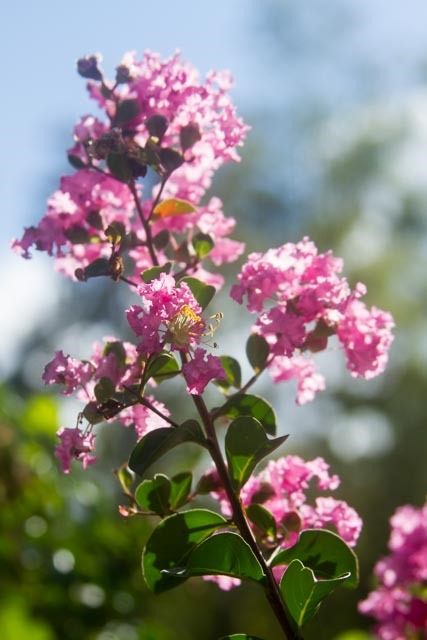
The second image I played with is of some pink crape myrtle blooms. I used the same basic process of conversion to black and white in Lightroom that I described above, but then I took the image into Photoshop for additional manipulation. I used the “Render” filter to add a lens flare. Adding the lens flare added small bits of color back into the image.

crape myrtle for web egret (1 of 5)

I love both the black and white and the color image. It’s hard to choose a favorite.

And the last thing I’ve done in the last few weeks is get my computer tweaked again. Our friendly, neighborhood computer technician Cale H put in a new solid state hard drive and increased the RAM in my five-year-old Toshiba laptop, and she’s running like a young deer now. I’m  happy! I’m glad I didn’t have to replace my computer.

Days are getting shorter, but in reality, the weeks are not getting longer. My goal is to keep learning something new each day. Maybe that’s why the weeks are longer. I’m filling up each day with so much goodness.

Lesson 1: Consider Your Vision

What is your vision as a photographer? Have you thought about it? Do you have a vision?

I read about photographers who talk about “style.” And I wonder what my style is. Do I even have a style? And I read about writers who talk about “voice.” I even teach writers to find their voices and to adapt their voices to their purposes for writing.

I don’t necessarily do the same to my own photography. This month, while I’m on hiatus from teaching written communication and composition, I am going to work through some of the lessons in David de Chemin’s book The Visual Toolbox, his vision of what a photography curriculum should include. The first lesson is a tough one: “Consider Your Vision.” De Chemin often puts vision ahead of technical matters of photography. For him, the “narrative” and the emotion conveyed by the image is more important than technical considerations of equipment and settings.

The first assignment is this: look through your photographs and identify your favorite images, not the ones that everyone else likes or the ones that are technically perfect (although they may be one and the same at times), but the ones that you like. Look for the things that they have in common and identify those elements. Some things to look for: subjects, color, lighting. These are part of your vision.

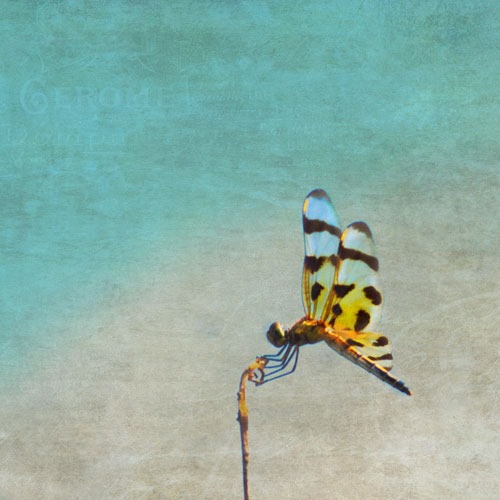
I am looking through my Lightroom catalog and identifying some of my favorite images. This is one of my most recent images:untitled-30

It is typical of my usual subject: nature. I tend to capture nature a lot! Well, it’s a handy subject for me! I live “in the country” and have lots of things to see. It’s not easy capturing a dragonfly, though, and I was lucky to get this one. And I did have to crop in a bit so that you could see the thing. I am in awe of Creation and the beauty that God has created in nature.  I also like to make images that have lots of “white space” around the subject so that I can add textures when I’m editing to give my images a painterly look.

dragonfly

I also look for textures in nature, especially in florals.

untitled-37untitled-4

And I like to see the little details, such as those little “spikes” in the button bush flowers. I find that I use my lenses “wide open” with large apertures so that I can focus on my subject and create a blurred background.

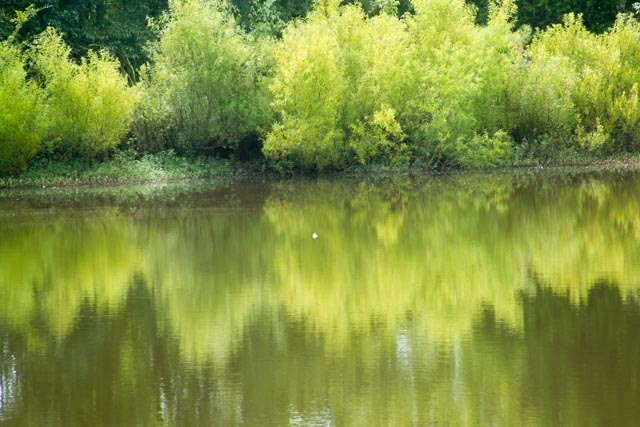
Another thing I’m drawn to is reflections.

untitled-45

Just another way of seeing the world.

This is just the beginning of seeing what my vision is. What is your vision as a photographer?

Lessons from the Lensbaby

No matter what the experts say, I think photographers have love affairs with camera equipment. I have a moratorium on my equipment purchases, so I have to work on learning to make the most of the equipment I have. And it is limited. I use my kit lens, the 28-135. I have another zoom that takes me to 200, a 50, and two optics with the Lensbaby Composer Pro—the Sweet 35 and the double optic.

This morning I went out with the double optic and the Composer Pro. I used the 5.6 aperture ring and set the camera for manual mode. Of course, with any Lensbaby, I used manual focus.

Lesson #1: sometimes moving physically is the only way to get the subject in sharp focus (or sharp for a Lensbaby since it is inherently a soft-focus lens). This is especially important when using the macro kit with the double optic.untitled-9untitled-52

Lesson #2—After using autofocus for sooooo long, manual focus can be hard. It feels as though I am learning to see all over again. Or else it feels like I’m not wearing my glasses or contacts. Nailing the focus is difficult, really. I found it hard to keep my focal point in focus with the Lensbaby when I tried to reframe the shot.

Lesson #3—The Lensbaby is worth it, and I need to work with it more often. While I like it a lot for macro work, I struggle with it for landscape shots. That’s where the practice comes in, I think. It is about learning where the lens’s sweet spot of focus is, learning how to tilt the lens to get pleasing composition and the famous Lensbaby blur. Some of my images today just didn’t work.

untitled-77

I think perhaps if I could have gotten lower, this might have worked better. Sigh . , , ,

Currently. . . .

What have you been doing recently?

I have been keeping a variety of journals recently. I began last November with the No More Excuses art journal. To do this, you do a few things, some daily, and some weekly: draw the weather, color a block with a color of the day, and write a word of the day. I do the weather and the color, usually based on my mood or whatever color strikes my fancy. I’ve added my own element to the day’s work. For the month of April, I am drawing and coloring a flower a day.

Then the Documented Life Unplanner 2016 project came along, and I am adding elements of that to the art journal. At the same time, I discovered Teresa Robinson’s Right Brain Planner and glue booking. Then just a month ago, I found Fauxbonichi journaling, which is similar to art journaling and DLP and RBP, but focuses more on the words rather than the art, although art and creativity are a part of the fauxbonichi journlaing. By the way, there is a Facebook group for Fauxbonichi journalers that is just full of inspiration. In the latter journal, I have been keeping a list of “current” things, everything from my “to do’s” and “necessaries” to the things I eat during the day, and things I’ve accomplished for the day. This week, I am doing a “Currently” list.

This is what I have so far:

Currently,

I’m reading,

  • Rock with Wings by Anne Hillerman, daughter of Tony Hillerman, who wrote a series of novels about Joe Leaphorn and Jim Chee, Navajo policemen in New Mexico.
  •  
  • This book is evocative of the American Southwest. Hillerman, like her father, is knowledgeable of the Southwest and the Navajo people.
  • Big Magic by Elizabeth Gilbert, author of Eat, Love, Pray, about living a creative life without fear
  • Creative Visualization for Photographers by Rick Sammon, about learning to see creatively

I’m learning

  • how to draw and sketch flowers, how to shade and color
  • how to create watercolor effects in Photoshop CS6 without using actions

I’m loving

  • the green-blues, such as teal and turquoise
  • { flora palette } image via: @thediaryofdi
  • What is on your “currently” list?

Time and Writing and Art

It’s been nearly a month since my last entry here. I have these “spells” when writing calls to me and I ignore the call. I’ve been doing that lately—ignoring the class. Oh, I’ve been writing—in my morning pages journal, in my art journal/documented life unplanner/right-brain planner, fauxbonichi journal—Oh, yes, I am writing. Just not here in this space. Just not for publication.

I have been reading a lot. I’m several chapters into Elizabeth Gilbert’s book, Big Magic. I have to thank my friend Mary for loaning me her book. Unfortunately, because she loaned it to me, I can’t mark it up! So, I bought my own Kindle edition so that I could highlight, underline, and comment. Oh, yes, I am writing quotes in my journals/planners/sticky notes, too.

And I’m reading one of Rick Sammons’ photography books on seeing creatively. I am reminded throughout the book that photography is more than settings on the camera and pressing a shutter button. It is about seeing the world, not merely glancing around, but looking deeply, and seeing what is not always obvious. I liked his analogy of using a shot-gun approach to photography versus a more considered approach. Sometimes, when we go out to photograph things, we take pictures of EVERYTHING in sight—aim and shoot! However, Sammons reminds me that while it’s okay to take the postcard pictures and attempt to capture everything, we also need to take the time to look closely, to see what “we” see and not what we’re necessarily expected to see.

The other aspect of Sammons’ book that I appreciate is that photography, especially digital photography, is not just about getting it right in the camera, but also about seeing our creative vision through in the post-processing stage. In most of the chapters, Sammons writes about some of the creative tools he uses—Lightroom, Photoshop, Topaz plug-ins, Nik software. .  . .

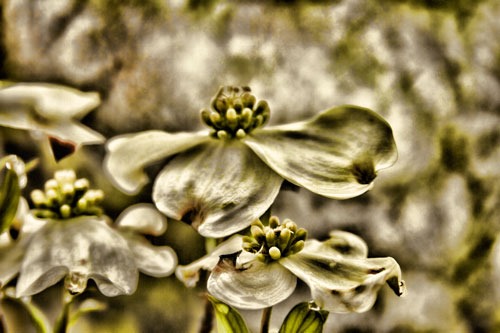
Last night, I played with some of those tools on images I took last weekend. And I played with layering textures and photo veils and other tools in my tool kit. I came up with this image of the dogwood. I think I like it. I like it very much.

topaz-adjustments-on-dogwood

untitled-13

This is the original (SOOC), and I like it, too.

I am trying to salvage this image of the heron that Mama and I saw while we were at Bennetts Point three weeks ago. It landed in the pasture next to our place there. I was not dressed to go outside to get a closer shot, and I had to shoot fast! I think those birds know when I’m coming with a camera and they are camera shy.

This is the original. Trust me, it’s a heron!

untitled-2

I cropped it, “fuzzed up” the grass a bit with a Topaz plug-in, and added several layers of textures, brushing each layer off the heron. This is the result.

heron at bennetts point

It does have a painterly look, and I like that. I like the softness of the background, but it’s still missing something, and I will come back to it again to see what I need to do.

Vision, creativity, writing, reading—it’s all part of what I want to do.

Experiencing Doubts

I have been absent from writing regular posts—again. I think I wrote last week, but it has been more than a month since I’ve posted regularly. I doubted I had much to say. And I doubted myself as an artist. My work is kind of dull compared to others.

Yesterday and this morning, I think I know why I am in such a state of doubt. I spent an evening looking through a truly beautiful magazine, Digital Studio, published by Stampington and Co. It is a gorgeous magazine. I love their publications, Somerset Studio, Somerset Life, Art Journaling . I could spend a small fortune on subscriptions alone! Then I begin to compare my work to what I see, and I tell myself that I don’t measure up. And then I doubt myself.

I am working on shaking that mode. A wise friend told me yesterday that I should remember that my photography is for me and me alone and that I should not be concerned that others “don’t get it.” You know, that image that speaks only to me, like this one.

untitled-3

It is a perfect pinecone, for heaven’s sake. And it’s attached to the branch on which it grew, and there are still green needles at the end. And I could not resist taking the image. Beauty. To me. And a little bit of “apartness” and separation and perhaps “aloneness.” (Okay, I’m taking a page from Shakespeare: if he can make up works like fantastical, then why can’t I?)

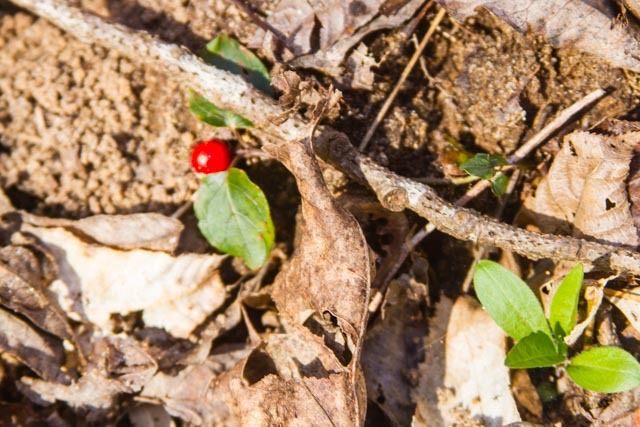
And there are details to notice in the world, like this:untitled-19

Again it’s only a holly berry lying on the brown earth, but it’s a spot of unexpected color. So, I received this tiny moment as that point of unexpectedness, recorded it, and moved on.

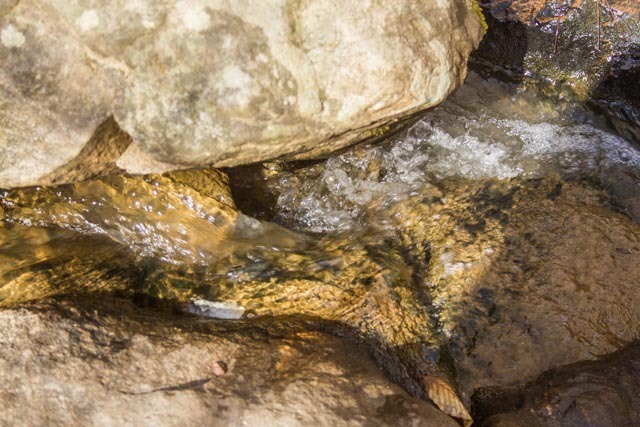
We walked by the creek/stream that runs through Lynch’s Woods yesterday. I admit that I am a “water person,” drawn to water and can abide by water. And I noticed more details—rocks, water, algae, texture.

untitled-15

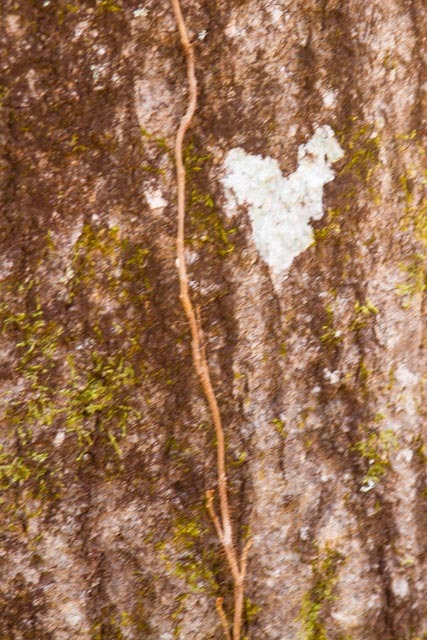
I listened to my wise friend’s advice and recorded the images that spoke to me. Near the end of the walk, we both spotted some lichen growing on the tree trunk:

untitled-38

Do you see it? There is a heart. And Madre Julie wrote to me on Facebook and said, “There is Love.” Someone understood. . . .

Tomorrow, I may face the demon doubt again and wonder if anyone understands what I’m trying to say through my art of photography. But for today, I will be content and know that at least one image has spoken and someone else “gets it.”

I will leave you with one more image of the blossoming of spring (and hope):untitled-55

Photojournal Monday—Out on a Limb

I think I am an online class junkie. I signed up for three classes, at least they are “sort of” classes: Ali Edwards’ One Little Word, Art to the Fifth’s Documented Life Project: the unPlanner 2016, and Theresa Robinson’s Right Brain Planner four-week class. (Am I nuts?) Notice I’m not taking any photography classes right now? Nope. It’s not that I don’t want to, but I need to focus on the ones I’ve signed up for that I haven’t finished yet! There’s the Photoshop Artistry class that I’m half-way through. And there are the saved lessons from Kim Manley Ort’s classes, and a couple of others from Katrina Kennedy. I need to find my focus, literally and figuratively.

The classes that have my attention right now are Documented Life Project and the Right-Brain Planner classes. For several years, I made and kept a mini-album I called “The Book of Days.” I used a variety of techniques to create calendars and then throughout the month, I would record snippets of my days. The DLP is similar. Someone else, though, has done the hard work of creating the templates! Thank you, DLP leaders!

In the DLP class, the theme for January is “Out on a Limb: Trying New Things.” Art journaling is a new thing for me. I’ve dabbled at it, but nothing seemed to take. Then I discovered this year, the No Excuses approach to art journaling, which led to the Documented Life Project 2015 (I just glimpsed it, didn’t sign up), and finally to Right-Brain planning. I have a mess. So, my limb is art journaling.

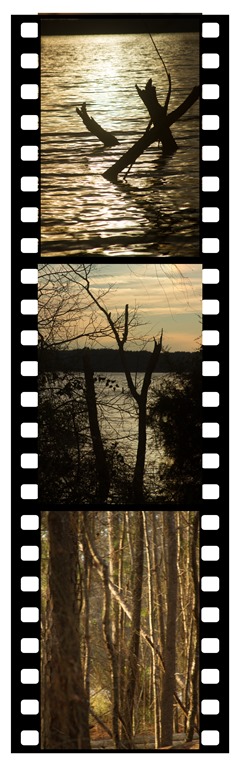
As a photographer, though, I have to include photographs and images in my journal. One way to do that is to create photo flimstrips. I think I love them. I can print out a strip, trim it down, and tape into my “unplanner” or art journal and have a record of my week or day or month—which ever I choose to document. I am not worried about whether my journals or planners are archival safe right now. I’m just working with the here and now. This project is for ME, not necessarily for posterity. If there is one thing that losing things in two house fires almost back to back has taught me is that the things of this world are just temporary.

So, here is my first filmstrip:

Out on a limb filmstrip

When I walked through Dreher Island Sunday afternoon, my photography “goal” or intention was to look for images that represented the literal aspect of this month’s DLP theme: Out on a Limb. I discovered that the hard part was finding isolated limbs. One of the things I love about photographing nature during winter is the graphic nature of things. Bare trees are lines and shapes and angles and curves. As you can see from a couple of the images I chose, I used backlighting to create a silhouette effect, and that just emphasizes the graphic qualities. I can see that I will use this template often to create a snippet of my walks and days and weeks and months.

Coming out of the Abyss—Day 8

It is by going down into the abyss that we recover the treasures of life. Where you stumble, there lies your treasure.

Joseph Campbell

Today, it is time to start the climb out of the abyss and return to the known world.

 untitled-27

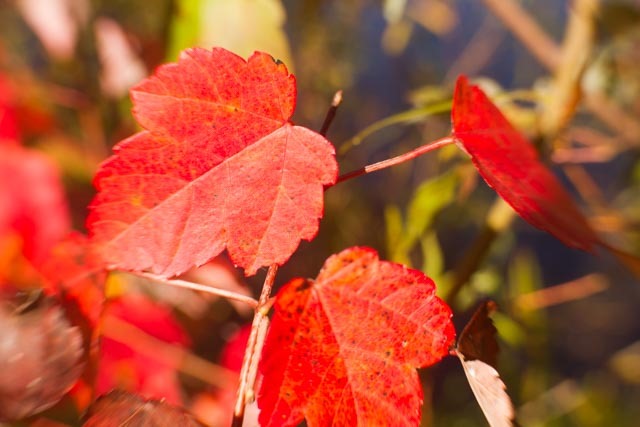
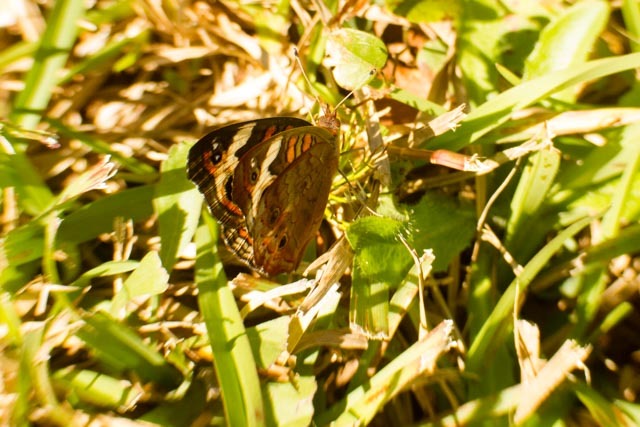
Today, I took out the camera and my trusty Zune player, loaded my “Fun” playlist. It is mid-October, and the world is beginning to shift from its summer greens to the oranges, reds, and browns of autumn. The sky this morning was a clear blue, and the atmosphere was clean that the light almost hurt my eyes. Everything seemed brighter, clearer, and sharper.untitled-2

It seems that I have been in the abyss for awhile, wandering around, trying to find my way out. One thing that helps is to look for beauty in whatever form I can find. And using the camera helps me find it. Beauty becomes the boon that lifts me back into the known world.

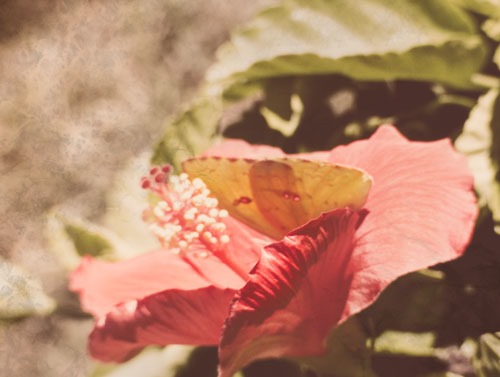
hibiscus

untitled-18

untitled-30

untitled-36